A low-cost single frequency laser emitting in the mid-infrared spectral region and dissipating minimal electrical power is a key ingredient for the next generation of portable gas sensors for high-volume applications involving chemical sensing of important greenhouse and pollutant gases. We propose here a Quantum Cascade Surface Emitting Laser (QCSEL), which we implement as a short linear cavity with high reflectivity coated end-mirrors to suppress any edge emission and use a buried semiconductor diffraction grating to extract the light from the surface. By wafer-level testing we investigate the cavity length scaling, extract mirror reflectivities larger than 0.9, and achieve a pulsed threshold power dissipation of 237 mW for an emission wavelength near 7.5 $\mu$m. Finally, we demonstrate single mode emission with a side-mode suppression ratio larger than 33 dB of a 248 $\mu$m short cavity mounted with the epitaxial layer up and operated in continuous wave at 20 $^\circ$C.
Laser & Photonics ReviewsVolume 18, Issue 8 2470049 Back CoverFree Access Quantum Cascade Surface Emitting Lasers (Laser Photonics Rev. 18(8)/2024) David Stark, David StarkSearch for more papers by this authorFilippos Kapsalidis, Filippos KapsalidisSearch for more papers by this authorSergej Markmann, Sergej MarkmannSearch for more papers by this authorMathieu Bertrand, Mathieu BertrandSearch for more papers by this authorBahareh Marzban, Bahareh MarzbanSearch for more papers by this authorEmilio Gini, Emilio GiniSearch for more papers by this authorMattias Beck, Mattias BeckSearch for more papers by this authorJérôme Faist, Jérôme FaistSearch for more papers by this author David Stark, David StarkSearch for more papers by this authorFilippos Kapsalidis, Filippos KapsalidisSearch for more papers by this authorSergej Markmann, Sergej MarkmannSearch for more papers by this authorMathieu Bertrand, Mathieu BertrandSearch for more papers by this authorBahareh Marzban, Bahareh MarzbanSearch for more papers by this authorEmilio Gini, Emilio GiniSearch for more papers by this authorMattias Beck, Mattias BeckSearch for more papers by this authorJérôme Faist, Jérôme FaistSearch for more papers by this author First published: 12 August 2024 https://doi.org/10.1002/lpor.202470049AboutPDF ToolsRequest permissionExport citationAdd to favoritesTrack citation ShareShare Give accessShare full text accessShare full-text accessPlease review our Terms and Conditions of Use and check box below to share full-text version of article.I have read and accept the Wiley Online Library Terms and Conditions of UseShareable LinkUse the link below to share a full-text version of this article with your friends and colleagues. Learn more.Copy URL Share a linkShare onEmailFacebookTwitterLinkedInRedditWechat Graphical Abstract Quantum Cascade Surface Emitting Lasers In article number 2300663, David Stark, Jérôme Faist, and co-workers introduce the Quantum Cascade Surface Emitting Laser (QCSEL, pronounced "kjuxel"), a device concept targeting the mid-infrared equivalent of the Vertical Cavity Surface Emitting Laser (VCSEL). By leveraging miniaturization and wafer-level testing, the authors demonstrate the feasibility of producing low-cost and low-power consuming mid-infrared lasers in high volumes. These devices are proposed for the next generation of compact and portable gas sensing applications involving industrial process control, environmental monitoring, and medical diagnosis. Volume18, Issue8August 20242470049 RelatedInformation
A crucial element for the next generation of portable gas sensors for high-volume applications, especially involving chemical sensing of important greenhouse and pollutant gases, is the development of a low-cost, low-power consuming, single-frequency laser operating in the mid-infrared spectral range. In this regard, we propose the implementation of a Quantum Cascade Surface Emitting Laser (QCSEL). Our design involves a linear microcavity with high reflectivity coated end-mirrors and a buried semiconductor diffraction grating to extract the light from the surface.
Standard Fourier Transform Infrared Spectrometers (FTIR) rely on a Michelson Interferometer scheme which uses a linear delay line to retrieve an interference pattern. Here, we demonstrate a fast FTIR based on a rotational delay line which allows us to achieve kHz acquisition rates. We perform spectrometry measurements using it in combination either with a Mid-IR Quantum Cascade Laser (QCL) frequency comb or a strongly, low-frequency, RF-modulated QCL. Regarding the latter, the modulation enables to broaden the laser emission up to 250cm^-1 (from 6.5µm to 7.5µm) and to reduce its amplitude noise compared to the free-running case. The combination of a strongly modulated QCL with a rotational FTIR opens the possibility to fast and broadband spectroscopy in the Mid-IR region, with possible applications spanning from gas detection to process control
The mid-infrared (MIR) spectral region (2-20 μm) is the molecular “fingerprint” region for many important organic and inorganic molecules [1], [2]. Miniaturized optical gas sensors based on MIR absorption spectroscopy are highly attractive for many applications such as industrial process control, environmental monitoring and medical diagnosis [3]. To enable low-cost and portable MIR gas sensors, compact and low power consuming single-mode light sources operating in the range of interest are highly desirable. $\mu \mathrm{m}$
Quantum-cascade-laser (QCL) frequency combs are compact semiconductor light sources operating in the mid-IR and terahertz frequencies. Achieving subpicosecond laser pulses with high peak power is of vital importance for performing nonlinear time-resolved spectroscopy as well for exploring nonlinear phenomena. Therefore, investigation and characterization of time-resolved free-running laser emission is a key for further improvement and optimization of these intersubband devices. In this work, we demonstrate a direct electric field measurement of a free-running terahertz QCL frequency comb using electro-optic sampling in combination with computational phase correction, where we retrieve the electric field profile and access the comb parameters. The demonstrated method is of high interest for time-resolved lowpower laser emission characterization, typical for ring terahertz QCL frequency combs and investigation of phase-compensated emission via waveguide dispersion engineering for broadband comb operation.
Fast (sub-second) spectroscopy with high spectral resolution is of vital importance for revealing quantum chemistry kinetics of complex chemical and biological reactions. Fourier transform (FT) spectrometers can achieve high spectral resolution and operate at hundreds of ms time scales in rapid-scan mode. However, the linear translation of a scanning mirror imposes stringent time-resolution limitations to these systems, which makes simultaneous high spectral and temporal resolution impossible. Here, we demonstrate an FT spectrometer whose operational principle is based on continuous rotational, rather than linear, motion of the scanning mirror, decoupling the spectral resolution from the temporal one. This enables 0.5 cm^-1 resolution on sub-ms time scales. Furthermore, we show that such rotational FT spectrometers can perform dual-comb spectroscopy with a single comb source, since the Doppler-shifted version of the comb serves as the second comb. In this way, we combine the advantages of dual-comb and FT spectroscopy using a single quantum cascade laser frequency comb as a light source. Our technique does not require any diffractive or dispersive optical elements and hence preserve the Jacquinot's-, Fellgett's-, and Connes'-advantages of FT spectrometers. The system supports a large optical bandwidth from visible to THz frequencies. The combination of a rotational delay line with collimated coherent or non-coherent light sources pave the way for FT spectrometers in applications where high speed, large optical bandwidth, and high spectral resolution are desired.
Real-time spectroscopy with simultaneous high speed, high spectral resolution, and broad bandwidth is of vital importance for studying non-repetitive reactions and process monitoring [1]. The general purpose instrument for infrared spectroscopy has been Fourier-Transform infrared (FTIR) spectroscopy, due to its flexibility brought by extremely broad-band globar sources. While state-of-the-art rapid-scan FTIR can reach time resolutions of 100's or even 10's of ms, these instruments suffer from an inevitable tradeoff between speed and spectral resolution. This trade- off is caused by the linear translation of the scanning mirror which makes simultaneous high spectral and temporal resolution impossible. In previous research works [2]–[4] an attempt has been made to resolve this issue. However, the solution resulted in co-linear incoming and out- going beams, presenting feedback into the light source, and an undesired dependence of the optical delay along the beam diameter, meaning sources with low coherence and very long path lengths could not be used. In this work we overcome the above mentioned issues, and demonstrate an FT spectrometer whose operational principle is based on continuous rotational, rather than linear, motion of the scanning mirror, decoupling the spectral resolution from the temporal one (see Fig. 1(a)). Fig 1(a) shows a schematic of the developed rotational delay line system, which consists out of a pair of static retroreflectors and a rotational retroreflector.
A terahertz intersubband emitter based on silicon is presented. The emission originates from n-type Ge/SiGe quantum cascade structures. We designed a strain-compensated single quantum active region based on a vertical optical transition and tensile-strained Si0.15Ge0.85 barriers. The 51 quantum cascade periods (corresponding to 4.2 μm) were grown on a Si1-xGex reverse graded virtual substrate on Ge/Si(001) substrates. Deeply etched diffraction gratings were processed and the surface emitting devices were characterized at 5 K with a Fourier transform infrared spectrometer. We observed two distinct peaks at 3.4 and 4.9 THz with a line broadening of 20%. This is an important step towards the realization of an Ge/SiGe THz quantum cascade laser.
In this work, by combining an asymmetric Silicon immersion lens configuration and a complementary resonator design, far-field transmission measurement of a single subwavelength split-ring resonator, ultra-strongly coupled to inter Landau level transitions in a single quantum well, is resolved. The highest coupling is 60%, achieved for only ~2000 coupled electrons for a single resonator on an InSb quantum well. This technique can be useful to characterize the complex conductivity of micron-sized samples, such as exfoliated graphene or transition metal dichalcogenide flakes, in the THz domain.
We will discuss, theoretically and experimentally, the existence of a limit to the possibility of arbitrarily increasing electromagnetic confinement in polaritonic systems, where strongly sub-wavelength fields can excite a continuum of high-momenta propagative magnetoplasmons. This leads to peculiar nonlocal polaritonic effects, as certain polaritonic features disappear and the system enters in the regime of discrete-to-continuum strong coupling. We will as well present experiments reporting spectroscopy of a single, ultrastrongly coupled, highly subwavelength resonator operating at 300 GHz.
We demonstrate a rotational optical delay line for Fourier transform infrared (FTIR) spectroscopy with simultaneous high time and frequency resolutions. Thanks to the rotational motion, the trade-off between speed and spectral resolution present in rapid-scan FTIRs is alleviated, and enables the use of high-brightness quantum cascade laser frequency combs as light sources. We demonstrate the capabilities of the delay line by resolving low-pressure methane absorption lines and tracking several absorption lines at video frame rates.
Free-space coupling to subwavelength individual optical elements is a central theme in quantum optics, as it allows the control over individual quantum systems. Here we show that, by combining an asymmetric immersion lens setup and a complementary resonating metasurface we are able to perform terahertz time-domain spectroscopy of an individual, strongly subwavelength meta-atom. We unravel the linewidth dependence as a function of the meta-atom number indicating quenching of the superradiant coupling. On these grounds, we investigate ultrastrongly coupled Landau polaritons at the single resonator level, measuring a normalized coupling ratio [Formula: see text]. Similar measurements on a lower density two dimensional electron gas yield a coupling ratio [Formula: see text] with a cooperativity C = 94. Our findings pave the way towards the control of ultrastrong light-matter interaction at the single electron/ resonator level. The proposed technique is way more general and can be useful to characterize the complex conductivity of micron-sized samples in the terahertz domain.
The Quantum Cascade Laser (QCL) has been demonstrated in polar III-V semiconductor materials employing transitions between conduction band states [1] . Harnessing intersubband transitions allows lasing at mid-infrared and far-infrared wavelengths. Buried InGaAs/InAlAs QCLs unlocked the mid-infrared application space, because they are operational at room-temperature and in continuous wave [2] . However, THz QCLs remain limited up to 250 K in pulsed operation with a large dissipation [3] . The quenching of the laser emission is related to ther-mally activated LO phonon emission in polar materials. Exploiting intersubband transitions in non-polar group IV materials with weaker electron-phonon interaction is an exciting approach to realize a Si-based THz QCL and to eventually elevate the operation temperature [4] .
We have performed two-dimensional THz spectroscopy on an unbiased quantum cascade structure (QCS), and observe multiple nonlinear pump-probe signals originating from the engineered intersubband system. Moreover, we provide experimental and simulation evidence for coherent population transport.
We present THz quantum cascade emitters realized on a Si substrate. The emission centered at 3.4 and 4.9 THz originates from L-valley transitions in strain-compensated n-type Ge/SiGe heterostructures. This is an important step towards the realization of Si-based THz quantum cascade lasers.
We report electroluminescence originating from L-valley transitions in n-type Ge/Si0.15Ge0.85 quantum cascade structures centered at 3.4 and 4.9THz with a line broadening of Delta f / f approximate to 0.2. Three strain-compensated heterostructures, grown on a Si substrate by ultrahigh vacuum chemical vapor deposition, have been investigated. The design is based on a single quantum well active region employing a vertical optical transition, and the observed spectral features are well described by non-equilibrium Green's function calculations. The presence of two peaks highlights a suboptimal injection in the upper state of the radiative transition. Comparison of the electroluminescence spectra with a similar GaAs/AlGaAs structure yields one order of magnitude lower emission efficiency.
Understanding and controlling the nonlinear optical properties and coherent quantum evolution of complex multilevel systems out of equilibrium is essential for the new semiconductor device generation. In this work, we investigate the nonlinear system properties of an unbiased quantum cascade structure by performing two-dimensional THz spectroscopy. We study the time-resolved coherent quantum evolution after it is driven far from equilibrium by strong THz pulses and demonstrate the existence of multiple nonlinear signals originating from the engineered subbands and find the lifetimes of those states to be in the order of 4-8 ps. Moreover, we observe a coherent population exchange among the first four intersubband levels during the relaxation, which have been confirmed with our simulation. We model the experimental results with a time-resolved density matrix based on the master equation in Lindblad form, including both coherent and incoherent transitions between all density matrix elements. This allows us to replicate qualitatively the experimental observations and provides access to their microscopic origin.
We use two-dimensional (2D) THz-spectroscopy to study the χ (3) non-linearities originating from four-wave mixing (FWM) in a quantum cascade structure (QCS), embedded in a single-plasmon waveguide. This approach allows us to extract the strength of all system non-linearities, study time-resolved system properties such as population and coherence lifetimes, as well as identify the dominant scattering mechanisms of the unbiased QCS at 10K.
For spin-based quantum computation in semiconductors, dephasing of electron spins by a fluctuating background of nuclear spins is a main obstacle. Here we show that this nuclear background can be precisely controlled in generic quantum dots by periodically exciting electron spins. We demonstrate this universal phenomenon in many-electron GaAs/AlGaAs quantum dot ensembles using optical pump-probe spectroscopy. A feedback mechanism between the electron spin polarization and the nuclear system focuses the electron spin precession frequency into discrete spin modes. Employing such control of nuclear spin polarization, the electron spin lifetime within individual dots can surpass the limit of nuclear background fluctuations, thus substantially enhancing the spin coherence time. This opens the door to achieve long electron spin coherence times also in lithographically defined many-electron systems that can be controlled in shape, size and position.
 Shovon Pal合作论文数School of Physical Sciences, National Institute of Science Education and Research19
 Hanond Nong合作论文数Laboratoire des Fonctions Optiques et Technologies de l’Information (FOTON-UMR CNRS 6082), Institut National des Sciences Appliquées (INSA),19
 Nathan Jukam合作论文数19
 Mathias Beck合作论文数Department of Management, Technology, and Economics, ETH Zürich;KOF Swiss Economic Institute, ETH Zürich19
 Jérôme Faist合作论文数Department of Physics, Eidgenössische Technische Hochschule Zürich18
 Andreas Dirk Wieck合作论文数Ruhr University Bochum16
 Giacomo Scalari合作论文数Department of Physics, Eidgenössische Technische Hochschule Zürich;Institut für Quantenelektronik, Eidgenössische Technische Hochschule Zürich14Lianhe Li (李联合)合作论文数Univ Leeds, Sch Elect & Elect Engn12
 David Stark合作论文数ETH Zurich12
 Edmund Linfield合作论文数School of Electronic and Electrical Engineering, Faculty of Engineering and Physical Sciences, University of Leeds12Negar Hekmat合作论文数11
 Giles Davies合作论文数School of Electronic and Electrical Engineering, Faculty of Engineering and Physical Sciences, University of Leeds10
 Tobias Fobbe合作论文数9Paul Dean合作论文数7
 Mathieu Bertrand合作论文数7
 Franckié Martin合作论文数7Sukhdeep Dhillon合作论文数6Jérôme Tignon合作论文数6
 Kukharchyk Nadezhda合作论文数6
 Arne Ludwig合作论文数Institut für Experimentalphysik VI, Ruhr-Universität Bochum5
 Sven Scholz合作论文数Lehrstuhl für Angewandte Festkörperphysik, Ruhr-Universität Bochum5Reshma A. Mohandas合作论文数5S. Moumdji合作论文数4J. Mangeney合作论文数4
 Monica De Seta合作论文数4
 Michele Montanari合作论文数4
 Feihu Wang (王飞虎)合作论文数Institute for Quanfum Science and Engineering, College of Science, Southern University of Science and Technology4Cedric Corley合作论文数4Chiara Ciano合作论文数4
 Sarah Houver合作论文数UPMC Univ Paris 06, PSL Res Univ, Lab Pierre Aigrainn,Sorbonne Paris Cite,Sorbonne, Dept Phys ENS,Ecole Normale Super,CNRS,Univ Paris, F-75005 Paris, France4
 Valentino Pistore合作论文数Univ Paris, Sorbonne Univ, CNRS, Lab Phys,ENS,Univ PSL, Paris, France4Andres Forrer合作论文数Inst Quantum Elect, Swiss Fed Inst Technol4
 Thomas Grange合作论文数Nextnano Lab, 12 Chemin Prunelles, F-38700 Corenc, France4
 Muhammad M. Mirza合作论文数4Pierre Jouy合作论文数4
 Douglas J. Paul合作论文数James Watt School of Engineering, University of Glasgow4
 Carlo Sirtori合作论文数Laboratoire de Physique, Ecole Normale Supérieure4
 Werner Wegscheider合作论文数Laboratory for Solid State Physics, Department of Physics, ETH Zurich4
 Ulrich Kunze合作论文数4
 Michele Ortolani合作论文数Berliner Elektronenspeicherring-Gesellshaft fur Synchrotronstrahlung4
 Filippos Kapsalidis合作论文数Institute for Quantum Electronics, Switzerland4
 Giovanni Capellini合作论文数Dipartimento di Scienze, Università Roma Tre4Emilio Gini合作论文数4
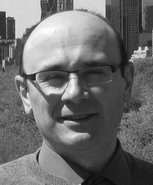 Raffaele Colombelli合作论文数Department of Photonics, Centre de Nanosciences et Nanotechnologies - CNRS;Université Paris Saclay4
 Luca Persichetti合作论文数Dipartimento Di Fisica, Università Degli Studi Di Roma Tor Vergata4
 Stefan Birner合作论文数Schottky Institut, Walter;Technische Universitat Munchen;Walter Schottky Institut, Technische Universitat Munchen4
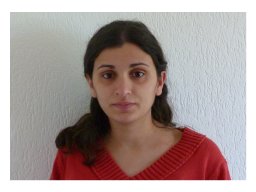 Maria I Amanti合作论文数Institute of Quantum Electronics4Claudia Bock合作论文数4Michele Virgilio合作论文数Dipartimento di Fisica;Universita di Pisa;Dipartimento di Fisica, Universita di Pisa4




