The present study is based on two observations: the presence of a type of Minoan vessel at Phaistos and Agia Triada, and the elephant tusks found in the storeroom of the Palace of Zakros, three sites in Crete. The examination of these objects allowed us to develop two hypotheses. The first concerns the cups called "grater", which include inside an element that served as rasp. The shape and surface of the rasp are surprisingly reminiscent of the outline and the design of the masticatory surface of elephant molars. This led us to revisit the fossil elephants of this island and to look for the degree of similarity between the elephant molars and the design of some rasps from Phaistos and Agia Triada, dating from c. 1800-1700 BC. The second hypothesis relates to the provenance of elephant ivory, used in Crete from c. 1600 BC to manufacture many precious objects (seals, plaques, figurines, statuettes, etc.), based on the raw elephant tusks found in a storeroom at Zakros, and dated to 1500-1450 BC. The morphological comparison of these tusks with those of fossil elephants from Crete and the extant species from Asia and Africa, as well as the examination of palaeontological, archaeological, iconographic and epigraphic data, allow us to suggest the attribution of the tusks of Zakros to Ele phas maximus Linnaeus, 1758 which lived in the Levant until around 1200 BC. This affinity would deserve to be supported by microstructural and isotopic analyses.
Prolagus michauxi López-Martínez, 1975 (Prolagidae, Lagomorpha) is one of the best known and most widespread species of its genus. It was described from Sète, a karst filling located in southern France that has yielded a rich fauna of micromammals. Its age is estimated between 3.5–3.0 Ma. This study provides as complete as possible a picture of the cranial and dental morphology by the analysis of the characters and their variation. Usually, the cranial and postcranial material is poorly represented in the fossil record, and thus little studied. Abundance of cranial and dental remains in Sète is an exception and allows for a better characterisation of P. michauxi. Detailed comparisons with contemporary species show its great resemblances with P. sorbinii Masini, 1989 from Italy with regard to dental features, but it differs by the characters of the cranium and the mandible. It is well known that the Alpine uplift and the progressive aridification of the Mediterranean region since the terminal Miocene (Messinian) have led to the fragmentation of habitats and, as far as the genus Prolagus is concerned, to the occurrence of numerous speciations. To adapt to these new conditions, some Mio-Pliocene species of Prolagus, in particular P. michauxi, have developed an enlarged premolar foramen next to upper cheek teeth and numerous foramina on the hard palate that allow for better thermoregulation. The fragmentation of habitats may also explain a great variation in dental morphologies in various Pliocene species whose geographical range extends from Portugal to Ukraine and Asia Minor, and also to North Africa. Indeed, P. michauxi is abundantly represented in the Iberian Peninsula and the Maghreb. Also, it was reported from several sites in Greece and Asia Minor, but the material is scarce, which makes the identifications uncertain.
This work describes and interprets fossil lagomorphs from seven sites in the Maghreb the ages of which range from the Miocene/Pliocene boundary to the Upper Pleistocene. Some of these sites, such as the Thomas Quarries in Morocco and Tighennif (=Ternifine) in Algeria, are well known for the discovery of fossil humans and their artefacts. The lagomorphs studied herein belong to two families, Prolagidae and Leporidae. The genus Prolagus has been recorded in the Maghreb since the latest Miocene, c. 6.2-6.5 Ma, and its last known representatives in Africa occur at Tighennif and Djebel Ressas 5 and 6 (Tunisia) the ages of which are estimated to be between 1.0 and 1.4 Ma. In other words, this genus, which is well known in Europe since the Early Miocene, crossed the Rifian Corridor during the Messinian crisis, and became extinct in the Maghreb earlier than in southwestern Europe where it survived until historical times. Its oldest representatives in the Maghreb known from the sites of Afoud and Lissasfa (latest Miocene-Early Pliocene) are related to P. michauxi, a species that is well represented in the latest Miocene and Early Pliocene localities in southern Europe. In the Early Pleistocene of Djebel Ressas 1 (Tunisia), it is represented by a new small species, Prolagus ressasensis n. sp. Prolagus is known in Europe as an inhabitant of wooded and humid environments. But in the terminal Miocene and Plio-Pleistocene this genus was confined more particularly to the Mediterranean rim, probably as an inhabitant of open woodland, temperate regions and certainly more open than the humid and wooded environments of the Early and Middle Miocene of Europe. The Leporidae appear in the Maghreb sites around the same time as Prolagus, but in the earlier sites (Afoud and Lissasfa), they are rare and therefore their identification is imprecise (Leporidae indet. at Afoud, Trischizolagus sp. at Lissasfa). In contrast, they are abundant in terminal Pliocene and Pleistocene sites. The genus Trischizolagus, that is well documented at Ahl al Oughlam (c. 2.5-3.0 Ma) by T. meridionalis Sen and Geraads, 2023, is even more abundant in the deposits of the Casablanca region (Grotte des Rhinocéros, Thomas IL, Thomas I-GH) and in Tighennif in Algeria where it is represented by T. raynali (Geraads, 1994). The last known representatives of this genus, collected from Grotte des Rhinocéros, occur alongside the first known representatives of the genus Lepus, described here as Lepus berbericus n. sp. In the Late Pleistocene site of Thomas I, a form of Lepus similar to L. capensis is represented by numerous mandible fragments. But the systematics of this species are the subject of debate, with no consensus as to whether it is a species occurring over a wide range from South Africa to the Middle East and North Africa or whether it comprises several species of which the morphological and / or genetic features are poorly defined. The genus Trischizolagus is well known in Europe and Anatolia with several species described between 6.5 and 3.5 Ma, while it survived in the Maghreb until the Middle Pleistocene, c. 0.5 Ma. It was probably replaced by the first hares of the Maghreb, described here as L. berbericus n. sp. The extant species Lepus capensis inhabits territories with open grassland and bushland habitats. The introduction of the rabbit Oryctolagus cuniculus to the Maghreb occurred later, probably in the Late Pleistocene by prehistoric men for food.
New surveys in August-September 2022 in the upper Zarqa Valley have increased the number of stratified archaeological sites from Early and Middle Pleistocene colluvial/alluvial units. The main results are: 1) the extension of the archaeological-bearing Dawqara Formation (Early Pleistocene) to the northern margin of the Zarqa Governorate, with the recovery of new artefacts, 2) the discovery of rodent teeth remains in an archaeological outcrop of Dawqara Formation 3) the discovery of three new stratified middle Acheulean sites, with minimal disturbance and favourable conditions for future excavations. Within the Dawqara and Birayn Formations the occurrence of several palaeosols indicates recurrent pedogenic phases in the Zarqa Valley and provided new material for palaeoenvironmental characterization of the archaeological sites. Conservation requirements and threats to the sites are also discussed with regard to the whole archaeological heritage of the oldest prehistory of Levant.
AbstractThe NOW database of fossil mammals came to be through a confluence of several initiatives spanning multiple decades. The first public version of NOW database was released in 1996 and the first Advisory Board was established the year after. Originally, NOW stood for Neogene of the Old World but with the gradual expansion of the database the acronym was eventually reassigned to stand for New and Old Worlds. The structure of what would become NOW was originally cloned from the ETE database of the Smithsonian Institution and the first NOW version accessible over the internet was a node of the ETE database. The first standalone, online version of NOW was launched in 2005 and the first formal steering group was established in 2009. During its existence, NOW has been funded, directly or indirectly, by several organizations but fundamentally it has always been an unfunded community effort, dependent on voluntary work by the participants.
The exceptionally rich vertebrate locality of Ahl al Oughlam near Casablanca (Morocco) yielded abundant remains of Lagomorpha, composed of cranial and postcranial bones and many isolated teeth. They represent a new species of Prolagidae, Prolagus migrans n. sp., and two new Leporidae, Trischizolagus meridionalis n. sp. and Afrolagus pomeli n. g., n. sp. The main characters of the new Prolagus species are the large and anteriorly curved mesial hyperloph on P2, the lack of crochet, and the protoconulid isolated in most p3s. Trischizolagus meridionalis n. sp. is smaller than the common European species T. dumitrescuae , and differs in having in most p3 a massive outlined trigonid, mesofossetid and paraflexid. The second leporid Afrolagus pomeli n. g., n. sp. displays a unique p3 pattern not seen in the Old World leporids with the hypoflexid penetrating more than two thirds of the total width; it is probably formed by the fusion of hypoflexid and mesofosssetid, but leaves a wide lingual connection between the trigonid and talonid. Its upper molariform teeth have strongly wrinkled enamel along the edges of the hypoflexus. Despite these differences, it also shares several dental features with both the African genus Serengetilagus and the European genus Oryctolagus , to which it is compared. Prolagus and Trichizolagus are both well-known European genera. Their occurrence in the Plio-Pleistocene of Morocco is certainly due to a dispersal event thanks to terrestrial connection between the Iberian Peninsula and the Moghreb. In the light of recent faunal, biogeographic and chronological data, the beginning of mammalian exchanges in both directions dates from about 6.2 Ma. The locality of Ahl al Oughlam, although much younger, with an age estimated to 3.0-2.5 Ma, retains taxa resulting from this dispersal event, including the lagomorphs described here.
RÉSUMÉ Dans les muséums d'histoire naturelle et autres institutions à vocation de conservation, les collections de fossiles sont les trésors des paléontologues. Elles sont les conservatoires du monde vivant des temps géologiques. Il importe aux paléontologues de connaître l'histoire des collections qu'ils consultent pour diverses raisons, que ce soit pour comparer les nouvelles découvertes avec les fossiles déjà connus ou pour réviser la systématique d'un groupe d'organismes ou d'une lignée évolutive. Dans cet article nous nous sommes intéressés à l'histoire de certaines collections de mammifères fossiles conservées dans les Muséums d'Histoire naturelle de Paris, de Bâle, ainsi qu'à l'Université Claude Bernard et au Muséum de Lyon. Derrière ces collections il y a un paysan d'Auvergne, Pierre Philis que Pierre Teilhard de Chardin a qualifié de « fossil hunter » dans une lettre adressée au Professeur Marcellin Boule en 1921, quand celui-ci l'a mandaté pour le rencontrer. P. Philis, né en 1880 dans le hameau de Senèze, commune de Domeyrat en Haute-Loire, a extrait du sous-sol de ses terres, mais aussi d'autres sites un peu partout en France, d'innombrables mammifères fossiles qui font aujourd'hui la richesse de ces musées et autres institutions. C'est probablement en voyant deux savants de Paris (M. Boule et A. Gaudry), accompagnés de notables de la région, venir en 1892 déterrer d'énormes ossements d'un mammouth dans un champ de son village qu'il a dû se passionner pour la recherche d'animaux fossiles. Dès le début des années 1900, il consacre tout son temps libre à la recherche de fossiles dans ses champs à Senèze et propose de vendre le fruit de ses récoltes à des paléontologues de divers pays d'Europe. Dès lors commence une correspondance fournie entre Philis et ses interlocuteurs, en particulier les paléontologues les plus connus de la première moitié du siècle: M. Boule et P. Teilhard de Chardin à Paris; C. Depéret, C. Gaillard, F. Roman et L. Mayet à Lyon; H. G. Stehlin, S. Schaub et H. Helbing à Bâle, pour ne citer que les plus célèbres. Durant 35 ans, de 1907 jusqu'à sa mort en 1942, P. Philis a entretenu une relation riche, qui va bien au-delà de simples rapports entre collecteur et acheteurs. Nous avons eu accès à 1300 lettres et cartes postales et à une quarantaine de documents de nature diverse, totalement inédits, conservés dans des archives familiales ou institutionnelles. Les collections du Muséum de Paris, du Musée des Confluences et de l'Université Claude Bernard à Lyon, et du Naturhistoriche Museum à Bâle, conservent plusieurs milliers de spécimens de mammifères fossiles récoltés par P. Philis à Senèze, mais aussi de nombreux autres gisements des départements de la Haute-Loire, du Puy-de Dôme, du Gard et du Vaucluse. Ces collections comportent de nombreux squelettes complets, dont certains sont toujours présentés dans les salles d'exposition permanente de ces musées. Pierre Philis a aussi loué ses services et son savoir de fouilleur et de prospecteur à ses interlocuteurs pour aller prospecter et fouiller là où ses commanditaires l'envoyaient: Chilhac, Soleilhac, Sainzelles, Vialette, Ronzon (Haute-Loire), Les Étouaires, Rocca-Neyra, Mont-Doury, Chambezon (Puy-de-Dôme), Euzet-les-Bains, Souvignargues (Gard), Murs (Vaucluse), etc. La recherche d'hommes fossiles et surtout de « l'Homme tertiaire» était alors dans tous les esprits. Pierre Philis y a participé en découvrant un crâne de Paradolichopithecus à Senèze, en effectuant des tranchées de sondage à La Denise (Haute-Loire). Il a aussi été intermédiaire entre les collectionneurs amateurs et les grands musées pour l'acquisition de collections. Mais la vente des fossiles aux plus offrants et l'exportation de ce patrimoine hors de la région et à l'étranger n'étaient pas appréciés de tous. Certains n'ont pas hésité à le critiquer dans leurs écrits ou à le dénoncer auprès des autorités. Dans les années 1910, plusieurs projets de loi portant sur la réglementation des fouilles préhistoriques et paléontologiques, sur le commerce de fossiles et d'objets archéologiques et leur exportation à l'étranger ont fait réagir C. Depéret et trembler les paléontologues bâlois. Mais ces projets de loi n'ont pas abouti à une réglementation et jusqu'à la fin de sa vie, P. Philis a extrait et vendu des tonnes de fossiles de vertébrés à ses correspondants. Philis faisait-il ce travail uniquement pour gagner de l'argent afin de compléter ses revenus agricoles par la vente de fossiles et/ou en louant ses services ? Certainement pas. Par cette activité il a eu la reconnaissance de grands savants de l'époque qui lui ont dédié de nouvelles espèces. II a été nommé Officier d'Académie et a reçu les honneurs de la République. Par delà, il a assouvi une réelle passion pour la paléontologie des mammifères. Ce sont ces aspects, et bien d'autres, que nous avons essayé de développer dans ce travail. Nous avons suivi les traces de Philis partout où il est allé à la recherche de fossiles. En lisant ses correspondances avec les paléontologues, nous avons tenté de mettre en lumière la concurrence des laboratoires de Paris, Lyon et Bâle, en tenant compte du contexte scientifique de la première moitié du siècle. Pierre Philis, ce paysan de la Haute-Loire, a été en fait un grand acteur de son temps pour la paléontologie des mammifères et pour les collections de plusieurs institutions.
In natural history museums and other institutions, fossil collections are the treasures of paleontologists. They are the conservatories of the living world of geological times. It is important for paleontologists to know the history of the collections they consult for various reasons, whether to compare new discoveries with already known fossils or to review the systematics of a group of organisms or a lineage. In the present study we are interested in the history of certain collections of fossil mammals at the natural history museums of Paris, Lyon and Basel, as well as at the University Claude Bernard-Lyon I. Behind these collections is a peasant from Auvergne, Pierre Philis, whom Pierre Teilhard de Chardin called "fossil hunter" in a letter addressed to Professor Marcellin Boule in 1921, when he was commissioned by Boule to meet him. P Philis was born in 1880 at the hamlet of Seneze, commune of Domeyrat in Haute-Loire. He has extracted from the subsoil of his land, but also from other sites in several other regions of France, countless fossil mammals that make today the richness of these museums and other institutions. It was probably when he saw two scholars from Paris (M. Boule and A. Gaudry), accompanied by local notables, coming in 1892 to dig up huge bones of a mammoth in a field of his village that he must have get passionate about finding fossil animals. From the beginning of the 1900s, he devoted all his free time to undertake excavations on his lands at Seneze and offered to sell the fruit of his record to paleontologists from various European countries. From then on, a continuous correspondence started between P. Philis and his interlocutors, in particular with the most famous paleontologists of the first half of the 20th century: M. Boule and P. Teilhard de Chardin in Paris; C. Deperet, C. Gaillard, F. Roman and L. Mayet in Lyon; H. G. Stehlin, S. Schaub and H. Helbing in Basel. For 35 years, from 1907 until his death in 1942, P. Philis had a rich exchange that went far beyond the simple relations between collector and buyers. We had access to 1,300 letters and postcards and about forty documents of various kinds, totally unpublished, kept in family or institutional archives. The collections of the Paris Museum, the Musee des Confluences and the University Claude Bernard in Lyon and the Naturhistoriche Museum in Basel keep several thousand specimens of fossil mammals collected by P. Philis at Seneze but also in many other localities in the departments of Haute-Loire, Puy-de Dome, Gard and Vaucluse. These collections include many complete skeletons, some of which are still on display in the permanent exhibition halls of these museums. P. Philis also praised his services and his digging knowledge to his interlocutors, to go prospecting and digging where his sponsors sent him: Chilhac, Soleilhac, Sainzelles, Vialette, Ronzon (Haute-Loire), Les Etouaires, Rocca-Neyra, Mont-Doury, Chambezon (Puy-de-Mme), Euzet-les-Bains, Souvignargues (Gard), Murs (Vaucluse), etc. The search for human fossils and especially of "Tertiary Man" was in everyone's mind at the time. P. Philis participated by discovering a skull of Paradolichopithecus at Seneze, by digging trenches at La Denise (Haute-Loire). He was also an intermediary between amateur collectors and major museums for the acquisition of collections. But the sale of fossils to the highest bidders and the export of this heritage outside the region and abroad were not appreciated by all. Some have not hesitated to criticize him in their writings or to denounce his activity to the authorities. In the 1910s, several law projects related to the regulation of prehistoric and paleontological excavations and in particular to the trade of fossils and archaeological objects and their export abroad reacted C. Deperet and trembled the Basel paleontologists. But these law projects did not result in any regulation of the excavations, and until the end of his life, P. Philis excavated and sold tons of vertebrate fossils to his correspondents. Did Philis search only to earn money to supplement his farm income by selling fossils and/or by hiring his services for excavation? Certainly not. By digging for fossils, he had the recognition of great scholars of his time who dedicated new species to him. He was appointed Academy Officer and received the honors of the Republic. Beyond that, he satiated a real passion for the paleontology of mammals. It is these and many other aspects that we have tried to develop in this work. We followed Philis' footsteps wherever he went to look for fossils, and through his correspondence the evolution of his knowledge and his passion for the paleontology of fossil mammals. We have read his correspondence with paleontologists, tried to highlight the competition between laboratories in Paris, Lyon and Basel, taking into account the scientific context of the first half of the 20th century. P. Philis, this peasant from Haute-Loire, was in fact a great actor of his time for the paleontology of mammals and the father of many collections in several institutions.
The Ereğli‐Ulukışla Basin which is the focus of this study is situated at the south‐eastern edge of the Central Anatolian Cenozoic basins (Tuzgölü, Haymana, Çankırı‐Çorum, and Sivas), and is divided into two sub‐basins, the Aktoprak (AT) and Hacıbekirli‐Tepeköy (HT). These sub‐basins mainly comprise a stratigraphically discontinuous and laterally variable series, represented by ‘fluvio‐lacustrine’ siliciclastic and carbonate sediments deposited over a wide range of environments, including meandering and braided rivers, coastal fluvial and fan deltas, mixed carbonate‐siliciclastic shores, dry lake flats, and coal‐bearing swamps. In the Ereğli‐Ulukışla Basin, higher palaeotopographic conditions existed in the AT because of the uplift of the Central Anatolian Plateau during late Middle Miocene (Serravallian)‐early Late Miocene (Tortonian) and the subsequent uplift of the Taurus Mountains in the latest Miocene (Messinian) as deduced in the Tepeköy region (northeast) of the HT sub‐basin. Diversity and abundance of archaic pollen (Normapolles) in the pollen biostratigraphy decreased from the Eocene to Oligocene, while forms with advanced angiosperm morphology (post‐Normapolles), were observed with the increase in post‐Normapolles during the Miocene. The dominance of woody angiosperms in the pollen assemblages, and increasing variety and abundance of ‘open herbs’ and shrub pollen from the Early Miocene to Late Miocene defines an important change in flora. Furthermore, the palaeoclimatic conditions changed from humid‐subtropical to warm‐temperate during the sediment deposition in the Ereğli‐Ulukışla Basin. Recurrent arid phases during the Late Miocene are indicated by the deposition of reddish caliche conglomerates in broad dry lake flats (HT), and evaporites in local playa lakes (AT), respectively.
La Reserve Naturelle Regionale Geologique (RNRG) de Pontlevoy inauguree en 2018 comprend deux anciennes carrieres (carriere du Four a Chaux et carriere du Haut de la Plaine Saint-Gilles). On peut y observer en superposition stratigraphique les principales formations miocenes du secteur situe entre Loire et Cher au sud de Blois : Calcaire de Beauce de l’Aquitanien, Sables et marnes du Blesois du Burdigalien et Faluns du Blesois du Langhien, les deux dernieres etant fossiliferes. Apres une breve synthese sur les formations miocenes de la region, sont presentees ici des donnees sedimentologiques sur les formations visibles dans la RNRG et les resultats de nouvelles fouilles paleontologiques dans les Sables et marnes du Blesois de la reserve. La prospection geophysique par conductivite electrique, ainsi que les sondages et forages carottes effectues entre les deux carrieres avant l’amenagement de la reserve, ont revele (1) la presence d’une nouvelle formation fluviatile comblant un profond chenal incise dans le falun langhien ; cette formation peut etre rapportee au Serravallien ou au Miocene superieur et (2) la presence d’une faille a regard est et decrochement senestre affectant l’ensemble des formations miocenes.
The vertebrate locality of Dorkovo yielded a rich mammalian assemblage of which some large mammals have been studied, but not smaller mammals. The previous investigations correlated this fauna to the early Pliocene (early Ruscinian, MN 14). The present paper describes lagomorph remains which consist of one fragment of mandible and 106 isolated teeth. Four species are identified: Ochotona cf. antiqua, Prolagus sorbinii, Alilepus spassovi n. sp. and Trischizolagus crusafonti. The new species is characterised by the derived pattern of its p3 which has trigonid more stretched, enamel infolding stronger than in any other species of Alilepus, and the p3 lacks anteroflexid. The presence of four species of lagomorphs at Dorkovo is in agreement with the diversity dynamics of lagomorphs toward the end of late Miocene and during the early Pliocene in Eurasia, and in particular in Eastern Europe. The time range of the Dorkovo lagomorphs encompasses the Miocene/Pliocene boundary, and this is in agreement with the previous age assignments, i.e., earliest Pliocene, or early part of MN 14 mammalian zone.
The primary aim of this study was to establish for the very first time the results on the rodent fauna gathered from the ongoing Neolithic excavations at the Tepecik-ciftlik site in southern Cappadocia (Nigde, Turkey). So far, the fauna being study is represented by species of arvicolines (Microtus cf. arvalis and Arvicola cf. amphibius), murines (Mus cf. musculus), sousliks (Spermophilus xanthoprymnus), hamsters (Mesocricetus brandti) and molerats (Spalax xanthodon), and their remains are described in detail. Paleoenvironmental assumption based on common preferences of the fauna elements indicates, at first sight, a rather dry steppe environment with sparse plant cover or perennial short grasses. On the other hand, the presence of Arvicola cf. amphibius points out streams and marsh-like vegetation cover with bodies of water . The predation or burn marks observed on some specimens and the presence of subterraneous rodents raise questions concerning their taphonomy.
The Suluova Basin is a prominent member of the wide transtensional Amasya Shear Zone located at the central part of the North Anatolian Shear Zone. This basin is crucial and provides well-resolved data to understand the evolution of transtensional tectonic zones as well as the morphological and paleoenvironmental changes of North Anatolia during the Quaternary. Analysis of detailed stratigraphical sections, faulting data, and mammal paleontology reveals that the Suluova Basin has started to evolve as a closed half-graben along the NW–SE-trending, SW-dipping basin bounding fault zone with normal slip in the early Quaternary. Initial sedimentation mode of the basin was dominated by alluvial fan facies associations. Progressive basin subsidence resulted in an expansion of a freshwater lake at the basin depocenter as faults propagated westwards. Further extensions in the basin were caused to initiate the E–W-trending southern tectonic boundary. Newly created accommodation space hosted a vast freshwater lake during the Calabrian (∼1.8–0.78 Ma) acting as a refugia for a rich faunal assemblage of large and small land mammals. The conditions prior to the onset of Middle Pleistocene (MIS19, ∼0.79 Ma) is marked with increasing regional erosion where paleo-Lake Suluova was captured by the regional river system. Synchronously, the next phase of the shear zone formation was introduced with E–W-trending dextral and NE–SW-trending sinistral strike-slip faults, cross-cutting the former basin structure, forming new depocenters. These faults are still active with noticeable seismic activity and comprise future risks for the major cities of the region.
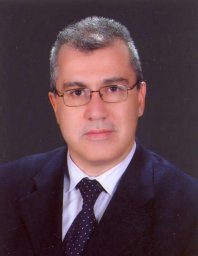 Levent Karadenizli合作论文数Faculty of Sciences, Ankara University24
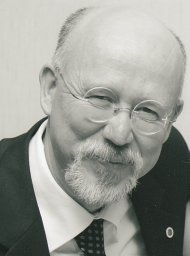 Gurol Seyitoglu合作论文数Faculty of Science, Ankara University19
 H Thomas合作论文数13Emmanuel Gheerbrant合作论文数Laboratoire de Paléontologie des Vertébrés (case 106),, Université Paris 613
 Gregoire Metais合作论文数Section of Vertebrate Paleontology, Carnegie Museum of Natural History12George D. Koufos合作论文数Laboratory of Geology and Palaeontology, Aristotle University of Thessaloniki11N Kazanci合作论文数10Gerçek Saraç合作论文数10
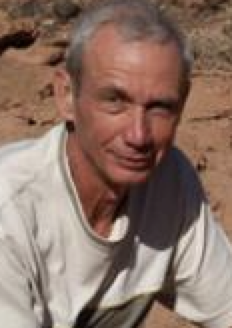 Denis Geraads合作论文数Centre De Recherche En Paleontologie;Department of Human Evolution, Max Planck Institute For Evolutionary Anthropology;Sorbonne Universite;Centre National De la Recherche Scientifique10
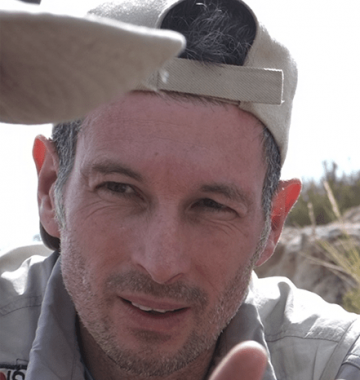 Pierre Olivier Antoine合作论文数Institut des Sciences de l’Evolution Montpellier, Universite de Montpellier10Nizamettin Kazanci合作论文数Faculty of Sciences, Ankara University10Z Alsulaimani合作论文数9
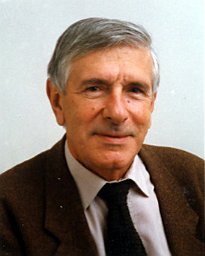 Louis De Bonis合作论文数Laboratoire de Paléontologie des Vertébrés, Université de Paris VI9Raymond L. Bernor合作论文数8
 Mikael Fortelius合作论文数Department of Geosciences and Geography, University of Helsinki8
 Jean Jacques Jaeger合作论文数French National Centre for Scientific Research, University of Poitiers8Jack Roger合作论文数8E HEINTZ合作论文数7John W. Kappelman合作论文数7
 Michel Brunet合作论文数Universite de Poitiers;College de France7
 Raquel López-Antoñanzas合作论文数Departamento de Paleobiología, Museo nacional de Ciencias naturales–CSIC7Martine Faure合作论文数7
 Baki Varol合作论文数7
 Ozan Erdal合作论文数Eurasia Inst Earth Sci, Istanbul Tech Univ6
 M. Cihat Alcicek合作论文数Department of Geological Engineering, Pamukkale University6G Sarac合作论文数5L DEBONIS合作论文数5
 Koray Sozeri合作论文数5
 Mehmet Ozkul合作论文数Department of Geological Engineering, Pamukkale University5
 H. Nüzhet Dalfes合作论文数Eurasia Institute of Earth Sciences, Istanbul Technical University5Juha Pekka Lunkka合作论文数Department of Geosciences, University of Oulu5
 Stuart Gilder合作论文数5
 Martin Pickford合作论文数Departement Histoire de la Terre, Museum National d'Histoire;College de France5H Araz合作论文数4MA RAHMANI合作论文数4Jy Crochet合作论文数4L Ginsburg合作论文数4Jm Mazin合作论文数4
 Jean-Philippe Avouac合作论文数Department of Mechanical and Civil Engineering, Division of Engineering and Applied Science, California Institute of Technology;Center for Geomechanics and Mitigation of Geohazards, California Institute of Technology;Center for Autonomous Systems and Technologies, California Institute of Technology4
 Oyal Neşe合作论文数4Yan Chen合作论文数4
 Stephane Dominguez合作论文数Laboratoire Dynamique de la Lithosphére;UMR CNRS/UMII 5573, Bâtiment 22 (cc. 60) Place Bataillon, 34095 Montpellier Cedex, France;Laboratoire Dynamique de la Lithosphére; UMR CNRS/UMII 5573, Bâtiment 22 (cc. 60) Place Bataillon, 34095 Montpellier Cedex, France4
 Margarita A. Erbajeva合作论文数4
 Dimitris S. Kostopoulos合作论文数School of Geology, Aristotle University of Thessaloniki4
 Julien Charreau合作论文数Institut des Sciences de la Terre d'Orleans4
 Lars Werdelin合作论文数Department of Palaeobiology, Naturhistoriska Riksmuseet4Claude Guérin合作论文数4Emile Heintz合作论文数4




