The Universal Morphology (UniMorph) project is a collaborative effort providing broad-coverage instantiated normalized morphological inflection tables for hundreds of diverse world languages. The project comprises two major thrusts: a language-independent feature schema for rich morphological annotation and a type-level resource of annotated data in diverse languages realizing that schema. This paper presents the expansions and improvements made on several fronts over the last couple of years (since McCarthy et al. (2020)). Collaborative efforts by numerous linguists have added 67 new languages, including 30 endangered languages. We have implemented several improvements to the extraction pipeline to tackle some issues, e.g. missing gender and macron information. We have also amended the schema to use a hierarchical structure that is needed for morphological phenomena like multiple-argument agreement and case stacking, while adding some missing morphological features to make the schema more inclusive. In light of the last UniMorph release, we also augmented the database with morpheme segmentation for 16 languages. Lastly, this new release makes a push towards inclusion of derivational morphology in UniMorph by enriching the data and annotation schema with instances representing derivational processes from MorphyNet.
While improving neural dialogue agents' factual accuracy is the object of much research, another important aspect of communication, less studied in the setting of neural dialogue, is transparency about ignorance. In this work, we analyze to what extent state-of-the-art chit-chat models are linguistically calibrated in the sense that their verbalized expression of doubt (or confidence) matches the likelihood that the model's responses are factually incorrect (or correct). We find that these models are poorly calibrated, yet we show that likelihood of correctness can accurately be predicted. By incorporating such metacognitive features into the training of a controllable generation model, we obtain a dialogue agent with greatly improved linguistic calibration. While improving neural dialogue agents' factual accuracy is the object of much research, another important aspect of communication, less studied in the setting of neural dialogue, is transparency about ignorance. In this work, we analyze to what extent state-of-the-art chit-chat models are linguistically calibrated in the sense that their verbalized expression of doubt (or confidence) matches the likelihood that the model's responses are factually incorrect (or correct). We find that these models are poorly calibrated, yet we show that likelihood of correctness can accurately be predicted. By incorporating such metacognitive features into the training of a controllable generation model, we obtain a dialogue agent with greatly improved linguistic calibration.
Large language models (LLMs) have been shown to be able to perform new tasks based on a few demonstrations or natural language instructions. While these capabilities have led to widespread adoption, most LLMs are developed by resource-rich organizations and are frequently kept from the public. As a step towards democratizing this powerful technology, we present BLOOM, a 176B-parameter open-access language model designed and built thanks to a collaboration of hundreds of researchers. BLOOM is a decoder-only Transformer language model that was trained on the ROOTS corpus, a dataset comprising hundreds of sources in 46 natural and 13 programming languages (59 in total). We find that BLOOM achieves competitive performance on a wide variety of benchmarks, with stronger results after undergoing multitask prompted finetuning. To facilitate future research and applications using LLMs, we publicly release our models and code under the Responsible AI License.
Tiago Pimentel, Maria Ryskina, Sabrina J. Mielke, Shijie Wu, Eleanor Chodroff, Brian Leonard, Garrett Nicolai, Yustinus Ghanggo Ate, Salam Khalifa, Nizar Habash, Charbel El-Khaissi, Omer Goldman, Michael Gasser, William Lane, Matt Coler, Arturo Oncevay, Jaime Rafael Montoya Samame, Gema Celeste Silva Villegas, Adam Ek, Jean-Philippe Bernardy, Andrey Shcherbakov, Aziyana Bayyr-ool, Karina Sheifer, Sofya Ganieva, Matvey Plugaryov, Elena Klyachko, Ali Salehi, Andrew Krizhanovsky, Natalia Krizhanovsky, Clara Vania, Sardana Ivanova, Aelita Salchak, Christopher Straughn, Zoey Liu, Jonathan North Washington, Duygu Ataman, Witold Kieraś, Marcin Woliński, Totok Suhardijanto, Niklas Stoehr, Zahroh Nuriah, Shyam Ratan, Francis M. Tyers, Edoardo M. Ponti, Grant Aiton, Richard J. Hatcher, Emily Prud'hommeaux, Ritesh Kumar, Mans Hulden, Botond Barta, Dorina Lakatos, Gábor Szolnok, Judit Ács, Mohit Raj, David Yarowsky, Ryan Cotterell, Ben Ambridge, Ekaterina Vylomova. Proceedings of the 18th SIGMORPHON Workshop on Computational Research in Phonetics, Phonology, and Morphology. 2021.
While language identification is a fundamental speech and language processing task, for many languages and language families it remains a challenging task. For many low-resource and endangered languages this is in part due to resource availability: where larger datasets exist, they may be single-speaker or have different domains than desired application scenarios, demanding a need for domain and speaker-invariant language identification systems. This year's shared task on robust spoken language identification sought to investigate just this scenario: systems were to be trained on largely single-speaker speech from one domain, but evaluated on data in other domains recorded from speakers under different recording circumstances, mimicking realistic low-resource scenarios. We see that domain and speaker mismatch proves very challenging for current methods which can perform above 95% accuracy in-domain, which domain adaptation can address to some degree, but that these conditions merit further investigation to make spoken language identification accessible in many scenarios.
What are the units of text that we want to model? From bytes to multi-word expressions, text can be analyzed and generated at many granularities. Until recently, most natural language processing (NLP) models operated over words, treating those as discrete and atomic tokens, but starting with byte-pair encoding (BPE), subword-based approaches have become dominant in many areas, enabling small vocabularies while still allowing for fast inference. Is the end of the road character-level model or byte-level processing? In this survey, we connect several lines of work from the pre-neural and neural era, by showing how hybrid approaches of words and characters as well as subword-based approaches based on learned segmentation have been proposed and evaluated. We conclude that there is and likely will never be a silver bullet singular solution for all applications and that thinking seriously about tokenization remains important for many applications.
Open-domain dialogue agents have vastly improved, but still confidently hallucinate knowledge or express doubt when asked straightforward questions. In this work, we analyze whether state-of-the-art chit-chat models can express metacognition capabilities through their responses: does a verbalized expression of doubt (or confidence) match the likelihood that the model's answer is incorrect (or correct)? We find that these models are poorly calibrated in this sense, yet we show that the representations within the models can be used to accurately predict likelihood of correctness. By incorporating these correctness predictions into the training of a controllable generation model, we obtain a dialogue agent with greatly improved linguistic calibration.
Typological knowledge bases (KBs) such as WALS (Dryer and Haspelmath, 2013) contain information about linguistic properties of the world's languages. They have been shown to be useful for downstream applications, including cross-lingual transfer learning and linguistic probing. A major drawback hampering broader adoption of typological KBs is that they are sparsely populated, in the sense that most languages only have annotations for some features, and skewed, in that few features have wide coverage. As typological features often correlate with one another, it is possible to predict them and thus automatically populate typological KBs, which is also the focus of this shared task. Overall, the task attracted 8 submissions from 5 teams, out of which the most successful methods make use of such feature correlations. However, our error analysis reveals that even the strongest submitted systems struggle with predicting feature values for languages where few features are known.
The Universal Morphology (UniMorph) project is a collaborative effort providing broad-coverage instantiated normalized morphological paradigms for hundreds of diverse world languages. The project comprises two major thrusts: a language-independent feature schema for rich morphological annotation and a type-level resource of annotated data in diverse languages realizing that schema. We have implemented several improvements to the extraction pipeline which creates most of our data, so that it is both more complete and more correct. We have added 66 new languages, as well as new parts of speech for 12 languages. We have also amended the schema in several ways. Finally, we present three new community tools: two to validate data for resource creators, and one to make morphological data available from the command line. UniMorph is based at the Center for Language and Speech Processing (CLSP) at Johns Hopkins University in Baltimore, Maryland. This paper details advances made to the schema, tooling, and dissemination of project resources since the UniMorph 2.0 release described at LREC 2018.
This paper describes the Dakshina dataset, a new resource consisting of text in both the Latin and native scripts for 12 South Asian languages. The dataset includes, for each language: 1) native script Wikipedia text; 2) a romanization lexicon; and 3) full sentence parallel data in both a native script of the language and the basic Latin alphabet. We document the methods used for preparation and selection of the Wikipedia text in each language; collection of attested romanizations for sampled lexicons; and manual romanization of held-out sentences from the native script collections. We additionally provide baseline results on several tasks made possible by the dataset, including single word transliteration, full sentence transliteration, and language modeling of native script and romanized text.
Topic models are a useful analysis tool to uncover the underlying themes within document collections. The dominant approach is to use probabilistic topic models that posit a generative story, but in this paper we propose an alternative way to obtain topics: clustering pre-trained word embeddings while incorporating document information for weighted clustering and reranking top words. We provide benchmarks for the combination of different word embeddings and clustering algorithms, and analyse their performance under dimensionality reduction with PCA. The best performing combination for our approach performs as well as classical topic models, but with lower runtime and computational complexity.
A broad goal in natural language processing (NLP) is to develop a system that has the capacity to process any natural language. Most systems, however, are developed using data from just one language such as English. The SIGMORPHON 2020 shared task on morphological reinflection aims to investigate systems' ability to generalize across typologically distinct languages, many of which are low resource. Systems were developed using data from 45 languages and just 5 language families, fine-tuned with data from an additional 45 languages and 10 language families (13 in total), and evaluated on all 90 languages. A total of 22 systems (19 neural) from 10 teams were submitted to the task. All four winning systems were neural (two monolingual transformers and two massively multilingual RNN-based models with gated attention). Most teams demonstrate utility of data hallucination and augmentation, ensembles, and multilingual training for low-resource languages. Nonneural learners and manually designed grammars showed competitive and even superior performance on some languages (such as Ingrian, Tajik, Tagalog, Zarma, Lingala), especially with very limited data. Some language families (Afro-Asiatic, Niger-Congo, Turkic) were relatively easy for most systems and achieved over 90% mean accuracy while others were more challenging.
The performance of neural machine translation systems is commonly evaluated in terms of BLEU. However, due to its reliance on target language properties and generation, the BLEU metric does not allow an assessment of which translation directions are more difficult to model. In this paper, we propose cross-mutual information (XMI): an asymmetric information-theoretic metric of machine translation difficulty that exploits the probabilistic nature of most neural machine translation models. XMI allows us to better evaluate the difficulty of translating text into the target language while controlling for the difficulty of the target-side generation component independent of the translation task. We then present the first systematic and controlled study of cross-lingual translation difficulties using modern neural translation systems. Code for replicating our experiments is available online at https://github.com/ e-bug/nmt-difficulty.
The Universal Morphology UniMorph project is a collaborative effort to improve how NLP handles complex morphology across the world's languages. The project releases annotated morphological data using a universal tagset, the UniMorph schema. Each inflected form is associated with a lemma, which typically carries its underlying lexical meaning, and a bundle of morphological features from our schema. Additional supporting data and tools are also released on a per-language basis when available. UniMorph is based at the Center for Language and Speech Processing (CLSP) at Johns Hopkins University in Baltimore, Maryland and is sponsored by the DARPA LORELEI program. This paper details advances made to the collection, annotation, and dissemination of project resources since the initial UniMorph release described at LREC 2016. lexical resources
Lexical ambiguity makes it difficult to compute various useful statistics of a corpus. A given word form might represent any of several morphological feature bundles. One can, however, use unsupervised learning (as in EM) to fit a model that probabilistically disambiguates word forms. We present such an approach, which employs a neural network to smoothly model a prior distribution over feature bundles (even rare ones). Although this basic model does not consider a token's context, that very property allows it to operate on a simple list of unigram type counts, partitioning each count among different analyses of that unigram. We discuss evaluation metrics for this novel task and report results on 5 languages.
For general modeling methods applied to diverse languages, a natural question is: how well should we expect our models to work on languages with differing typological profiles? In this work, we develop an evaluation framework for fair cross-linguistic comparison of language models, using translated text so that all models are asked to predict approximately the same information. We then conduct a study on 21 languages, demonstrating that in some languages, the textual expression of the information is harder to predict with both n-gram and LSTM language models. We show complex inflectional morphology to be a cause of performance differences among languages.
The CoNLL--SIGMORPHON 2018 shared task on supervised learning of morphological generation featured data sets from 103 typologically diverse languages. Apart from extending the number of languages involved in earlier supervised tasks of generating inflected forms, this year the shared task also featured a new second task which asked participants to inflect words in sentential context, similar to a cloze task. This second task featured seven languages. Task 1 received 27 submissions and task 2 received 6 submissions. Both tasks featured a low, medium, and high data condition. Nearly all submissions featured a neural component and built on highly-ranked systems from the earlier 2017 shared task. In the inflection task (task 1), 41 of the 52 languages present in last year's inflection task showed improvement by the best systems in the low-resource setting. The cloze task (task 2) proved to be difficult, and few submissions managed to consistently improve upon both a simple neural baseline system and a lemma-repeating baseline.
 Ryan Cotterell合作论文数Department of Computer Science, ETH Zurich;Department of Computer Science and Technology, University of Cambridge11
 Kat Vylomova合作论文数School of Computing and Information Systems, University of Melbourne8
 Christo Kirov合作论文数Google AI6
 Mans Hulden合作论文数Department of Linguistics, College of Arts and Sciences, University of Colorado Boulder;Institute of Cognitive Science, University of Colorado Boulder6
 Elizabeth Salesky合作论文数Center for Language and Speech Processing, Johns Hopkins University6
 Elena Klyachko合作论文数Dept Typol & Areal Linguist, Russian Acad Sci, Inst Linguist5
 Garrett-Nicolai合作论文数Department of Linguistics, Faculty of Arts, University of British Columbia5
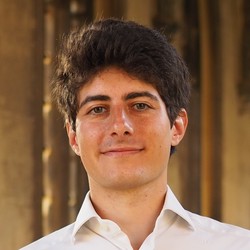 Edoardo M. Ponti合作论文数School of Informatics, The University of Edinburgh;Institute for Language, Cognition and Computation, The University of Edinburgh;University of Cambridge5
 David Yarowsky合作论文数Department of Computer Science, Whiting School of Engineering, Johns Hopkins University;Center for Language and Speech Processing, Whiting School of Engineering, Johns Hopkins University5
 Miikka Silfverberg合作论文数Alma Media4
 Arya D. McCarthy合作论文数Johns Hopkins University4
 Jason Eisner合作论文数Department of Computer Science, Whiting School of Engineering, Johns Hopkins University;Center for Language and Speech Processing, Whiting School of Engineering, Johns Hopkins University4
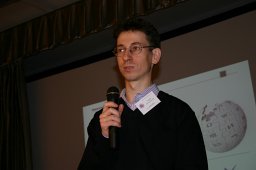 Andrew Krizhanovsky合作论文数St.Petersburg Institute for Informatics and Automation of the Russian Academy of Sciences4
 Tiago Pimentel合作论文数ETH Zurich3
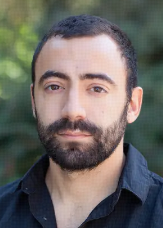 Antonis Anastasopoulos合作论文数Department of Computer Science, George Mason University3
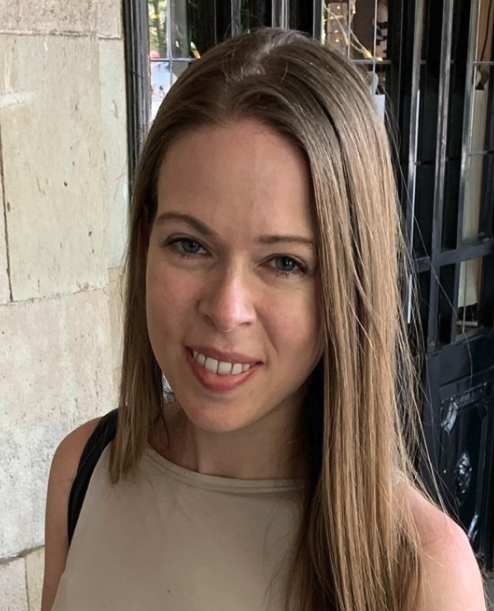 Eleanor Chodroff合作论文数Institut für Computerlinguistik, Universität Zürich3
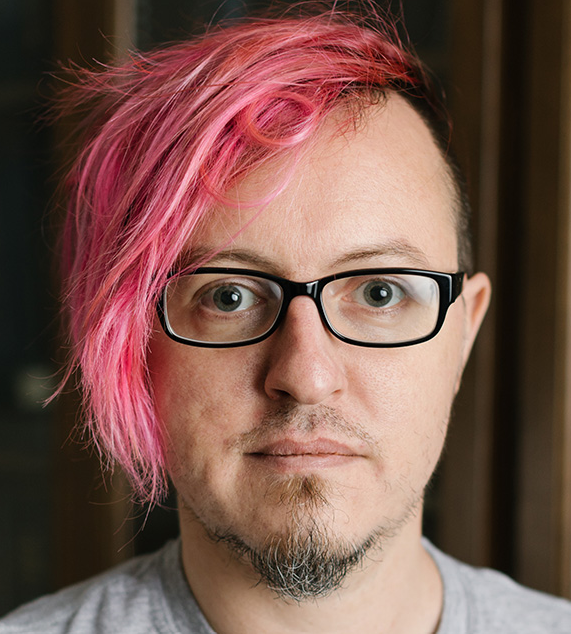 Francis M. Tyers合作论文数Department of Linguistics, College of Arts and Sciences, Indiana University3
 Ran Zmigrod合作论文数Apple2
 Natalia Krizhanovsky合作论文数2Aziyana Bayyr-ool合作论文数2Aelita Salchak合作论文数2Mohit Raj合作论文数2
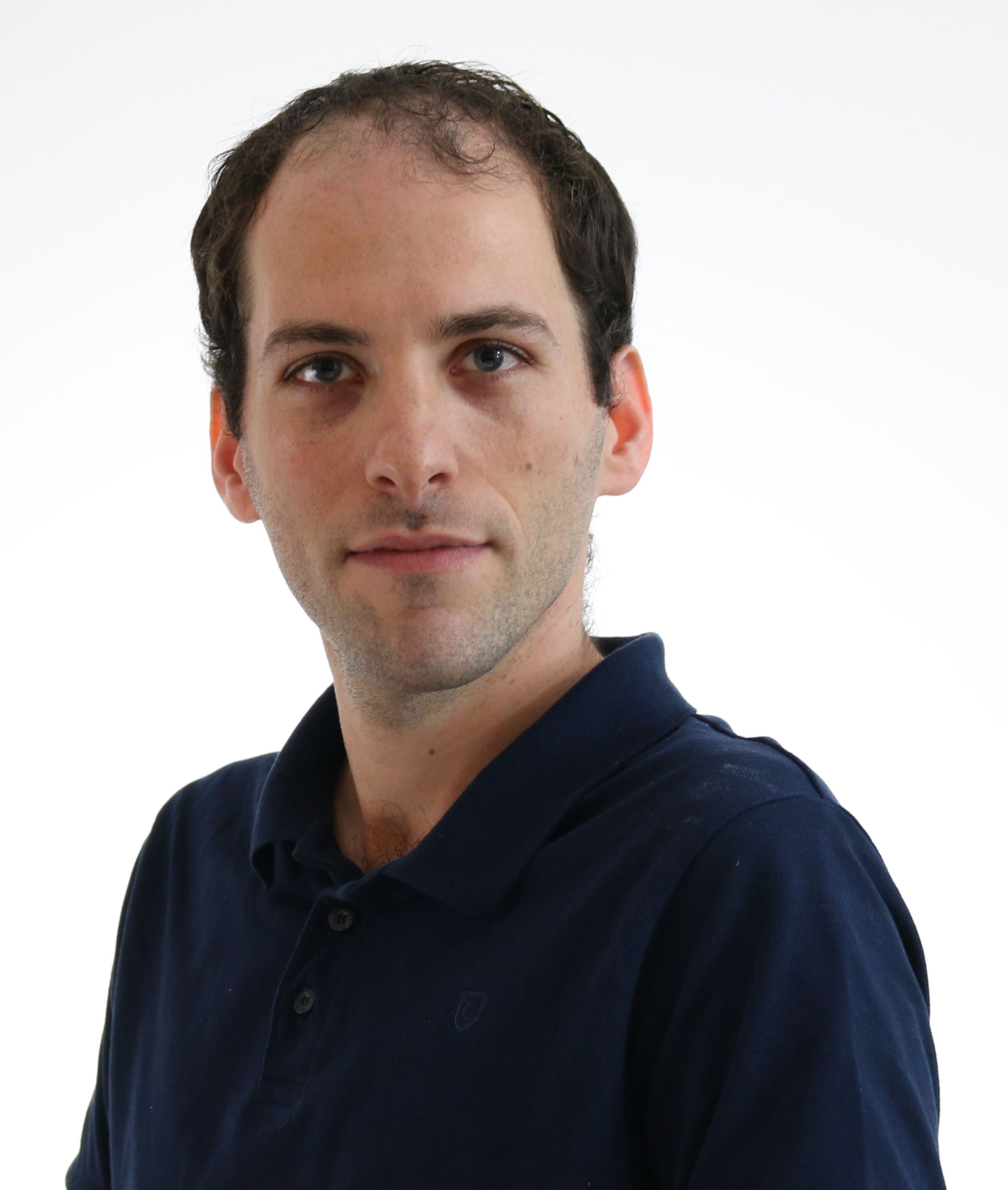 Yuval Pinter合作论文数Department of Computer Science, Ben-Gurion University of the Negev;School of Brain Sciences and Cognition, Ben-Gurion University of the Negev2Brian Leonard合作论文数2Matvey Plugaryov合作论文数2Sofya Ganieva合作论文数2Karina Sheifer合作论文数2Gema Silva Villegas合作论文数2
 Salam Khalifa合作论文数Department of Linguistics, Stony Brook University;New York University Abu Dhabi2
 Shyam Ratan合作论文数2
 Chenglei Si合作论文数Stanford University2Grant Aiton合作论文数2
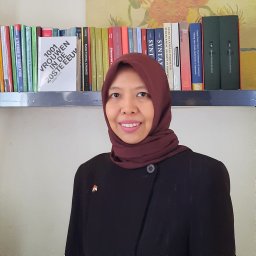 Zahroh Nuriah合作论文数University of Indonesia2
 Wilson Y Lee合作论文数HubSpot2
 christopher a straughn合作论文数2
 Yustinus Ghanggo Ate合作论文数STKIP Weetebula Res Inst Indigenous Languages2Richard Hatcher合作论文数Univ Buffalo2Charbel El-Khaissi合作论文数2Ali Salehi合作论文数2
 Lucas Torroba-Hennigen合作论文数Massachusetts Institute of Technology;Google2Adam Ek合作论文数2Paula Czarnowska合作论文数University of Cambridge2
 Zaid Alyafeai合作论文数King Abdullah University of Science and Technology2
 Manan Dey合作论文数Salesforce2John Sylak-Glassman合作论文数Johns Hopkins Univ, Ctr Language & Speech Proc, Baltimore, MD 21218 USA2Irene Nikkarinen合作论文数2
 Hilaria Cruz合作论文数2
 Sardana Ivanova合作论文数2
 Jennifer White合作论文数Univ Cambridge2




