Inference-time control of diffusion models aims to steer model outputs to satisfy new constraints without retraining. Previous approaches have mostly relied on heuristic guidance or have been coupled with Sequential Monte Carlo (SMC) for bias correction. In this paper, we propose a flexible alternative based on replica exchange, an algorithm designed initially for sampling problems. We refer to this method as the CREPE (Controlling with REPlica Exchange). Unlike SMC, CREPE: (i) generates particles sequentially, (ii) maintains high diversity in the generated samples after a burn-in period, and (iii) enables online refinement or early termination. We demonstrate its versatility across various tasks, including temperature annealing, reward tilting, model composition and classifier-free guidance debiasing, with competitive performance compared to prior SMC methods.
Annealed Sequential Monte Carlo (ASMC) samplers are special cases of SMC samplers where the sequence of distributions can be embedded in a smooth path of distributions. Using this underlying path and a performance model based on the variance of the normalising constant estimator, we systematically study dense-schedule limits. From our theory emerges a notion of global barrier, capturing the inherent complexity of normalising constant approximation under our performance model. We then turn the resulting approximations into surrogate objective functions of algorithm performance, using them to guide method development. This leads to novel adaptive methods, Optimised Annealed SMC (OASMC), which address practical difficulties inherent in previous adaptive SMC methods. First, our OASMC algorithms are predictable: they produce a sequence of increasingly precise estimates at deterministic, known times. Second, Optimised Annealed Importance Sampling (OAIS), a special case of OASMC, enables schedule adaptation at a memory cost constant in the number of particles, requiring significantly less communication. Finally, these characteristics make OAIS highly efficient on GPUs. We provide an open-source, high-performance GPU implementation of our method and demonstrate up to a hundred-fold speed improvement compared to state-of-the-art adaptive AIS methods.
Protein switches are proteins that can respond to biochemical stimuli by rearranging their structural elements, essential for cells to transduce signals. The de novo design of such proteins requires amino acid sequences whose energy landscapes support multiple stimulus-dependent conformations, yet most current de novo protein design pipelines are optimized for single stable structures. Existing multi-state inverse-folding methods can design sequences compatible with multiple backbones, but they assume that suitable backbone ensembles are already available, often requiring expert knowledge. We introduce Diff-Switch, a framework for sampling switch-like backbone ensembles from pretrained protein diffusion models. Given a reference backbone structure and domain decomposition, our method preserves local domain geometry while encouraging diversity in global domain arrangements along user-specified collective variables, inspired by metadynamics. We implement this objective through a controlled diffusion sampler with reward-tilting for local similarity between the ensemble members and history-dependent bias in collective-variable space to avoid repeated sampling of the same global arrangement. The resulting ensembles provide candidate conformational states for downstream multi-state inverse folding. Across our evaluation set of 20 diverse proteins, using conformations from these generated ensembles improves the success rate of finding switch-compatible sequences over baseline sampling. We further apply the method to a real-world protein switch design task and characterize the resulting designs.
Markov Chain Monte Carlo (MCMC) algorithms are essential tools in computational statistics for sampling from unnormalised probability distributions, but can be fragile when targeting high-dimensional, multimodal, or complex target distributions. Parallel Tempering (PT) enhances MCMC's sample efficiency through annealing and parallel computation, propagating samples from tractable reference distributions to intractable targets via state swapping across interpolating distributions. The effectiveness of PT is limited by the often minimal overlap between adjacent distributions in challenging problems, which requires increasing the computational resources to compensate. We introduce a framework that accelerates PT by leveraging neural samplers---including normalising flows, diffusion models, and controlled diffusions---to reduce the required overlap. Our approach utilises neural samplers in parallel, circumventing the computational burden of neural samplers while preserving the asymptotic consistency of classical PT. We demonstrate theoretically and empirically on a variety of multimodal sampling problems that our method improves sample quality, reduces the computational cost compared to classical PT, and enables efficient free energy/normalising constant estimation.
Sampling from unnormalized multimodal distributions with limited density evaluations remains a fundamental challenge in machine learning and natural sciences. Successful approaches construct a bridge between a tractable reference and the target distribution. Parallel Tempering (PT) serves as the gold standard, while recent diffusion-based approaches offer a continuous alternative at the cost of neural training. In this work, we introduce Conditional Diffusion Sampling (CDS), a framework that combines these two paradigms. To this end, we derive Conditional Interpolants, a class of stochastic processes whose transport dynamics are governed by an exact, closed-form stochastic differential equation (SDE), requiring no neural approximation. Although these dynamics require sampling from a non-trivial initialization distribution, we show both theoretically and empirically that the cost of this initialization diminishes for sufficiently short diffusion times. CDS leverages this by a two-stage procedure: (1) PT is used to efficiently sample the initial distribution, and then (2) samples are transported via the transport SDE. This combination couples the robust global exploration of PT with efficient local transport. Experiments suggest that CDS has the potential to achieve a superior trade-off between sample quality and density evaluation cost compared to state-of-the-art samplers.
Efficient equilibrium sampling of molecular conformations remains a core challenge in computational chemistry and statistical inference. Classical approaches such as molecular dynamics or Markov chain Monte Carlo inherently lack amortization; the computational cost of sampling must be paid in-full for each system of interest. The widespread success of generative models has inspired interest into overcoming this limitation through learning sampling algorithms. Despite performing on par with conventional methods when trained on a single system, learned samplers have so far demonstrated limited ability to transfer across systems. We prove that deep learning enables the design of scalable and transferable samplers by introducing Ensemble, a 200 million parameter all-atom transferable normalizing flow trained on a corpus of peptide molecular dynamics trajectories up to 8 residues in length. Ensemble draws zero-shot uncorrelated proposal samples for arbitrary peptide systems, achieving the previously intractable transferability across sequence length, whilst retaining the efficient likelihood evaluation of normalizing flows. Through extensive empirical evaluation we demonstrate the efficacy of Ensemble as a proposal for a variety of sampling algorithms, finding a simple importance sampling-based finetuning procedure to achieve superior performance to established methods such as sequential Monte Carlo. We open-source the Ensemble codebase, model weights, and training dataset, to further stimulate research into amortized sampling methods and finetuning objectives.
Denoising diffusion models (DDMs) offer a flexible framework for sampling from high dimensional data distributions. DDMs generate a path of probability distributions interpolating between a reference Gaussian distribution and a data distribution by incrementally injecting noise into the data. To numerically simulate the sampling process, a discretisation schedule from the reference back towards clean data must be chosen. An appropriate discretisation schedule is crucial to obtain high quality samples. However, beyond hand crafted heuristics, a general method for choosing this schedule remains elusive. This paper presents a novel algorithm for adaptively selecting an optimal discretisation schedule with respect to a cost that we derive. Our cost measures the work done by the simulation procedure to transport samples from one point in the diffusion path to the next. Our method does not require hyperparameter tuning and adapts to the dynamics and geometry of the diffusion path. Our algorithm only involves the evaluation of the estimated Stein score, making it scalable to existing pre-trained models at inference time and online during training. We find that our learned schedule recovers performant schedules previously only discovered through manual search and obtains competitive FID scores on image datasets.
Selecting the step size for the Metropolis-adjusted Langevin algorithm (MALA) is necessary in order to obtain satisfactory performance. However, finding an adequate step size for an arbitrary target distribution can be a difficult task and even the best step size can perform poorly in specific regions of the space when the target distribution is sufficiently complex. To resolve this issue we introduce autoMALA, a new Markov chain Monte Carlo algorithm based on MALA that automatically sets its step size at each iteration based on the local geometry of the target distribution. We prove that autoMALA has the correct invariant distribution, despite continual automatic adjustments of the step size. Our experiments demonstrate that autoMALA is competitive with related state-of-the-art MCMC methods, in terms of the number of log density evaluations per effective sample, and it outperforms state-of-the-art samplers on targets with varying geometries. Furthermore, we find that autoMALA tends to find step sizes comparable to optimally-tuned MALA when a fixed step size suffices for the whole domain.
Non-reversible parallel tempering (NRPT) is an effective algorithm for sampling from target distributions with complex geometry, such as those arising from posterior distributions of weakly identifiable and high-dimensional Bayesian models. In this work we establish the uniform (geometric) ergodicity of NRPT under a model of efficient local exploration. The uniform ergodicity log rates are inversely proportional to an easily-estimable divergence, the global communication barrier (GCB), which was recently introduced in the literature. We obtain analogous ergodicity results for classical reversible parallel tempering, providing new evidence that NRPT dominates its reversible counterpart. Our results are based on an analysis of the hitting time of a continuous-time persistent random walk, which is also of independent interest. The rates that we obtain reflect real experiments well for distributions where global exploration is not possible without parallel tempering.
Exchangeability—in which the distribution of an infinite sequence is invariant to reorderings of its elements—implies the existence of a simple conditional independence structure that may be leveraged in the design of statistical models and inference procedures. In this work, we study a relaxation of exchangeability in which this invariance need not hold precisely. We introduce the notion of local exchangeability—where swapping data associated with nearby covariates causes a bounded change in the distribution. We prove that locally exchangeable processes correspond to independent observations from an underlying measure-valued stochastic process. Using this main probabilistic result, we show that the local empirical measure of a finite collection of observations provides an approximation of the underlying measure-valued process and Bayesian posterior predictive distributions. The paper concludes with applications of the main theoretical results to a model from Bayesian nonparametrics and covariate-dependent permutation tests.
We introduce a software package, Pigeons.jl, that provides a way to leverage distributed computation to obtain samples from complicated probability distributions, such as multimodal posteriors arising in Bayesian inference and high-dimensional distributions in statistical mechanics. Pigeons.jl provides simple APIs to perform such computations single-threaded, multi-threaded, and/or distributed over thousands of MPI-communicating machines. In addition, Pigeons.jl guarantees a property that we call strong parallelism invariance: the output for a given seed is identical irrespective of the number of threads and processes, which is crucial for scientific reproducibility and software validation. We describe the key features of Pigeons.jl and the approach taken to implement a distributed and randomized algorithm that satisfies strong parallelism invariance.
U-Nets are a go-to, state-of-the-art neural architecture across numerous tasks for continuous signals on a square such as images and Partial Differential Equations (PDE), however their design and architecture is understudied. In this paper, we provide a framework for designing and analysing general U-Net architectures. We present theoretical results which characterise the role of the encoder and decoder in a U-Net, their high-resolution scaling limits and their conjugacy to ResNets via preconditioning. We propose Multi-ResNets, U-Nets with a simplified, wavelet-based encoder without learnable parameters. Further, we show how to design novel U-Net architectures which encode function constraints, natural bases, or the geometry of the data. In diffusion models, our framework enables us to identify that high-frequency information is dominated by noise exponentially faster, and show how U-Nets with average pooling exploit this. In our experiments, we demonstrate how Multi-ResNets achieve competitive and often superior performance compared to classical U-Nets in image segmentation, PDE surrogate modelling, and generative modelling with diffusion models. Our U-Net framework paves the way to study the theoretical properties of U-Nets and design natural, scalable neural architectures for a multitude of problems beyond the square.
Parallel tempering (PT) methods are a popular class of Markov chain Monte Carlo schemes used to sample complex high-dimensional probability distributions. They rely on a collection of $N$ interacting auxiliary chains targeting tempered versions of the target distribution to improve the exploration of the state-space. We provide here a new perspective on these highly parallel algorithms and their tuning by identifying and formalizing a sharp divide in the behaviour and performance of reversible versus non-reversible PT schemes. We show theoretically and empirically that a class of non-reversible PT methods dominates its reversible counterparts and identify distinct scaling limits for the non-reversible and reversible schemes, the former being a piecewise-deterministic Markov process and the latter a diffusion. These results are exploited to identify the optimal annealing schedule for non-reversible PT and to develop an iterative scheme approximating this schedule. We provide a wide range of numerical examples supporting our theoretical and methodological contributions. The proposed methodology is applicable to sample from a distribution $\pi$ with a density $L$ with respect to a reference distribution $\pi_0$ and compute the normalizing constant. A typical use case is when $\pi_0$ is a prior distribution, $L$ a likelihood function and $\pi$ the corresponding posterior.
Sampling from complex target distributions is a challenging task fundamental to Bayesian inference. Parallel tempering (PT) addresses this problem by constructing a Markov chain on the expanded state space of a sequence of distributions interpolating between the posterior distribution and a fixed reference distribution, which is typically chosen to be the prior. However, in the typical case where the prior and posterior are nearly mutually singular, PT methods are computationally prohibitive. In this work we address this challenge by constructing a generalized annealing path connecting the posterior to an adaptively tuned variational reference. The reference distribution is tuned to minimize the forward (inclusive) KL divergence to the posterior distribution using a simple, gradient-free moment-matching procedure. We show that our adaptive procedure converges to the forward KL minimizer, and that the forward KL divergence serves as a good proxy to a previously developed measure of PT performance. We also show that in the large-data limit in typical Bayesian models, the proposed method improves in performance, while traditional PT deteriorates arbitrarily. Finally, we introduce PT with two references -- one fixed, one variational -- with a novel split annealing path that ensures stable variational reference adaptation. The paper concludes with experiments that demonstrate the large empirical gains achieved by our method in a wide range of realistic Bayesian inference scenarios.
Parallel tempering (PT) is a class of Markov chain Monte Carlo algorithms that constructs a path of distributions annealing between a tractable reference and an intractable target, and then interchanges states along the path to improve mixing in the target. The performance of PT depends on how quickly a sample from the reference distribution makes its way to the target, which in turn depends on the particular path of annealing distributions. However, past work on PT has used only simple paths constructed from convex combinations of the reference and target log-densities. This paper begins by demonstrating that this path performs poorly in the setting where the reference and target are nearly mutually singular. To address this issue, we expand the framework of PT to general families of paths, formulate the choice of path as an optimization problem that admits tractable gradient estimates, and propose a flexible new family of spline interpolation paths for use in practice. Theoretical and empirical results both demonstrate that our proposed methodology breaks previously-established upper performance limits for traditional paths.
In this essay we explored two original problems related to diffusions with singular drifts. In Chapter 1, we construct diffusions X on [0,∞) using speed and scale analysis, that satisfy the stochastic differential equation (SDE), Xt = X0 + ∫ t 0 X sdBs + bt, for 0 < p ≤ 1 2 , b ≥ 0, when X > 0, but exhibit sticky boundary behaviour at 0. I.e., X spends a positive amount time at zero, but never a full interval. We then find the SDE characterization of the sticky diffusions and show that in the case where p = 12 , the SDE fails to uniquely encode the boundary behaviour of the process. In Chapter 2, we then proceed to the realm of spatial diffusions and construct a nontrivial continuous measure-valued process X that solves the stochastic partial differential equation (SPDE), ∂X ∂t = ∆X 2 + √ XẆ + Ȧ, where W is a space-time white noise and A is a continuous measure-valued immigration such that At is only active in the regions where Xt does not occupy mass.
In quantum state tomography we want to be able to construct an estimate ρ̂ after performing repeated measurements on some unknown ρ. The most widely used method right now to contruct ρ̂ is maximum likelihood estimation (MLE). MLE is flawed because it produces estimates that are implausible, and gives no bound on the errors. In this paper we introduce a relatively new approach to state tomography; Bayesian mean estimation (BME). We discuss the properties of BME and its advantages over MLE. BME is then used to construct confidence regions of ρ̂, an analogue of confidence intervals from classical statistics. Submitted to: Professor Joseph Emerson for AMATH 876
 Trevor Campbell合作论文数Department of Statistics, Faculty of Science, University of British Columbia6
 Arnaud Doucet合作论文数DeepMind;Department of Statistics, University of Oxford5
 Nikola Surjanovic合作论文数4
 Alexandre Bouchard-Côté合作论文数Faculty of Science, University of British Columbia;Department of Statistics, University of British Columbia4
 Jiajun He (何佳峻)合作论文数University of Cambridge3Miguel Biron-Lattes合作论文数2
 Yuanqi Du合作论文数Department of Computer Science, Cornell University;NVIDIA2
 Christopher J. Williams合作论文数University of Oxford;Defence Science and Technology2
 George Deligiannidis合作论文数Department of Statistics, University of Oxford2
 José Miguel Hernández-Lobato合作论文数Division of Information Engineering, Department of Engineering, University of Cambridge;Boltzbit Limited;Angstrom AI2Majdi Hassan合作论文数1
 Leo Zhang合作论文数Department of Statistics, University of Oxford1
 Francisco Miguel Castro Macías合作论文数Universidad de Granada1
 Charlie B. Tan合作论文数Department of Computer Science, University of Oxford1Kevin Chern合作论文数1
 Leon Klein合作论文数Institute of Mathematics, Department of Mathematics and Computer Science, Freie Universität Berlin;AI4Science Lab, Freie Universität Berlin1
 Kirill Neklyudov合作论文数Université de Montréal;Mila - Quebec Artificial Intelligence Institute1Chiao-Yu Yang合作论文数Dept Math, Univ Calif Berkeley1Pablo Morales-Alvarez合作论文数1
 Fabian Falck合作论文数OxCSML Group, Department of Statistics, University of Oxford;Oriel College1
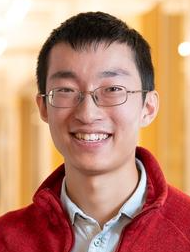 Alex Tong合作论文数Aithyra Research Institute for Biomedical Artificial Intelligence1
 Vittorio Romaniello合作论文数Abnormal AI1
 Joerg Gsponer合作论文数Department of Biochemistry & Molecular Biology, Faculty of Medicine, The University of British Columbia1
 Dominique Beaini合作论文数Valence Discovery;Université de Montréal;Mila - Quebec Artificial Intelligence Institute1
 Paul Jeha合作论文数Technical University of Denmark1
 Andrew Campbell合作论文数Google DeepMind1
 Michael Bronstein合作论文数Department of Computer Science, University of Oxford;AITHYRA Research Institute for Biomedical Artificial Intelligence1
 Michael I. Jordan (迈克尔·乔丹)合作论文数Department of Electrical Engineering and Computer Sciences, University of California, Berkeley;Department of Statistics, University of California, Berkeley;Department of Industrial Engineering and Operations Research, University of California, Berkeley1
 Jennifer M. Bui合作论文数1
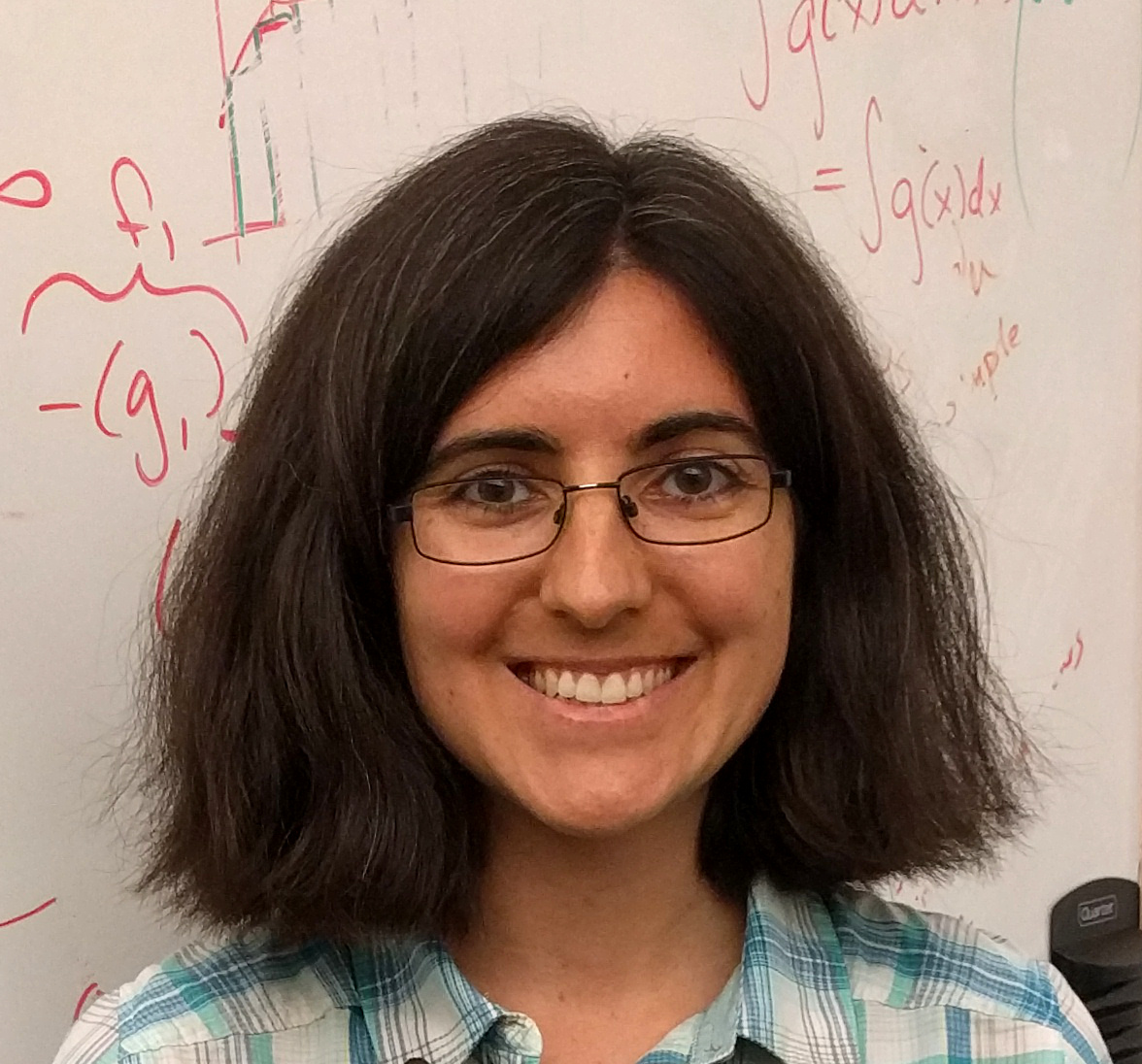 Tamara Broderick合作论文数Department of Electrical Engineering and Computer Science, Massachusetts Institute of Technology1
 Daniel Hernández-Lobato合作论文数Department of Computer Science, Escuela Politécnica Superior, Universidad Autonoma de Madrid1
 Rafael Molina Soriano合作论文数Department of Computer Science and Artificial Intelligence, Universidad de Granada1
 Christopher Holmes合作论文数Department of Statistics, University of Oxford1




