Sampling from score-based diffusion models incurs bias due to both time discretisation and the approximation of the score function. A common strategy for reducing this bias is to apply corrector steps based on the unadjusted Langevin algorithm (ULA) at each noise level within a predictor-corrector framework. However, ULA is itself a biased sampler, as it discretises a continuous diffusion process. In this work, we consider adjusted Langevin correctors that employ Metropolis–Hastings (MH) or Barker's accept-reject steps to correct for this bias. Since the target density ratio typically required by MH-based algorithms is unavailable, we propose methods that instead utilise the score function to compute the correct acceptance probability. We introduce the first exact method for adjusting Langevin corrections in diffusion models, based on a two-coin Bernoulli factory algorithm. We also propose an efficient approximation based on Simpson's rule that achieves accuracy of order 5/2 in the step size at near-zero marginal cost. We demonstrate that these procedures improve sample quality on both synthetic and image datasets, yielding consistent gains in Fréchet Inception Distance (FID) on the latter.
We present self-speculative masked diffusions, a new class of masked diffusion generative models for discrete data that require significantly fewer function evaluations to generate samples. Standard masked diffusion models predict factorized logits over currently masked positions. A number of masked positions are then sampled, however, the factorization approximation means that sampling too many positions in one go leads to poor sample quality. As a result, many simulation steps and therefore neural network function evaluations are required to generate high-quality data. We reduce the computational burden by generating \emph{non-factorized} predictions over masked positions. This is achieved by modifying the final transformer attention mask from non-causal to causal, enabling draft token generation and parallel validation via a novel, model-integrated speculative sampling mechanism. This results in a non-factorized predictive distribution over masked positions in a single forward pass. We apply our method to GPT2 scale text modelling and protein sequences generation, finding that we can achieve a ~2x reduction in the required number of network forward passes relative to standard masked diffusion models.
The success of denoising diffusion models raises important questions regarding their generalisation behaviour, particularly in high-dimensional settings. Notably, it has been shown that when training and sampling are performed perfectly, these models memorise training data -- implying that some form of regularisation is essential for generalisation. Existing theoretical analyses primarily rely on algorithm-independent techniques such as uniform convergence, heavily utilising model structure to obtain generalisation bounds. In this work, we instead leverage the algorithmic aspects that promote generalisation in diffusion models, developing a general theory of algorithm-dependent generalisation for this setting. Borrowing from the framework of algorithmic stability, we introduce the notion of score stability, which quantifies the sensitivity of score-matching algorithms to dataset perturbations. We derive generalisation bounds in terms of score stability, and apply our framework to several fundamental learning settings, identifying sources of regularisation. In particular, we consider denoising score matching with early stopping (denoising regularisation), sampler-wide coarse discretisation (sampler regularisation) and optimising with SGD (optimisation regularisation). By grounding our analysis in algorithmic properties rather than model structure, we identify multiple sources of implicit regularisation unique to diffusion models that have so far been overlooked in the literature.
Classifier-free guidance (CFG) is a widely used technique for improving the perceptual quality of samples from conditional diffusion models. It operates by linearly combining conditional and unconditional score estimates using a *guidance weight* $\omega$. While a large, static weight can markedly improve visual results, this often comes at the cost of poorer distributional alignment. In order to better approximate the target conditional distribution, we instead learn *guidance weights* $\omega_{c,(s,t)}$, which are continuous functions of the conditioning $c$, the time $t$ from which we denoise, and the time $s$ towards which we denoise. We achieve this by minimizing the distributional mismatch between noised samples from the true conditional distribution and samples from the guided diffusion process. We extend our framework to reward guided sampling, enabling the model to target distributions tilted by a reward function $R(x_0,c)$, defined on clean data and a conditioning $c$. We demonstrate the effectiveness of our methodology on low-dimensional toy examples and high-dimensional image settings, where we observe improvements in Fréchet inception distance (FID) for image generation. In text-to-image applications, we observe that employing a reward function given by the CLIP score leads to guidance weights that improve image-prompt alignment.
Speculative decoding speeds up LLM inference by using a draft model to generate tokens, with an acceptance-rejection scheme that ensures that the output matches the target distribution. Adapting this to continuous diffusions is difficult because speculative sampling requires drawing from a residual distribution. While straightforward in discrete spaces, efficiently sampling this residual in continuous space is non-trivial. Consequently, existing diffusion adaptations either use computationally inefficient sampling techniques or rely on an alternative scheme. In this work, we introduce a novel scheme that efficiently implements the original speculative sampling mechanism for diffusion models. Our approach offers a critical advantage over current methods: it enables us to adapt block verification from LLMs to diffusions – which provably improves the acceptance rate of drafts. Furthermore, we formalize and analyze the Free Drafter, a heuristic self-speculative drafter for diffusions that requires no training. By enabling block verification, our Free Drafter yields up to a 6.3
Annealed Sequential Monte Carlo (ASMC) samplers are special cases of SMC samplers where the sequence of distributions can be embedded in a smooth path of distributions. Using this underlying path and a performance model based on the variance of the normalising constant estimator, we systematically study dense-schedule limits. From our theory emerges a notion of global barrier, capturing the inherent complexity of normalising constant approximation under our performance model. We then turn the resulting approximations into surrogate objective functions of algorithm performance, using them to guide method development. This leads to novel adaptive methods, Optimised Annealed SMC (OASMC), which address practical difficulties inherent in previous adaptive SMC methods. First, our OASMC algorithms are predictable: they produce a sequence of increasingly precise estimates at deterministic, known times. Second, Optimised Annealed Importance Sampling (OAIS), a special case of OASMC, enables schedule adaptation at a memory cost constant in the number of particles, requiring significantly less communication. Finally, these characteristics make OAIS highly efficient on GPUs. We provide an open-source, high-performance GPU implementation of our method and demonstrate up to a hundred-fold speed improvement compared to state-of-the-art adaptive AIS methods.
Recently, Deng et al. (2026) proposed Generative Modeling via Drifting (GMD), a novel framework for generative tasks. This note presents an analysis of GMD through the lens of Wasserstein Gradient Flows (WGF), i.e., the path of steepest descent for a functional in the space of probability measures, equipped with the geometry of optimal transport. Unlike previous WGF-based contributions, GMD can be thought of as directly targeting a fixed point of a specific WGF flow. We demonstrate three main results: first, that one algorithm proposed by Deng et al. (2026) corresponds to finding the limiting point of a WGF on the KL divergence, with Parzen smoothing on the densities. Second, that the algorithm actually implemented by Deng et al. (2026) corresponds to a different procedure, which bears some resemblance to the fixed point of a WGF on the Sinkhorn divergence, but lacks certain desirable properties of the latter. Third, the same same idea can be extended to the limiting point of other WGFs, including the Maximum Mean Discrepancy (MMD), the sliced Wasserstein distance, and GAN critic functions.
Modern text-to-image diffusion models rely on classifier-free guidance (CFG) to achieve high image fidelity and text alignment. However, CFG typically applies a static, global scale across all timesteps, samples, and conditions – a choice that is generally suboptimal and can introduce artifacts, as different states may benefit from different levels of guidance. While time-varying schedules are known to improve quality, designing them by hand is non-trivial and application-dependent. In this paper, we learn the guidance schedule as a function of diffusion time, conditioning and the current noisy sample, in order to better align sampled images with the text prompt. We frame this as a density ratio estimation problem: a discriminator is trained to estimate the time-dependent log-density ratio between the true and guided marginal distributions, while a lightweight generator network predicts the optimal, state-dependent guidance scale. Empirically, our approach outperforms both heuristic CFG schedules and prior methods for learning dynamic guidance on text-to-image generation benchmarks.
Distillation and Reinforcement Learning (RL) fine-tuning are the primary pillars of diffusion post-training. While traditionally studied in isolation, the interaction between these phases remains poorly understood, and in particular how fine-tuning impacts the generative quality of distilled models. We introduce Rewarded Moment Matching Distillation (RMMD), a novel framework that simultaneously distills diffusion models and maximizes a reward function. RMMD preserves the high-fidelity “naturalness” characteristic of advanced distillation (such as 8-step Moment Matching) by adapting the sampling loop for on-policy training and repurposing the distillation loss as a proxy for integral KL regularization. By evaluating the FID-Reward Pareto fronts on ImageNet, we demonstrate that RMMD achieves superior trade-offs compared to single-step baselines (DI++) and multi-step competitors (DRaFT, HyperNoise). Finally, we apply RMMD to GenCast, a state-of-the-art weather forecasting model, to distill it while optimizing the Continuous Ranked Probability Score (CRPS) metric. The resulting distilled model achieves a 7.5x speedup while outperforming the teacher model on 93
The goal of single-channel source separation is to reconstruct K sources given their mixture. In supervised settings where vast amounts of clean source data are available, this challenging, ill-posed problem has been addressed successfully by generative diffusion and flow-based prior models. However, access to such clean source samples is often limited, and even when available, supervised models are vulnerable to domain shifts. To bridge this gap, we present Separation via Unsupervised Remixing Flow (SURF), an unsupervised flow matching approach for source separation that learns directly from observed mixtures. This method relies on a novel combination of state-of-the-art supervised flow matching and regression-based self-supervised techniques. At a high level, starting from a teacher model, we utilize a "remixing" step to bootstrap the learning of a student flow model from the teacher's estimates. We provide insights into the objectives optimized by this approach and draw a novel connection to the Wake-Sleep algorithm. Empirical evaluations on image and audio benchmarks demonstrate that SURF establishes a new state-of-the-art, significantly outperforming existing unsupervised methods. See our demo page for examples. https://google.github.io/df-conformer/surf/
Markov Chain Monte Carlo (MCMC) algorithms are essential tools in computational statistics for sampling from unnormalised probability distributions, but can be fragile when targeting high-dimensional, multimodal, or complex target distributions. Parallel Tempering (PT) enhances MCMC's sample efficiency through annealing and parallel computation, propagating samples from tractable reference distributions to intractable targets via state swapping across interpolating distributions. The effectiveness of PT is limited by the often minimal overlap between adjacent distributions in challenging problems, which requires increasing the computational resources to compensate. We introduce a framework that accelerates PT by leveraging neural samplers---including normalising flows, diffusion models, and controlled diffusions---to reduce the required overlap. Our approach utilises neural samplers in parallel, circumventing the computational burden of neural samplers while preserving the asymptotic consistency of classical PT. We demonstrate theoretically and empirically on a variety of multimodal sampling problems that our method improves sample quality, reduces the computational cost compared to classical PT, and enables efficient free energy/normalising constant estimation.
We introduce DiffusionGemma, an experimental open-weight language model that uses discrete diffusion to generate text at exceptionally high speed. Rather than decoding one token at a time, DiffusionGemma iteratively refines blocks of 256 tokens in parallel, avoiding the sequential decoding bottleneck of conventional autoregressive (AR) large language models. Instead of training from scratch, we obtain DiffusionGemma by fine-tuning the mixture-of-experts Gemma 4 model with 3.8B activated and 25.2B total parameters. Our compute-efficient two-stage training pipeline uses fewer than 10
Evaluating large generative models across benchmarks is time-consuming and computationally expensive. This drives the need for methods that can estimate full benchmark performance by evaluating models on only a subset of items, known as a coreset. Current literature mostly requires the practitioner to input a coreset size. However, when reliable performance estimation takes priority over efficiency, an evaluation method should also be capable of automatically determining a coreset size that reflects this priority. We introduce BayesAME, a sequential Bayesian framework specifically targeting automatic determination of the coreset size. BayesAME models performance as a random variable by defining a latent ability for each group of items sharing the same historical model performances, with a joint prior distribution encoding the belief that the target model behaves similarly to these historical models. The posterior distribution over these abilities is used to derive performance estimators, quantify performance uncertainty, and select items to add to the coreset via an information-gain criterion. The coreset is iteratively augmented until the performance estimate fluctuation and the performance uncertainty fall below their respective user-defined thresholds. We propose a multi-target extension that captures performance correlations across multiple target models to further reduce the coreset size. Through extensive experiments across diverse benchmarks, we demonstrate that BayesAME consistently outperforms sequential adaptations of existing methods. Crucially, our comprehensive analysis addresses recent skepticism in the literature, establishing that non-random coreset selection is advantageous over random selection. Finally, we highlight that leveraging continuous response log-likelihoods over traditional binary scores significantly enhances estimation accuracy.
For complex latent variable models, the likelihood function is not available in closed form. In this context, a popular method to perform parameter estimation is Importance Weighted Variational Inference. It essentially maximizes the expectation of the logarithm of an importance sampling estimate of the likelihood with respect to both the latent variable model parameters and the importance distribution parameters, the expectation being itself with respect to the importance samples. Despite its great empirical success in machine learning, a theoretical analysis of the limit properties of the resulting estimates is still lacking. We fill this gap by establishing consistency when both the Monte Carlo and the observed data sample sizes go to infinity simultaneously. We also establish asymptotic normality and efficiency under additional conditions relating the rate of growth between the Monte Carlo and the observed data samples sizes. We distinguish several regimes related to the smoothness of the importance ratio.
Diffusion models offer a robust framework for sampling from unnormalized probability densities, which requires accurately estimating the score of the noise-perturbed target distribution. While the standard Denoising Score Identity (DSI) relies on data samples, access to the target energy function enables an alternative formulation via the Target Score Identity (TSI). However, these estimators face a fundamental variance trade-off: DSI exhibits high variance in low-noise regimes, whereas TSI suffers from high variance at high noise levels. In this work, we reconcile these approaches by unifying both estimators within the principled framework of control variates. We introduce the Control Variate Score Identity (CVSI), deriving an optimal, time-dependent control coefficient that theoretically guarantees variance minimization across the entire noise spectrum. We demonstrate that CVSI serves as a robust, low-variance plug-in estimator that significantly enhances sample efficiency in both data-free sampler learning and inference-time diffusion sampling.
We establish disintegrated PAC-Bayesian generalisation bounds for models trained with gradient descent methods or continuous gradient flows. Contrary to standard practice in the PAC-Bayesian setting, our result applies to optimisation algorithms that are deterministic, without requiring any de-randomisation step. Our bounds are fully computable, depending on the density of the initial distribution and the Hessian of the training objective over the trajectory. We show that our framework can be applied to a variety of iterative optimisation algorithms, including stochastic gradient descent (SGD), momentum-based schemes, and damped Hamiltonian dynamics.
We consider the problem of simulating diffusion bridges, which are diffusion processes that are conditioned to initialize and terminate at two given states. The simulation of diffusion bridges has applications in diverse scientific fields and plays a crucial role in the statistical inference of discretely-observed diffusions. This is known to be a challenging problem that has received much attention in the last two decades. This article contributes to this rich body of literature by presenting a new avenue to obtain diffusion bridge approximations. Our approach is based on a backward time representation of a diffusion bridge, which may be simulated if one can time-reverse the unconditioned diffusion. We introduce a variational formulation to learn this time-reversal with function approximation and rely on a score matching method to circumvent intractability. Another iteration of our proposed methodology approximates the Doob's $h$-transform defining the forward time representation of a diffusion bridge. We discuss algorithmic considerations and extensions, and present numerical results on an Ornstein--Uhlenbeck process, a model from financial econometrics for interest rates, and a model from genetics for cell differentiation and development to illustrate the effectiveness of our approach.
Diffusion models are central to generative modeling and have been adapted to graphs by diffusing adjacency matrix representations. The challenge of having up to n! such representations for graphs with n nodes is only partially mitigated by using permutation-equivariant learning architectures. Despite their computational efficiency, existing graph diffusion models struggle to distinguish certain graph families and their spectra, unless graph data are augmented with ad hoc features. This shortcoming stems from enforcing the inductive bias within the learning architecture. In this work, we leverage random matrix theory to analytically extract the spectral properties of the diffusion process, allowing us to push most of the inductive bias from the architecture into the dynamics. Building on this, we introduce the Dyson Diffusion Model, which employs Dyson's Brownian motion to capture the spectral dynamics of an Ornstein-Uhlenbeck process on the adjacency matrix. Furthermore, conditioned on the spectral dynamics, we formulate a Lie group diffusion, appropriately modeling the remaining degrees of freedom. Strikingly, the resulting learning problem becomes permutation invariant at the Lie algebra level. We demonstrate that the Dyson Diffusion Model learns graph spectra accurately and outperforms existing graph diffusion models.
We present a new algorithm to optimize distributions defined implicitly by parameterized stochastic diffusions. Doing so allows us to modify the outcome distribution of sampling processes by optimizing over their parameters. We introduce a general framework for first-order optimization of these processes, that performs jointly, in a single loop, optimization and sampling steps. This approach is inspired by recent advances in bilevel optimization and automatic implicit differentiation, leveraging the point of view of sampling as optimization over the space of probability distributions. We provide theoretical guarantees on the performance of our method, as well as experimental results demonstrating its effectiveness in real-world settings.
Sampling efficiently from a target unnormalized probability density remains a core challenge, with relevance across countless high-impact scientific applications. A promising approach towards this challenge is the design of amortized samplers that borrow key ideas, such as probability path design, from state-of-the-art generative diffusion models. However, all existing diffusion-based samplers remain unable to draw samples from distributions at the scale of even simple molecular systems. In this paper, we propose Progressive Inference-Time Annealing (PITA) a novel framework to learn diffusion-based samplers that combines two complementary interpolation techniques: I.) Annealing of the Boltzmann distribution and II.) Diffusion smoothing. PITA trains a sequence of diffusion models from high to low temperatures by sequentially training each model at progressively higher temperatures, leveraging engineered easy access to samples of the temperature-annealed target density. In the subsequent step, PITA enables simulating the trained diffusion model to *procure training samples at a lower temperature* for the next diffusion model through inference-time annealing using a novel Feynman-Kac PDE combined with Sequential Monte Carlo. Empirically, PITA enables, for the first time, equilibrium sampling of $N$-body particle systems, Alanine Dipeptide, and tripeptides in Cartesian coordinates with dramatically lower energy function evaluations.
 Christophe Andrieu合作论文数School of Mathematics, University of Bristol65
 Sumeetpal Sidhu Singh合作论文数Department of Engineering, University of Cambridge35
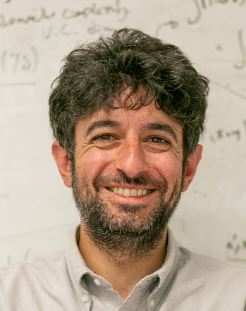 George Deligiannidis合作论文数Department of Statistics, University of Oxford34
 Pierre Del Moral合作论文数32
 Valentin De Bortoli合作论文数Google DeepMind;Center for Data Science, Centre National de la Recherche Scientifique29
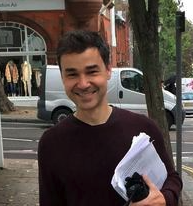 Nando de Freitas合作论文数Microsoft AI;Canadian Institute for Advanced Research23
 Adam Johansen合作论文数Department of Statistics, University of Warwick20
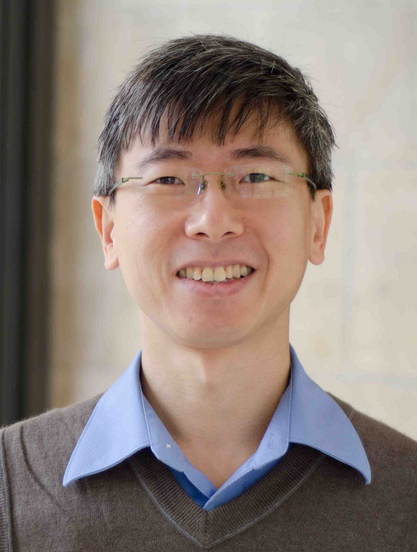 Yee Whye Teh合作论文数Department of Statistics, University of Oxford;Google DeepMind20
 Simon Godsill合作论文数Information Engineering Division, Department of Engineering, University of Cambridge19
 Ajay Jasra合作论文数18
 François Caron合作论文数Department of Statistics, University of Oxford;Keble College, University of Oxford15
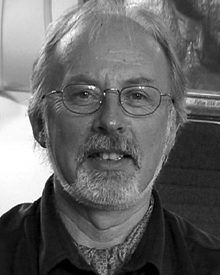 W. J. Fitzgerald合作论文数14
 Arthur Gretton合作论文数Centre for Computational Statistics and Machine Learning, University College London;Google DeepMind13
 Christopher Holmes合作论文数Department of Statistics, University of Oxford13Vladislav B. Tadic合作论文数13
 Nikolas Kantas合作论文数Department of Mathematics, Faculty of Natural Sciences, Imperial College London11
 Ba-Ngu Vo合作论文数Department of Electrical & Computer Engineering, Faculty of Science & Engineering, Curtin University11Manuel Davy合作论文数10
 Robert Christian P.合作论文数Centre de Recherche en Mathématiques de la Décision, Université Paris Dauphine - PSL10
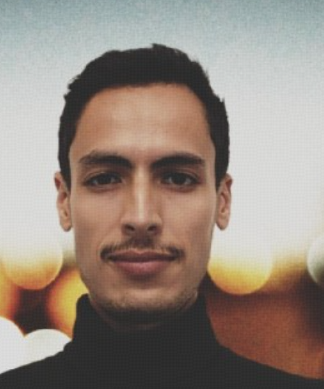 Soufiane Hayou合作论文数Department of Applied Mathematics and Statistics, The Johns Hopkins University9
 Gareth Peters合作论文数School of Mathematics and Statistics, University of NSW9
 Jaco Vermaak合作论文数Department of Engineering;University of Cambridge9P Duvaut合作论文数9
 Yutian Chen (陈御天)合作论文数8
 Elena Punskaya合作论文数7
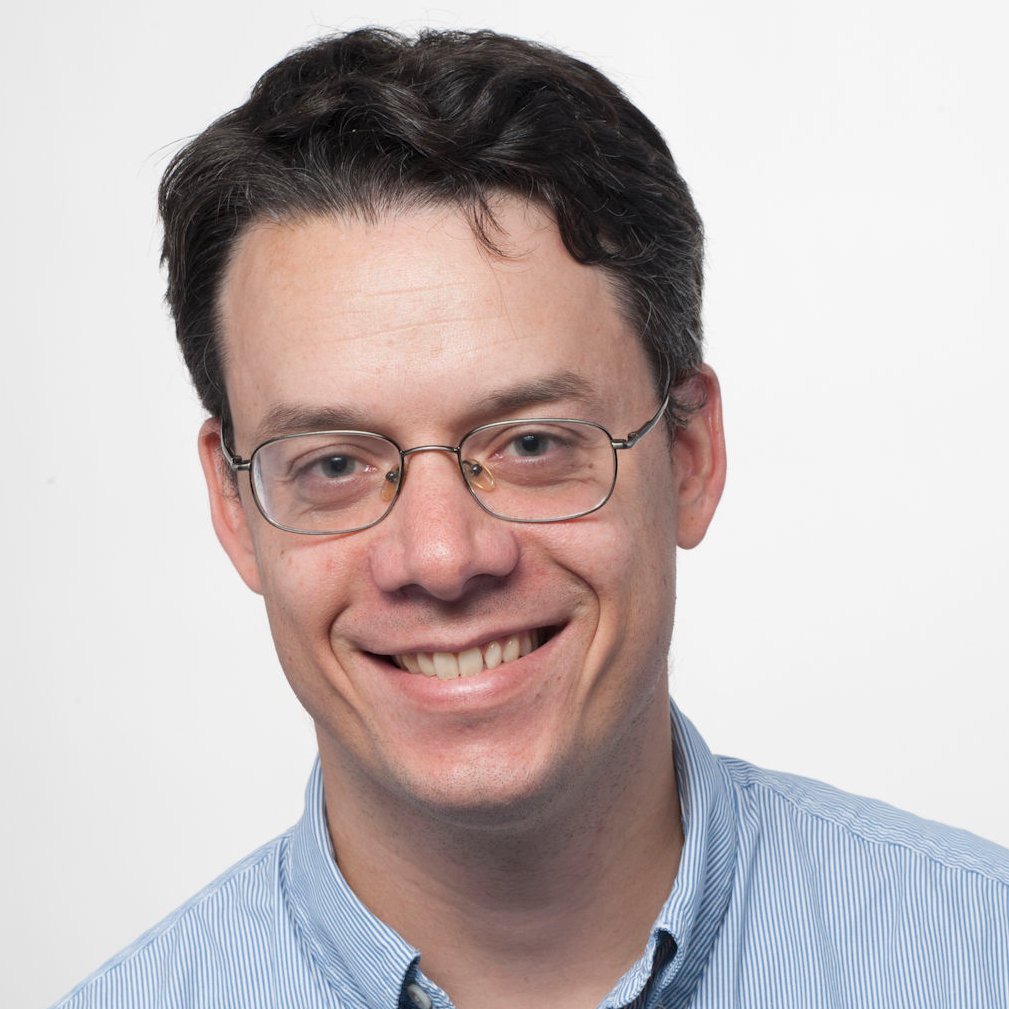 Nicolas Chopin合作论文数Department of Statistics, École Nationale de La Statistique et de l'Administration Économique7
 Rob Cornish合作论文数University of Oxford7
 Andrew Campbell合作论文数Google DeepMind7
 Judith Rousseau合作论文数Department of Statistics, Jesus College, University of Oxford7
 Alexandre Bouchard-Côté合作论文数Faculty of Science, University of British Columbia;Department of Statistics, University of British Columbia7George Poyiadjis合作论文数7
 Mark Briers合作论文数7Yuyang Shi合作论文数6
 Eugenio Clerico合作论文数Dept Stat, Univ Oxford6
 Joe Benton合作论文数Alignment Science Team, Anthropic6
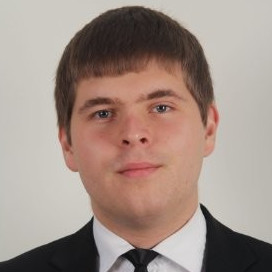 Alexandre Galashov合作论文数DeepMind6
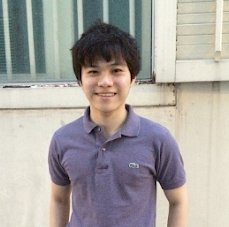 Jeremy Heng合作论文数ESSEC Business Sch6
 Pierre E. Jacob合作论文数Département des Systèmes d’Information, Sciences de la Décision et Statistiques, ESSEC Business School6
 James Thornton合作论文数Google DeepMind6
 Anthony Lee合作论文数School of Mathematics, University of Bristol6
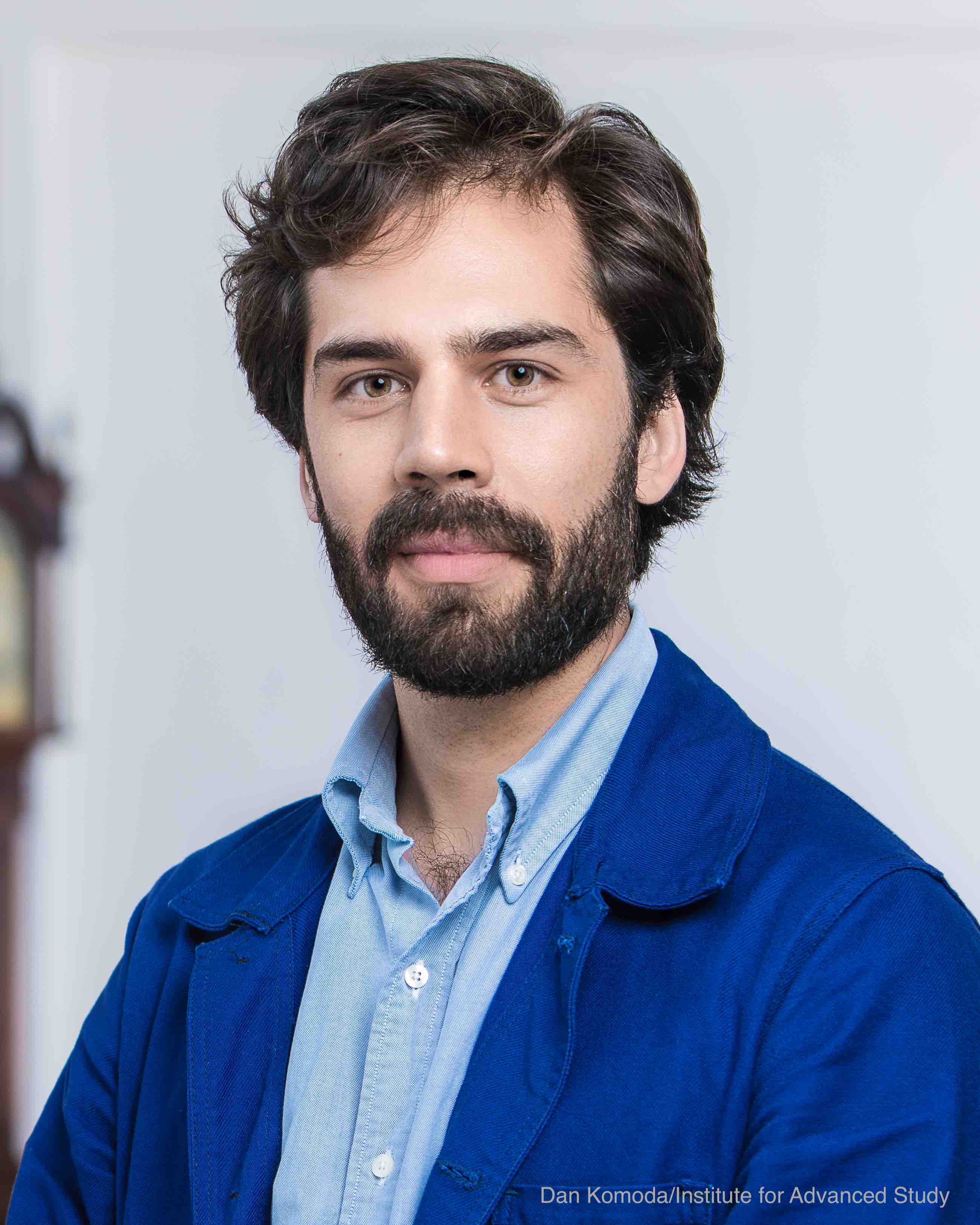 Chris J. Maddison合作论文数Department of Statistical Sciences, Faculty of Arts & Science, University of Toronto;Vector Institute;DeepMind6
 Sinan Yıldırım合作论文数Department of Electrical and Electronics Engineering, Bo'aziçi University6
 Saifuddin Syed合作论文数Department of Statistics, Faculty of Science, University of British Columbia5
 Mike West合作论文数Department of Statistical Science, Duke University5
 David Stutz合作论文数Max Planck Institute for Informatics5
 Ali Taylan Cemgil合作论文数Department of Computer Engineering, Bogazici University5
 Michael Hutchinson合作论文数Isomorphic Labs5
 Emilien Dupont合作论文数Google DeepMind5
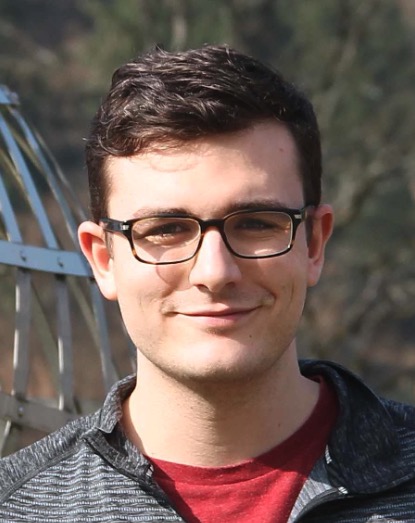 Quentin Berthet合作论文数Google DeepMind5




