SUMMARY STATEMENT:We propose the use of artificial societies to support health care policymakers in understanding and forecasting the impact and adverse effects of policies. Artificial societies extend the agent-based modeling paradigm using social science research to allow integrating the human component. We simulate individuals as socially capable software agents with their individual parameters in their situated environment including social networks. We describe the application of our method to better understand policy effects on the opioid crisis in Washington, DC, as an example. We document how to initialize the agent population with a mix of empiric and synthetic data, calibrate the model, and make forecasts of possible developments. The simulation forecasts a rise in opioid-related deaths as they were observed during the pandemic. This article demonstrates how to take human aspects into account when evaluating health care policies.
Enhancing skills is one of the main reasons for the use of simulation. This chapter of the SCS M&S Body of Knowledge looks mainly at training. The use of simulators, often referred to as virtual simulation, is described and followed by the use of constructive simulation systems, where all relevant entities of interests are simulated. Examples from the defense sector are given, but also health care and emergency management. Finally, a section describes the various options of live simulation, where trainees with their operational equipment are stimulated by simulated inputs.
The SCS M&S Body of Knowledge is a living concept, and core research areas are among those that will drive its progress. In this chapter, conceptual modeling constitutes the first topic, followed by the quest for model reuse. As stand-alone applications become increasingly rare, embedded simulation is of particular interest. In the era of big data, data-driven M&S gains more interest as well. Applying the M&S Framework (MSF) to enable neuromorphic architectures exemplifies the ability of simulation to meaningfully contribute to other fields as well. The chapter closes with sections on model behavior generation and the growth of simulation-based disciplines.
Introduction COVID-19 has prompted the extensive use of computational models to understand the trajectory of the pandemic. This article surveys the kinds of dynamic simulation models that have been used as decision support tools and to forecast the potential impacts of nonpharmaceutical interventions (NPIs). We developed the Values in Viral Dispersion model, which emphasizes the role of human factors and social networks in viral spread and presents scenarios to guide policy responses. Methods An agent-based model of COVID-19 was developed with individual agents able to move between 3 states (susceptible, infectious, or recovered), with each agent placed in 1 of 7 social network types and assigned a propensity to comply with NPIs (quarantine, contact tracing, and physical distancing). A series of policy questions were tested to illustrate the impact of social networks and NPI compliance on viral spread among (1) populations, (2) specific at-risk subgroups, and (3) individual trajectories. Results Simulation outcomes showed large impacts of physical distancing policies on number of infections, with substantial modification by type of social network and level of compliance. In addition, outcomes on metrics that sought to maximize those never infected (or recovered) and minimize infections and deaths showed significantly different epidemic trajectories by social network type and among higher or lower at-risk age cohorts. Conclusions Although dynamic simulation models have important limitations, which are discussed, these decision support tools should be a key resource for navigating the ongoing impacts of the COVID-19 pandemic and can help local and national decision makers determine where, when, and how to invest resources.
We present a perspective of the national transplant program based on organizational theory and complexity theory, framing the system’s allocation of donor organs as an interorganizational directed multiplex of agents with diverse belief formation in a cooperative-competitive environment. Simulation and analysis of this macroscale complexity may help explain known behavioural variations across member organizations. However, the transplant community still relies on system-scale simulations since effective macroscale methodologies are not well established. Therefore, we offer this perspective of the national transplant program as a means to stimulate new methods that capture macroscale impacts of policy development for deceased donor organ allocation.
The practice of deceased-donor solid-organ transplantation is unique among clinical therapies because it substantially benefits recipients, The allocation process is a complex System-of-Systems (SoS) with multiple stakeholders, components, rules, and policies. While we model and simulate such SoS, they are challenging to verify and validate thoroughly due to a large number of use cases and the sensitivity to initial conditions. Furthermore, subject matter experts within communities of practice do not trust such models because they are difficult to explain. This paper proposes a trust-centric approach to validation focusing on experimentally exploring the simulation's behavior space and demonstrating its utility to a community of experts. We describe a three-step validation process to show how modelling and simulation professionals can foster trust in simulations of a complex SoS. We apply the framework to verify and validate a simulation model of the Kidney-Pancreas (KP) allocation process within the United States.
Computational research methods are increasingly proving their worth within the academic study of religion/s. These valuable tools can operate in a manner complementary to and supportive of the interpretative dimensions of the study of religion/s. They can also function in a generative way, helping scholars discover and refine important hypotheses. They are useful for articulating theories in detail, which helps to promote evaluation, correction, and improvement of those theories. Three classes of advanced computational approaches are discussed in the chapter: collaborative, longitudinal, and massive database technologies; natural language processing technologies; and computational modeling and simulation technologies. Each class of advanced computational approaches is internally diverse, and we document this internal diversity with many examples and case studies. Scholars and scientists who study religion typically will benefit from working on teams containing experts in the particular computational techniques important for any given research project.
A significant therapeutic challenge for people with disabilities is the development of verbal and echoic skills. Digital voice assistants (DVAs), such as Amazon's Alexa, provide networked intelligence to billions of Internet-of-Things devices and have the potential to offer opportunities to people, such as those diagnosed with autism spectrum disorder (ASD), to advance these necessary skills. Voice interfaces can enable children with ASD to practice such skills at home; however, it remains unclear whether DVAs can be as proficient as therapists in recognizing utterances by a developing speaker. We developed an Alexa-based skill called ASPECT to measure how well the DVA identified verbalization by autistic children. The participants, nine children diagnosed with ASD, each participated in 30 sessions focused on increasing vocalizations and echoic responses. Children interacted with ASPECT prompted by instructions from an Echo device. ASPECT was trained to recognize utterances and evaluate them as a therapist would-simultaneously, a therapist scored the child's responses. The study identified no significant difference between how ASPECT and the therapists scored participants; this conclusion held even when subsetting participants by a pre-treatment echoic skill assessment score. This indicates considerable potential for providing a continuum of therapeutic opportunities and reinforcement outside of clinical settings.
In this article, we provide an introduction to simulation for cybersecurity and focus on three themes: (1) an overview of the cybersecurity domain; (2) a summary of notable simulation research efforts for cybersecurity; and (3) a proposed way forward on how simulations could broaden cybersecurity efforts. The overview of cybersecurity provides readers with a foundational perspective of cybersecurity in the light of targets, threats, and preventive measures. The simulation research section details the current role that simulation plays in cybersecurity, which mainly falls on representative environment building; test, evaluate, and explore; training and exercises; risk analysis and assessment; and humans in cybersecurity research. The proposed way forward section posits that the advancement of collecting and accessing sociotechnological data to inform models, the creation of new theoretical constructs, and the integration and improvement of behavioral models are needed to advance cybersecurity efforts.
This paper proposes a new approach to the demography of religion and non-religion that builds on and expands agent-based modeling and social simulation techniques developed in prior work by the research teams led by the authors. Traditional demographic approaches to religion and non-religion understandably focus attention on self-reports of religious identity or affiliation, where longitudinal data is most readily available, and they employ a cohort-component methodology to make projections. We argue that demographic projections of religion and non-religion could be enhanced by using multi-agent artificial intelligence models of societies. After artificial societies with suitably cognitively complex agents are validated using existing demographic data, projections of religion and non-religion could be made by measuring religiosity within the artificial society not only as affiliation but also in three other dimensions: belief, service attendance, and private religious practices. Artificial-society religious demographic projection could also take account of non-linear feedback loops and interaction of variables, produce narrower error estimates, and integrate a rich array of disciplinary insights relevant to religious and non-religious identity and change—all of which are weaknesses in traditional religious demographic projections.
Public policies are designed to have an impact on particular societies, yet policy-oriented computer models and simulations often focus more on articulating the policies to be applied than on realistically rendering the cultural dynamics of the target society. This approach can lead to policy assessments that ignore crucial social contextual factors. For example, by leaving out distinctive moral and normative dimensions of cultural contexts in artificial societies, estimations of downstream policy effectiveness fail to account for dynamics that are fundamental in human life and central to many public policy challenges. In this paper, we supply evidence that incorporating morally salient dimensions of a culture is critically important for producing relevant and accurate evaluations of social policy when using multi-agent artificial intelligence models and simulations.
Verification is a crucial process to facilitate the identification and removal of errors within simulations. This study explores semantic changes to the concept of simulation verification over the past six decades using a data-supported, automated content analysis approach. We collect and utilize a corpus of 4,047 peer-reviewed Modeling and Simulation (M&S) publications dealing with a wide range of studies of simulation verification from 1963 to 2015. We group the selected papers by decade of publication to provide insights and explore the corpus from four perspectives: (i) the positioning of prominent concepts across the corpus as a whole; (ii) a comparison of the prominence of verification, validation, and Verification and Validation (V&V) as separate concepts; (iii) the positioning of the concepts specifically associated with verification; and (iv) an evaluation of verification's defining characteristics within each decade. Our analysis reveals unique characterizations of verification in each decade. The insights gathered helped to identify and discuss three categories of verification challenges as avenues of future research, awareness, and understanding for researchers, students, and practitioners. These categories include conveying confidence and maintaining ease of use; techniques' coverage abilities for handling increasing simulation complexities; and new ways to provide error feedback to model users.
The abandonment of supernatural religious beliefs and rituals seems to occur quite easily in some contexts, but post-supernaturalist cultures require a specific set of conditions that are difficult to produce and sustain on a large scale and thus are historically rare. Despite the worldwide resurgence of supernaturalist religion, some subcultures reliably produce people who deny the existence of supernatural entities. This social phenomenon has evoked competing explanations, many of which enjoy empirical support. We synthesize six of the most influential social-science explanations, demonstrating that they provide complementary perspectives on a complex causal architecture. We incorporate this theoretical synthesis into a computer simulation, identifying conditions under which the predominant attitude toward supernaturalism in a population shifts from acceptance to rejection (and vice versa). The model suggests that the conditions for producing widespread rejection of supernatural worldviews are highly specific and difficult to produce and sustain. When those conditions combine, which is historically rare, a stable social equilibrium emerges within which post-supernaturalist worldviews are widespread; however, this equilibrium is easier to disrupt than equilibria whose cohesion is stabilized by supernatural religion due to persistent cognitive tendencies toward supernaturalism in evolved human minds.
This paper presents our novel efforts on automatically capturing and analyzing user data from a discrete-event simulation environment. We collected action data such as adding/removing blocks and running a model that enable creating calculated data fields and examining their relations across expertise groups. We found that beginner-level users use more blocks/edges and make more build errors compared to intermediate-level users. When examining the users with higher expertise, we note differences related to time spent in the tool, which could be linked to user engagement. The model running failure of beginner-level users may suggest a trial and error approach to building a model rather than an established process. Our study opens a critical line of inquiry focused on user engagement instead of process establishment, which is the current focus in the community. In addition to these findings, we report other potential uses of such user action data and lessons learned.
The academic achievement gap in the United States education system persists despite significant investments and efforts to correct it. Research reveals potential functions - priorities, readiness, expectation and motivation - performed by four stakeholders - students, teachers, schools and parents. A system dynamics simulation is proposed that captures the stakeholders and their functions to facilitate the exploration of potential interventions to close the achievement gap. We demonstrate the development of a working simulation when important information (known quantitative relationships, scales, and formulations) are not available. Two experiments are conducted to 1) identify which stakeholders have the greatest impact, and 2) explore the effect of combined interventions on closing the achievement gap. Simulation results suggest a ranking among individual stakeholder interventions where student interventions have the greatest effect followed by teachers, and then parents. Results further indicate that combining stakeholder interventions at moderate levels have the greatest impact on reducing the achievement gap.
Reasoning is dynamic. Human understanding evolves across changing and unexpected circumstances, whether escaping a war zone or watching a suspenseful movie. General and past knowledge is often insufficient to make sense of these unfolding situations; it must be adapted to account for unexpected inputs. This chapter describes an early-stage prototype of a modeling platform that tracks how humans adjust old information toward new contexts, revising their understanding of real-world situations. The process is modeled as streams of narrative—as an interplay of semantic networks that represent mental, social, and cultural webs of information. Its taxonomy is newly realized in a Unity 3D environment so that annotations can be spatially captured and anchored in inhabitable spaces. The result is a new method for modeling the emergence of unexpected entities and contexts, including shared contexts. This can endlessly connect artifacts of different media and sources in a unifying immersive space. A long-term plan for these models is to inform artificial intelligence that can reason about situations that unfold past the ontological boundaries of their general reference frameworks.
We need to train the next generation of scientists, modelers and analysts to be technically competent and socially aware transdisciplinary collaborators. Model thinking and Modeling and Simulation can play an even more significant role in society if we expand our horizons beyond socio-technical problems and tackle broader challenges impacting the human condition. In this paper, we discuss transdisciplinary collaboration, inclusion and social awareness as three pillars that can form the basis for maintaining and increasing the relevance of our field in a world where technological change is outpacing our ability to manage and predict its impact on key aspects of life and society.
Complex scheduling problems require a large amount computation power and innovative solution methods. The objective of this paper is the conception and implementation of a multi-agent system that is applicable in various problem domains. Independent specialized agents handle small tasks, to reach a superordinate target. Effective coordination is therefore required to achieve productive cooperation. Role models and distributed artificial intelligence are employed to tackle the resulting challenges. We simulate a NP-hard scheduling problem to demonstrate the validity of our approach. In addition to the general agent based framework we propose new simulation-based optimization heuristics to given scheduling problems. Two of the described optimization algorithms are implemented using agents. This paper highlights the advantages of the agent-based approach, like the reduction in layout complexity, improved control of complicated systems, and extendability.
Operating universities under pandemic conditions is a complex undertaking. The Artificial University (TAU) responds to this need. TAU is a configurable, open-source computer simulation of a university using a contact network based on publicly available information about university classes, residences, and activities. This study evaluates health outcomes for an array of interventions and testing protocols in an artificial university of 6,500 students, faculty, and staff. Findings suggest that physical distancing and centralized contact tracing are most effective at reducing infections, but there is a tipping point for compliance below which physical distancing is less effective. If student compliance is anything short of high, it helps to have separate buildings for quarantining infected students, thereby gracefully increasing compliance. Hybrid in-person and online classes and closing fitness centers do not significantly change cumulative infections but do significantly decrease the number of the infected at any given time, indicating strategies for "flattening the curve" to protect limited resources. Supplementing physical distancing with centralized contact tracing decreases infected individuals by an additional 14%; boosting frequency of testing for student-facing staff yields a further 7% decrease. A trade-off exists between increasing the sheer number of infection tests and targeting testing for key nodes in the contact network (i.e., student-facing staff). There are significant advantages to getting and acting on test results quickly. The costs and benefits to universities of these findings are discussed. Artificial universities can be an important decision support tool for universities, generating useful policy insights into the challenges of operating universities under pandemic conditions.
 Andreas Tolk合作论文数Modeling and Analysis Innovation Center, The MITRE Corporation58
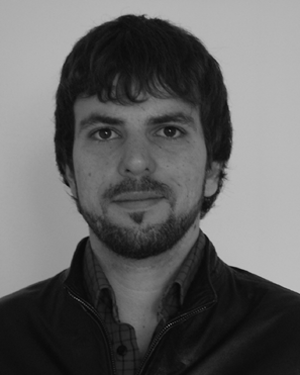 Jose J. Padilla合作论文数Old Dominion University49
 Ross Gore合作论文数University of Virginia35
 I. O. Ryzhov合作论文数25S. Buckley合作论文数24
 Levent Yilmaz合作论文数Auburn University24
 John A. Miller合作论文数Department of Computer Science, University of Georgia20
 Wesley J. Wildman合作论文数15
 Hamdi Kavak合作论文数13
 F. LeRon Shults合作论文数Agder University12
 Charles D. Turnitsa合作论文数Old Dominion University12
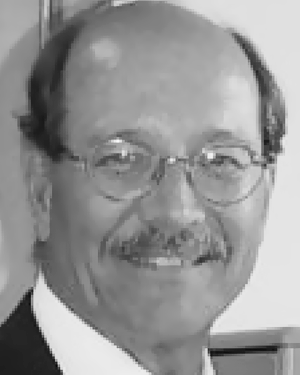 Curtis Blais合作论文数10
 Anthony Barraco合作论文数8
 Gregory Zacharewicz合作论文数University of Bordeaux8
 Saurabh Mittal合作论文数7
 Navonil Mustafee合作论文数University of Exeter7stan levine合作论文数6
 Kevin Heffner合作论文数Computer Research Institute of Montreal (CRIM), Montreal, QC, Canada6
 Ivan Puga-Gonzalez合作论文数4Heber Herencia-Zapana合作论文数4
 Krzysztof J. Rechowicz合作论文数Modeling, Simulation and Visualization Engineering Department, Old Dominion University4
 Umut Durak合作论文数TUBITAK-SAGE4
 John A. Sokolowski合作论文数Old Dominion University4jeff abbott合作论文数3Daniele Vernon-Bido合作论文数Old Dominion Univ3
 David Voas合作论文数IOE - Social Research Institute, University College London3
 Justin E. Lane合作论文数Institute of Cognitive and Evolutionary Anthropology, University of Oxford3
 John Shull合作论文数3marc stonge合作论文数2George Hodulik合作论文数2Kevin Gupton合作论文数2Kelsi Lindblad合作论文数2Robert D. King合作论文数2Gabe Vece合作论文数2alex c nielsen合作论文数2dan scolaro合作论文数2sidney chartrand合作论文数2John J. Johnson IV合作论文数2Paul Reynolds合作论文数2Olcay Sahin合作论文数2
 Andrew C Page合作论文数School of Science and Health, University of Western Sydney2
 Bernard P. Zeigler合作论文数Department of Electrical & Computer Engineerin, College of Engineering, The University of Arizona2
 Bruno Vallespir合作论文数Laboratoire d'Automatique et de Productique, University Bordeaux 12
 Stuart Morgan合作论文数2
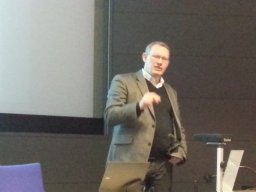 Per M. Gustavsson合作论文数Stratsys;George Mason University;The University of Skövde2
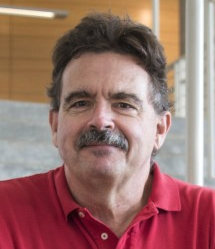 Paul Fishwick合作论文数Metaphorz, LLC2Neha Gondal合作论文数Department of Sociology, Rutgers University2
 Yiannis Papelis合作论文数Old Dominion University2
 Tuncer Ören合作论文数School of Electrical Engineering and Computer Science, Faculty of Engineering, University of Ottawa;TÜBİTAK2




