Coming to suspect someone has engaged in wrongdoing based on their unexpected behavior is a common phenomenon—yet little is known about what triggers initial suspicion. We investigate how violating expectations for high emotionality during a traumatic event can trigger suspicion that one has engaged in immoral—or even criminal—activity through moral typecasting. Five studies demonstrate this theory in a criminal context with dire real-world consequences: 911callers reporting violent crimes generating suspicion due to unexpected behavior, which could trigger confirmation bias in investigations leading to wrongful convictions. Using both real and tightly controlled, simulated 911 calls, we demonstrate that failing to express the expected levelof emotion on a 911 call reporting a violent crime leads laypeople and police to morally typecast the caller as more of a moral agent capable of perpetrating immoral acts and less of a moral patient capable of being the victim of immoral acts—ultimately increasing suspicion they were involved in the crime and support for treating them as a suspect. We advance moral psychologicaltheory by demonstrating that failing to express expected levels of emotion about a moral violation can shape moral inferences about someone’s capacity to commit versus be the victim of moral wrongs, thereby generating suspicion that they might have engaged in wrongdoing. We demonstrate this theory in criminal settings to explain how one tragedy can become two: altruistic witnesses calling 911 to plead for help becoming suspects of the crime they reported because they failed to exhibit expected emotional demeanor.
Abstract When trials include emotionally evocative evidence such as gruesome photographs and victim impact statements, maintaining the balance between probative value and prejudicial effects can be difficult. Such evidence can rouse jurors’ anger, disgust, outrage, or empathy. In turn, experienced emotions can, directly or indirectly, within or outside awareness, motivate decision makers to blame, punish, or forgive. These psychological processes can bias guilt or liability verdicts, where visceral reactions influence how jurors interpret facts or even motivate them to bypass careful consideration of these facts. Further, emotional displays from defendants (e.g., remorse) and victims (e.g., distress) influence judgments of credibility and legal decisions via cognitive (expectancy violation) or emotional (empathy) processes. The chapter describes the most recent scientific research on these topics, integrating work from social, cognitive, and legal psychology. The chapter concludes with recommendations for future research on emotion and prejudice, group processes, and emotion regulation in legal settings.
Objectives: Three experiments tested the utility of minimal versus extended voir dire questions in predicting mock jurors’ verdicts and damage awards, and whether the biasing impact of their preexisting attitudes on case judgments could be reduced by judicial rehabilitation.Hypotheses: We hypothesized that extended voir dire questions would be more predictive of case judgments than minimal voir dire questions. We hypothesized that judicial rehabilitation would not reduce this impact of preexisting attitudes on case judgments. Method: Across three experiments, each focusing on a different civil case (insurance bad faith, wrongful birth, medical malpractice misdiagnosis), online participants (N=2,041; 62% female; 77% White, 9% African American, 6% Asian/Pacific Islander, 6% Hispanic or Latino/a; Mage=40) were paid Mturk workers. They were randomly assigned to experience (a) no voir dire, minimal voir dire focusing on previous legal experience and self-identification of biases, or extended voir dire focusing on specific attitudes about civil litigation, parties, and laws, before judging the case and (b) no judicial rehabilitation, or judicial rehabilitation. Participants read a civil case, made case judgments, and completed bias awareness measures.Results: Demographic information and minimal voir dire questions did not predict case judgments, but the majority of extended voir dire responses predicted verdicts and damage awards. Judicial rehabilitation did not reduce the biasing impact of their preexisting attitudes on case judgments—but did result in mock jurors reporting that they were less biased, despite judicial rehabilitation not actually reducing their bias.Conclusions: Attorneys need the opportunity during voir dire to ask jurors about specific attitudes that might bias their decisions because relying on jurors’ self-identification of their own biases has little utility. Further, although judicial rehabilitation might make jurors think that they are less biased, it may not actually reduce the impact of their preexisting attitudes on their case decisions. Public interest statement: Contrary to popular belief, juror biases are not likely to be cured by judicial rehabilitation, and might backfire by creating the illusion in jurors that they are unbiased. Although very few mock jurors were able to self-identify things that might bias them when asked general questions in voir dire, they were willing to admit specific attitudes that biased their verdicts and damage awards when asked. Thus, we suggest reducing bias on juries by allowing attorneys to ask specific, detailed voir dire questionnaires crafted by the parties to streamline the jury selection process and remove jurors for cause or via peremptory challenges, rather than relying on “quick fixes”, such as general questions that ask jurors to self-identify their own bias or judicial rehabilitation.
In civil litigation voir dire (jury selection) has a fundamental impact on jury composition, and by extension, is inextricably entangled with constitutional, statutory, and precedential guarantees regarding an impartial jury of the parties' peers. However, despite its deep influence on jury composition, and by extension trial outcomes, the rules for jury selection vary wildly by jurisdiction, ranging from almost no questioning of jurors at all to extensive questioning that dives into details of the underlying cases. Indeed, selection can take a week in some states and 20 minutes in others. This article involves a first of its kind empirical study that analyzes results from a national sample of over 2,000 mock jurors. The study measures the impact of jury selection across three distinct civil case presentations based on actual cases. It measures existing jury biases, explores how those biases impact juror decisions, considers whether existing methods common to voir dire sufficiently identify those biases, and analyzes whether existing methods for "curing" such biases are effective. It concludes that a) existing biases, many of which are prevalent in the existing jury population, fundamentally impact juror decision making - sometimes in ways that are inappropriate, b) these biases can harm both sides of civil litigation but they skew in favor of civil defendants, c) these biases will often go unidentified under existing rules so that an impartial jury is not assured, d) this problem is not cured by existing interventions, and e) jurors are largely blind to the role bias plays in their decision making. The article concludes with best practices that could be useful to attorneys, legislators, and judges.
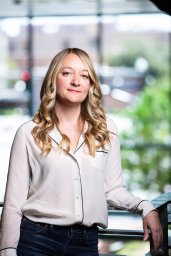 Jessica M. Salerno合作论文数University of Illinois4
 John Campbell合作论文数2Daphna Spivack合作论文数2
 Hannah J. Phalen合作论文数Sch Social & Behav Sci, Arizona State Univ2
 Valerie Hans合作论文数Behavioral Economics and Decision Research, Cornell SC Johnson College of Business, Cornell University2Liana C Peter-Hagene合作论文数University of Illinois at Chicago1
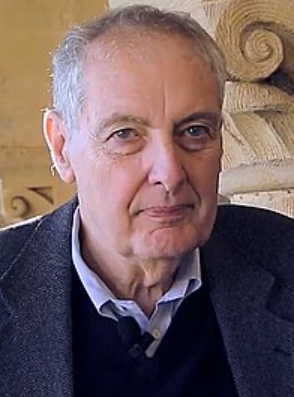 Lee Ross合作论文数Department of Psychology, Stanford University;Stanford Center on Conflict and Negotiation1




