Monitoring wildlife populations at scale is fraught with logistical and resource constraints. Despite this, estimating wildlife population state variables and vital rates remains crucial for science, and to assess conservation investment and effort. The veracity and transparency of results population size are rare in the literature. To overcome a near two-decade long data gap we thority across six important protected areas. Surveys were conducted within a spatial capturerecapture framework, the industry gold-standard for monitoring carnivore populations. For while for leopards, and spotted hyenas we deployed camera traps. Our protocols were designed to obtain unambiguous individual identification photographs. This large-scale effort involved data university students, and government rangers). Locally extinct in three areas, we show lion
The use of remote camera traps has accelerated rapidly in the field of large carnivore science since the 1990s. Members of the Hyaenidae are important components of functional ecosystems in Africa and parts of the Middle East and South Asia, and make good candidates for study using camera traps. However, camera trap studies of hyenas remain rare in the literature when compared to species like tigers Panthera tigris , leopards Panthera pardus , and snow leopards Panthera uncia . In this paper, we examine the published use of camera traps for hyenas ( n = 34 studies implemented between 2007 and 2020) and examine the logistical challenges of using camera traps, such as individual identification, limited sexual dimorphism, and complex social structures, for studies of hyena population biology, behavioral ecology, and conservation. We highlight what these challenges may mean for data analyses and interpretation. We also suggest potential benefits of further camera trap studies of this taxonomic family, including new insights into social behavior, range extensions, and robust density estimates.
The decline and extirpation of large carnivore populations can lead to cascading effects in natural ecosystems. An understanding of large carnivore population densities, distribution and dynamics is therefore critical for developing effective conservation strategies across landscapes. This is particularly important in island environments where species face increased extinction risk due to genetic isolation coupled with local losses of finite habitat. The Sri Lankan leopard Panthera pardus kotiya is one of two remaining island-living leopards on Earth and the only apex predator in Sri Lanka. Despite its iconic status in Sri Lanka, robust research on the species has been limited to only a handful of scientific studies, limiting meaningful scientific recommendations for the species' conservation and management. In this study, we conducted a single season camera trap survey in Sri Lanka's largest protected area, Wilpattu National Park (1317 km2), located in the country's northwest. Our objective was to estimate key ecological state variables of interest (density, abundance, sex-specific movement and spatial distribution) of this leopard subspecies. Our results indicate that Wilpattu National Park supports a density of 18 individuals/100 km2 (posterior SD=1.5; 95% HPD interval=16–21) with a mean abundance of 144 (posterior SD=15) individual leopards and a healthy sex ratio (f:m=2.03:1). The estimated activity range for male leopards > 2 years old was 49.53 km2 (Posterior SD=3.43; HPD interval=43.09–56.41) and for female leopards > 2 years old was 22.04 km2 (Posterior SD=1.82; HPD interval=18.34–25.65). This density falls at the higher end of published estimates for the species anywhere in its global range, based on similar methods. Given Sri Lanka's limited size, this national park system should be considered as a critical stronghold that maintains a source population of leopards, contributing to the long-term population viability of leopards in the larger landscape.
Large felids represent some of the most threatened large mammals on Earth, critical for both tourism economies and ecosystem function. Most populations are in a state of decline, and their monitoring and enumeration is therefore critical for conservation. This typically rests on the accurate identification of individuals within their populations. We review the most common and current survey methods used in individual identification studies of large felid ecology (body mass > 25 kg). Remote camera trap photography is the most extensively used method to identify leopards, snow leopards, jaguars, tigers, and cheetahs which feature conspicuous and easily identifiable coat patterning. Direct photographic surveys and genetic sampling are commonly used for species that do not feature easily identifiable coat patterning such as lions. We also discuss the accompanying challenges encountered in several field studies, best practices that can help increase the precision and accuracy of identification and provide generalised ratings for the common survey methods used for individual identification.
Robust measures of animal densities are necessary for effective wildlife management. Leopards ( Panthera pardus ) and spotted hyenas ( Crocuta Crocuta ) are higher order predators that are data deficient across much of their East African range and in Uganda, excepting for one peer-reviewed study on hyenas, there are presently no credible population estimates for these species. A lack of information on the population status and even baseline densities of these species has ramifications as leopards are drawcards for the photo-tourism industry, and along with hyenas are often responsible for livestock depredations from pastoralist communities. Leopards are also sometimes hunted for sport. Establishing baseline density estimates for these species is urgently needed not only for population monitoring purposes, but in the design of sustainable management offtakes, and in assessing certain conservation interventions like financial compensation for livestock depredation. Accordingly, we ran a single-season survey of these carnivores in the Lake Mburo National Park of south-western Uganda using 60 remote camera traps distributed in a paired format at 30 locations. We analysed hyena and leopard detections under a Bayesian spatially explicit capture-recapture (SECR) modelling framework to estimate their densities. This small national park (370 km 2 ) is surrounded by Bahima pastoralist communities with high densities of cattle on the park edge (with regular park incursions). Leopard densities were estimated at 6.31 individuals/100 km 2 (posterior SD = 1.47, 95% CI [3.75–9.20]), and spotted hyena densities were 10.99 individuals/100 km 2 , but with wide confidence intervals (posterior SD = 3.35, 95% CI [5.63–17.37]). Leopard and spotted hyena abundance within the boundaries of the national park were 24.87 (posterior SD 7.78) and 39.07 individuals (posterior = SD 13.51) respectively. Leopard densities were on the middle end of SECR studies published in the peer-reviewed literature over the last 5 years while spotted hyena densities were some of the first reported in the literature using SECR, and similar to a study in Botswana which reported 11.80 spotted hyenas/100 km 2 . Densities were not noticeably lower at the park edge, and in the southwest of our study site, despite repeated cattle incursions into these areas. We postulate that the relatively high densities of both species in the region could be owed to impala Aepyceros melampus densities ranging from 16.6–25.6 impala/km 2 . Another, potential explanatory variable (albeit a speculative one) is the absence of interspecific competition from African lions ( Panthera leo ), which became functionally extinct (there is only one male lion present) in the park nearly two decades ago. This study provides the first robust population estimate of these species anywhere in Uganda and suggests leopards and spotted hyenas continue to persist in the highly modified landscape of Lake Mburo National Park.
Abstract In 2017, Sri Lanka set a goal to increase its forest cover to 32% by 2030 (Sri Lanka UN‐REDD, 2017). However, on November 4th 2020, the government published circular MWFC/1/2020 revoking the circular 5/2001 of August 10th 2001, one of the country's most crucial forest protection directives. The revocation of the 5/2001 circular could severely hamper this target, posing a threat of deforestation to a variety of ecosystems which are not part of any formally designated protected areas (PA) in Sri Lanka, also known as Other State Forests. This includes forested areas adjoining PAs which are crucial for habitat connectivity and standalone state forest lands. Such a retrograde step could have potentially catastrophic ramifications on Sri Lanka's declining forest cover. It would also severely weaken the country's commitments to inter alia, the UNREDD Programme, Kyoto protocol and CBD. We therefore call on the Government of Sri Lanka to urgently reconsider and reverse this decision.
We provide a detailed redescription of the two original type specimens of the little-known, endemic Andaman water monitor, Varanus salvator andamanensis Deraniyagala, 1944. Examination of further voucher specimens allows for an expanded morphological diagnosis of this island taxon and comparison with other currently recognized subspecies of the wide-spread Southeast Asian water monitor. Based on the specimens examined, V. s andamanensis is characterized by a homogenous black dorsal background colour, with five to seven, more or less distinctive transverse rows of small spots or ocelli, light yellowish dots arranged sporadically between transverse spot/ocelli rows on the body, light yellowish coloured spots distributed sporadically throughout both forelimbs and hind limbs; 17-18 prominent rows of light spots continuing from base of tail to its tip dorsally with sporadically arranged dots on lateral sides of tail; and higher scale counts in transverse dorsal scale rows. Based on photographic evidence and examination of museum specimens, V. s. andamanensis inhabits both the Andaman and southern Nicobar Islands, which politically belong to the Republic of India. In addition, we confirm the presence of V. s. macromaculatus in the northern and central Nicobar Islands, thus providing evidence for the allopatric co-occurrence of two different water monitor subspecies in these remote archipelagos.
The Kandyan Shrub Frog, Pseudophilautus rus is known only from two localities around Kandy (500–800 m a.s.l), Sri Lanka; Kiribathkumbura and Pilimatalawa. Mature males attain a SVL of 20.6–24.1 mm and mature females up to 23.1 mm. P. rus perches on low vegetation, usually on leaves and branches of shrubs, grass, and logs, 0.1–1.5 m above the ground. Males of the species produce one of the most frequently heard calls in suburban and urban areas in Kandy, together with the common shrub frog P. popularis. Here, I describe for the first time the advertisement call of P. rus.
In Sri Lanka, the family Rhacophoridae consists of 72 species and 67 of them belong to the genus Pseudophilautus (Laurent) (Meegaskumbura et al. 2010; Meegaskumbura & Manamendra-Arachchi 2011; Meegaskumbura & Manamendra-Arachchi 2005). Pseudophilautus popularis (Manamendra-Arachchi & Pethiyagoda 2005) is a small frog where males would attain snout-vent-lengths between 17.7–21.3 mm and gravid females attaining lengths around 23.0–25.6 mm. It is found in elevations approximately up to 1070 m above sea level (asl). It is a widely distributed species found in many localities within the wet zone. As the name suggests, it is commonly encountered near anthropogenic habitats and forest edges (Manamendra-Arachchi & Pethiyagoda 2005, Karunarathna & Amarasinghe 2010). Pseudophilautus popularis perches on low vegetation, generally on shrubs 0.2–1.5 m above the ground. Here, I describe the complex advertisement call of P. popularis.
—Uda Mäliboda Trail is an unstudied, remarkable forest located in the northwest region of Samanala Nature Reserve (SNR) in Sri Lanka’s wet zone. Here we report the first record of D. kotagamai from Uda Mäliboda Trail and the lowest elevation records of four highland Rhacophorid frogs: Pseudophilautus alto, P. asankai, P. femoralis, and Taruga eques. Further, we present results of a preliminary study of herpetofaunal diversity in Uda Mäliboda Trail. Thirty-four amphibian (26 endemic and 19 Threatened) and 59 reptile (32 endemic and 19 Threatened) species were observed. This wet zone forest supports high herpetofaunal diversity; however activities such as deforestation, human encroachment, mining, agriculture, dumping, road construction, and a hydroelectric power station threaten the ecology of this biologically diverse forest.
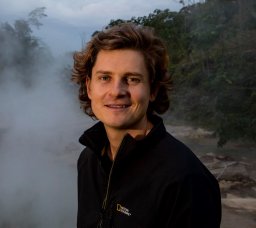 Alexander Braczkowski合作论文数Biodivers Lab, Southern Univ Sci & Technol5
 Duan Biggs合作论文数Environmental Futures Research Institute, Griffith University3
 Luke Gibson合作论文数2
 Ralph Schenk合作论文数2
 Arjun Dheer合作论文数Dept Evolutionary Ecol, Leibniz Inst Zoo & Wildlife Res2
 Arjun M. Gopalaswamy合作论文数Carnassials Global2
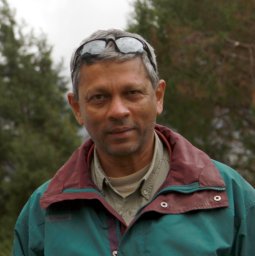 Eric Wikramanayake合作论文数Department of Wildlife and National Parks, Peninsular Malaysia2
 Indika Peabotuwage合作论文数1Sophia Jingo合作论文数1Allie Richardson合作论文数1
 Majintha Madawala合作论文数1
 Tutilo Mudumba合作论文数Dept Zool Entomol & Fisheries Sci, Makerere Univ1
 Christopher J. O'Bryan合作论文数Ctr Biodivers & Conservat Sci, Univ Queensland1Justine Shanti Alexander合作论文数1
 Nirmala Kanthi Panagodage Perera合作论文数Department of Health, Medicine and Caring Sciences, Linkoping University1
 Sevvandi Jayakody合作论文数Dept Aquaculture & Fisheries, Wayamba Univ Sri Lanka1
 Harikrishnan Surendran合作论文数Metastring Fdn, Kirloskar Business Pk1
 Nicholas Elliot合作论文数University of Oxford1
 Julien Fattebert合作论文数Panthera;School of Life Sciences, University of Kwazulu-Natal;School of Life Sciences, University of Kwazulu-Natal1
 Suranjan Karunarathna合作论文数Nature Explorations and Education Team, De Soysapura Housing Scheme;Email: unknown.;Nature Explorations and Education Team, Soysapura Housing Scheme1
 Hamish McCallum合作论文数Centre for Planetary Health and Food Security, Griffith University1
 Andre Koch合作论文数1Aggrey Rwetsiba合作论文数1
 Peter A. Lindsey合作论文数Mpala Research Centre1
 Christos Astaras合作论文数1
 Robert Martin Kityo合作论文数Zoology Department, Makerere University1Eric Sande合作论文数1
 Kelum Manamendra-Arachchi合作论文数Wildlife Heritage Trust1
 Stephanie M. Dloniak合作论文数Department of Zoology, Michigan State University1
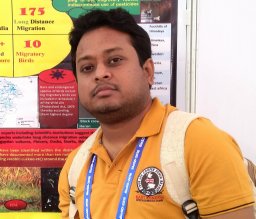 Suman Pratihar合作论文数1




