This research proposes an approach to long-horizon manipulation which uses video and kinesthetic demonstrations to imitate human actions. The task learning process involves two stages. To learn the sequence of the sub-actions in the video demonstration, the Task Sequencing Network (TSNet) - a hybrid neural network made up of Convolutional Neural Network (CNN), Recurrent Neural Network (RNN), and Connectionist Temporal Classification (CTC) loss, is used in the first stage. Through dynamic movement primitive (DMP) models, task-agnostic task primitives are learned in the second stage via kinesthetic demonstrations. To encode the semantic relationship between the subactions and the objects, a Multi-relational Embedding Network (MRE) using YOLOv4 for object detection is used to estimate the affordances associated with the objects in the scene. For tasks like liquid pouring, table cleaning and object placement, the proposed imitation learning approach learns task planning and execution in a decoupled manner, resulting in effective sub-action sequencing and quicker and more precise learning of sub-action execution.
This paper addresses the problem of visual feature representation learning with an aim to improve the performance of end-to-end reinforcement learning (RL) models. Specifically, a novel architecture is proposed that uses a heterogeneous loss function, called CRC loss, to learn improved visual features which can then be used for policy learning in RL. The CRC-loss function is a combination of three individual loss functions, namely, contrastive, reconstruction and consistency loss. The feature representation is learned in parallel to the policy learning while sharing the weight updates through a Siamese Twin encoder model. This encoder model is augmented with a decoder network and a feature projection network to facilitate computation of the above loss components. Through empirical analysis involving latent feature visualization, an attempt is made to provide an insight into the role played by this loss function in learning new action-dependent features and how they are linked to the complexity of the problems being solved. The proposed architecture, called CRC-RL, is shown to outperform the existing state-of-the-art methods on the challenging Deep mind control suite environments by a significant margin thereby creating a new benchmark in this field.
The paper proposes a novel method to detect graspable handles for picking objects from a confined and cluttered space, such as the bins of a rack in a retail warehouse. The proposed method combines color and depth curvature information to create a Gaussian mixture model that can segment the target object from its background and imposes the geometrical constraints of a two-finger gripper to localize the graspable regions. This helps in overcoming the limitations of a poorly trained deep network object detector and provides a simple and efficient method for grasp pose detection that does not require a priori knowledge about object geometry and can be implemented online with near real-time performance. The efficacy of the proposed approach is demonstrated through simulation as well as real-world experiment.
Post-editing in Automatic Speech Recognition (ASR) entails automatically correcting common and systematic errors produced by the ASR system. The outputs of an ASR system are largely prone to phonetic and spelling errors. In this paper, we propose to use a powerful pre-trained sequence-to-sequence model, BART, further adaptively trained to serve as a denoising model, to correct errors of such types. The adaptive training is performed on an augmented dataset obtained by synthetically inducing errors as well as by incorporating actual errors from an existing ASR system. We also propose a simple approach to rescore the outputs using word level alignments. Experimental results on accented speech data demonstrate that our strategy effectively rectifies a significant number of ASR errors and produces improved WER results when compared against a competitive baseline. We also highlight a negative result obtained on the related grammatical error correction task in Hindi language showing the limitation in capturing wider context by our proposed model.
The ability to apply a previously-learned skill (e.g., pushing) to a new task (context or object) is an important requirement for new-age robots. An attempt is made to solve this problem in this paper by proposing a deep meta-imitation learning framework comprising of an attentive-embedding net-work and a control network, capable of learning a new task in an end-to-end manner while requiring only one or a few visual demonstrations. The feature embeddings learnt by incorporating spatial attention is shown to provide higher embedding and control accuracy compared to other state-of-the-art methods such as TecNet [7] and MIL [4]. The interaction between the embedding and the control networks is improved by using multiplicative skip-connections and is shown to overcome the overfitting of the trained model. The superiority of the proposed model is established through rigorous experimentation using a publicly available dataset and a new dataset created using PyBullet [36]. Several ablation studies have been carried out to justify the design choices.
This paper is concerned with the motor skill learning from human demonstrations using the framework of dynamic regressive models (DRMs). The DRM-based motion planner is preferred as it generates the end-effector trajectory dynamically based on the current state of the end-effector. Within existing frameworks, a single DRM can learn a single motion profile. In addition, such learned DRMs from the data may not be stable. This paper addresses both these issues in a comprehensive manner. In this paper a single DRM has been used to encode human demonstrations involving multitask profiles and multiple task-equilibriums which is novel. We have introduced the idea that the learned DRM will generate human-like stable motion if the energy dissipation rate (EDR) of the generated trajectory follows that of the human demonstration. Thus, the DRM structure has been modified by adding a continuous guiding signal which can be called as the control signal. This signal has been derived using control theoretic principle to ensure asymptotic stability while maintaining the EDR equivalent to that of the human demonstration. The asymptotic stability of the learned DRM has been established by involving a nonmonotonic Lyapunov function consisting of first derivative of a quadratic function and the energy function associated with the DRM. The proposed framework can be learned using many existing regression techniques in this paper Gaussian mixture regression, locally weighted projection regression, and support vector regression techniques have been used successfully. During the pick and place tasks, human demonstrations involving multiple task profiles and multiple task-equilibriums are generated using a 7 DOF commercial robot manipulator. Experimental validations show that the DRMs learned using these three regression schemes are able to guide the robot along the multitask profiles in a stable manner.
This book illustrates basic principles, along with the development of the advanced algorithms, to realize smart robotic systems. It speaks to strategies by which a robot (manipulators, mobile robot, quadrotor) can learn its own kinematics and dynamics from data. In this context, two major issues have been dealt with; namely, stability of the systems and experimental validations. Learning algorithms and techniques as covered in this book easily extend to other robotic systems as well. The book contains MATLAB- based examples and c-codes under robot operating systems (ROS) for experimental validation so that readers can replicate these algorithms in robotics platforms.
This paper proposes an end-to-end self-supervised feature representation network named Attentive Task-Net or AT-Net for video-based task imitation. The proposed AT-Net incorporates a novel multi-level spatial attention module to highlight spatial features corresponding to the intended task demonstrated by the expert. The neural connections in AT-Net ensure the relevant information in the demonstration is amplified and the irrelevant information is suppressed while learning task-specific feature embeddings. This is achieved by a weighted combination of multiple intermediate feature maps of the input image at different stages of the CNN pipeline. The weights of the combination are given by the compatibility scores, predicted by the attention module for respective feature maps. The AT-Net is trained using a metric learning loss which aims to decrease the distance between the feature representations of concurrent frames from multiple view points and increase the distance between temporally consecutive frames. The AT-Net features are then used to formulate a reinforcement learning problem for task imitation. Through experiments on the publicly available Multi-view pouring dataset, it is demonstrated that the output of the attention module highlights the task-specific objects while suppressing the rest of the background. The efficacy of the proposed method is further validated by qualitative and quantitative comparison with a state-of-the-art technique along with intensive ablation studies. The proposed method is implemented to imitate a pouring task where an RL agent is learned with the AT-Net in Gazebo simulator. Our findings show that the AT-Net achieves 6.5% decrease in alignment error along with a reduction in the number of training iterations by almost 155k over the state-of-the-art while satisfactorily imitating the intended task.
This paper looks into the problem of handling imbalanced data in a multi-label classification problem. The problem is solved by proposing two novel methods that primarily exploit the geometric relationship between the feature vectors. The first one is an undersampling algorithm that uses angle between feature vectors to select more informative samples while rejecting the less informative ones. A suitable criterion is proposed to define the informativeness of a given sample. The second one is an oversampling algorithm that uses a generative algorithm to create new synthetic data that respects all class boundaries. This is achieved by finding \emph{no man's land} based on Euclidean distance between the feature vectors. The efficacy of the proposed methods is analyzed by solving a generic multi-class recognition problem based on mixture of Gaussians. The superiority of the proposed algorithms is established through comparison with other state-of-the-art methods, including SMOTE and ADASYN, over ten different publicly available datasets exhibiting high-to-extreme data imbalance. These two methods are combined into a single data processing framework and is labeled as ``GICaPS'' to highlight the role of geometry-based information (GI) sampling and Class-Prioritized Synthesis (CaPS) in dealing with multi-class data imbalance problem, thereby making a novel contribution in this field.
Sequential prediction problems such as imitation learning, where future observations depend on previous predictions (actions), violate the common i.i.d. assumptions made in statistical learning. This leads to poor performance in theory and often in practice. Some recent approaches (Daumé III et al., 2009; Ross and Bagnell, 2010) provide stronger guarantees in this setting, but remain somewhat unsatisfactory as they train either non-stationary or stochastic policies and require a large number of iterations. In this paper, we propose a new iterative algorithm, which trains a stationary deterministic policy, that can be seen as a no regret algorithm in an online learning setting. We show that any such no regret algorithm, combined with additional reduction assumptions, must find a policy with good performance under the distribution of observations it induces in such sequential settings. We demonstrate that this new approach outperforms previous approaches on two challenging imitation learning problems and a benchmark sequence labeling problem.
 Swagat Kumar合作论文数Department of electrical engineering, indian institute of technology kanpur27
 Laxmidhar Behera合作论文数Department of Electrical Engineering22
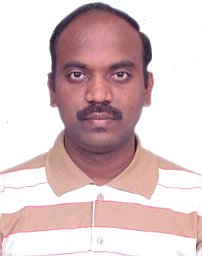 Prem Kumar Patchaikani合作论文数Department of Electrical Engineering, Indian Institute of Technology Kanpur16
 Ranjith Ravindranathan Nair合作论文数14
 Anima Majumder合作论文数TCS Innovation Labs, TCS Innovation Labs10
 Asish Kumar Sen合作论文数8
 Swarbhanu Sarkar合作论文数Council of Scientific and Industrial Research, Indian Institute of Chemical Biology6
 Shyam Ji Gupta合作论文数4
 Olyvia Kundu合作论文数4
 Madhu Vankadari合作论文数Cyber Physical Systems Group, University of Oxford;Wolfson College, University of Oxford;Department of Computer Science, University of Oxford3Kartik Ramachandruni合作论文数2Vishal Bhutani合作论文数Tata Consultancy Services , India2
 Rajesh Sinha合作论文数Tata Consultancy Services - Research2
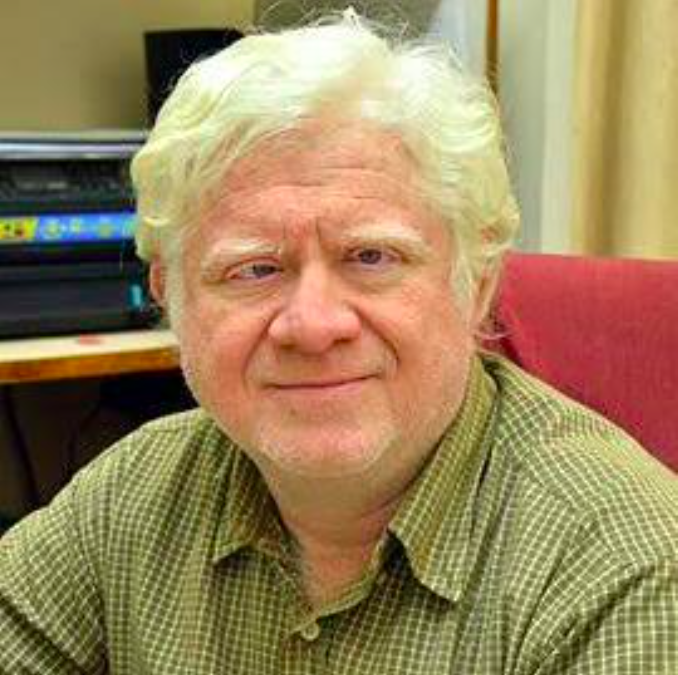 K. S. Venkatesh合作论文数Department of Electrical Engineering, Indian Institute of Technology Kanpur2
 Subhendu Naskar合作论文数Department of Chemistry, Bengal Engineering and Science University2Gora Das合作论文数1P Bhattacharyya合作论文数1Manish Soni合作论文数1
 Tushar Sandhan合作论文数1Darshita Jain合作论文数1Sharath Jotawar合作论文数1
 Ravi Prakash合作论文数1
 Debarshi Patanjali Ghoshal合作论文数Dept Elect Comp & Software Engn, McGill Univ1
 Prerna Singh合作论文数Department of Electrical and Computer Engineering, Indrapastha Institute of Information Technology1D Ghoshal合作论文数1K Bose合作论文数1Aaditya Asati合作论文数TCS Research, TATA Consultancy Services, India1Omprakash Jha合作论文数Tata Consultancy Services , India1
 rammyani pal合作论文数Organic and Medicinal Chemistry Division, CSIR-Indian Institute of Chemical Biology1V. Madhu Babu合作论文数TATA Consultancy Serv, Bangalore, Karnataka, India1nivedita chatterjee合作论文数1Singh Vipender合作论文数1
 Niladri Das合作论文数1
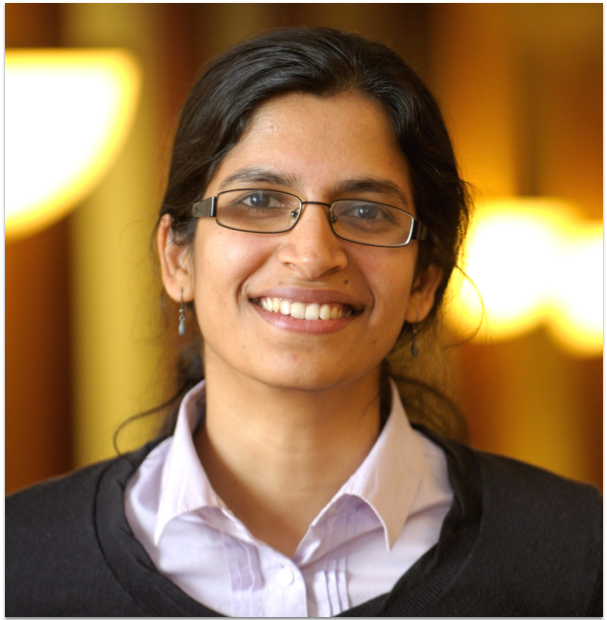 Preethi Jyothi合作论文数Department of Computer Science and Engineering, Indian Institute of Technology Bombay1
 Rekha Raja合作论文数1
 Dr Rajdip Dey合作论文数1
 Saeid Nahavandi合作论文数Swinburne University of Technology;Harvard University1
 Ayush Maheshwari合作论文数NVIDIA;Temples of India1
 Ganesh Ramakrishnan合作论文数Department of Computer Science and Engineering, Indian Institute of Technology Bombay;Centre for Machine Intelligence & Data Science, Indian Institute of Technology Bombay;Bank of Baroda1
 Ashish Kumar合作论文数Stealth Mode Start-Up1
 Rahul Gajbhiye合作论文数Department of Reproductive Endocrinology and Infertility, National Institute for Research in Reproductive Health1
 Parasuraman Jaisankar合作论文数Indian Institute of Chemical Biology1
 Awhan Patnaik合作论文数1




