The Supreme Court of India has directed the National Medical Commission to find out the rationality of conducting live surgical workshops during medical conferences several times without any clear guidelines or directives. Whilst live surgical workshops are great learning tools for young surgeons, there exists a risk of a breach of patient confidentiality and safety. Do the pros outweigh the cons is to be addressed. The time may be ripe to explore other options like live operations on simulators with the scenario manipulated by Artificial Intelligence (AI), to make it more a real, challenging experience for surgical trainees.
Stromal-epithelial communication is an absolute necessity when it comes to the morphogenesis and pathogenesis of solid tissues, including the prostate and breast. So far, signalling pathways of several growth factors have been investigated. Besides such chemical factors, non-coding RNAs such as miRNAs have recently gained much interest because of their variety and complexity of action. Prostate and breast tissues being highly responsive to steroid hormones such as androgen and estrogen, respectively, it is not surprising that a huge set of available literature critically investigated the interplay between such hormones and miRNAs, especially in carcinogenesis. This review showcases our effort to highlight hormonally-related miRNAs that also somehow perturb the regular stromal-epithelial interactions during carcinogenesis in the prostate and breast. In future, we look forward to exploring how hormonal changes in the tissue microenvironment bring about miRNA-mediated changes in stromal-epithelial interactome in carcinogenesis and cancer progression.
Anal fistula is a complicated medical condition that poses a unique challenge in treatment due to its intricate anatomy and high recurrence rates. However, India’s rigorous research in this domain has been transformative, with several groundbreaking innovations and discoveries. This review aims to shed light on India’s outstanding contributions to anal fistula management and treatment, potentially reshaping the way we approach this ailment. A review of the last 10-year articles focused on the various novel aspects of anal fistula was performed using papers obtained from electronic databases, including PubMed, Embase, and Scopus. The search was restricted to articles published in the English language, and the search terms included “anal fistula,” “fistula-in-ano,” “MRI,” “tuberculosis,” and “sphincter-sparing.”
Artificial intelligence (AI), once integrated into medicine, has transformed its role from a mere statistical tool to a sophisticated system capable of guiding surgical procedures and predicting outcomes. AI algorithms utilize machine learning (ML), deep learning, and neural networks to analyze large datasets and identify patterns, ultimately making accurate predictions about patient outcomes. Through continuous learning, adaptation, and updating, these systems assist healthcare professionals in the diagnosis and offer real-time guidance during surgical interventions, reducing surgical error and postoperative complications. This evolution marks a paradigm shift, enhancing precision, efficiency, and, ultimately, patient care in surgery. This review article explores the critical role of AI in predicting surgical complications and discusses associated challenges and ethical considerations.
Raman spectroscopy discovered by Nobel laureate Sir Chandrasekhara Venkata Raman from India in 1928 changed the history of Oncosurgery and gave a new direction and dimension to the diagnosis, management, screening, and treatment of cancer. The amalgamation of laser and artificial intelligence in spectroscopy made this invention of Raman an extremely useful non-invasive tool in cancer surgery and management. Apart from intraoperative guidance, early detection, and tumor classification, Raman spectroscopy was found to be useful in the assessment of residual disease, therapeutic monitoring of chemotherapy drugs and radiotherapy, biomarker invention, drug delivery monitoring, and cancer screening. While Raman spectroscopy shows great promise in cancer research and diagnosis, it is still a developing field, and further research is needed to fully understand its potential.
“Surgical sexism” is the latest addition to the medical vocabulary where studies revealed surgical specialists treating women are reimbursed at a lower rate than surgical specialists treating men. While in India, this ethical issue has still not been reported, it is an issue to watch for in future as a part of gender discrimination.
The recent demise of Dr. Bindumadhav Dattatraya Pujari, Past President of the Association of Surgeons of India, has left a void in the academic world for the surgical fraternity of India. An astute academician and researcher, he was associated with a few of the pioneering surgical research in India especially in the arena of abdominal tuberculosis, necrotizing enteritis, and hemorrhoids.
Recent years have witnessed a significant interest in phytonutrients as treatment module for a range of diseases, including cancers. Catechins, predominant in green tea are potent antioxidants belonging to the flavonoid family that have been linked epidemiologically to a lower prevalence of prostate pathologies in Asian nations. In the present work, we investigated ameliorative potential of green tea catechins (epigallocatechin, EGC, and epigallocatechin 3-gallate, EGCG) on the aberrant proliferation of normal prostate epithelial cells driven by paracrine action of stromal medium, conditioned with estradiol (E2) and dihydrotestosterone (DHT) (20 pM and 10 nM respectively). It was observed that EGC (5 mu M) significantly inhibited the aberrant epithelial proliferation induced by stromal conditioned medium (CM), with a decreased expression of ER alpha, ER[3, AR, CK05, CK18, and PSA. Further, the CM collected after pre-treatment of stromal cells with EGCG (0.75 mu M), had an inhibitory effect on epithelial cell proliferation, with reduction in the expression of ER alpha, AR, and CK05 while the expression of ER[3, CK18, and PSA were increased. These findings suggest that EGC helps in downregulating the aberrant epithelial proliferation while EGCG is able to downregulate the proliferative potential of stromal cell secretome. These insights will help in deciphering preventive measures against prostate pathologies involving stromal-epithelial cross-talk.
Breast diseases are on the rise throughout the world. It is essential to learn correct technique of “clinical breast examination” to ascertain the appropriate diagnostic workup in the most efficient manner. The ABCD rule is proposed by three highly skilled clinicians in the field of breast care trained in the famous Cardiff Breast Unit of Prof LE Hughes, Prof David JT Webster and Prof Robert E Mansel. The ABCD rule will allow early detection of breast cancer and other diseases with timely management of patients. It will help both the medical and nursing students as well as the field health workers in learning about diagnosis of breast diseases and in screening for breast cancer.
Asian Society of Mastology (ASOMA) is an international body of experts from disciplines of surgery, radiology, pathology, medical and radiation oncology, plastic surgery, and breast support group dedicated to improving the care of patients with breast diseases. The clinical breast assessment (CBA) of patients with a focused history and clinical breast examination (CBE) is an essential and initial component of triple assessment in the evaluation of patients presenting with breast diseases. CBE is also an affordable method of screening for breast cancer. It adds to breast imaging by providing additional information about the breast lesion and providing a sense of reassurance to the patients. CBA needs to be implemented in a systematic and uniform fashion throughout the world by all the clinicians involved in breast care. The optimal method for CBE has not yet been fully established. This article highlights the importance of CBE and discusses the studies comparing various methods of CBE on breast models and human subjects to provide the evidence to support the most valid and reliable method of CBE.
Tehemton Erach Udwadia (1934–2023) is regarded as the “Father of Laparoscopic Surgery in India”. His demise recently left a void in the academic world, and his role in making the Indian Journal of Surgery a reputed and highly popular journal for the Indian surgical fraternity will always remain as a milestone. He was the Chief Editor of the Indian Journal of Surgery from 2001 to 2003. He was a true visionary who understood and could foresee the reach of the Indian Journal of Surgery and therefore initiated the web-based peer review and online manuscript management system for the first time for the journal.
Burst abdomen is a grave complication of laparotomy. X-suturing has been developed as a new method for reducing risk of burst abdomen. Five randomised controlled trials were conducted comparing X-suture with continuous suture in patients undergoing emergency laparotomy. The analysis of pooled data is presented. Data from five randomised controlled trials were collated. Data on individual patients were obtained from each centre on an Excel database format. A total of 1005 patients undergoing emergency laparotomy were studied. Of these 494 patients were randomised to X-suture arm and 511 to the continuous suture arm. The occurrence of burst abdomen was the main outcome of interest and the suture technique the main predictor of burst. The continuous suture group was considered the reference category. Risk ratio, risk difference, attributable proportion in exposed and prevented fraction in the exposed were calculated. Burst abdomen occurred in 9.31% patients in the X-suture group and in 20.35% patients in the continuous suture group. The risk difference (11%) and relative risk = 0.45 were highly significant (p = 0.0001) with a prevented fraction = 54%. Presence of diabetes, intraperitoneal sepsis, uraemia, and raised serum bilirubin were associated with increased risk of burst abdomen. The risk of burst abdomen can be substantially reduced with the use of X-suture in patients undergoing emergency laparotomy.
Over the past two decades, the roles of stem cells have been studied in the contexts of developmental biology, tissue engineering, cancer therapy, neurodegenerative disorders and what not! Right since the discovery of prostate specific adult stem cells or stem-like cells in both stromal and epithelial compartments, their participation in prostate development and prostatic pathologies (like benign prostatic hyperplasia and prostate cancer) are being thoroughly investigated. The present mini-review summarizes the ins and outs of the histological organization of acinar prostate and prostate cancer, keeping the prostate-specific epithelial stem cells on the backdrop.
 Kaushik Bhattacharya合作论文数G 616, Siliguri 734010, India7
 Anurag Srivastava合作论文数Adv Mat Res Lab, ABV Indian Inst Informat Technol & Management4
 Deepak Pandey合作论文数3
 Muni Nagesh Alapakam合作论文数2
 Ankit Roy Choudhury合作论文数2
 Pradeep kumar Chaturvedi合作论文数2
 Pankaj Garg合作论文数Garg Fistula Research Institute2
 Neeraj Kumar合作论文数2
 Vipul D Yagnik合作论文数Department of Surgical Gastroenterology, Ronak Endo-Laparoscopy and General Surgical Hospital2Abraham Santhosh John合作论文数2Gupta Surabhi合作论文数2
 Anita Dhar合作论文数2Neela Bhattacharya合作论文数2Hari S. Shukla合作论文数2G. Siddesh合作论文数1Piyush Ranjan Mishra合作论文数1Ravinder Mohan Pandey合作论文数1
 prema ram choudhary合作论文数Department of Physiology, C.U. Shah Medical College1Seenu Vuthaluru合作论文数1
 Mahesh C Misra合作论文数Dept Surg Disciplines, All India Inst Med Sci1Dawka S合作论文数1
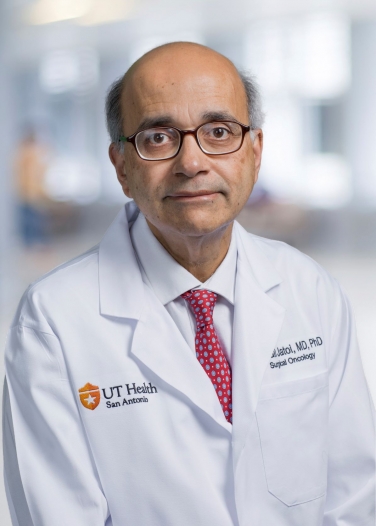 Ismail Jatoi合作论文数Division of Surgical Oncology and Endocrine Surgery, Joe R.& Teresa Lozano Long School of Medicine, University of Texas Health Science Center at San Antonio/Department of Surgery, Joe R.& Teresa Lozano Long School of Medicine, University of Texas Health Science Center at San Antonio1
 Anshul Thakur合作论文数Department of Computer Science and Engineering, PEC University of Technology1
 Kamal Kataria合作论文数1
 Lohani Kush R合作论文数Department of Surgery, Creighton University School of Medicine1
 Surajit Bhattacharya合作论文数1




