BACKGROUND:Coaching for professional development contributes to improved performance, personal satisfaction, and well-being. Although coaching programs have been widely introduced at the undergraduate medical education level and in certain residency programs, coaching programs targeting the unique experiences of fellows are less well described. Given high rates of burnout, pulmonary and critical care medicine (PCCM) fellows may benefit from professional development coaching. OBJECTIVE:To design, implement, and evaluate an individual coaching program for PCCM fellows. METHODS:Alumni surveys and trainee and faculty focus groups identified key needs of a coaching program. Coaches received salary support and were trained in competencies including positive psychology, learner engagement, and communication. Starting in 2019, 3 coaches were assigned 7 fellows each, spanning the 3 Accreditation Council of Graduate Medical Education (ACGME) years. The program was evaluated through ACGME surveys, Likert scale-based end-of-year surveys, and qualitative analysis of fellows' written feedback. RESULTS:Coaching was associated with improved overall training program satisfaction (ACGME survey overall satisfaction [survey range 1-5, with 5 highest] was 4.2, 3.9, and 4.3 in the 3 years preintervention, and 4.6, 4.6, and 4.6 in the 3 years postintervention). Compliant responses in the ACGME survey domain of Evaluation increased above our program benchmark of 90% from a baseline of 75%. Fellow well-being demonstrated slight improvements through the evaluation period (2018-2022). Fellows rated the coaching program highly, especially in support and well-being, feedback, and goal-setting. Only 66% reported a direct impact on choosing a specific career path. CONCLUSIONS:Implementation of this fellowship coaching program was associated with improvements in fellows' satisfaction with the training experience, evaluation and feedback, career development, and well-being, despite the added challenges of the COVID-19 pandemic. Future directions include standardizing coaching frameworks, exploring long-term impacts on career trajectories, and evaluating coaches' satisfaction with the program.
Background Residency retreats are a valuable tool for residency programs to enhance physician wellbeing and foster skill development. Existing literature emphasizes the role of retreats in community building and wellness, but less attention has been directed to their potential to address educational gaps and support professional identity formation (PIF). Methods We aim to provide a framework in which residency retreats can be transformed from social events into venues for skill building and PIF. 185 residents from the University of California San Francisco (UCSF) internal medicine program participate in leadership and affinity retreats each year throughout their training. We applied Kern’s 6-step approach to curriculum development to design a curriculum that targets essential skill-building and PIF during key developmental stages leading to structured retreats that focus on core competencies, community engagement, and connection within affinity groups. Results Through a program-specific needs assessment, we identify areas requiring growth and tailor our curriculum to incorporate PIF content into our retreats. Conclusions In this paper, we outline the development and implementation of structured retreats in a large internal medicine residency, emphasizing the integration of leadership skills, advocacy, and PIF.
Despite numerous calls to action, palliative care remains inadequately integrated into pulmonary-critical care medicine (PCCM) practice and is de-emphasized in PCCM education. Barriers to specialty palliative care demonstrate a clear need for efficient and effective primary palliative care delivered by PCCM clinicians with advanced training. This American Thoracic Society Workshop Report builds on our policy statement on the proactive integration of palliative care in serious respiratory illness with 2 goals: (1) Develop a scalable "PalliPulm" framework to improve palliative care education and practice in PCCM and (2) inform palliative care-focused education and training programs in PCCM to guide future initiatives. We convened an interdisciplinary and interprofessional group of experts between May 2024 and February 2025 over 4 phases: (1) hybrid workshop; (2) virtual breakout groups; (3) nominal group technique and rapid qualitative analysis; and (4) workshop report development. We identified core primary palliative care skills that PCCM trainees and clinicians should obtain and prioritized the most essential skills-that is, symptom management, serious illness communication, and caregiver support in ambulatory settings and serious illness communication, symptom management, palliative care fundamentals, and end of life care in inpatient settings. We describe pragmatic ways to integrate palliative care into PCCM education and offer advanced educational resources. We provide recommendations for framing palliative care to patients and caregivers, illustrate ways to deliver culturally appropriate palliative care, and offer a path for the future of PalliPulm. This report guides PCCM leaders, trainees, and clinicians to establish scalable PalliPulm educational and practice initiatives and improve its integration into practice.
ICU-to-ward transfers are high-risk transitions marked by information loss and burdensome handoff preparation. We developed PAUSE-Agents, a clinician-in-the-loop multi-agent LLM pipeline that drafts source-attributed handoff briefs from structured ICU data and clinical notes using the clinician-developed ICU-PAUSE template. Mirroring ICU team structure, PAUSE-Agents routes each record through a scribe extractor, 6 role-specialized agents, explicit conflict surfacing, and deterministic safety checks before synthesis, producing an editable first draft rather than an autonomous note. In a single-center medical ICU cohort, 5 physicians completed 100 reviews of 84 agent-drafted briefs. Among adjudicable claims, 98.8% were verified and 1.2% were incorrect; 88% of briefs had no pertinent omission, and mean PDSQI-9 quality was 4.20/5. PAUSE-Agents surfaced 118 conflict warnings and 421 safety flags, making documentation inconsistencies visible before handoff. An o4-mini PDSQI-9 judge showed limited case-level discrimination but supported aggregate monitoring. We release PAUSE-Agents and its clinician evaluation application.
Rationale Communication errors during transitions of care between the intensive care unit (ICU) and the hospital wards threaten care quality and patient safety. In 2019, we developed a structured ICU-to-ward transfer tool (ICU-PAUSE) to improve handoff communication during this transition of care; ICU-PAUSE has since been implemented at 23 medical centers in the United States and one in India. To develop best practices for continued implementation efforts, we sought to understand how local modifications to the ICU-PAUSE template and its implementation strategies enhanced fit, acceptance, and uptake. Methods We conducted semi-structured post-implementation interviews and surveys with intensivist ICU-PAUSE implementation champions at each site to identify and describe implementation strategy modifications that were successful at their institutions. Concurrently, we analyzed content modifications to the ICU-PAUSE template embedded into each site's electronic health record. We used the Framework for Reporting Adaptations and Modifications-Enhanced to Implementation Strategies (FRAME-IS) to characterize the site-specific modifications. We then developed a set of best practices to guide ongoing scale-up efforts. Results The majority of the site-specific modifications were content changes to the template (Figure 1); prominent examples included a checkbox to indicate if a referral to a post-ICU clinic is needed and a section listing any operations performed during a patient's ICU course with the surgeon's information. Per FRAME-IS, most remaining modifications to the implementation strategies were context-informed personnel and format adjustments, such as adding regular information sessions regarding ICU-PAUSE for rotating trainees. Overall, interviews identified four key implementation strategies for the successful adoption and sustainability of ICU-PAUSE: 1) build a coalition, 2) distribute educational materials, 3) promote adaptability, and 4) conduct ongoing training. Important local partnerships included collaboration with hospitalists, administrators, technical support, and more. Conclusion The identified best practices for implementation will now be incorporated into the ICU-PAUSE bundled intervention for future sites participating in rolling implementation. Next steps include evaluating the impact of the intervention on key care processes and patient outcomes, including readmissions, length of ICU stay and total hospitalization, and mortality. Multisite center-level patient data analyses are underway in partnership with Vizient, Inc., the national quality improvement data organization, and will be available for review at the time of ATS 2025. Figure 1. Best practices for ICU-PAUSE implementation and site-specific template modifications.
Rationale Patient handoffs between the intensive care unit (ICU) and medical wards are high-risk and prone to communication errors.1-3 ICU-PAUSE is a structured ICU-to-ward handoff tool, previously developed to improve communication during this transition of care by summarizing pertinent information from a patient's ICU course and embedding a diagnostic pause during the transfer process.4 ICU-PAUSE has subsequently been implemented at 23 medical centers across the United States. However, international institutions may face similar challenges as well as unique challenges during ICU-ward transitions of care. This study describes the process and assesses the feasibility of the first international implementation of ICU-PAUSE at a medical center in India. Methods To implement ICU-PAUSE at the KIMS Hospitals in India, an information session was conducted for the intensivist serving as the site champion to introduce ICU-PAUSE and outline the steps for its implementation. The site champion then modified the ICU-PAUSE tool and implementation strategies to fit their specific institutional needs. Template modifications made by the site champion were the addition of blood group, allergies and nutrition in the handover. These parameters were frequently found to be missed and led to significant medical errors. An educational session was held for faculty and trainees at the medical center to increase buy-in and adoption of the tool. Intervention uptake was evaluated by auditing the use of the template in ICU-ward transfer notes. Furthermore, post-implementation surveys regarding user experience were conducted to assess satisfaction with the tool. Results Utilizing the implementation strategies that were successful in the United States, ICU-PAUSE was introduced to its first international institution. The compliance for usage has been found to be 88.7% from the ICU (55/62) since October 1st,2024. the cases missed were found in the initial days of implementation. The feedback from the ICU team has been positive and the tool could be seamlessly integrated into the institutional Electronic Health Record system. Challenges to implementation found were hesitancy in adopting a new format and perceived documentation burden. Conclusions This study describes the international scale-up of a low-resource ICU-to-ward transfer bundled intervention. Close collaboration with local stakeholders and the modifiability of ICU-PAUSE facilitated successful implementation at an international site despite differences in organizational structures and workflows. Next steps will include assessing the sustainability of the tool in an international setting and the long-term impact on patient outcomes.
Importance:High-quality discharge summaries are associated with improved patient outcomes, but contribute to clinical documentation burden. Large language models (LLMs) provide an opportunity to support physicians by drafting discharge summary narratives. Objective:To determine whether LLM-generated discharge summary narratives are of comparable quality and safety to those of physicians. Design, Setting, and Participants:This cross-sectional study conducted at the University of California, San Francisco included 100 randomly selected inpatient hospital medicine encounters of 3 to 6 days' duration between 2019 and 2022. The analysis took place in July 2024. Exposure:A blinded evaluation of physician- and LLM-generated narratives was performed in duplicate by 22 attending physician reviewers. Main Outcomes and Measures:Narratives were reviewed for overall quality, reviewer preference, comprehensiveness, concision, coherence, and 3 error types (inaccuracies, omissions, and hallucinations). Each error individually, and each narrative overall, were assigned potential harmfulness scores ranging from 0 to 7 on an adapted Agency for Healthcare Research and Quality scale. Results:Across 100 encounters, LLM- and physician-generated narratives were comparable in overall quality on a Likert scale ranging from 1 to 5 (higher scores indicate higher quality; mean [SD] score, 3.67 [0.49] vs 3.77 [0.57]; P = .21) and reviewer preference (χ2 = 5.2; P = .27). LLM-generated narratives were more concise (mean [SD] score, 4.01 [0.37] vs 3.70 [0.59]; P < .001) and more coherent (mean [SD] score, 4.16 [0.39] vs 4.01 [0.53]; P = .02) than their physician-generated counterparts, but less comprehensive (mean [SD] score, 3.72 [0.58] vs 4.13 [0.58]; P < .001). LLM-generated narratives contained more unique errors (mean [SD] errors per summary, 2.91 [2.54]) than physician-generated narratives (mean [SD] errors per summary, 1.82 [1.94]). There was no significant difference in the potential for harm between LLM- and physician-generated narratives across individual errors (mean [SD] of 1.35 [1.07] vs 1.34 [1.05]; P = .99), with 6 and 5 individual errors, respectively, with scores of 4 (potential for permanent harm) or greater. Both LLM- and physician-generated narratives had low overall potential for harm (scores <1 on a scale ranging from 0-7), with LLM-generated narratives scoring higher than physician narratives (mean [SD] score of 0.84 [0.98] vs 0.36 [0.70]; P < .001) and only 1 LLM-generated narrative (compared with 0 physician-generated narratives) scoring 4 or greater. Conclusions and Relevance:In this cross-sectional study of 100 inpatient hospital medicine encounters, LLM-generated discharge summary narratives were of comparable quality, and were preferred equally, to those generated by physicians. LLM-generated narratives were more likely to contain errors but had low overall harmfulness scores. These results suggest that, in clinical practice, using such narratives after human review may provide a viable option for hospitalists.
PURPOSE:The classic paradigm of procedural education in medical training has involved trainees learning and performing invasive bedside procedures and subsequently teaching these procedures to more junior trainees. Many existing resident-as-teacher curricula focus on cognitive domains; there has been a lack of literature examining the transition from learner to teacher in procedural education. This hypothesis-generating instrumental case study explored how expert procedural educators transitioned from novice procedural educators to experts. METHOD:A constructivist approach with semistructured interviews was used to explore the individual narratives and experiences of faculty of the Hospitalist Procedure Service at the University of California San Francisco as they reflected on their journey from learners to teachers, focusing on the faculty of the hospitalist procedure team at the University of California San Francisco. All 12 Hospitalist Procedure Service faculty members received invitations to be interviewed, and 9 agreed to participate. Interviews were conducted between July and October 2023. RESULTS:The 9 interviews created a rich and complex picture of the individual experiences and perceptions of procedural teaching. The faculty members varied in experience, ranging from 2 years on the procedure service faculty to more than 15 years of experience. Four main themes emerged from the interviews: methods for building teaching skills, tools that facilitate further educator growth, essential behaviors of effective educators, and common challenges. Inductive thematic analysis revealed trial and error as a major means of building procedural pedagogy and the use of precise communication as a crucial skill to manage learner cognitive load and the emotional challenges associated with learning and teaching procedures. CONCLUSIONS:The use of precise communication as a tool for both educator and learner to navigate the complexities of procedural teaching highlights the essential role of clear instruction and feedback in the learning process.
The ACGME Internal Medicine (IM) Program Requirements mandate 6 months of individualized training and 10 months of outpatient medicine over 3 years. Balancing these with service needs is challenging. At UCSF, we developed a multi-pronged approach to individualize training across clinical settings. To develop a curriculum that supports individualized education, longitudinal mentorship, and career development while meeting ACGME requirements. An IM residency spanning three hospitals at the University of California, San Francisco. All PGY2–PGY3 categorical IM residents in the 2024–2025 academic year. Two complementary innovations were implemented: (1) Inpatient Threads, allowing residents to select inpatient tracks aligned with career goals (e.g., generalist, cardiology/critical care); and (2) Block 2.0, a redesigned outpatient/elective curriculum with longitudinal subspecialty clinics (LSCs), skill-based pathways, and scholarly time. Residents completed 2 LSCs annually and enrolled in a GME-wide Academic Pathway. The redesign was informed by needs assessments and survey data collected from 2014 to 2023. Early outcomes signal improved mentorship and record participation in the resident research symposium. Ongoing evaluation includes ACGME survey data, internal surveys, and focus groups. This customizable curriculum offers a replicable model to individualize training while preserving the generalist foundation of IM residency.
PurposeMedical career decisions are complex. Gender and racial disparities remain among internal medicine (IM) subspecialty fellows, particularly in procedural subspecialties. This qualitative study aims to thematically explore factors that influence IM resident subspecialty career choice, with a focus on factors specific to women and UIM trainees to better understand existing disparities. This is the first study to explore IM residents own stated reasons to subspecialize into various fields.MethodsWe conducted virtual focus groups with 37 IM residents from multiple institutions, organized by affinity groups based on self-identifying as UIM and non-UIM race or ethnicity. Thematic analysis using inductive coding was used to analyze the data and identify themes applying the Systems Theory Framework (STF) of career development. Key themes were divided into social or contextual factors, individual factors, or uncontrollable factors.ResultsStudy participants were 45.9% women (n = 17) and 51.4% self-identified as UIM (n = 19). In this sample of graduating IM residents who have matched into subspeciality fellowships, contextual factors emerged as the most influential to their career choices. The main contributors to selecting a subspecialty were mentorship and role models, positive experiences and exposure to the field, work-life balance, enjoyment of clinical and/or procedural work, and financial compensation. UIM residents identified their communities and their personal identities (i.e., race, ethnicity, culture) as influential to their career choices. Both women and UIM residents more frequently described the importance of representation and belonging in their career decisions compared to their non-UIM and male counterparts. Family planning emerged as an important factor for women.ConclusionsOur findings lend insights into how academic institutions, medicine subspecialty societies, training programs, and faculty at large can engage trainees in their field. We propose ways to improve the recruitment and retention of women and UIM trainees into the IM subspecialty fields.
IMPORTANCE:Communication failures during patient handoffs from the ICU to the ward are common and negatively impact patients. Structured handoff communication tools may improve these transitions yet remain infrequently used. OBJECTIVES:Characterize local determinants of ICU-PAUSE handoff program perceived implementation success and describe adaptations made to the ICU-PAUSE tool and its implementation strategies during multicenter implementation. DESIGN, SETTING, AND PARTICIPANTS:Qualitative study in 11 academic hospitals' medical ICUs. Participants were intensive care physicians who volunteered to champion ICU-PAUSE implementation at their respective institutions. ANALYSIS:Thematic analysis of semi-structured interviews to understand determinants, artifact analysis to characterize adaptations, and retrospective post-implementation chart review of ICU-to-ward transfer notes to evaluate uptake and sustainability of the intervention. RESULTS:Participants reported fewer perceived implementation barriers than expected, with many anticipated barriers ultimately functioning as important facilitators. Eight sites (73%) modified the ICU-PAUSE electronic template and/or its implementation strategies; most of the 29 unique adaptations described by participants involved adding new content to the standard template. Noncontent adaptations were largely contextual to fit site-specific needs and facilitate tool adoption. One year after implementation, the ICU-PAUSE template was used in 75% of ICU-to-ward transfer notes analyzed. CONCLUSIONS:ICU-PAUSE is a low-barrier intervention to improve ICU-ward handoff communication. This study highlights the importance of adaptability in the success of nationally scalable implementation efforts for bundled interventions like ICU-PAUSE.
 Patrick H. Lyons合作论文数Washington Univ Sch Med Dept Med Div Pulm Crit Care Med St Louis MO 63110 USA13Jennifer M. Babik合作论文数13
 Carlos William G合作论文数Department of Internal Medicine, Indiana University School of Medicine12
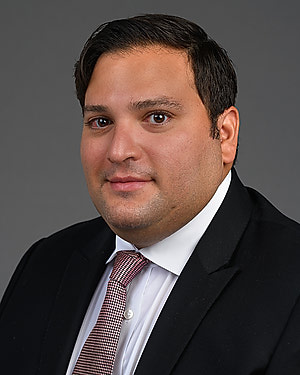 Juan C. Rojas合作论文数Rush University Medical Center;Center for Healthcare Delivery Science and Innovation, The University of Chicago Medicine;Division of Translational and Precision Medicine, Rush University8Shah Rupal J合作论文数8Ilana Roberts Krumm合作论文数6
 Juan C Rojas合作论文数Department of Medicine, University of Chicago;and.;Department of Medicine, University of Chicago6
 Bridget Keenan合作论文数5
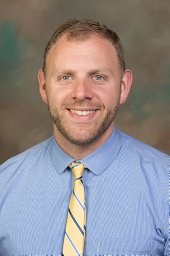 Denson Joshua L合作论文数5Emily Harris合作论文数4
 Wade Brown合作论文数4
 Snigdha Jain合作论文数4Nitin Seam合作论文数National Institutes of Health4P.G. Lyons合作论文数3Sarah Schaeffer合作论文数3
 Emily Abdoler合作论文数3
 Leah J Witt合作论文数3Anna Brady合作论文数3Gerald Hsu合作论文数3
 Abesh Niroula合作论文数Department of Pulmonary, Allergy, Critical Care and Sleep Medicine, Emory University School of Medicine3Laura A Huppert合作论文数3
 Shazia Jamil合作论文数3Michelle Mourad合作论文数3
 Janae K. Heath合作论文数Division of Pulmonary, Allergy and Critical Care, Department of Medicine, Perelman School of Medicine, University of Pennsylvania3
 Vineet Arora合作论文数Pritzker School of Medicine, The University of Chicago3
 Wray Charlie M合作论文数Loma Linda University3Sumant R. Ranji合作论文数3Bradley A. Sharpe合作论文数Department of Chemistry, Stanford University3Brian L. Block合作论文数3Brian Schwartz合作论文数2Gretchen Winter合作论文数2James Frank合作论文数2Shikha Jain合作论文数2Sasha Morduchowicz合作论文数2Yaron B Gesthalter合作论文数2Avraham Z Cooper合作论文数2
 Colin Hubbard合作论文数2
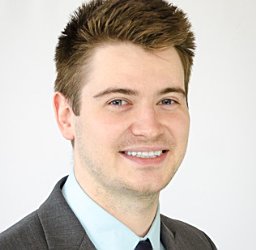 Timothy G. Dyster合作论文数Department of Medicine, University of California2Benjamin I Rosner合作论文数2
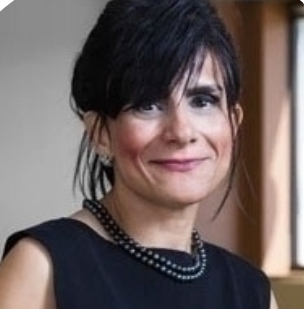 Sherine E. Salib合作论文数Department of Internal Medicine, Dell Medical School, University of Texas at Austin2
 Nancy Stewart合作论文数2Horatio Holzer合作论文数2
 Bridget O'Brien合作论文数Ctr Fac Educators, Univ Calif San Francisco2
 Michelle Sharp合作论文数Dept Med, Johns Hopkins Univ2M Yukawa合作论文数2
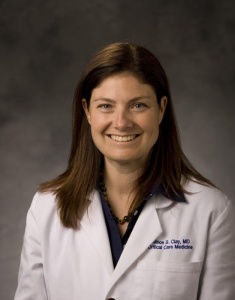 Alison Suzanne Clay合作论文数Department of Medicine, Duke University School of Medicine2Alison P. Klein合作论文数Epidemiology, Bloomberg School of Public Health, Johns Hopkins University2
 Emily P. Brigham合作论文数Department of Otolaryngology-Head and Neck Surgery, School of Medicine, Johns Hopkins University2
 Ann Marie Parker合作论文数Division of Pulmonary & Critical Care Medicine, Department of Medicine, Johns Hopkins University2




