Abstract As Large Language Models (LLMs) expand beyond text, integrating speech as a native modality has given rise to SpeechLLMs, which directly process spoken language and enable speech-to-text translation (ST) and other downstream tasks, bypassing traditional transcription-based pipelines. Whether this integration improves ST quality over established cascaded architectures, however, remains an open question. We present Hearing to Translate,1 the first comprehensive test suite rigorously benchmarking 6 state-of-the-art SpeechLLMs against 16 strong direct and cascade systems that couple leading speech foundation models (SFM), with multilingual LLMs. Our analysis spans 16 benchmarks, 13 language pairs, and 9 challenging conditions, including disfluent, noisy, and long-form speech. Across this extensive evaluation, we find that cascaded systems remain the most reliable solution overall, but most recent SpeechLLMs can match or even outperform cascades in various settings while SFMs lag behind both, highlighting that integrating an LLM, either within the model or in a pipeline, is essential for high-quality speech translation.
Simultaneous speech-to-text translation (SimulST) generates translations while speech is still unfolding, requiring a streaming policy that decides when to read and when to write. State-of-the-art approaches rely on attention-based encoder-decoder models where cross-attention provides explicit alignment signals. In contrast, Speech Large Language Models (SpeechLLMs) are decoder-only architectures relying solely on self-attention. This raises a central question: whether decoder self-attention contains sufficiently stable alignment signals to guide the streaming policy. Moreover, existing approaches typically rely on training-based adaptations or heuristic wait-k policies and have not been validated in long-form settings. To fill these gaps, we propose Decoder-Only Attention (DOA), a training-free policy that enables long-form simultaneous translation with off-the-shelf SpeechLLMs by deriving a proxy alignment from self-attention. Experiments on Phi4-Multimodal and Qwen3-Omni show that DOA provides an effective alignment signal for supporting streaming decisions, enabling low-latency long-form SimulST with quality close to offline decoding without retraining.
For scientific progress, we need benchmarks that test the limits of state-of-the-art models, and evaluation methods that inform us about failure cases. As models get stronger, standard benchmarks for machine translation are approaching saturation. Further, automatic translation metrics are unreliable, vulnerable to reward-hacking, and provide unactionable assessments. Even gold human evaluation is not problem-free, because it often lacks reproducibility, objectivity, and scalability. Overall, this prevents us from tracking objective progress in the field and identifying pathways for improvement. We introduce the Last Translation Benchmark, a collection of human-authored and peer-reviewed examples (texts, images, audio, videos) that break leading machine translation models. We also present a new evaluation approach: each example comes with handcrafted verification rules describing concrete failure cases on that example, therefore allowing reliable and actionable future evaluation. The Last Translation Benchmark is a live dataset that accepts ongoing contributions. The latest version is LTBv1, containing accepted contributions prior to September 1st 2026, with future releases planned as new data is continuously collected.
Speech-capable models are increasingly deployed in real-world applications across languages. Yet their safety and fairness beyond English settings and under naturalistic conditions remain understudied. We survey safety reporting practices across state-of-the-art speech model releases, finding that only 8
This paper describes our submission to the IWSLT 2026 Instruction Following shared task. SpeechLLMs are developed for both short-form and long-form speech instruction following under constrained settings. For the short track, strong performance is achieved on MCIF, with a SIFS score of 2.0708. For the long track, three speech segmentation methods are explored, and the HIFS score is introduced to account for unstable long-form generation. Experimental results show that fixed 30-second segmentation provides the most robust long-form performance, achieving the highest HIFS score of 2.0663. Further analysis shows that hallucination mainly manifests as repetitive insertions in generated outputs, substantially affecting ASR and SSUM, while short-form capabilities are largely retained after long-form extension.
Recent advances in large language models have laid the foundation for multimodal LLMs (MLLMs), which unify text, speech, and vision within a single framework. As these models are rapidly evolving toward general-purpose instruction following across diverse and complex tasks, a key frontier is evaluating their crosslingual and multimodal capabilities over both short- and long-form inputs. However, existing benchmarks fall short in evaluating these dimensions jointly: they are often limited to English, mostly focus on a single modality at a time, rely on short-form inputs, or lack human annotations--hindering comprehensive assessment of model performance across languages, modalities, and task complexity. To address these gaps, we introduce MCIF (Multimodal Crosslingual Instruction Following), the first crosslingual human-annotated benchmark based on scientific talks on NLP and beyond. MCIF evaluates instruction following in crosslingual, multimodal settings over different input lengths and spans four macro-tasks: recognition, translation, question answering, and summarization. It covers three core modalities (speech, vision, and text) and four diverse languages (English, German, Italian, and Chinese), fully aligned across all dimensions. This parallel design enables a systematic evaluation of MLLMs' abilities to interpret instructions across languages and effectively integrate multimodal contextual information. Our benchmarking and analysis of 23 models highlight universal challenges across modalities and tasks, indicating substantial room for improvement in future MLLMs development. MCIF is released under CC-BY 4.0 license to promote open research.
Simultaneous speech-to-speech translation (SimulS2S) is essential for real-time multilingual communication, with increasing integration into meeting and streaming platforms. Despite this, SimulS2S remains underexplored in research, where current solutions often rely on resource-intensive training procedures and operate on short-form, pre-segmented utterances, failing to generalize to continuous speech. To bridge this gap, we propose SimulU, the first training-free policy for long-form SimulS2S. SimulU adopts history management and speech output selection strategies that exploit cross-attention in pre-trained end-to-end models to regulate both input history and output generation. Evaluations on MuST-C across 8 languages show that SimulU achieves a better or comparable quality-latency trade-off against strong cascaded models. By eliminating the need for ad-hoc training, SimulU offers a promising path to end-to-end SimulS2S in realistic, long-form scenarios.
Speech Large Language Models (SLLMs) have rapidly expanded, supporting a wide range of tasks. These models are typically evaluated using text prompts, which may not reflect real-world scenarios where users interact with speech. To address this gap, we introduce DoWhatISay (DOWIS), a multilingual dataset of human-recorded spoken and written prompts designed to pair with any existing benchmark for realistic evaluation of SLLMs under spoken instruction conditions. Spanning 9 tasks and 11 languages, it provides 10 prompt variants per task-language pair, across five styles. Using DOWIS, we benchmark state-of-the-art SLLMs, analyzing the interplay between prompt modality, style, language, and task type. Results show that text prompts consistently outperform spoken prompts, particularly for low-resource and cross-lingual settings. Only for tasks with speech output, spoken prompts do close the gap, highlighting the need for speech-based prompting in SLLM evaluation.
The rapid progress of Large Language Models (LLMs) has transformed natural language processing and broadened its impact across research and society. Yet, systematic evaluation of these models, especially for languages beyond English, remains limited. "Challenging the Abilities of LAnguage Models in ITAlian" (CALAMITA) is a large-scale collaborative benchmarking initiative for Italian, coordinated under the Italian Association for Computational Linguistics. Unlike existing efforts that focus on leaderboards, CALAMITA foregrounds methodology: it federates more than 80 contributors from academia, industry, and the public sector to design, document, and evaluate a diverse collection of tasks, covering linguistic competence, commonsense reasoning, factual consistency, fairness, summarization, translation, and code generation. Through this process, we not only assembled a benchmark of over 20 tasks and almost 100 subtasks, but also established a centralized evaluation pipeline that supports heterogeneous datasets and metrics. We report results for four open-weight LLMs, highlighting systematic strengths and weaknesses across abilities, as well as challenges in task-specific evaluation. Beyond quantitative results, CALAMITA exposes methodological lessons: the necessity of fine-grained, task-representative metrics, the importance of harmonized pipelines, and the benefits and limitations of broad community engagement. CALAMITA is conceived as a rolling benchmark, enabling continuous integration of new tasks and models. This makes it both a resource – the most comprehensive and diverse benchmark for Italian to date – and a framework for sustainable, community-driven evaluation. We argue that this combination offers a blueprint for other languages and communities seeking inclusive and rigorous LLM evaluation practices.
Cross-attention is a core mechanism in encoder-decoder architectures, widespread in many fields, including speech-to-text (S2T) processing. Its scores have been repurposed for various downstream applications–such as timestamp estimation and audio-text alignment–under the assumption that they reflect the dependencies between input speech representation and the generated text. While the explanatory nature of attention mechanisms has been widely debated in the broader NLP literature, this assumption remains largely unexplored within the speech domain. To address this gap, we assess the explanatory power of cross-attention in S2T models by comparing its scores to input saliency maps derived from feature attribution. Our analysis spans monolingual and multilingual, single-task and multi-task models at multiple scales, and shows that attention scores moderately to strongly align with saliency-based explanations, particularly when aggregated across heads and layers. However, it also shows that cross-attention captures only about 50
Scientific communication is receiving increasing attention in natural language processing, especially to help researches access, summarize, and generate content. One emerging application in this area is Speech-to-Abstract Generation (SAG), which aims to automatically generate abstracts from recorded scientific presentations. SAG enables researchers to efficiently engage with conference talks, but progress has been limited by a lack of large-scale datasets. To address this gap, we introduce NUTSHELL, a novel multimodal dataset of *ACL conference talks paired with their corresponding abstracts. We establish strong baselines for SAG and evaluate the quality of generated abstracts using both automatic metrics and human judgments. Our results highlight the challenges of SAG and demonstrate the benefits of training on NUTSHELL. By releasing NUTSHELL under an open license (CC-BY 4.0), we aim to advance research in SAG and foster the development of improved models and evaluation methods.
The remarkable performance achieved by Large Language Models (LLM) has driven research efforts to leverage them for a wide range of tasks and input modalities. In speech-to-text (S2T) tasks, the emerging solution consists of projecting the output of the encoder of a Speech Foundational Model (SFM) into the LLM embedding space through an adapter module. However, no work has yet investigated how much the downstream-task performance depends on each component (SFM, adapter, LLM) nor whether the best design of the adapter depends on the chosen SFM and LLM. To fill this gap, we evaluate the combination of 5 adapter modules, 2 LLMs (Mistral and Llama), and 2 SFMs (Whisper and SeamlessM4T) on two widespread S2T tasks, namely Automatic Speech Recognition and Speech Translation. Our results demonstrate that the SFM plays a pivotal role in downstream performance, while the adapter choice has moderate impact and depends on the SFM and LLM.
Simultaneous speech-to-text translation (SimulST) translates source-language speech into target-language text concurrently with the speaker's speech, ensuring low latency for better user comprehension. Despite its intended application to unbounded speech, most research has focused on human pre-segmented speech, simplifying the task and overlooking significant challenges. This narrow focus, coupled with widespread terminological inconsistencies, is limiting the applicability of research outcomes to real-world applications, ultimately hindering progress in the field. Our extensive literature review of 110 papers not only reveals these critical issues in current research but also serves as the foundation for our key contributions. We 1) define the steps and core components of a SimulST system, proposing a standardized terminology and taxonomy; 2) conduct a thorough analysis of community trends, and 3) offer concrete recommendations and future directions to bridge the gaps in existing literature, from evaluation frameworks to system architectures, for advancing the field towards more realistic and effective SimulST solutions.
This paper presents the outcomes of the shared tasks conducted at the 22nd International Workshop on Spoken Language Translation (IWSLT). The workshop addressed seven critical challenges in spoken language translation: simultaneous and offline translation, automatic subtitling and dubbing, model compression, speech-to-speech translation, dialect and low-resource speech translation, and Indic languages. The shared tasks garnered significant participation, with 32 teams submitting their runs. The field's growing importance is reflected in the increasing diversity of shared task organizers and contributors to this overview paper, representing a balanced mix of industrial and academic institutions. This broad participation demonstrates the rising prominence of spoken language translation in both research and practical applications.
Training large-scale models presents challenges not only in terms of resource requirements but also in terms of their convergence. For this reason, the learning rate (LR) is often decreased when the size of a model is increased. Such a simple solution is not enough in the case of speech-to-text (S2T) trainings, where evolved and more complex variants of the Transformer architecture -- e.g., Conformer or Branchformer -- are used in light of their better performance. As a workaround, OWSM designed a double linear warmup of the LR, increasing it to a very small value in the first phase before updating it to a higher value in the second phase. While this solution worked well in practice, it was not compared with alternative solutions, nor was the impact on the final performance of different LR warmup schedules studied. This paper fills this gap, revealing that i) large-scale S2T trainings demand a sub-exponential LR warmup, and ii) a higher LR in the warmup phase accelerates initial convergence, but it does not boost final performance.
Automatic evaluation of speech-to-text translation (ST) systems is typically performed by comparing translation hypotheses with one or more reference translations. While effective to some extent, this approach inherits the limitation of reference-based evaluation that ignores valuable information from the source input. In machine translation (MT), recent progress has shown that neural metrics incorporating the source text achieve stronger correlation with human judgments. Extending this idea to ST, however, is not trivial because the source is audio rather than text, and reliable transcripts or alignments between source and references are often unavailable. In this work, we conduct the first systematic study of source-aware metrics for ST, with a particular focus on real-world operating conditions where source transcripts are not available. We explore two complementary strategies for generating textual proxies of the input audio, automatic speech recognition (ASR) transcripts, and back-translations of the reference translation, and introduce a novel two-step cross-lingual re-segmentation algorithm to address the alignment mismatch between synthetic sources and reference translations. Our experiments, carried out on two ST benchmarks covering 79 language pairs and six ST systems with diverse architectures and performance levels, show that ASR transcripts constitute a more reliable synthetic source than back-translations when word error rate is below 20
Multi-task and multilingual approaches benefit large models, yet speech processing for low-resource languages remains underexplored due to data scarcity. To address this, we present Granary, a large-scale collection of speech datasets for recognition and translation across 25 European languages. This is the first open-source effort at this scale for both transcription and translation. We enhance data quality using a pseudo-labeling pipeline with segmentation, two-pass inference, hallucination filtering, and punctuation restoration. We further generate translation pairs from pseudo-labeled transcriptions using EuroLLM, followed by a data filtration pipeline. Designed for efficiency, our pipeline processes vast amount of data within hours. We assess models trained on processed data by comparing their performance on previously curated datasets for both high- and low-resource languages. Our findings show that these models achieve similar performance using approx. 50 less data. Dataset will be made available at https://hf.co/datasets/nvidia/Granary
 Matteo Negri合作论文数Fondazione Bruno Kessler37
 Marco Gaido合作论文数MT Unit, Fondazione Bruno Kessler35
 Luisa Bentivogli合作论文数Fondazione Bruno Kessler29
 Mauro Cettolo合作论文数Centro per la Ricerca Scientifica e Tecnologica15
 Marco Turchi合作论文数Zoom13
 Beatrice Savoldi合作论文数Fondazione Bruno Kessler8
 Jan Niehues合作论文数Institute for Anthropomatic and Robotics, Karlsruhe Institute of Technology7
 Maike Züfle合作论文数Karlsruhe Institute of Technology5
 Dominik Macháček合作论文数Institute of Formal and Applied Linguistics, Faculty of Mathematics and Physics, Charles University5
 Vilém Zouhar合作论文数Language, Reasoning and Education Lab, Department of Computer Science, ETH Zurich5
 Peter Polák合作论文数Institute of Formal and Applied Linguistics, Faculty of Mathematics and Physics, Charles University5
 Roberto Gretter合作论文数5
 Alessio Brutti合作论文数Fondazione Bruno Kessler5
 Marco Matassoni合作论文数Centro per la Ricerca Scientifica e Tecnologica5
 Kenton Murray合作论文数HLTCOE, Johns Hopkins Univ4
 Roldano Cattoni合作论文数Centro per la Ricerca Scientifica e Tecnologica4
 Ondřej Bojar合作论文数Institute of Formal and Applied Linguistics, Faculty of Mathematics and Physics, Charles University;Faculty of Nuclear Sciences and Physical Engineering, Czech Technical University4
 Dennis Fucci合作论文数Università di Trento3
 Dávid Javorský合作论文数Institute of Formal and Applied Linguistics, Faculty of Mathematics and Physics, Charles University;ISIR - Institut des Systèmes Intelligents et de Robotique3
 Claytone Sikasote合作论文数Department of Computer Science, University of Zambia3Fabian Retkowski合作论文数3Alina Karakanta合作论文数Fdn Bruno Kessler, Ctr Mat & Microsistemi, Trento, Italy3
 Nakamura, Satoshi合作论文数Graduate School of Information Science at Nara Institute of Science and Technology.3
 Antonis Anastasopoulos合作论文数Department of Computer Science, George Mason University3
 Tsz Kin Lam合作论文数Department of Computational Linguistics, Heidelberg University3
 Danni Liu合作论文数Karlsruhe Institute of Technology3
 Patrick Wilken合作论文数AppTek3
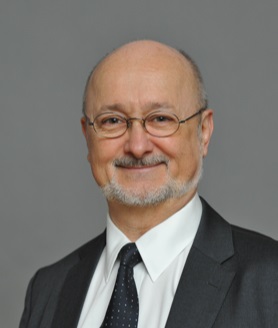 Alex Waibel合作论文数Interactive Systems Labs, Institute for Anthropomatics and Robotics, Karlsruhe Institute for Technology;InterACT;Carnegie Mellon University3
 Andrea Piergentili合作论文数3
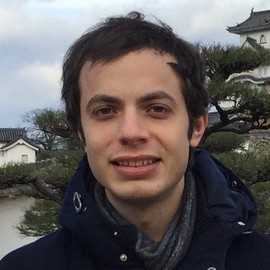 Matthias Sperber合作论文数Apple3
 Evgeny Matusov合作论文数RWTH Aachen University3
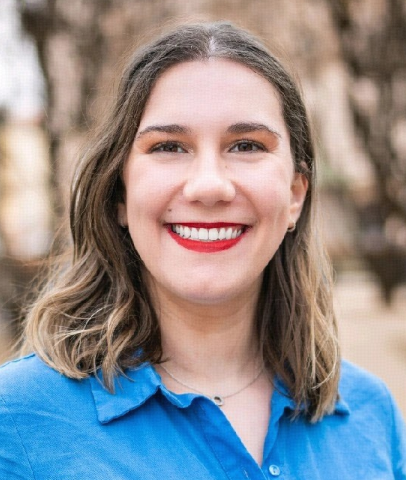 Patrícia Schmidtová合作论文数Institute of Formal and Applied Linguistics, Faculty of Mathematics and Physics, Charles University;The University of Bonn3
 Katsuhito Sudoh合作论文数NTT Communication Science Laboratories3
 Sebastian Stuker合作论文数Zoom Video Communications Inc.3
 Marcello Federico合作论文数Amazon3Mateusz Krubinski合作论文数2
 Rodolfo J. Zevallos Salazar合作论文数Universitat Pompeu Fabra2
 Yashesh Gaur合作论文数Microsoft2
 Carlos Escolano合作论文数Instituto de Investigación en Ingeniería de Aragón-I3A, the Universidad de Zaragoza2
 Atul Kumar Ojha合作论文数University of Galway2
 Wang Peidong合作论文数Harbin University of Science and Technology2
 Jinyu Li合作论文数Microsoft2
 Jian Xue合作论文数Microsoft2
 Daniele Falavigna合作论文数Institute for Scientific and Technological Research I2Brian Thompson合作论文数Amazon2
 Claudia Borg合作论文数University of Malta2
 Pavel Pecina合作论文数Charles University2
 Andrea Pilzer合作论文数NVIDIA2
 Barry Haddow合作论文数Aveni2




