The present study aimed to evaluate the antioxidant and enzyme inhibition properties of aerial part of Verbascum cheiranthifolium Boiss. V. myriocarpum Boiss. & Heldr. and V. pyroliforme (Boiss. & Heldr.) Kuntze as well as their chemical profiles. Results showed that MeOH and hydro-methanol recovered the highest total polyphenolic content with highest content obtained from V. cheiranthifolium (27.61and 27.69 mg GAE/g respectively) and V. myriocarpum (24.24 and 25.34 GAE/g respectively). The estimated content of verbascoside was quite higher in V. cheiranthifolium (987.05-6780.07 mg/100 g) and V. myriocarpum (1506.47-6433.73 mg/100 g) than V. pyroliforme (49.54-121.97 mg/100 g). All extracts of V. cheiranthifolium (274.17-713.79 mg/100 g) and polar ones of V. myriocarpum (185.67-304.51 mg/100 g) accu-mulated higher chlorogenic acid content than V. pyroliforme extracts (36.33-112.56 mg/100 g). The latter species was dominated by luteolin-7-O-glucoside and apigenin-7-O-glucoside with highest content recorded from the hydromethanolic extract (639.70 and 196.14 mg/100 g respectively). Extracts of V. cheiranthifolium (46.15-48.74 mg TE/g) and V. myriocarpum (46.05-48.50 mg TE/g) exerted significantly higher scavenging activity than those from V. pyroliforme (12.77-34.64 mg TE/g). Highest significant anti-acetylcholinesterase activity was obtained by MeOH extract of V. pyroliforme (2.65 mg GALAE/g) and V. myriocarpum (2.57 mg GALAE/g). In conclusion, extracts from the three investigated Verbascum spp. can be a potential source of bioactive metabolites with interesting antioxidant and enzyme inhibition properties.
Novel three nickel(II) complexes of type [Ni(metf)(o-phen)2]Cl2 (1), [Ni(metf)(opda)2]Cl2 (2), [Ni(metf)(2–2'bipy)2]Cl2 (3), (Metf = metformin, o-phen = ortho-phenanthroline, opda = ortho-phenylenediamine, 2–2' bipy = 2–2′ bipyridyl) were synthesized and characterized by various analytical and spectral techniques. Based on these studies, octahedral geometry is assigned to these complexes. The DNA binding properties of these complexes were investigated by absorption, emission, and viscosity studies. From the spectral data, it was concluded that the complexes bind to DNA through groove mode of binding. The intrinsic binding constants (Kb) from absorption spectroscopy were 1.60 × 10⁴, 3.57 × 10⁴, and 5.70 × 10⁴ M−1 for 1, 2, and 3, respectively, and Stern–Volmer quenching constants (Ksv) from emission spectroscopy were 0.11, 0.87, and 0.24, respectively. Thermal degradation pattern of the compounds was studied and Coats–Redfern method is used to determine kinetic parameters for complexes 1, 2, and 3 from thermal studies. The software Discovery Studio 2.1 was used to assess the binding affinity and interaction pattern of complexes with the B-DNA receptor protein and complex 1 has the highest dock score.
A series of novel carbazol-thiazolidinedione hybrid derivatives were designed, synthesised and screened for antimicrobial activity against gram-positive and gram-negative bacterial species. All the novel compounds were characterized by 1H, 13C NMR, IR, and Mass spectral analysis data. The results of antibacterial study indicated that compounds (Vc) and (Vh) showed appreciable antibacterial activity. Furthermore, molecular docking of selected compounds was also performed to see interaction between active compound and binding site.
In the present study, we report that neolignan1 (Diethyl-4,4'-dihydroxy-8,3'-neolign-7,7'-dien-9,9'-dionate) relaxes the superior mesenteric artery in a concentration dependent manner (pD2 value 5.392 +/- 0.04; n = 8 for endothelium intact and 5.204 +/- 0.03; n = 8 for endothelium denuded mesenteric rings, respectively). The relaxation response of neolignan1 was found to be endothelium independent and sensitive to 1H-[1,2,4] oxadiazolo [4,3-a] quinoxalin-1-on (ODQ; 1 mu M) and tetraethyl ammonium (TEA; 1 mM). In-silico studies showed good LibDock score (92.66) of neolignan1 with BKCa channel and are in well corroboration with ex-vivo study. Further, neolignan1 significantly decreased the systolic blood pressure, diastolic blood pressure and mean arterial pressure in the Nw-Nitro-L-arginine methyl ester hydrochloride (L-NAME; 50 mg/kg) treated Wistar rats at the dose of 30 and 100 mg/kg given once orally for 15 days. In addition, neolignan1 is well tolerated up to 100 mg/kg when given as a repeated dose, once orally for 28 days in Swiss albino mice. Neolignanl was well absorbed from oral route, reached peak at 4 h and eliminated below detection level by 12 h after administration. Our present study concludes that neolignan1 produced relaxation in superior mesenteric artery by opening of BKCa channel and produced significant antihypertensive activity in L-NAME treated Wistar rats and was well tolerated by the experimental animal.
Three chromium ternary complexes with metformin (met) as a primary ligand and bipyridine (bipy) or ortho‐phenylenediamine (opda) or ortho‐phenanthroline (phen) as secondary ligand were synthesized. These complexes [Cr (Cl)2(Hmet)(bipy)]‐(1), [Cr (Cl)2(Hmet)(opda)]‐(2) and [Cr (Cl)2(Hmet)(phen)]‐(3) were characterized by LC–MS, elemental analysis, molar conductance, thermal analysis, infrared spectroscopy, electronic spectroscopy. The geometrical structures have been found to be octahedral. Degradation pattern of the compounds is shown by thermal studies. The Kinetic parameters‐ energy of activation (Ea), enthalpy (ΔH), entropy (ΔS) and free energy changes (ΔG) have been determined by thermogravimetric data. Coats‐Redfern integration method with thirteen kinetic models was used to calculate the kinetic and thermodynamic parameters for the degradation of all the complexes. The stabilities of the complexes were obtained from their molecular orbital structures from which the quantum chemical parameters were calculated using the HOMO‐LUMO energies. UV–Visible absorption, fluorescence, and viscosity measurements have been conducted to assess the interaction of the complexes with CT DNA. The complexes showed absorption hyperchromism in its UV–Vis spectrum with DNA. The binding constants Kb from UV–Vis absorption studies were 3.1x10⁴, 4.4x10⁴, 5x10⁴ M−1 for 1, 2, 3 respectively and Stern–Volmer quenching constants (Ksq) from fluorescence studies were 0.137, 0.532, 0.631 for 1, 2, 3 respectively. Finally, viscosity measurements revealed that the binding of the complexes with CT‐DNA could be surface binding, mainly due to groove binding. The activity of complexes towards DNA cleavage decrease in the order of 3 > 2 > 1.The light switching properties of the complexes were also evaluated. The complexes were docked in to B‐DNA sequence, 5′(D*AP*CP*CP*GP*AP*CP*GP*TP*CP*GP*GP*T)‐3′ retrieved from protein data bank (PDB ID: 423D), using Discovery Studio 2.1 software.
Synthesis of novel N -protected and unprotected 3-N-substituted 1,8-naphthyridin-2(1 H )-ones with potential inhibiting activity of penicillin-binding protein 6 (PBP6) has been developed. The synthesis is designed around a Buchwald–Hartwig crosscoupling of various 3-bromo-6-substituted-1,8-naphthyridin-2(1 H )-ones with two different functionalized anilines. According to the preliminary antibacterial evaluation, the products 9b – 9d and 10b – 10d have demonstrated high inhibiting activity against spore germination of Staphylococcus aureus (gram positive) and Escherichia coli (gram negative). The molecular docking procedure has denoted the probable interactions of the synthesized compounds 9b – 9d and 10b – 10d with the target protein.
The cobalt(II) complexes [Co(Cl) 2 (met)(o-phen)] ( 1 ), [Co(Cl) 2 (en)(met)] ( 2 ) and [Co(Cl) 2 (met)(opda)] ( 3 ) (met = metformin, o-phen = ortho -phenanthroline, en = ethylenediamine, opda = ortho -phenylenediamine) were synthesized and characterized using liquid chromatography–mass spectrometry, elemental analysis, molar conductance measurements, thermal analysis, infrared spectroscopy, magnetic moment measurements, electronic spectroscopy and X-ray diffraction. The metal centre was found to be in an octahedral geometry. UV–visible absorption, fluorescence and viscosity measurements were conducted to assess the interaction of the complexes with calf thymus DNA. The complexes showed absorption hyperchromism in UV–visible spectra with DNA. The binding constants from UV–visible absorption studies were 1.38 × 10 5 , 2.1 × 10 5 and 3.1 × 10 5 M −1 for 1 , 2 and 3 , respectively, and Stern–Volmer quenching constants from fluorescence studies were 0.146, 0.176 and 0.475, respectively. Viscosity measurements revealed that the binding of the complexes with DNA could be surface binding, mainly due to groove binding. The activities of the complexes in DNA cleavage decrease in the order 3 > 2 > 1 . The complexes were docked into DNA topoisomerase II using Discovery Studio 2.1 software.
Novel 5-{(1-[(1-phenyl-1 H -1,2,3-triazol-4-yl)methyl]-1 H -indol-3-yl)methylene}pyrimidine-2,4,6-(1 H ,3 H ,5 H )trione derivatives ( 5a – 5k ) were synthesized by the click reaction. All compounds 5a – 5k were characterized by 1 H and 13 C NMR, IR and Mass spectra and evaluated for their in vitro anticancer activity against cervical cancer cell lines. Among all, compound 5e (IC 50 = 6.76 μM), shown high inhibitory activity. Docking analysis of all the compounds with the Lipid kinase PI3K-α revealed that the compound 5e fitted well in the active site pocket, showing the best docking score (LibDock) of 123.274.
A new series of 2-(4-((5-(4-bromophenyl)-1,3,4-oxadiazol-2-yl)methoxy)phenyl)-1H-benzo[de]isoquinoline-1,3(2H)-dione derivatives (6a-1) have been synthesized by using conventional method. All the newly synthesized compounds were evaluated for their antibacterial and antifungal activity against gram positive bacteria S. aureus gram negative bacteria E. coli and ciprofloxacin used standard drug. The antifungal activity screened against two pathogenic fungal strains A.niger and C. albicans and Voriconazole used as standard drug. The antibacterial results shows that compounds 6i more than 6f are as potent against S. aureus with compare to standard drug. In the case of B. subtilis the compounds 6f more than 6i are more active. In the case of E. coli the compounds 6i more than 6f are more active. The compounds 6f and 6i are more active against P. aeruginosa. The anti-fungal activity result shows that the compounds 6f and 6i are as active as standard drug Voriconazole against A.niger. In the case of C. albicans the compounds 6f and 6i are showing the same activity with compare to standard drug. All the synthesized novel compounds were characterized by IR, H-1-NMR, C-13-NMR, HRMS spectroscopic methods and the elemental analysis (C, H and N).
The copper(II) complexes [Cu(Cl)(2)(met)(o-phen)] (1), (Cu(Cl)(2)(met)(en)] (2) and (Cu(Cl)(2)(met)(opda)] (3) (met = metformin, o-phen = ortho-phenanthroline, en = ethylenediamine, opda = ortho-phenylenediamine) were synthesized and characterized by LC-MS, elemental analysis, molar conductance, thermal analysis, infrared spectra, magnetic moment, electronic spectra and XRD studies. The metal center was found in an octahedral geometry. The activation thermodynamic properties were calculated using Coats-Redfern method. Thermal decomposition processes of complexes 1, 2, 3 are non-spontaneous, i.e., the complexes are thermally stable. The positive value of Gibbs free energy of decomposition (Delta G*) for the Cu(II) complexes is non-spontaneous processes. UV-Visible absorption, fluorescence, and viscosity measurements have been conducted to assess the interaction of the complexes with CT DNA. The complexes showed absorption hyperchromism in its UV-Vis spectrum with DNA. The binding constants K-b from UV-Vis absorption studies were 4.6 x 10(5), 1.48 x 10(5), 2.09 x 10(5) M-1 for 1, 2, 3 respectively and Stern-Volmer quenching constants (K-sq) from fluorescence studies were 0.636, 0.293, 0.487 for 1, 2, 3 respectively. Finally, viscosity measurements revealed that the binding of the complexes with CT-DNA could be surface binding, mainly due to groove binding. The activity of complexes towards DNA cleavage decreases in the order of 1 > 3 > 2. The complexes were docked in to B-DNA sequence, 5'(D*AP*CP*CP*GP"AP*CP"GP*TP*CP*GP*GP*T)-3' retrieved from protein data bank (PDB ID: 423D), using Discovery Studio 2.1 software.
Novel 5-{(1-[(1-phenyl-1H-1,2,3-triazol-4-yl)methyl]-1H-indol-3-yl)methylene}pyrimidine-2,4,6-(1H,3H,5H)trione derivatives (5a–5k) were synthesized by the click reaction. All compounds 5a–5k were characterized by 1H and 13C NMR, IR and Mass spectra and evaluated for their in vitro anticancer activity against cervical cancer cell lines. Among all, compound 5e (IC50 = 6.76 μM), shown high inhibitory activity. Docking analysis of all the compounds with the Lipid kinase PI3K-α revealed that the compound 5e fitted well in the active site pocket, showing the best docking score (LibDock) of 123.274.
Two new water soluble oxovanadium(IV) complexes with formulae Na[VO(his)(met)SO4] (1) and Na[VO(gly)(met)SO4] (2), (gly=glycine his=histidine, and met=metformin) were synthesized and characterized by LCMS, UV-Visible absorption, infrared spectra, magnetic moment, elemental analysis, thermal analysis and electronic spectral studies. The metal center was found in an octahedral geometry. DNA binding interaction of these complexes with CT DNA has been explored by UV-Visible absorption, fluorescence, viscosity measurements and cleavage studies. Finally the binding of the complexes with CT-DNA could be surface binding, mainly in the groove binding. The complexes were docked in to B-DNA sequence, 5'(D*AP*CP*CP*GP*AP*CP*GP*TP*CP*GP*GP*T)-3' retrieved from protein data bank (PDB ID: 423D), using Discovery Studio 2.1 software.
A series of novel 3-phenyl-1-(4-(4-((4-(1,4,5-triphenyl-1H-imidazol-2-yl)phenoxy)methyl)-1H-1,2,3-triazol-1-yl)phenyl)prop-2-en-1-one derivatives 6a–j were synthesized in click chemistry reaction conditions and evaluated in silico by docking studies to recognize their hypothetical binding motif with cyclooxygenase-1 and cyclooxygenase-2. All docked compounds exhibited good docking scores in the range from 208.357 to 161.285 as compared with 145.934 for indomethacin, and 168.763 to 147.904 as compared with 145.934 for ibuprofen. Among all the tested compounds, 6b showed good docking score and good interactions with binding-site residues of the COX proteins.
Novel 1-phenyl-4-((4-(1,4,5-triphenyl-1H-imidazol-2-yl)phenoxy)methyl)-1H-1,2,3-triazole derivatives were synthesized by click chemistry reaction and screened for antimicrobial activity against grampositive and gram-negative bacterial and fungal species. All the compounds were characterized by 1H and 13C NMR, IR, and mass spectral data. The results of antibacterial study indicated that 1-(4-nitrophenyl)-4-((4-(1,4,5-triphenyl-1H-imidazol-2-yl)phenoxy)methyl)-1H-1,2,3-triazole, 1-(4-(4-((4-(1,4,5-triphenyl-1H-imidazol-2-yl)phenoxy)methyl)-1H-1,2,3-triazol-1-yl)phenyl)ethanone, 1-(2,6-dichloro-4-nitrophenyl)-4-((4-(1,4,5-triphenyl-1H-imidazol-2-yl)phenoxy)methyl)-1H-1,2,3-triazole, and 1-(2-methoxy-4-nitrophenyl)-4-((4-(1,4,5-triphenyl-1H-imidazol-2-yl)phenoxy)methyl)-1H-1,2,3-triazole showed appreciable antibacterial activity while 1-(4-fluorophenyl)-4-((4-(1,4,5-triphenyl-1H-imidazol-2-yl)phenoxy) methyl)-1H-1,2,3-triazole, 1-(2,6-dichloro-4-nitrophenyl)-4-((4-(1,4,5-triphenyl-1H-imidazol-2-yl)phenoxy)methyl)-1H-1,2,3-triazole, and 1-(4-methoxyphenyl)-4-((4-(1,4,5-triphenyl-1H-imidazol-2-yl)phenoxy)methyl)-1H-1,2,3-triazole emerged as the most potential antifungal agents.
2-Phenyl-4-{4-[(1-phenyl-1H-1,2,3-triazol-4-yl)methoxy]benzylidene}oxazol-5(4H)-one derivatives were synthesized by click chemistry reactions. Exploration of molecular interaction of the obtained compounds, performed through molecular docking studies with α-glucosidase, revealed the high docking scores (LibDock) in the range of 135.056–126.164 as compared to acarbose (136.345).
 P.V. Anantha Lakshmi合作论文数12Singh Arjun合作论文数7
 Sarfaraz Alam合作论文数CSIR-Central Institute of Medicinal and Aromatic Plants (CSIR-CIMAP), Kukrail Picnic Spot Road, PO CIMAP, Lucknow 226015, India.7
 Debabrata Chanda合作论文数P.O. CIMAP, Central Institute of Medicinal and Aromatic Plants (CIMAP-CSIR),7
 Feroz Khan合作论文数Division of Biochemical Sciences, National Chemical Laboratory6P. Vasantha合作论文数5
 Hina Iqbal合作论文数contributed equally.5
 Kashif Hanif合作论文数Peptide Synthesis Laboratory, Institute of Genomics and Integrative Biology, Mall Road, Delhi 110007, India5
 Mohammad Shafiq M.Sc. Ph.D.合作论文数Pharmacol Div, CSIR Cent Drug Res Inst4B. Shekhar合作论文数4
 Sarkar Jayanta合作论文数CSIR-Central Drug Research Institute (CSIR-CDRI),4
 Mohammad Hasanain合作论文数CSIR-Central Drug Research Institute (CSIR-CDRI),4Chityala Vijay Kumar合作论文数4Kavitha Helen P合作论文数4L. Kamala合作论文数3
 Kalyan Mitra合作论文数Division Electron Microscope, Central Drug Research Institute3
 Suaib Luqman合作论文数Central Institute of Medicinal and Aromatic Plants (CIMAP), PO CIMAP, Kukrail Road, Lucknow 226 015, India3Dharmendra K. Yadav合作论文数2B. Ashok Kumar合作论文数2
 Amit Kumar Verma合作论文数2B. Veena合作论文数2
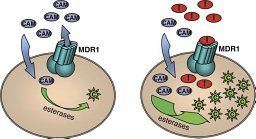 Kaneez Fatima合作论文数Acad Sci & Innovat Res AcSIR2
 Sakram Boda合作论文数Dept Chem, Osmania Univ2
 Jyotsana Singh合作论文数Asterisk with author names denotes non-ASH members.2
 N. J. P. Subhashini合作论文数Univ Coll Sci, Osmania Univ2Prashanthi Y合作论文数Department of Chemistry, Osmania University;Indian Institute of Chemical Technology2
 E. Sujatha合作论文数Department of Botany;Osmania University;Department of Botany, Osmania University2
 Tondepu Subbaiah合作论文数Institute of Minerals and Materials Technology (CSIR) Formerly Regional Research Laboratory Bhubaneswar 751 013 Orissa India2
 Rituraj Konwar合作论文数Division of Medicinal and Process Chemistry;Division of Endocrinology;Central Drug Research Institute;Division of Endocrinology, Central Drug Research Institute2
 Dushyant Singh Raghuvanshi合作论文数banaras hindu university2Ashok Kommakula合作论文数1S. Arulmurugan合作论文数1
 Kannan RR Rengasamy合作论文数1K. Rajeshwari合作论文数1A. Kurumanna合作论文数1K Kiranmai合作论文数1
 Aastha Singh合作论文数1
 Pankaj Yadav合作论文数Bioprospection and Product Development Division, CSIR-Central Institute of Medicinal and Aromatic Plants1Rambabu Sirgamalla合作论文数1
 Ramesh Macha合作论文数University College of Science, Osmania University1
 Dr Rambabu Sirgamalla合作论文数1
 D. Ravi合作论文数Biomedical Technology Wing, Sree Chitra Tirunal Institute for Medical Sciences & Technology Poojappura1Sakina Yagi合作论文数1
 Ina Corkovic合作论文数1
 Abdullahi Ibrahim Uba合作论文数Faculty of Engineering and Natural Sciences, Kadir Has University1
 Venkatraman B. R.合作论文数Dept Chem, Bharathidasan Univ1V Manivannan合作论文数1
 Olapeju Aiyelaagbe合作论文数Department of Chemistry, University of Ibadan1




