While orthotopic liver transplantation (OLT) has become the treatment of choice for most irreversible end-stage liver diseases, its role in patients with hepatitis B (HBV) infection is controversial. A high risk of reinfection of the transplanted graft, associated with significant morbidity and mortality, has been reported. Although passive and active immunization can delay reappearance of the virus in the allograft, there is not yet an effective therapy for recurrent HBV infection in liver transplant recipients. Between October 1985 and March 25, 1991, 28 OLT in 25 patients with acute and chronic HBV infections were performed. Twelve of the patients were HBV DNA-negative, six were HBV DNA-positive, and seven were not tested prior to transplantation. Only the 19 patients surviving more than 100 days after transplantation were considered to have sufficient duration of follow-up (mean 734 days; range 500-1545) to include in analysis of recurrence. Five (26%) were free of recurrent disease at the time of last follow-up (mean 1031 days, range 526 to 1770 days. Recurrent HBV in the allograft, as defined by positive immunoperoxidase stains of biopsy sections for viral antigens, was detected in 74% (13 male, 1 female; 7 Asian, 7 white) at a mean of 134 days posttransplantation. Histological changes of viral hepatitis, first appearing an average of 157 days (range 95-326) posttransplantation, were evident in 13 of 14 with positive immunostaining. Twelve of the 14 patients were treated, on an open trial basis, with intravenous and oral prostaglandin E (PGE) because of deteriorating clinical condition. Eleven of the twelve responded to PGE with an initial drop in serum transaminases, improvement in coagulopathy and resolution of encephalopathy. One patient failed to respond and died of a myocardial infarction within 9 days of institution of therapy. Three of the eleven patients with an initial response relapsed and died in liver failure as a direct result of recurrent HBV after 13, 16, and 37 days of treatment in association with generalized sepsis. Eight of the 12 patients (67%) had a sustained favorable response to PGE therapy (mean follow-up 737 days, range 403-1545). All patients with a sustained response had accompanying improvement in histology and reduction in viral antigen staining in hepatocytes. Treatment with PGE appeared to be of benefit in recurrent HBV infection of the transplanted liver with an initial response rate of 92% and a sustained response rate of 67%.
The effect of prostaglandins (PG) in patients with fulminant and subfulminant viral hepatitis was studied. Seventeen patients presented with FHF secondary to hepatitis A (N = 3), hepatitis B (N = 6) and non-A, non-B (NANB) hepatitis (N = 8). Fourteen of the 17 patients had stage III or IV hepatic encephalopathy (HE). At presentation, the mean AST was 1844 +/- 1246 units/liter, bilirubin 232 +/- 135 mumol/liter, PT 34 +/- 18 and PTT 73 +/- 26 sec, and coagulation factors V and VII were 8 +/- 4 and 9 +/- 51%, respectively. Twelve of 17 patients responded to PGE1 rapidly, with a decrease in AST from 1540 +/- 833 to 188 +/- 324 units/liter, a decrease in prothrombin time from 27 +/- 7 sec to 12 +/- 1 sec, PTT from 61 +/- 10 sec to 31 +/- 2 sec, and an increase in factor V from 9 +/- 4% to 69 +/- 18% and factor VII from 11 +/- 5% to 71 +/- 20%. Five responders with NANB hepatitis relapsed upon discontinuation of therapy, with recurrence of HE and increases in AST and PT but improvement was observed upon retreatment. After four weeks of intravenous therapy, oral PGE2 was substituted. Two patients have recovered completely and remain in remission six and 12 months following cessation of therapy. Two additional patients continue in remission after two and six months of PGE2. No relapses have been seen in patients with hepatitis A virus (HAV) or hepatitis B virus (HBV) infection. Liver biopsies in the 12 surviving patients have returned to normal. These results suggest efficacy of PGE for FHF. Further investigation is warranted.
This study describes the dose response, time course, and lymphocyte requirements of procoagulant activity (PCA) induction following stimulation of thioglycolate-elicited BALB/c peritoneal macrophages with live and inactivated bacteria (Bacteroides fragilis, Escherichia coli, and Staphylococcus aureus) and murine hepatitis virus type 3 (MHV-3). Induction of PCA by MHV-3 was significantly more rapid and the maximal PCA achieved was significantly greater than by the three bacterial species studied. In relation to induction of PCA by bacteria, the PCA response was more rapid and of greater magnitude with S. aureus and E. coli than with B. fragilis. MHV-3 induced an augmented PCA response at all concentrations of virus studied in a dose-dependent fashion, whereas higher titers of live bacteria (greater than 10(7) CFU/ml) inhibited PCA, suggesting the production of an inhibitory factor. Significant PCA induction was observed when macrophages were incubated with bacteria or virus in the absence of lymphocytes. At low titers of B. fragilis (10(3) CFU/ml), addition of lymphocytes greatly augmented PCA production, whereas at higher titers (10(7) CFU/ml), the addition of lymphocytes only slightly augmented the PCA response. In contrast, MHV-3 induction of PCA was enhanced by the addition of lymphocytes at all concentrations of virus studied, suggesting a lymphocyte-dependent process. Heat-inactivated bacteria were as effective as live bacteria in inducing PCA, suggesting that induction of PCA by bacteria requires only a bacterial surface component. In contrast, UV-inactivated MHV-3 did not induce PCA, suggesting that viral replication is a necessary step in PCA induction. These results suggest that the cellular and metabolic requirements for induction of PCA differ among viral and bacterial pathogens and may partly explain their differences in pathogenicity.
The effect of PG on patients with fulminant and subfulminant viral hepatitis (FHF) was studied. 17 patients presented with FHF secondary to hepatitis A (n = 3), hepatitis B (n = 6), and non-A, non-B (NANB) hepatitis (n = 8). 14 of the 17 patients had stage III or IV hepatic encephalopathy (HE). At presentation the mean aspartate transaminase (AST) was 1,844 +/- 1,246 U/liter, bilirubin 232 +/- 135 mumol/liter, prothrombin time (PT) 34 +/- 18, partial thromboplastin time (PTT) 73 +/- 26 s, and coagulation Factors V and VII 8 +/- 4 and 9 +/- 5%, respectively. Intravenous PGE1 was initiated 24-48 h later after a rise in AST (2,195 +/- 1,810), bilirubin (341 +/- 148), PT (36 +/- 15), and PTT (75 +/- 18). 12 of 17 responded rapidly with a decrease in AST from 1,540 +/- 833 to 188 +/- 324 U/liter. Improvement in hepatic synthetic function was indicated by a decrease in PT from 27 +/- 7 to 12 +/- 1 s and PTT from 61 +/- 10 to 31 +/- 2 s, and an increase in Factor V from 9 +/- 4 to 69 +/- 18% and Factor VII from 11 +/- 5 to 71 +/- 20%. Five responders with NANB hepatitis relapsed upon discontinuation of therapy, with recurrence of HE and increases in AST and PT, and improvement was observed upon retreatment. After 4 wk of intravenous therapy oral PGE2 was substituted. Two patients with NANB hepatitis recovered completely and remained in remission 6 and 12 mo after cessation of therapy. Two additional patients continued in remission after 2 and 6 mo of PGE2. No relapses were seen in the patients with hepatitis A virus and hepatitis B virus infection. Liver biopsies in all 12 surviving patients returned to normal. In the five nonresponders an improvement in hepatic function was indicated by a fall in AST (3,767 +/- 2,611 to 2,142 +/- 2,040 U/liter), PT (52 +/- 25 to 33 +/- 18 s), and PTT (103 +/- 29 to 77 +/- 44 s), but all deteriorated and died of cerebral edema (n = 3) or underwent liver transplantation (n = 2). These results suggest efficacy of PGE for FHF, and further investigation is warranted.
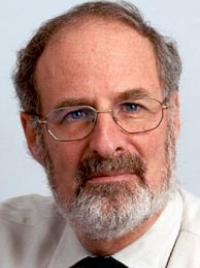 Gary Levy合作论文数Department of Immunology, Temerty Faculty of Medicine, University of Toronto;University Health Network5
 Paul D. Greig合作论文数3Ross Cameron合作论文数3Mj Phillips合作论文数2S.W. Chung合作论文数2
 Laurence Blendis合作论文数2A Sherker合作论文数1MJ PHILLIPS合作论文数1E A Roberts合作论文数1M Flowers合作论文数1M FLOWERS合作论文数1
 Morris Sherman合作论文数Department of Medicine, Temerty Faculty of Medicine, University of Toronto;Toronto General Hospital Research Institute, University of Toronto;University Health Network1
 Ori Rotstein合作论文数Department of Surgery, Temerty Faculty of Medicine, University of Toronto;Unity Health Toronto;Department of Electrical and Computer Engineering, Ryerson University1




