The Eastern European Alps boasts highly biodiverse ecosystems and a rich archaeological history. However, there is limited research on the enduring impacts of historical climate change and human activities on plant biodiversity in this region. Using sedimentary ancient DNA, we reconstructed plant and animal dynamics from 8500 years before present (ka BP) around Gro beta er Winterleitensee (Zirbitzkogel, Austria). Variable intensities of human activities since the Middle Bronze Age (similar to 3.5 ka BP) facilitated the persistence of biodiverse Alpine meadow communities and lowered timberlines below their natural limit. Since the end of the Bronze Age (similar to 2.8 ka BP), human activities, particularly pasturing, and increasing temperatures, emerged as significant drivers of plant community dynamics. The introduction of sheep (Ovis aries) did not reduce wild mammal presence, including red deer (Cervus elaphus), hare (Lepus), European mole (Talpa europaea), bank vole (Myodes glareolus), and short-tailed field vole (Microtus agrestis). During the High & Late Mediaeval Period, (similar to 1150-450 BP), cattle (Bos taurus) and horses (Equus caballus) became the dominant domesticates, while all wild mammals except the short-tailed field vole and Eurasian water shrew (Neomys fodiens) declined or even disappeared. These changes are also accompanied by a significant transformation of plant community structure. The ability to determine both plant responses and animal drivers from the same palaeolimnological sequence vastly improves our ability to partition causes of vegetation change over the Holocene. Here, we reveal that plant biodiversity is maintained or increased by moderate cattle grazing. Therefore, non-intensive domesticated stock grazing is essential for maintaining diverse Alpine meadows.
The Alps contain highly biodiverse ecosystems including a large number endemic flora. As a result of climate change and anthropogenic activities, such ecosystems are at risk from upward vegetation displacement and species loss. Extensive archaeological research in the Eastern Alps has documented human settlement from ~5500 years ago driven by salt and copper mining; which has caused significant impact on the ecosystems through mining, deforestation, and pastoral farming. To elucidate the effects of climate change and anthropogenic activities on plant biodiversity, multi-proxy reconstructions have been carried out throughout the Western Alps . Despite this research, the palaeoecological history of the Eastern Alps is relatively understudied. Consequently, we are limited in our understanding of how climate change and human impact have affected past biodiversity and the formation of the contemporary vegetation in this region. Here, we focus on the Austrian sub-alpine lake, Großer Winterleitensee located at the Easternmost margin of the Alps; only locally glaciated during the Pleistocene. We applied sedimentary ancient DNA (sedaDNA) metabarcoding to reconstruct Holocene plant community dynamics within the lake catchment. These data, in conjunction with local temperature reconstructions, sediment elemental composition, magnetic susceptibility, and loss-on-ignition analyses, allowed us to identify key intervals of plant diversity change. Two such intervals begin at samples dated ~5500 cal. yr BP and ~2200 cal. yr BP, coinciding with Neolithic and Iron Age settlement phases in the area. Palaeoecological reconstructions of plant biodiversity and their responses to climate change and anthropogenic pressures may be able to provide essential information for future conservation purposes.
The Eastern Alps in Europe have a rich alpine biodiversity and a long archaeological history. However, the palaeoecological record of this region has been relatively understudied, which has limited our understanding of the formation of the contemporary vegetation since the end of the last Ice Age, including the likely impacts of changes in climate and human pressures through pasturing and agriculture. To fill this knowledge gap, we are using plant and mammal sedaDNA taken from five sub-alpine to alpine Holocene lake cores in the Austrian and Italian Eastern Alps: Grosser Winterleitensee, Krummschnabelsee, Mittlerer Kaltenbachsee and Sulzkarsee (Austria), and Laghetti Colbricon (Italy). We will outline our first results on full plant community reconstructions from some lakes and on the mammal presence. Findings from the plant record will allow us for uncovering the Holocene dynamics of plant communities, and for identifying key intervals where biodiversity may have been strongly affected by anthropogenic factors and climate change. The mammal sedaDNA data will also be used to track the presence of domestic livestock through time and therefore provide insight into past human pastoral practices in the region.
Climate change has already started to rapidly transform ecosystems. Predicted scenarios of future ecosystem changes inferred from contemporary ecological data may be uncertain, as these records do not provide the temporal depth needed to understand how ecosystems have responded to past periods of climatic changes and human pressure. However, palaeoecological approaches allow for the reconstruction of past ecosystem changes, including the composition of plant communities, thereby enabling researchers to improve models of future climatic change impacts. Lakes located in high-mountain ranges, such as the Alps, are suitable ecosystems for studying long-term species turnover and environmental shifts driven by past climate changes, as they preserve a wealth of palaeoecological information in its sediment archives. The Alpine ecosystems are expected to be affected by ongoing climate warming, prompting an upward displacement of vegetation, elevated replacement rates and species losses, with projected increased intensity of impacts in the future. Previous studies of the Alps have used pollen and macrofossil evidence to infer past vegetation dynamics. However, microscopic morphological determinations are time-consuming and some inferences have been limited by low taxonomic resolution and the biased preservation of identifiable remains. Ancient DNA from organisms is also often preserved in the sediment (sedaDNA), which can rapidly be detected and analysed using metabarcoding approaches. Together with a novel, region-specific barcode reference database for the flora of the Alps (PhyloAlps; 4500 taxa), we can bypass the morphological limitations of previous palaeobotanical studies and refine taxonomic resolution, often to the species level. To investigate the origin and impact of past environmental changes in alpine ecosystems throughout the Holocene, we performed a multi-proxy reconstruction of 9 lake sediment cores from the Western Alps (France, Italy and Switzerland). Using metabarcoding, we reconstructed the plant community composition and used XRF, magnetic susceptibility, and loss-on-ignition data to understand lacustrine dynamics during the Holocene for each lake. We will present the major findings from these analysed records, the general ecosystem shifts inferred, and the impacts of perturbations caused by human pressure and climatic changes.
 Sandra Garcés-Pastor合作论文数Department of Evolutionary Biology, Universitat de Barcelona3
 Peter D Heintzman合作论文数Dept Ecol & Evolutionary Biol, Univ Calif Santa Cruz3
 Tony Brown合作论文数University of Tromsø Museum3
 Youri Lammers合作论文数3
 Andreas Tribsch合作论文数Institute of Botany, University of Vienna3
 Eric Coissac合作论文数INRIA-Rhône Alpes projet HELIX3
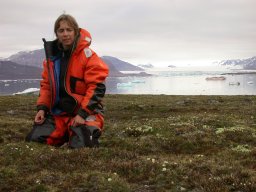 Inger Greve Alsos合作论文数Tromsø University Museum, University of Tromsø3
 Sebastien Lavergne合作论文数Department of Plant Biology;University of Vermont;Department of Plant Biology, University of Vermont2Boris Vannière合作论文数1
 Christoph Schworer合作论文数1Walsh Kevin B合作论文数1
 Willy Tinner合作论文数Institute of Plant Sciences, Department of Biology, Faculty of
Science, University of Bern1
Willy Tinner合作论文数Institute of Plant Sciences, Department of Biology, Faculty of
Science, University of Bern1 Oliver Heiri合作论文数Department of Environmental Sciences, University of Basel1
 Isabelle Jouffroy-Bapicot合作论文数1
 C. Giguet-Covex合作论文数EDYTEM, Université de Savoie CNRS Pôle Montagne1




