With continuous advancements in robotics, both in hardware and in software, the feasibility to deploy robotic assistants as co-workers for astronauts in real mission scenarios is coming in sight. In the context of the Surface Avatar International Space Station (ISS) telerobotic technology demonstration mission, we study the requirements in terms of user interface (UI), robotic capabilities, and communication to enable efficient usage of robots as astronaut's co-workers. During the experiments, astronauts onboard the ISS command a team of heterogeneous robots at the German Aerospace Center (DLR) in Oberpfaffenhofen, Germany, to perform experimental tasks in a Mars analog environment. In order to complete the tasks successfully, the astronauts have to select between different robot command modalities, namely teleoperation and supervised autonomy. While previous publications have mostly focused on the UI, the interfaces between robots and the UI, and the overall mission concept, this work sheds light on the robotic back-end and provides a description of our reference implementation. Utilizing the humanoid robot Rollin’ Justin as our prime use case, we describe the modules that enable the robotic capabilities that are offered to the astronauts as well as their implementations. As a core aspect of Surface Avatar is the ability to select from different command modes, i.e. supervised autonomy and direct teleoperation, we put special focus on the high-level modules that enable supervised autonomy, such as knowledge representation, belief state representation, and reasoning, as well as the teleoperation interfaces. The paper also describes the integration of the aforementioned modules into the overall system. In this work we share the decisions and iteration processes that lead up to our current design, the motivation behind the decisions, the limitations they imply on the system, and the lessons learned during the process. This work particular examines these modules in the context of the Surface Avatar experiment session and describes, in particular, the improvements that have been achieved in comparison to previous versions. While the system continues to evolve to support new features for upcoming experiment sessions, our description covers the state of the robot during the first ISS experiment sessions and the two following prime sessions of Surface Avatar.
There is an ongoing debate among regulators and researchers about concerns that the provision of non‐audit services (NAS) to audit clients may impair audit quality by reduced independence. In this context, there can be different perspectives on audit quality. Given recent regulatory changes in the European Union (EU) aimed to improve investor confidence in audited financial statements, it is critical to understand the association of NAS and audit quality perceptions by investors before and after the regulation. We investigate whether NAS affect shareholder and lender perceptions of audit quality, measured by the cost of debt and equity capital. For a sample of German firms, we find significant positive associations of NAS with both cost of debt and cost of equity. Other assurance and consultancy services drive this effect. We do not find this effect in the pre‐regulation period, but in the transition period when the regulation was passed but NAS restriction did not yet apply. In the post‐regulation period, it only persists for lenders. Thus, the EU regulation may have increased (or inadequately created) independence concerns for shareholders and lenders and curbed these concerns for shareholders only.
Crewed missions to celestial bodies such as Moon and Mars are in the focus of an increasing number of space agencies. Precautions to ensure a safe landing of the crew on the extraterrestrial surface, as well as reliable infrastructure on the remote location, for bringing the crew back home are key considerations for mission planning. The European Space Agency (ESA) identified in its Terrae Novae 2030+ roadmap, that robots are needed as precursors and scouts to ensure the success of such missions. An important role these robots will play, is the support of the astronaut crew in orbit to carry out scientific work, and ultimately ensuring nominal operation of the support infrastructure for astronauts on the surface. The METERON SUPVIS Justin ISS experiments demonstrated that supervised autonomy robot command can be used for executing inspection, maintenance and installation tasks using a robotic co-worker on the planetary surface. The knowledge driven approach utilized in the experiments only reached its limits when situations arise that were not anticipated by the mission design. In deep space scenarios, the astronauts must be able to overcome these limitations. An approach towards more direct command of a robot was demonstrated in the METERON ANALOG-1 ISS experiment. In this technical demonstration, an astronaut used haptic telepresence to command a robotic avatar on the surface to execute sampling tasks. In this work, we propose a system that combines supervised autonomy and telepresence by extending the knowledge driven approach. The knowledge management is based on organizing the prior knowledge of the robot in an object-centered context. Action Templates are used to define the knowledge on the handling of the objects on a symbolic and geometric level. This robot-agnostic system can be used for supervisory command of any robotic coworker. By integrating the robot itself as an object into the object-centered domain, robot-specific skills and (tele-)operation modes can be injected into the existing knowledge management system by formulating respective Action Templates. In order to efficiently use advanced teleoperation modes, such as haptic telepresence, a variety of input devices are integrated into the proposed system. This work shows how the integration of these devices is realized in a way that is agnostic to the input devices and operation modes. The proposed system is evaluated in the Surface Avatar ISS experiment. This work shows how the system is integrated into a Robot Command Terminal featuring a 3-Degree-of-Freedom Joystick and a 7-Degree-of-Freedom haptic input device in the Columbus module of the ISS. In the preliminary experiment sessions of Surface Avatar, two astronauts on orbit took command of the humanoid service robot Rollin’ Justin in Germany. This work presents and discusses the results of these ISS-to-ground sessions and derives requirements for extending the scalable autonomy system for the use with a heterogeneous robotic team.
Objective: Evidence for the duration of perioperative antibiotic prophylaxis (PAP) after the correction of craniosynostosis in children is scarce. We evaluated the necessary duration of PAP to ensure a minimal rate of postoperative wound infections. Methods: In this monocentric, retrospective, and prospective pilot study, two PAP protocols were compared. From August 2017 to May 2018, treatment group 1 (TG 1) was treated using the standard PAP protocol with at least three doses of antibiotics. Between May 2018 and March 2019, a shortened PAP with a single-shot administration was given to treatment group 2 (TG 2a and b). Endpoints of this study were wound infection rate, colonization rate of wound drains, and the course of treatment reflected by clinical and laboratory data. Results: A cohort of 187 children underwent craniosynostosis correction: 167 were treated according to protocols-−95 patients with at least three doses (TG 1) and 72 patients with a single-shot of cefuroxime (TG 2a). Baseline characteristics were similar for both groups. We could not detect significant differences, neither for wound infection rates (TG 1: 1.1%, TG 2a: 0.0%, p = 0.38) nor for colonization rates of wound drains (TG 1: 4.8%, TG 2a: 10.5%, p = 0.27). Conclusions: Single-shot PAP had no adverse effects on the wound infection rate or the colonization rate of the wound drains compared with prolonged perioperative antibiotic prophylaxis. As a result, single-shot preoperative PAP is now applied to the majority craniosynostosis patients undergoing surgical correction in our unit.
Hemiplegic migraine (HM) is a rare migraine subtype with aura presenting as recurrent transient attacks of migraine and hemiparesis. HM is genetically and clinically heterogeneous with underlying heterozygous mutations of genes encoding voltage-gated ion channels for calcium (CACNA1A) and sodium (SCN1A), the isoform 2 of Na+-K+-ATPase’s α-subunit (ATP1A2), as well as transmembrane proteins (PRRT2). 1 Dreier J.P. Victorov I.V. Petzold G.C. et al. Electrochemical failure of the brain cortex is more deleterious when it is accompanied by low perfusion. Stroke. 2013; 44: 490-496 Crossref PubMed Scopus (25) Google Scholar Typically, motor symptoms of migraine auras last less than 72 hours; in some patients muscle weakness may last for longer periods and even result in permanent neurological deficit. 2 Ho M.-L. Rojas R. Eisenberg R.L. Cerebral edema. AJR Am J Roentgenol. 2012; 199: 258-273 Crossref PubMed Scopus (57) Google Scholar No evidence-based guidelines for the emergency management of HM have been established, and management therefore remains empirical. We report the successful treatment of a prolonged ATP1A2 gene-linked HM attack with nimodipine, which has not been reported so far and may be a treatment option for further patients with HM.
The paper addresses the static balancing and walking of elastically actuated legged robots. The control is realized by commanding the motor positions only and exploiting the bijective relation between motor and link positions at equilibrium under static external forces. The approach is formulated in a quite general framework first. The main implementation contribution is the definition of a body coordinate system and of an appropriate set of constraints, which leads to a fully determined system of equations. In addition to the desired COM and the vertical foot positions, which are defined by the walking task and the terrain, the imposed constraints are related to distances between individual legs. The controller is experimentally validated on a compliantly actuated quadruped.
Intelligent robotic coworkers are considered a valuable addition in many application areas. This applies not only to terrestrial domains, but also to the exploration of our solar system. As humankind moves toward an ever increasing presence in space, infrastructure has to be constructed and maintained on distant planets such as Mars. AI-enabled robots will play a major role in this scenario. The space agencies envisage robotic co-workers to be deployed to set-up habitats, energy, and return vessels for future human scientists. By leveraging AI planning methods, this vision has already become one step closer to reality. In the METERON SUPVIS Justin experiment, the intelligent robotic coworker Rollin' Justin was controlled from Astronauts aboard the International Space Station (ISS) in order to maintain a Martian mock-up solar panel farm located on Earth to demonstrate the technology readiness of the developed methods. For this work, the system is demonstrated at AAAI 2019, controlling Rollin' Justin located in Munich, Germany from Honolulu, Hawaii.
Smartphone-based sensing is becoming a convenient way to collect data in science, especially in environmental research. Recent studies that use smartphone sensing methods focus predominantly on single sensors that provide quantitative measurements. However, interdisciplinary projects call for study designs that connect both, quantitative and qualitative data gathered by smartphone sensors. Therefore, we present a novel open-source task automation solution and its evaluation in a personal exposure study with cyclists. We designed an automation script that advances the sensing process with regard to data collection, management and storage of acoustic noise, geolocation, light level, timestamp, and qualitative user perception. The benefits of this approach are highlighted based on data visualization and user handling evaluation. Even though the automation script is limited by the technical features of the smartphone and the quality of the sensor data, we conclude that task automation is a reliable and smart solution to integrate passive and active smartphone sensing methods that involve data processing and transfer. Such an application is a smart tool gathering data in population studies.
Statutory audits are only beneficial if the appropriate audit quality is both provided and perceived by the users of audited financial statements. On the one hand, Big 4 audit firms are commonly viewed as producing high quality audits. On the other hand, regulators complain about the high market share of Big 4 audit firms. In this context, it is of interest to examine the drivers of a Big 4 audit firm selection. Despite extensive prior research, there is still a lack of findings form Continental European countries and on the impact of corporate governance on auditor choice. This paper on hand is intended to fill the related research gap. Thus, our study identifies variables that determine the auditor choice of large German listed companies. Based on a sample of 432 firm-year observations for the period 2010–2014, our logistic regression analysis suggests that the corporate governance structure influences auditor choice significantly. Notably, the annual meeting frequency of the audit committee and the size of the supervisory board are positively associated with the engagement of a Big 4 audit firm. However, the meeting frequency of the supervisory board and the compliance to the German corporate governance code are negatively related to the choice of a Big 4 auditor. Additionally, the proportion of female supervisory board members does not exert a significant impact. The results remain stable when the DAX30 observations, for which statutory audits are exclusively performed by Big 4 audit firms, are excluded. The main contribution of our paper is, that it sheds light on the impact of corporate governance variables not analyzed by prior research, like supervisory board characteristics, deviations from a corporate governance code, or the female quota, in a Continental European setting, and that it mainly indicates a complementary relationship. Despite the peculiarities of the German setting, the two-tier corporate governance system and the low level of investor protection, the findings of our study are not only relevant for Germany, since many other Continental European countries are characterized by a similar environment. The study’s findings are of particular interest for regulators when addressing audit market structure problems.
As a result of mistrust in the auditing profession, legislators and regulators continue to impose restrictions to the joint provision of audit and nonaudit services (NAS) to protect investors' interests. However, investors may perceive NAS differently than legislators, and it is an open question whether a ban on NAS always aligns with investors' interests. Little evidence exists on investors' perceptions of auditor‐provided NAS in the continental European regulatory environment, including Germany. The unique features of the German legal and regulatory environment raise questions of its ability to comfort investors that auditors resist client‐induced biases in financial reporting. To empirically investigate and test this, we use earnings response coefficients (ERC) to measure investors' perceptions of earnings quality and examine the associations between ERC and NAS fees. Surprisingly, we do not find significant associations between ERC and NAS fees for our entire sample period 2005–2015. For further examination, we split the sample before and after the financial crisis in 2008–2009. The findings indicate that, in the pre‐financial crisis period 2005–2007, investors perceive large NAS fees negatively, and this concern also extends to the components of the NAS fees. In contrast, in the post‐financial crisis period 2010–2015, investors perceive large NAS fees positively and favorable perceptions of tax services are the driver of this result. We discuss the findings in light of the regulatory initiatives in the aftermath of the financial crisis, and the recent EU supranational prohibitions of NAS and the German application of these.
This paper presents the first two members of the new generation of CLASH hands, which exploit low cost actuation and rapid prototyping to create antagonistic modular and lightweight hands and grippers. The hands approach the robustness of the DLR Awiwi hand with a much lower complexity and cost. To reduce the number of required actuators, a differential coupling mechanism for underactuated fingers was developed, along with a new mechanism that uses variable stiffness actuation in order to increase the workspace of underactuated fingers. The hands provide a research platform for both hand-in-hand and robotic grasping. Design aspects are discussed, and an initial experimental validation verifies the hands' performance.
The spring loaded inverted pendulum (SLIP) model has been extensively shown to be fundamental for legged locomotion. However, the way this low-order template model dynamics is anchored in high-dimensional articulated multibody systems describing compliantly actuated robots (and animals) is not obvious and has not been shown so far. In this letter, an articulated leg mechanism and a corresponding quadrupedal robot design are introduced, for which the natural oscillation dynamics is structurally equivalent to the SLIP. On the basis of this property, computationally simple and robust control methods are proposed, which implement the gaits of pronking, trotting, and dynamic walking in the real robotic system. Experiments with a compliantly actuated quadruped featuring only low-performance electrical drives validate the effectiveness of the proposed approach.
As a consequence of the global financial and economic crisis, the European Commission recently reformed the audit market. One objective was to restore public trust in the auditing profession and thus to enhance the audit function. This study investigates whether perceptions of auditor independence and audit quality are influenced by audit firm rotation, auditor retention and joint audits, because regulators argue that these instruments can improve auditor independence and audit quality. Therefore, we conduct an experiment with bank directors and institutional investors in Germany. The results indicate a negative main effect for joint audits on perceived auditor independence, and that a rotation cycle of 24 years marginally significantly impairs participant perceptions of audit quality, compared to a rotation cycle of only ten years. Besides the main effects, planned contrast tests suggest a negative interaction between rotation and joint audit on participant perceptions of auditor independence. Moreover, a negative interaction effect is revealed between rotation after 24 years and retention on perceptions of audit quality. It is particularly noteworthy that we failed to identify a positive impact of the regulatory measures taken or supported by the European Commission on perceptions of auditor independence and audit quality.
With advances in technology, artificial agents such as humanoid robots will soon become a part of our daily lives. For safe and intuitive collaboration, it is important to understand the goals behind their motor actions. In humans, this process is mediated by changes in activity in fronto‐parietal brain areas. The extent to which these areas are activated when observing artificial agents indicates the naturalness and easiness of interaction. Previous studies indicated that fronto‐parietal activity does not depend on whether the agent is human or artificial. However, it is unknown whether this activity is modulated by observing grasping (self‐related action) and pointing actions (other‐related action) performed by an artificial agent depending on the action goal. Therefore, we designed an experiment in which subjects observed human and artificial agents perform pointing and grasping actions aimed at two different object categories suggesting different goals. We found a signal increase in the bilateral inferior parietal lobule and the premotor cortex when tool versus food items were pointed to or grasped by both agents, probably reflecting the association of hand actions with the functional use of tools. Our results show that goal attribution engages the fronto‐parietal network not only for observing a human but also a robotic agent for both self‐related and social actions. The debriefing after the experiment has shown that actions of human‐like artificial agents can be perceived as being goal‐directed. Therefore, humans will be able to interact with service robots intuitively in various domains such as education, healthcare, public service, and entertainment.
Against the backdrop of the financial crisis and the associated auditors' criticism and in light of the debate over the role, regulation and quality of auditing services as well as the new regulation implemented by the EU, it is necessary for the public accountants to correct their image in public. This paper therefore analyzes the views of auditors and financial report users concerning the image of the public accountants. The results indicate no significant differences between auditors and user groups regarding the nature of an audit. In general, all participants perceive the auditor as highly competent. However, the user groups as well as the auditor groups significantly doubt the independence and the impartiality of the auditors.
 Christoph Borst合作论文数Center for Visual and Decision Informatics, University of Louisiana at Lafayette15
 Holger von Wenckstern合作论文数Department of Combinatorial Epitaxy, Universitat Leipzig;Fakultät für Physik und Erdsystemwissenschaften, Universitat Leipzig10
 Alin Albu-Schäffer合作论文数Institut für Robotik und Mechatronik, Deutsches Zentrum für Luft- und Raumfahrt;School of Computation, Information and Technology, Technical University Munich;Department of Computer Science, Technical University Munich9
 Daniel Leidner合作论文数Robotics and Mechatronics Center, RMC German Aerospace Center DLR9
 Reiner Quick合作论文数Lehrstuhls für Rechnungswesen, Controlling & Wirtschaftsprüfung, TU Darmstadt9
 Gerd Hirzinger合作论文数Institut fur Robotik und Mechatronik, Deutsches Zentrum fur Luft- und Raumfahrt8
 Werner Friedl合作论文数Institute of Electrical;Graz University of Technology;Institute of Electrical, Graz University of Technology7
 Maximo A. Roa合作论文数Institute of Robotics and Mechatronics, DLR German Aerospace Center;Robotics and Mechatronics Center, DLR German Aerospace Center7
 B. König合作论文数Institut für Organische Chemie, Fakultät für Chemie und Pharmazie, Universität Regensburg6
 Christian Ott合作论文数Automation and Control Institute, Technische Universität Wien6
 Franziska Zacharias合作论文数6
 Thomas Wimboeck合作论文数European Patent Office6
 Thomas Gumpert合作论文数5
 Oliver Eiberger合作论文数5
 Florian Loeffl合作论文数4
 Marius Grundmann合作论文数Institut für Experimentelle Physik II, Fakultät für Physik und Geowissenschaften, Universität Leipzig4
 Matthias Fuchs合作论文数Department of Physics, Universitat Konstanz4
 Alexander Dietrich合作论文数Institute of Robotics and Mechatronics, German Aerospace Center4Markus Grebenstein合作论文数Institute of Robotics and Mechatronics, Deutsches Zentrum für Luft und Raumfahrt4
 Alexander Beyer合作论文数4
 Dominic Lakatos合作论文数German Aerosp. Center (DLR), Inst. of Robot. & Mechatron., Oberpfaffenhofen, Germany;c;German Aerosp. Center (DLR), Inst. of Robot. & Mechatron., Oberpfaffenhofen, Germany|c|4robert heinhold合作论文数3Robert Burger合作论文数3simon heuser合作论文数3M Schmidt合作论文数3
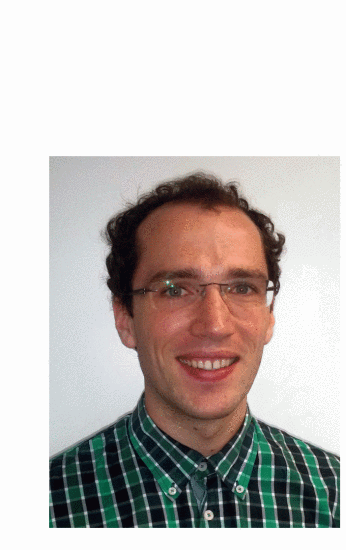 Peter Schmaus合作论文数German Aerospace Center3
 Rustam Stolkin合作论文数School of Metallurgy and Materials, College of Engineering and Physical Sciences, University of Birmingham3
 Martin W. Allen合作论文数MacDiarmid Inst Adv Mat & Nanotechnol, Univ Canterbury3
 Baumann Andreas合作论文数Bavarian Ctr Appl Energy Res ZAE Bayern3Julia Sprandel合作论文数3
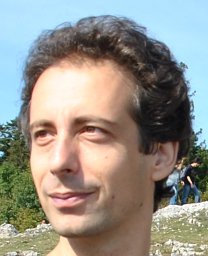 Emilio Maggio合作论文数VICON and Queen Mary University of London3
 Ciro Natale合作论文数Dipartimento di Ingegneria Industriale e dell'Informazione, Seconda Universití degli Studi di Napoli3
 Katharina Hertkorn合作论文数Neatleaf GmbH3Stefan Stadlbauer合作论文数3
 Neal Y. Lii合作论文数3Ulrich Hillenbrand合作论文数Institute of Robotics|German Aerospace Center3
 Gerhard Grunwald合作论文数3
 Jeremy L. Wyatt合作论文数Intelligent Robotics Laboratory3
 Alessandro Saffiotti合作论文数School of Science and Technology, Örebro University;WASP – Wallenberg AI3Julien Bidot合作论文数3Jens Reinecke合作论文数3
 Marek Sewer Kopicki合作论文数3
 Fabien Lagriffoul合作论文数Department of Computing Science, Umeå University3Alexander Riechers合作论文数3
 Pietro Falco合作论文数U.O. di Neonatologia e Terapia Intensiva Neonatale, Azienda Ospedaliera di Caserta3Dieter Mewes合作论文数3
 Lars Karlsson合作论文数Cognitive Robotic Systems Lab, Applied Autonomous Sensor Systems Center, School of Science and Technology, Orebro university3h s kim合作论文数2




