In their recently published case report, Lowery et al presented 2 patients with bladder agenesis and concomitant pelvic arterial anomaly and suggested the 2 anatomical variants are causally related. 1 Lowrey T Josephs S Baker L Bladder agenesis and associated pelvic arterial anomaly in 2 female pediatric patients. Urology. 2019; 123: 227-229 Abstract Full Text Full Text PDF Scopus (2) Google Scholar Bladder agenesis is extremely rare with only 25 live births recorded in the literature. 2 Nazim SM Zaidi Z. Bilateral ectopic ureters with bladder agenesis. JPMA. 2012; 62: 1086-1089 PubMed Google Scholar With so few patients to study, much of what is known is through case reports such as Lowery's.
Our center has one of the largest representations of African Americans in listed and transplanted patients. We investigated if and how racial differences affect outcomes in our patient population.
Simultaneous liver-kidney allocation protocols allocate dual organs based on a sustained eGFR of 30 mL/min or less. A 2017-UNOS update includes CKD3 as dual organ candidates but only when the listing eGFR is <30 mL/min while recommending a "safety net" for prioritized kidney listing post-LT. We retrospectively reviewed adult LTs examine whether the UNOS proposal captured the LT population at highest risk for developing post-LT ESRD. Among 290 LT recipients, 67 had pre-LT CKD3, 141 had AKI, of whom 47 required dialysis (<4 weeks). During follow-up, 25 (8.62%) developed ESRD, while 70 (24.1%) died. In adjusted Cox models, CKD3 had an independent association with post-LT ESRD (adjusted HR 4.8; P = 0.001), independent of AKI. Interestingly, CKD3 with listing GFR >30 mL/min was still significantly associated with post-LT ESRD. AKI was associated with reduced post-LT survival (adjusted HR 1.9; P = 0.02), albeit only in the first-year post-LT. Severe AKI-D was associated with post-LT ESRD and mortality. The safety net would have captured only 60% of all post-LT ESRD cases in our cohort. Pre-LT CKD3 was associated with increased risk of post-LT ESRD above the recommended cutoff for listing GFR. These findings, if generalizable in larger cohorts have important implications for dual organ allocation.
The objective of this review is to explore the available literature on solid renal masses (SRMs) in transplant allograft kidneys to better understand the epidemiology and management of these tumors. A literature review using PubMed was performed according to the PRISMA (Preferred Reporting Items for Systematic Reviews and Meta-Analyses) methodology. Fifty-six relevant studies were identified from 1988 to 2015. A total of 174 SRMs in 163 patients were identified, with a mean tumor size of 2.75 cm (range 0.5-9.0 cm). Tumor histology was available for 164 (94.3%) tumors: clear cell renal cell carcinoma (RCC; 45.7%), papillary RCC (42.1%), chromophobe RCC (3%), and others (9.1%). Tumors were managed by partial nephrectomy (67.5%), radical nephrectomy (19.4%), percutaneous radiofrequency ablation (10.4%), and percutaneous cryoablation (2.4%). Of the 131 patients (80.3%) who underwent nephron-sparing interventions, 10 (7.6%) returned to dialysis and eight (6.1%) developed tumor recurrence over a mean follow-up of 2.85 years. Of the 110 patients (67.5%) who underwent partial nephrectomy, 3.6% developed a local recurrence during a mean follow-up of 3.12 years. The current management of SRMs in allograft kidneys mirrors management in the nontransplant population, with notable findings including an increased rate of papillary RCC and similar recurrence rates after partial nephrectomy in the transplant population despite complex surgical anatomy.
Belatacept is a non-nephrotoxic immunosuppressive agent, which may make it the ideal agent for patients with delayed or slow graft function on calcineurin inhibitors. There are limited data on conversion of patients to belatacept within 6 months of transplantation. Between January 2012 and December 2015, 16 patients were converted to belatacept for delayed or poor graft function (eGFR<30 mL/min/1.73 m2 , MDRD); three were HIV positive. Conversion protocols were analyzed in patients ≤4 months and 4-6 months post-transplantation. Mean serum creatinine levels after belatacept conversion were compared with preconversion levels. Patient survival was 100%, and graft survival was 88%. The mean creatinine fell from 3.9±1.82 mg/dL prebelatacept conversion to 2.1±1.1 mg/dL at 6 months and 1.9±0.47 mg/dL (median 1.8 mg/dL) at 12 months postconversion. There was no significant increased risk of rejection, infection, or malignancy. HIV parameters remained largely stable. Early conversion to belatacept in patients with DGF or slow graft function is safe and efficacious, in a single-center nonrandomized retrospective analysis.
You have accessJournal of UrologyTransplantation & Vascular Surgery: Renal Transplantation & Vascular Surgery I1 Apr 2016MP29-19 INCIDENCE OF SOLID RENAL MASSES IN TRANSPLANTED ALLOGRAFT KIDNEYS John Griffith, Katherine Brewer, Michael Palese, Susan Lerner, Veronica Delaney, Scott Ames, John Sfakianos, Ketan Badani, and Reza Mehrazin John GriffithJohn Griffith More articles by this author , Katherine BrewerKatherine Brewer More articles by this author , Michael PaleseMichael Palese More articles by this author , Susan LernerSusan Lerner More articles by this author , Veronica DelaneyVeronica Delaney More articles by this author , Scott AmesScott Ames More articles by this author , John SfakianosJohn Sfakianos More articles by this author , Ketan BadaniKetan Badani More articles by this author , and Reza MehrazinReza Mehrazin More articles by this author View All Author Informationhttps://doi.org/10.1016/j.juro.2016.02.1103AboutPDF ToolsAdd to favoritesDownload CitationsTrack CitationsPermissionsReprints ShareFacebookTwitterLinked InEmail INTRODUCTION AND OBJECTIVES Renal transplantation is the gold-standard treatment for end-stage renal disease (ESRD). It is known that transplant patients are at an increased risk of developing de-novo malignancy; however, there is a paucity of data on the incidence of solid renal masses (SRMs) in the transplant allograft kidney (TAK). The aim of this study was to review the available literature exploring the incidence of SRMs in allografted kidneys. METHODS A literature review using key word searches in PubMed was performed. An abstract review was then performed to identify pertinent studies. Article references were used to further identify all relevant published articles. RESULTS Overall, 56 studies, since 1988, exploring solid renal masses in transplanted allograft kidneys were identified: 1 multi-center case series, 19 single-institution case series, and 36 case reports. A total of 174 SRMs (163 patients) in TAK were identified with a mean tumor size of 2.75 cm (0.5-9.0 cm). Tumor histology was available in 164 tumors: clear cell (45.7%), papillary (42.1%), chromophobe (3%), and others (9.1%). Fuhrman grade (FG) designation was reported in 127 (73%) tumors: FG1 (18.9%), FG2 (63.7%), FG3 (15.7%), and FG4 (1.6%). While the majority were pT1a (87%) tumors, 9%, 1.3%, and 2.6% were pT1b, pT2a, pT3a, respectively. Tumors were managed by partial nephrectomy (67.5%), radical nephrectomy (19.4%), percutaneous radiofrequency ablation (10.4%), and cryoablation (2.4%). Of the 131 patients who underwent nephron-sparing interventions, 7.6% returned to dialysis and 5.3% developed tumor recurrence, during a mean follow-up of 2.85 years. Of those who had partial nephrectomy, 3.6% developed local recurrence, requiring subsequent complete transplant nephrectomy. During a mean follow-up of 3.12 years, 9 patients were deceased, of which 2 were cancer-specific mortalities. CONCLUSIONS Current management of SRMs in transplant allograft kidney mirrors management of renal masses in the average population. Compared to the non-transplant population, the incidence of papillary RCC in the transplanted allograft is much higher (42% vs. 10-15%). While papillary RCC is known to have an increased incidence in ESRD native kidneys, the majority of the transplant allograft kidneys were healthy at time of transplant. As life expectancy improves for renal transplant patients, SRMs will likely become more prevalent. Proper surveillance of this subpopulation is imperative, as acceptable oncological outcome of allograft tumors is achievable. © 2016FiguresReferencesRelatedDetails Volume 195Issue 4SApril 2016Page: e387-e388 Advertisement Copyright & Permissions© 2016MetricsAuthor Information John Griffith More articles by this author Katherine Brewer More articles by this author Michael Palese More articles by this author Susan Lerner More articles by this author Veronica Delaney More articles by this author Scott Ames More articles by this author John Sfakianos More articles by this author Ketan Badani More articles by this author Reza Mehrazin More articles by this author Expand All Advertisement Advertisement PDF downloadLoading ...
You have accessJournal of UrologyBladder Oncology/Testis/Transplantation/Trauma1 Apr 2016V8-04 ROBOTIC-ASSISTED VERSUS LAPAROSCOPIC LIVING DONOR NEPHRECTOMY: A 12-STEP COMPARISON OF SURGICAL TECHNIQUE Michael Palese, Jamie Pak, Edward Chin, Greg Gin, Daniel Herron, Susan Lerner, Dianne LaPointe Rudow, Antonios Arvelakis, Scott Ames, Alan Benvenisty, Ron Shapiro, and Sander Florman Michael PaleseMichael Palese More articles by this author , Jamie PakJamie Pak More articles by this author , Edward ChinEdward Chin More articles by this author , Greg GinGreg Gin More articles by this author , Daniel HerronDaniel Herron More articles by this author , Susan LernerSusan Lerner More articles by this author , Dianne LaPointe RudowDianne LaPointe Rudow More articles by this author , Antonios ArvelakisAntonios Arvelakis More articles by this author , Scott AmesScott Ames More articles by this author , Alan BenvenistyAlan Benvenisty More articles by this author , Ron ShapiroRon Shapiro More articles by this author , and Sander FlormanSander Florman More articles by this author View All Author Informationhttps://doi.org/10.1016/j.juro.2016.02.747AboutPDF ToolsAdd to favoritesDownload CitationsTrack CitationsPermissionsReprints ShareFacebookTwitterLinked InEmail INTRODUCTION AND OBJECTIVES Laparoscopic donor nephrectomy (LDN) has gained wide acceptance among surgeons and donors due to better short-term donor morbidity compared to the open approach without compromising graft outcome. The first robotic-assisted laparoscopic donor nephrectomy (RDN) was reported in 2002. A recent randomized comparative study reported less postoperative pain, less analgesic requirement, and shorter hospital stay with RDN versus LDN. In this video, we compare the operative technique of RDN vs. LDN at our institution at twelve critical steps of the procedure. METHODS The 12 steps include: 1. Medial reflection of descending colon, 2. Complete mobilization of spleen, 3. Exposure of gonadal vessel and renal vein, 4. Ligation of adrenal, gonadal, and lumbar veins, 5. Mobilization of kidney laterally and posteriorly, 6. Dissection of adrenal off upper pole/superior mobilization, 7. Dissection of renal hilum, 8. Medial rotation of kidney along hilum and posterior hilar dissection, 9. Mobilization and ligation of distal ureter, 10. Preparation for extraction, 11. Ligation of renal artery and vein, and 12. Extraction of kidney. Our case series of RDN were then compared to our historical institutional LDN case series as previously reported in a 2009 manuscript. RESULTS LDN utilizes fenestrated forceps in the left hand and Harmonic Ace shears in the right, while RDN utilizes bipolar precise forceps on the left arm and monopolar cutting scissors on the right. Notable differences also occur at Step 11, when ligation of the renal artery and vein is performed by the bedside surgeon in RDN versus by the primary surgeon in LDN, and Step 12, when LDN involves kidney extraction via a hand-assist device, while RDN utilizes a specimen bag introduced through the assistant port with extraction through a Pfannenstiel incision. A preliminary comparison of 512 historical LDN cases versus 17 RDN cases reveals RDN has a lower intraoperative estimated blood loss, but similar operative time, warm ischemia time, length of stay, rates of transfusion, and conversion rate versus LDN. CONCLUSIONS We outline several differences in operative technique between RDN and LDN during ligation of the renal hilum and extraction of the kidney. Short-term outcomes appear similar between the two approaches, with the exception of significantly less estimated blood loss in RDN. © 2016FiguresReferencesRelatedDetails Volume 195Issue 4SApril 2016Page: e772 Advertisement Copyright & Permissions© 2016MetricsAuthor Information Michael Palese More articles by this author Jamie Pak More articles by this author Edward Chin More articles by this author Greg Gin More articles by this author Daniel Herron More articles by this author Susan Lerner More articles by this author Dianne LaPointe Rudow More articles by this author Antonios Arvelakis More articles by this author Scott Ames More articles by this author Alan Benvenisty More articles by this author Ron Shapiro More articles by this author Sander Florman More articles by this author Expand All Advertisement Advertisement PDF downloadLoading ...
Mount Sinai Hospital in New York has a long history in the field of organ transplantation. The first kidney transplant at Mount Sinai was performed in 1967 by the late Dr. Lewis Burrows and the first laparoscopic donor nephrectomy in New York was performed at Mount Sinai in 1996. Over 3000 kidney transplantations have been performed at Mount Sinai. In the early 1990s, the first hepatitis C virus (HCV) positive patient at Mount Sinai underwent a kidney transplant and the first kidney transplant in a patient with human immunodeficiency virus (HIV) in New York was performed at Mount Sinai in 2001. In general, these patients have done well after renal transplantation, with outcomes similar to those seen in non-infected patients. This chapter will describe the evolution of immunosuppressive regimens in HCV positive and HIV positive patients, and will describe the outcomes of kidney transplantation in these patients. Given the favorable outcomes, it is reasonable to continue to offer renal transplantation as a treatment for end stage renal disease patients with HCV and/or HIV.
Renal artery anastomotic pseudoaneurysms, an uncommon complication of transplantation, may result in aneurysm rupture and loss of allograft. We report the case of 50-year-old female with back pain 3 weeks post renal transplantation. CT scan revealed transplant renal artery anastomotic pseudoaneurysm arising from anastomosis of two renal arteries joined together to form a single renal artery that was joined to the aorta. Successful endovascular treatment was achieved with covered stents, resulting in preserved renal function. Follow-up ultrasound at one-day post procedure and CT at 2 months revealed satisfactory renal perfusion with no pseudoaneurysm. Endovascular treatment of transplant renal artery pseudoaneurysms with covered stent and ostial flare balloon technology may be preferred in patients with extensive prior pelvic surgery, as illustrated in this case.
Introduction: Robot-assisted laparoscopic donor nephrectomy (RALDN) is an emerging minimally invasive technique for procuring living renal allografts for transplantation. As an alternative to traditional laparoscopy, robotics provides optical magnification and instrument articulation, which can be used in intricate dissection of the vessels and obtaining maximum length for the graft. We provide a reproducible 12-step instruction on our standard left RALDN and results of our initial experience. Methods: The patient is placed in the right lateral decubitus position and the robotic ports are placed. The 12 steps of our standard left RALDN include medial reflection of the descending colon, complete mobilization of the spleen, exposure of the gonadal and renal vein, ligation of the adrenal, gonadal, and lumbar vein, mobilization of the kidney laterally and posteriorly, dissection of the adrenal off the upper pole/superior mobilization, dissection of the renal hilum, medial rotation of the kidney and posterior hilum dissection, mobilization and ligation of the distal ureter, placement of the kidney in a specimen bag, ligation of the renal artery and vein, and extraction of the kidney. Results: With standardization of RALDN to 12 steps, this technique can initially be performed with comparable outcomes to standard laparoscopic donor nephrectomy. In our institution's initial experience comparing eight RALDN to eight LDN, there were no significant differences found between RALDN and LDN in the mean operative duration (217.4 minutes vs. 190.1 minutes, respectively), warm ischemia time (2:55 vs. 2:13), estimated blood loss (58.8 cc vs. 72.1 cc), length of stay (2.5 days vs. 2.2 days), and 2-week follow-up creatinine (1.33 mg/dL vs. 1.29 mg/dL). Conclusion: RALDN can be performed in a reproducible manner based on 12 steps. There is a short learning curve, and outcomes are comparable to standard laparoscopic donor nephrectomy even in an initial experience. The authors declare that no competing financial interests exist. Runtime of video: 8 mins 29 secs
Approximately 10% of patients treated with erythropoiesis-stimulating agents (ESAs) for the anemia of chronic kidney disease are unresponsive or relatively resistant to therapy. The etiology of this is usually linked to iron deficiency or an independent underlying illness. We describe a hemodialysis patient with a failed renal transplant 1.5years earlier, who developed progressive erythropoietin resistance and anemia without an apparent cause. He simultaneously developed nonspecific malaise and fatigue. By exclusion, the only possible cause of these signs and symptoms was inflammation from acute and chronic rejection in the retained failed renal allograft. Following pulse steroids and transplant nephrectomy, the patient's symptoms resolved and both his hemoglobin improved and his erythropoietin requirements decreased significantly. The patient never required a blood transfusion and was successfully relisted for a deceased donor renal transplant. Hence, inflammation from a retained transplant allograft may be an under-recognized cause of erythropoietin resistance in dialysis patients. Although transplant nephrectomy remains a controversial practice due to concerns of alloantibody production, it may be considered in patients with failed renal allografts and anemia refractory to treatment with ESAs.
Background: As the number of patients over 70 on the renal transplant waiting list rises, transplant teams must weigh the risk of prolonged waiting time against the challenges of the donor pool. Materials and Methods: We performed a descriptive analysis of UNOS data from the NYRT donation service area from 2005-2012. Patients were divided by recipient age (Age ≤ 70 vs. Age > 70 years) and deceased donor type. Results: Recipients > 70 years (n=400) had similar graft survival as younger recipients (n=4300). Recipients > 70 years receiving grafts from donors after cardiac death (DCD) experienced similar graft survival as those using non-DCD grafts (5-years graft survival: 83.2% vs. 80.2%, p=0.847). However, DCD grafts had greater DGF incidence in the older cohort (54.4% vs. 74.2%, p=0.034). The older cohort received extended criteria donors (ECD) more often and these grafts trended to a worse graft survival (5-years graft survival: 74.4% vs. 86.3%, p=0.08) despite a similar incidence of DGF (39.5% vs. 44.9% respectively, p=ns.). The use of CDC high-risk donors and donors with positive HCV antibody in HCV positive recipients offered similar survival in both cohorts without different DGF incidence. Conclusions:CDC high risk donors and donors with positive HCV antibody are a good option for recipients over 70 years while the use of DCD and ECD should be carefully balanced with the consequences of facing DGF in these recipients.
How would you like to know, I mean really know, not just when your software is "Good-To-Go!", but when its going to be "Good-To-Go!"? That's what the T.R.A.M. can do for your company and your clients. The Test Requirements Agile Metric is a top-down, statistical method for analyzing Quality Assurance requirements and results. It is useful for project management, estimation, risk analysis, functional and defect prioritization and can save weeks of development time and cost. According to The Standish Group's 2009 Chaos Summary, 68% of all IT projects are either late, over budget or both. The Test Requirements Agile Metric can help your company improve this number. It forces software to be more robust at each release, leading to higher quality, more accurate estimates, decreased development costs, increased profits, happier, more satisfied customers and, most importantly, greater profits.
 Jonathan S. Bromberg合作论文数Department of Surgery, University of Maryland School of Medicine23
 Vinita Sehgal合作论文数22
 Enver Akalin合作论文数Renal Division, Mount Sinai School of Medicine19
 Barbara A Murphy合作论文数Sch Agr & Food Sci, Univ Coll Dublin16Sander Florman合作论文数11Lerner Susan M合作论文数10Susan Lerner合作论文数10
 Ron Shapiro合作论文数Mount Sinai’s Recanati/Miller Transplantation Institute8Veronica Delaney合作论文数8Nair Vinay合作论文数6Michael Edye合作论文数Department of Surgery, Mount Sinai Medical Center6
 Michael A Palese合作论文数6
 Juan P. Rocca合作论文数Westchester Medical Center, New York Medical College Liver Transplant & Hepatobiliary Service6
 Peter S. Heeger合作论文数Recanati Miller Transplant Institute, Icahn School of Medicine at Mount Sinai5Alan I. Benvenisty合作论文数College of Physicians and Surgeons, Columbia University5Daniel M. Herron合作论文数5
 Edward H Chin合作论文数5Marilena Fotino合作论文数5Antonios Arvelakis合作论文数5Shirish Huprikar合作论文数5R. Dinavahi合作论文数4Vikram Wadhera合作论文数4Bernd Schroeppel合作论文数4Dinavahi Rajani合作论文数4
 Bernd Schröppel合作论文数Klinik für Innere Medizin I, Universitätsklinikum Ulm4Rebecca Kent合作论文数3
 Rafael Khaim合作论文数3R. Friedlander合作论文数3L Daly合作论文数3
 Madhav Menon合作论文数Nephrology, Internal Medicine, Yale School of Medicine, Yale University3de Boccardo Graciela合作论文数3LaPointe Rudow Dianne合作论文数3G. Deboccardo合作论文数3Michael J. Goldstein合作论文数3
 Deirdre Sawinski合作论文数3
 Sander S Florman合作论文数Recanati/Miller Transplantation Institute, The Mount Sinai School of Medicine3
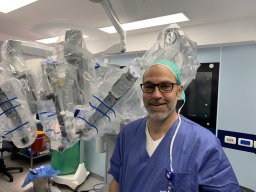 David Hazzan合作论文数Carmel Medical Center General Surgery Department3Barbara T. Murphy合作论文数2Leandra Miko合作论文数2R Shapiro合作论文数2Navdeep Dhillon合作论文数2Ghalib Jibara合作论文数2Luz Liriano-Ward合作论文数2Zeynep Ebcioglu合作论文数2Eric Davis合作论文数2
 Christina Marie Wyatt合作论文数Department of Medicine, School of Medicine, Duke University School of Medicine2
 Sukru Emre合作论文数Yale New Haven Transplantation Center, Yale New Haven Hospital;School of Medicine, Yale University2Dikman S合作论文数2




