The aim of this study was to investigate differences in the thermochemical conversion properties of freshwater and marine algae as well as micro- and macroalgae on the production of biogas, bio-oils, and biochar. The pyrolysis process of all samples involved three main stages consisting of the evaporation of bound water, primary pyrolysis reactions, and the slow decomposition of the remaining carbonaceous matter. There were no obvious differences in the thermal behavior between freshwater micro- and macroalgae, with similar thermogravimetric and apparent specific-heat profiles. However, the marine alga exhibited significantly different thermal behavior to the freshwater algae. The marine alga showed a very significant endothermic reaction of bound water releasing and a dramatic high-temperature endothermic reaction, which were not observed in any of the freshwater algae. The evolution of primary volatiles showed CO2 and CO as the dominant volatiles for all species of algae. At the heating rate of 60 degrees C/min, the maximum liquid yield for the pyrolysis of the marine Ulva ohnoi was 55 wt %, while the range of 70-75 wt % could be achieved for the pyrolysis of the three species of freshwater algae. The bio-oils collected after heating of the samples to 500 degrees C under slow and fast heating rates indicated that alcohols (including phenols) and carboxylic acids were the dominant components in the bio-oils produced from the three species of freshwater algae, while nitrogen-containing organics and phenols were overwhelming in the oil from the marine alga. The bio-oils produced at two heating rates presented only minor differences in the bio-oil composition and compound contents.
With the growing tension between freshwater resources and arable land, the implications of microalgae for future food production, CO2 sequestration and biofuel supply are increasingly compelling [1...
Life cycle assessment (LCA) of a microalgae biomass cultivation, bio-oil extraction and pyrolysis processing regime is a useful means to gauge the likely environmental impact of this prospective new development on an industrial scale. Coupled to thermal conversion via slow pyrolysis, the prospect of biologically ‘sequestering’ carbon derived from microalgae biomass as biochar, added to soil, is considered. However, an intensive closed culturing photobioreactor system coupled to a pyrolysis process incurs a net increase in global warming and overall life cycle impact, notwithstanding biochar application to soil. Results indicate that up to 50% of environmental impact in certain categories stems from the upstream influence of fertiliser production. Energy used in flue gas delivery and pumping during cultivation is also considerable, suggesting that current practice in closed cultivation systems does not yet adequately trade-off biomass productivity against operating intensity. Drying of the harvested microalgae biomass for pyrolysis processing is potentially a major hurdle in terms of process viability also. Overall, utilisation of nutrients derived from waste streams, integrating renewable energy and capture of process heat for more efficient drying are essential levers for reducing the environmental impact of this proposition.
Microalgae have significant capacity to fix CO2 and to become a major industrial biomass resource. Examining ways to innovate the microalgae cultivation and processing value chain includes a focus on the most efficient and economical means to produce a liquid oil fraction from the microalgae species. This work compares the use of organic solvent, supercritical carbon dioxide (SC-CO2), and pyrolysis to assess their relative capacity to derive oil from the marine microalgae Tetraselmis chui. The SC-CO2 technique was shown to be the least effective in natural oil extraction from T. chui. The results reveal that pure solvent extraction produces the most complete extraction of natural oil at just under 15% by weight. Subsequent pyrolysis of the post-solvent extraction residue and examination of the byproduct suggest that extraction of natural lipids prior to thermal processing increases the total quantity of bio-oil yield production by more than 11%.
Pyrolysis of biomass is a means to industrially manufacture renewable oil and gas, in addition to biochar for soil amendment and long-term carbon fixation. In this work, oil and char derived from the slow pyrolysis of the unicellular marine diatom Tetraselmis chui are analysed using a variety of techniques. The pyrolytic oil fraction exhibits a wide variety of fatty acids, alkanes, alkenes, amides, aldehydes, terpenes, pyrrolidinines, phytol and phenols, with a high heating value (HHV) of 28 MJ/kg. The biochar produced has a HHV of 14.5 MJ/kg and reveals a number of properties that are potentially valuable from an agronomic point of view, including high cation exchange capacity (CEC), large concentration of N, and a low C:N ratio. The quantity of C in T. chui biochar that can be expected to stabilise in soil amounts to approximately 9%/wt of the original feedstock, leading to a potential net reduction in atmospheric CO(2).
Aquatic microalgae have high potential for production of bio-chemicals, liquid transport fuels and charcoal. Their main advantage over existing energy crops is that they have faster growth rates and do not compete with food production. In this study six species of microalgae (Tetraselmis chui, Chlorella like, Chlorella vulgaris, Chaetocerous muelleri, Dunaliella tertiolecta and Synechococcus) were selected, presenting a broad cross-section of physical characteristics and known behaviour under cultivation. The objective of this work was to ascertain differences in thermal conversion behaviour between the microalgae species under slow pyrolysis conditions.The samples were first analysed with a Computer Aided Thermal Analysis (CATA) technique at a standard heating rate of 10 degrees C/min. For all species, the energy required to achieve thermal conversion was found to be approximately 1 MJ/kg. Gas chromatography was then applied to measure the evolution of biogas compounds with temperature. The heat of combustion of the biogas compounds was estimated to vary significantly between species, ranging from 1.2 to 4.8 MJ/kg.Pyrolysis oil product yields were also estimated at 500 degrees C. The oils produced at this temperature were collected and their molecular weight distribution assessed by Matrix Assisted Laser Desorption/Ionisation (MALDI). The species were found to produce up to 43% by volume of bio-oils. In all samples the char fraction remained above one third of total sample weight. (C) 2008 Elsevier B.V. All rights reserved.
 Vladimir Strezov合作论文数Department of Environment and Geography, Graduate School of the Environment, Macquarie University;School of Natural Sciences, Faculty of Science and Engineering, Macquarie University6
 gary k ellem合作论文数1
 Jonas Bengtsson合作论文数1
 Yan Li合作论文数1J. Herbertson合作论文数1Raffaella Mummacari合作论文数1Mangott Arnold合作论文数College of Marine and Environmental Science, James Cook University;MBD Energy Ltd;College of Marine and Environmental Science, James Cook University1
 Tao Kan合作论文数Laboratory of Biomass Clean Energy, University of Science & Technology of China1
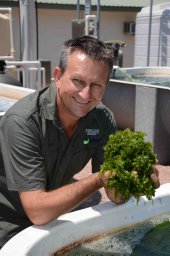 Rocky de Nys合作论文数Department of Aquaculture, James Cook University1
 Neil R. Foster合作论文数Faculty of Science and Engineering, Curtin University1
 Sargent Bray合作论文数School of Ocean and Earth Science, National Oceanography Centre Southampton, Faculty of Environmental and Life Sciences, University of Southampton1
 Peer Schenk合作论文数Global Sustainable Solutions Pty Ltd;Sustainable Solutions Hub;Schenk Lab1Luu Thai Danh合作论文数College of Agriculture and Applied Biology, The University of Can Tho1Ross Mcgregor合作论文数1
 Pushan Shah合作论文数Graduate School of the Environment, Macquarie University1




