Piecewise parametric surfaces have long been established as prevalent geometric representations; however, they often require surface refinement or sophisticated quadrangulation to accurately represent complex geometries. Geometric deep learning has shown that neural networks can provide greater representational power than conventional methods. Nevertheless, approaches using a single parametric surface for shape fitting struggle to capture fine-grained geometric details, while multi-patch methods fail to ensure seamless connections between adjacent patches. We present Neural Piecewise Parametric Surfaces (NeuPPS), the first piece-wise neural surface representation that allows for coarse patch layouts composed of arbitrary n-sided surface patches to model complex surface geometries with high precision, offering enhanced flexibility compared with traditional parametric surfaces. This new surface representation guarantees, by construction, the continuity between adjacent patches, a property that other neural patch-based approaches cannot ensure. Two novel components are introduced: a learnable feature complex and a continuous mapping function approximated by multi-layer perceptrons (MLPs). We apply the proposed NeuPPS to surface fitting and shape space learning tasks. Extensive experiments demonstrate the advantages of NeuPPS over traditional parametric representations and existing patch-based learning approaches.
Point cloud capture processes are error-prone and introduce noisy artifacts that necessitate filtering/denoising. Recent filtering methods often suffer from point clustering or noise retaining issues. In this paper, we propose Hybrid Point Cloud Filtering (HybridPF) that considers both short-range and long-range filtering trajectories when removing noise. It is well established that short range scores, given by ∇_xlog p(x_t), may provide the necessary displacements to move noisy points to the underlying clean surface. By contrast, long range velocity flows approximate constant displacements directed from a high noise variant patch x_0 towards the corresponding clean surface x_1. Here, noisy patches x_t are viewed as intermediate states between the high noise variant and the clean patches. Our intuition is that long range information from velocity flow models can guide the short range scores to align more closely with the clean points. In turn, score models generally provide a quicker convergence to the clean surface. Specifically, we devise two parallel modules, the ShortModule and LongModule, each consisting of an Encoder-Decoder pair to respectively account for short-range scores and long-range flows. We find that short-range scores, guided by long-range features, yield filtered point clouds with good point distributions and convergence near the clean surface. We design a joint loss function to simultaneously train the ShortModule and LongModule, in an end-to-end manner. Finally, we identify a key weakness in current displacement based methods, limitations on the decoder architecture, and propose a dynamic graph convolutional decoder to improve the inference process. Comprehensive experiments demonstrate that our HybridPF achieves state-of-the-art results while enabling faster inference speed.
Cross fields play a critical role in various geometry processing tasks, especially for quad mesh generation. Existing methods for cross field generation often struggle to balance computational efficiency with generation quality, using slow per-shape optimization. We introduce CrossGen , a novel framework that supports both feed-forward prediction and latent generative modeling of cross fields for quad meshing by unifying geometry and cross field representations within a joint latent space. Our method enables extremely fast computation of high-quality cross fields of general input shapes, typically within one second without per-shape optimization. Our method assumes a point-sampled surface, also called a point-cloud surface , as input, so we can accommodate various surface representations by a straightforward point sampling process. Using an auto-encoder network architecture, we encode input point-cloud surfaces into a sparse voxel grid with fine-grained latent spaces, which are decoded into both SDF-based surface geometry and cross fields (see the teaser figure). We also contribute a dataset of models with both high-quality signed distance fields (SDFs) representations and their corresponding cross fields, and use it to train our network. Once trained, the network is capable of computing a cross field of an input surface in a feed-forward manner, ensuring high geometric fidelity, noise resilience, and rapid inference. Furthermore, leveraging the same unified latent representation, we incorporate a diffusion model for computing cross fields of new shapes generated from partial input, such as sketches. To demonstrate its practical applications, we validate CrossGen on the quad mesh generation task for a large variety of surface shapes. Experimental results demonstrate that CrossGen generalizes well across diverse shapes and consistently yields high-fidelity cross fields, thus facilitating the generation of high-quality quad meshes.
Gaussian splatting has achieved impressive improvements for both novel-view synthesis and surface reconstruction from multi-view images. However, current methods still struggle to reconstruct high-quality surfaces from only sparse view input images using Gaussian splatting. In this paper, we propose a novel method called SolidGS to address this problem. We observed that the reconstructed geometry can be severely inconsistent across multi-views, due to the property of Gaussian function in geometry rendering. This motivates us to consolidate all Gaussians by adopting a more solid kernel function, which effectively improves the surface reconstruction quality. With the additional help of geometrical regularization and monocular normal estimation, our method achieves superior performance on the sparse view surface reconstruction than all the Gaussian splatting methods and neural field methods on the widely used DTU, Tanks-and-Temples, and LLFF datasets.
The recent surge of utilizing deep neural networks for geometric processing and shape modeling has opened up exciting avenues. However, there is a conspicuous lack of research efforts on using powerful neural representations to extend the capabilities of parametric surfaces, which are the prevalent surface representations in product design, CAD/CAM, and computer animation. We present Neural Parametric Surfaces, the first piecewise neural surface representation that allows coarse patch layouts of arbitrary $n$-sided surface patches to model complex surface geometries with high precision, offering greater flexibility over traditional parametric surfaces. By construction, this new surface representation guarantees $G^0$ continuity between adjacent patches and empirically achieves $G^1$ continuity, which cannot be attained by existing neural patch-based methods. The key ingredient of our neural parametric surface is a learnable feature complex $\mathcal{C}$ that is embedded in a high-dimensional space $\mathbb{R}^D$ and topologically equivalent to the patch layout of the surface; each face cell of the complex is defined by interpolating feature vectors at its vertices. The learned feature complex is mapped by an MLP-encoded function $f:\mathcal{C} \rightarrow \mathcal{S}$ to produce the neural parametric surface $\mathcal{S}$. We present a surface fitting algorithm that optimizes the feature complex $\mathcal{C}$ and trains the neural mapping $f$ to reconstruct given target shapes with high accuracy. We further show that the proposed representation along with a compact-size neural net can learn a plausible shape space from a shape collection, which can be used for shape interpolation or shape completion from noisy and incomplete input data. Extensive experiments show that neural parametric surfaces offer greater modeling capabilities than traditional parametric surfaces.
We propose a method, named DualMesh-UDF, to extract a surface from unsigned distance functions (UDFs), encoded by neural networks, or neural UDFs. Neural UDFs are becoming increasingly popular for surface representation because of their versatility in presenting surfaces with arbitrary topologies, as opposed to the signed distance function that is limited to representing a closed surface. However, the applications of neural UDFs are hindered by the notorious difficulty in extracting the target surfaces they represent. Recent methods for surface extraction from a neural UDF suffer from significant geometric errors or topological artifacts due to two main difficulties: (1) A UDF does not exhibit sign changes; and (2) A neural UDF typically has substantial approximation errors. DualMesh-UDF addresses these two difficulties. Specifically, given a neural UDF encoding a target surface $\bar{S}$ to be recovered, we first estimate the tangent planes of $\bar{S}$ at a set of sample points close to $\bar{S}$. Next, we organize these sample points into local clusters, and for each local cluster, solve a linear least squares problem to determine a final surface point. These surface points are then connected to create the output mesh surface, which approximates the target surface. The robust estimation of the tangent planes of the target surface and the subsequent minimization problem constitute our core strategy, which contributes to the favorable performance of DualMesh-UDF over other competing methods. To efficiently implement this strategy, we employ an adaptive Octree. Within this framework, we estimate the location of a surface point in each of the octree cells identified as containing part of the target surface. Extensive experiments show that our method outperforms existing methods in terms of surface reconstruction quality while maintaining comparable computational efficiency.
We propose a robust normal estimation method for both point clouds and meshes using a low rank matrix approximation algorithm. First, we compute a local isotropic structure for each point and find its similar, non-local structures that we organize into a matrix. We then show that a low rank matrix approximation algorithm can robustly estimate normals for both point clouds and meshes. Furthermore, we provide a new filtering method for point cloud data to smooth the position data to fit the estimated normals. We show the applications of our method to point cloud filtering, point set upsampling, surface reconstruction, mesh denoising, and geometric texture removal. Our experiments show that our method generally achieves better results than existing methods.
While researchers have acknowledged the potential role of environmental scientists, engineers, and industrial hygienists during this pandemic, the role of the water utility professional is often overlooked. The wastewater sector is critical to public health protection and employs collection and treatment system workers who perform tasks with high potential for exposures to biological agents. While various technical guidances and reports have initially provided direction to the water sector, the rapidly growing body of research publications necessitates the constant review of these papers and data synthesis. This paper presents the latest findings and highlights their implications from a water and wastewater utility operation and management perspective. Practitioner points Extrapolation from SARS-CoV-1 and MERS-CoV, as well as other surrogates, has helped predicting SARS-CoV-2 behavior and risk management. Data from treated wastewater effluent suggest that current processes are sufficient for SARS-CoV-2 control. Scientific evidence supports the possibility of fecal-oral transmission for SARS-CoV-2. Limited evidence supports the potential survival of infective SARS-CoV-2 on surfaces and in aerosols and the efficacy of control measures at reducing transmission. Protective practices and PPE can protect workers from SARS-CoV-2 and other pathogens found in wastewater.
Preamble On February 19, 2020, WEF published The Water Professional’s Guide to COVID-19. The Guide was meant to increase water sector awareness of COVID-19 virus and any water and wastewater-related issues and relevant resources. The content was reprinted in the April 2020 issue of Water Environment & Technology. Since then, the World Health Organization (WHO) has declared COVID-19 a pandemic and the disease has spread to more than 210 countries with more research on the virus being published every day.
We present a piece-wise rational, quadratic, interpolatory curve that is able to reproduce circles and other elliptical or hyperbolic shapes. The curve is curvature continuous except at infection points and points of local maximum curvature appear only at control points and nowhere else. The local maximum curvature property ensures that users have direct control over salient points of the curve, and users can control if and where features such as cusps and loops are generated.To construct the desired curve, we formulated an energy that encodes the desired properties to optimize using a boxed constrained optimization. We provide an efficient algorithm for choosing an initial guess close to the solution to accelerate convergence. In addition, we show how to automatically choose the rational weights of the curve as part of the optimization to reproduce shapes such as circles.
The authors study the market for young attorneys. Using data from two surveys of attorneys who passed the bar exam in 2000, they find that attorneys who graduate from law schools ranked in the Top 10 nationally earn considerably more than those without such a qualification, even compared to attorneys who graduate from schools ranked 11–20. The premium to an elite education carries over to an attorney’s undergraduate institution as well, and the findings suggest that elite bachelor’s degrees and elite law degrees are close substitutes in terms of their relationships to salaries. The elite–law school premium is more robust to various methods for correcting for selection on ability than the widely studied premium to attending a selective undergraduate institution. The authors consider several reasons elite-school premiums may exist in this labor market.
We construct a family of barycentric coordinates for 2D shapes including non‐convex shapes, shapes with boundaries, and skeletons. Furthermore, we extend these coordinates to 3D and arbitrary dimension. Our approach modifies the construction of the Floater‐Hormann‐Kós family of barycentric coordinates for 2D convex shapes. We show why such coordinates are restricted to convex shapes and show how to modify these coordinates to extend to discrete manifolds of co‐dimension 1 whose boundaries are composed of simplicial facets. Our coordinates are well‐defined everywhere (no poles) and easy to evaluate. While our construction is widely applicable to many domains, we show several examples related to image and mesh deformation.
We present a method for constructing almost-everywhere curvature-continuous, piecewise-quadratic curves that interpolate a list of control points and have local maxima of curvature only at the control points. Our premise is that salient features of the curve should occur only at control points to avoid the creation of features unintended by the artist. While many artists prefer to use interpolated control points, the creation of artifacts, such as loops and cusps, away from control points has limited the use of these types of curves. By enforcing the maximum curvature property, loops and cusps cannot be created unless the artist intends for them to be. To create such curves, we focus on piecewise quadratic curves, which can have only one maximum curvature point. We provide a simple, iterative optimization that creates quadratic curves, one per interior control point, that meet with G 2 continuity everywhere except at inflection points of the curve where the curves are G 1 . Despite the nonlinear nature of curvature, our curves only obtain local maxima of the absolute value of curvature only at interpolated control points.
Bijective maps are commonly used in many computer graphics and scientific computing applications, including texture, displacement, and bump mapping. However, their computation is numerically challenging due to the global nature of the problem, which makes standard smooth optimization techniques prohibitively expensive. We propose to use a scaffold structure to reduce this challenging and global problem to a local injectivity condition. This construction allows us to benefit from the recent advancements in locally injective maps optimization to efficiently compute large scale bijective maps (both in 2D and 3D), sidestepping the need to explicitly detect and avoid collisions. Our algorithm is guaranteed to robustly compute a globally bijective map, both in 2D and 3D. To demonstrate the practical applicability, we use it to compute globally bijective single patch parametrizations, to pack multiple charts into a single UV domain, to remove self-intersections from existing models, and to deform 3D objects while preventing self-intersections. Our approach is simple to implement, efficient (two orders of magnitude faster than competing methods), and robust, as we demonstrate in a stress test on a parametrization dataset with over a hundred meshes.
We propose a robust and effective mesh denoising approach consisting of three steps: vertex pre-filtering, L1-median normal filtering, and vertex updating. Given an input noisy mesh model, our method generates a high quality model that preserves geometric features. Our approach is more robust than state of the art approaches when denoising models with different levels of noise and can handle models with irregular surface sampling.
We present a method for constructing almost-everywhere curvature-continuous, piecewise-quadratic curves that interpolate a list of control points and have local maxima of curvature only at the control points. Our premise is that salient features of the curve should occur only at control points to avoid the creation of features unintended by the artist. While many artists prefer to use interpolated control points, the creation of artifacts, such as loops and cusps, away from control points has limited the use of these types of curves. By enforcing the maximum curvature property, loops and cusps cannot be created unless the artist intends for them to be. To create such curves, we focus on piecewise quadratic curves, which can have only one maximum curvature point. We provide a simple, iterative optimization that creates quadratic curves, one per interior control point, that meet with G2 continuity everywhere except at inflection points of the curve where the curves are G1. Despite the nonlinear nature of curvature, our curves only obtain local maxima of the absolute value of curvature only at interpolated control points.
En se focalisant sur les principes economiques qui regissent le comportement des entreprises et des marches, ce livre aborde les fondamentaux du raisonnement strategique et detaille les outils necessaires a la realisation d une analyse strategique serieuse et valable.
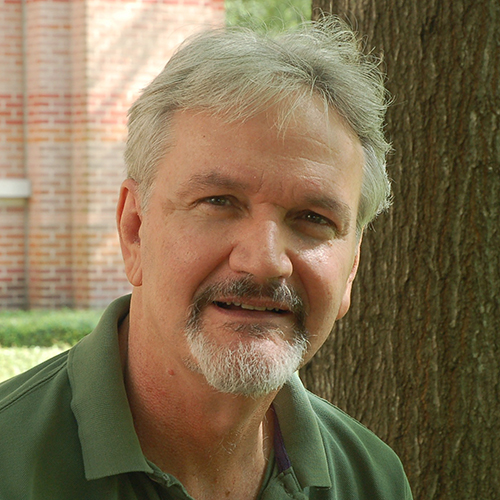 Joe D. Warren合作论文数Department of Computer Science, George R. Brown School of Engineering, Rice University23
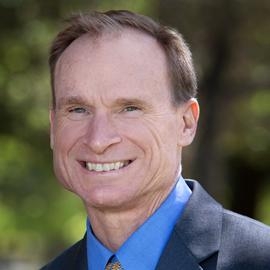 Paul Oyer合作论文数Graduate School of Business, Stanford University22
 Josiah Manson合作论文数12Rachel M. Hayes合作论文数David Eccles School of Business, University of Utah8
 Tao Ju (居涛)合作论文数Department of Computer Science and Engineering, McKelvey School of Engineering, Washington University in St. Louis8todd d farrell合作论文数7
 John Keyser合作论文数Texas A&M Univ, Dept Comp Sci & Engn, College Stn, TX 77843 USA7
 Wenping Wang合作论文数Department of Computer Science & Engineering, College of Engineering, Texas A&M University7
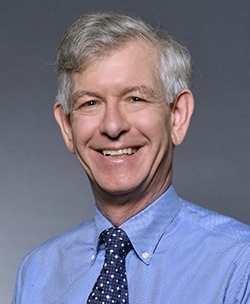 David Besanko合作论文数Center for the Study of Industrial Organization, Weinberg College of Arts and Sciences, Northwestern University6
 David Dranove合作论文数Kellogg School of Management, Northwestern University6
 Mark Shanley合作论文数College of Business Administration, University of Illinois at Chicago6jeffery w janzen合作论文数5jan hakenberg合作论文数5
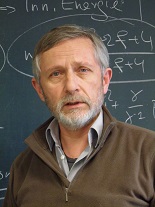 Karl-Heinz Glaßmeier合作论文数Institut fur Geophysik und Extraterrestrische Physik, Fakultat fur Elektrotechnik, Informationstechnik, Physik, Technische Universitat Braunschweig5
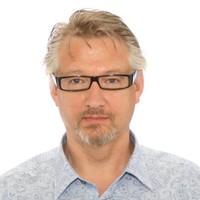 Charles Loop合作论文数NVIDIA Corporation5Naoko Munakata合作论文数4Jay Swift合作论文数4Akin Babatola合作论文数4Lola Olabode合作论文数4Zhipei Yan合作论文数Texas A&M University4
 Kari Brisolara合作论文数4
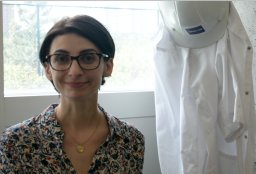 Rasha Maal-Bared合作论文数EPCOR4
 Kyle Bibby合作论文数GERM Lab, Department of Civil & Environmental Engineering & Earth Sciences, College of Engineering, University of Notre Dame4
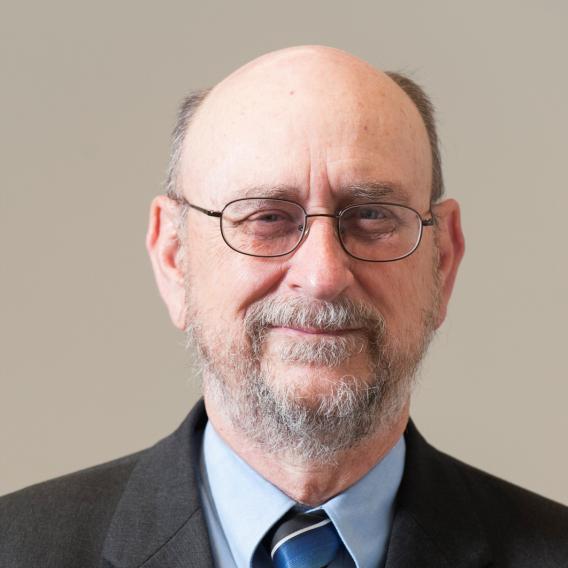 Charles Gerba合作论文数Water and Energy Sustainable Technology Center, The University of Arizona;Department of Environmental Science, The University of Arizona4
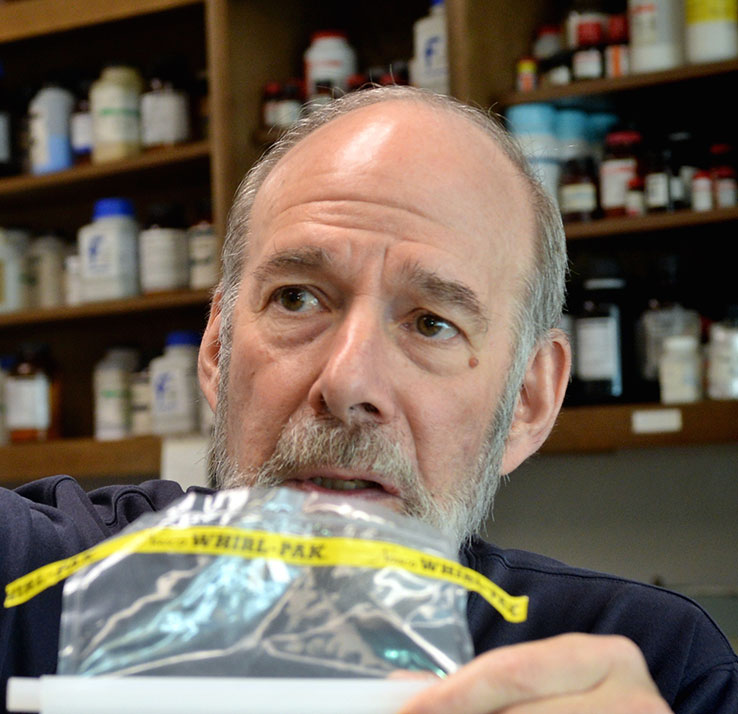 Mark D. Sobsey (Mark Sobsey)合作论文数Department of Environmental Sciences and Engineering, Gillings School of Global Public Health, University of North Carolina4
 Ulrich Reif合作论文数Fachbereich Mathematik, Technische Universitat Darmstadt4christopher s johnson合作论文数3
 Congyi Zhang合作论文数Department of Computer Science, Faculty of Science, The University of British Columbia;Department of Computer Science, The University of Hong Kong3Robert Bastian合作论文数3Robert Reimers合作论文数3
 Samendra Sherchan合作论文数Morgan State University3Andre Balogh合作论文数Department of Physics, Faculty of Natural Sciences, Imperial College London3J. Smith合作论文数3
 Lei Yang (杨磊)合作论文数Faculty of Engineering, The University of Hong Kong3H. Reme合作论文数3
 Xin Li (李昕)合作论文数Section of Visual Computing and Computational Media, College of Performance, Visualization, and Fine Arts, Texas A&M University;Department of Computer Science and Engineering, College of Engineering, Texas A&M University3
 Mayank Singh合作论文数Texas A&M University3
 Ronald Goldman合作论文数Computer Science at Rice University in Houston, Texas3
 Xuequan Lu (鲁学权)合作论文数The University of Western Australia3
 Bernard Mourrain合作论文数Inria Sophia Antipolis Mediterranee Aromath3Eric Landreneau合作论文数3Guergana Petrova合作论文数Department of Mathematics;Texas A&M University;Department of Mathematics, Texas A&M University3
 Qiugang Zong (宗秋刚)合作论文数School of Earth and Space Sciences, Peking University3
 Cem Yuksel合作论文数Kahlert School of Computing, University of Utah;Cyber Radiance LLC.3Stephen Schiller合作论文数2
 Yujing Sun合作论文数2helen yuehong zhang合作论文数2Guying Lin合作论文数2
 Leonard W. Casson合作论文数2




