In Vehicular Ad Hoc Networks (VANETs), the high mobility of vehicle nodes makes the network topology change frequently, reducing the forwarding efficiency of MAC protocol. In the existing enhanced TDMA-based MAC protocol, the farthest node in the current transmission range is chosen as the forwarding node to accelerate the multi-hop transmission. However, we use probabilistic model to show that there potentially exist better forwarding nodes, which could effectively improve transmission efficiency. Therefore, we propose a motion-prediction based TDMA protocol, which predicts the network topology in the next frame to select the better forwarding node. The test results of highway and urban scenarios show that the motion-prediction based TDMA protocol effectively reduces the number of hops in multi-hop transmission and decreases the broadcast delay by 50% to cover the whole network.
Many Carrier Sense Multiple Access (CSMA) and Time Division Multiple Access (TDMA) based medium access control (MAC) protocols for vehicular ad hoc networks (VANETs) have been proposed recently. Contrary to the common perception that they are competitors, we argue that the underlying strategies used in these MAC protocols are complementary. Based on this insight, we design CTMAC, a MAC protocol that synthesizes existing strategies; namely, random accessing channel (used in CSMA-style protocols) and arbitral reserving channel (used in TDMA-based protocols). CTMAC swiftly changes its strategy according to the vehicle density, and its performance is better than the state-of-the-art protocols. We evaluate CTMAC using at-scale simulations. Our results show that CTMAC reduces the channel completion time and increases the network goodput by 45% for a wide range of application workloads and network settings.
In vehicular ad hoc networks (VANET), the medium access control (MAC) protocol was of crucial importance to provide time-critical multihop broadcast. Contemporary multihop broadcast protocols in VANET usually choose the farthest node in broadcast range as the forwarder to reduce the number of forwarding hops. However, it was demonstrated that the farthest forwarder may experience long contention delay in case of high vehicle density. An IEEE 802.11p-based multihop broadcast protocol vehicle density based forwarding (VDF) was proposed, which adaptively chose the forwarder according to the vehicle density. The evaluation results in safety warning and online game applications show that, VDF could shorten broadcast delay by achieving the proper trade-off between the contention delay and coverage speed.
 Jiawei Huang (黄家玮)合作论文数School of Computer Science and Engineering, Central South University3
 LianHai Liu (刘联海)合作论文数2
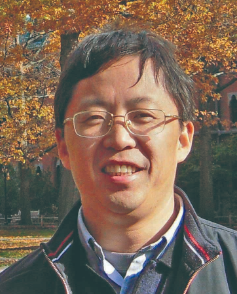 Jianxin Wang (王建新)合作论文数School of Computer Science and Engineering, Central South University2Jinbin Hu合作论文数1
 Wenjun Lyu合作论文数Rutgers University, Piscataway, NJ, USA1
 Ping Zhong (钟萍)合作论文数School of Computer Science and Engineering, Central South University1
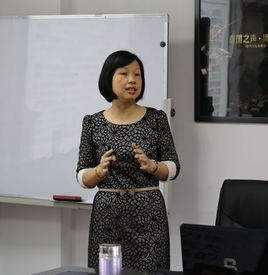 Jin Ye (叶进)合作论文数School of Information and Communication Engineering,Guilin University of Electronic Technology1
 Qi Li (李奇)合作论文数School of Automation, Southeast University1




