Background Renewable energy sources occupy a pivotal role in contemporary society, underpinning a substantial portion of our daily energy requirements. Given the inherent variability and intermittency of these resources, a comprehensive understanding of their underlying systems is essential for accurately forecasting performance under diverse environmental conditions. For instance, in photovoltaic systems, the identification of key unknown parameters enables precise prediction of output behavior across varying levels of solar irradiance and ambient temperature. Similarly, in fuel cell configurations, parameter estimation facilitates the modeling of system dynamics under fluctuating pressures and temperatures, thereby informing effective energy management strategies. Methods This paper presents a novel strategy aimed at advancing the performance of metacognitive optimization algorithms, with a particular focus on refining their exploration and exploitation dynamics. The proposed technique is characterized by its ease of implementation and high computational efficiency, contributing to faster convergence toward global optimal solutions while enhancing overall algorithmic stability and resilience. Notably, it also addresses the common challenge of becoming trapped in local minima—achieving this without the need to construct entirely new algorithmic frameworks. To demonstrate the practical value of this enhancement, the method was embedded into the structure of the Butterfly Optimization Algorithm, resulting in an improved version termed the Smart Butterfly Optimization Algorithm (SBOA). Significant finding This upgraded model was rigorously evaluated through parameter identification tasks in two widely used energy systems: photovoltaic cells and proton exchange membrane fuel cells (PEMFCs). The solar cell assessment included various diode configurations—single, double, and triple—as well as benchmark models such as SM55, KC200GT, and SW255, under varying thermal and irradiance conditions. For fuel cells, a single test scenario was examined, involving a system with seven unknown parameters. The model’s reliability was validated by comparing SBOA-generated current-voltage characteristics to empirical PEMFC data collected under different environmental parameters. Results highlight the improved algorithm's superior accuracy, convergence speed, and robustness across multiple engineering applications.
In modern AI training clusters, efficient load balancing is essential to achieve low-latency and high-throughput communication. Although advanced flowlet-based methods in Remote Direct Memory Access (RDMA) datacenter networks are widely adopted for preventing out-of-order packets, they inadvertently harm performance by misinterpreting all interpacket gaps (IPGs) as congestion, triggering unnecessary and disruptive rerouting. To address this issue, we present a gapaware load balancing mechanism (GaLB), which proactively identifies non-congested IPGs to prevent unnecessary rerouting. Specifically, GaLB leverages both IPG measurements and flow control frame states to discern the nature of inter-packet gaps, enabling differentiated routing strategies. Experimental results show that GaLB significantly outperforms state-of-theart schemes, reducing the average and the $99^{t h}$ percentile flow completion times (FCT) by 21.4% and 22.3%, respectively, while lowering the out-of-order event rate by 25.3%.
Concrete material will gradually lose its original structural strength over time and suffer from a variety of structural damages, such as cracks, potholes, etc. Diverse damage patterns and complex geometries of material make accurate multi-class material structural damage segmentation more difficult than the segmentation of a single type of damage. Integrating detection methods with other systems and applying them to engineering practice imposes demands on the efficiency of model inference. In response to these challenges, Real-Time concrete structural Damage Segmentation network (RTDSeg) was proposed. In this network, efficient feature extraction backbone was introduced to improve the perceptual capabilities of the model. In order to alleviate the problem of feature redundancy when fusing features from different scales, semantic enhancement module was designed to filter the encoding features. Furthermore, auxiliary prediction head and hard example sampling training method were introduced to optimize the training effectiveness of the model, which improved the model's prediction accuracy without extra inference cost. A series of experiments demonstrated the superiority of RTDSeg and the effectiveness of several improvements. In the compared state-of-the-art networks, RTDSeg achieved 8.98% mIoU and 13.89% FPS lead on a bridge damage dataset, and 3.88% mIoU and 92.03% FPS lead on a reinforced concrete damage dataset compared to the ones with the highest accuracy.
More and more service providers deploy applications in data centers connected by the wide area network (WAN). WAN makes these data center networks (DCNs) interconnected to a certain extent, but the security problems within the network are increasingly prominent. Especially when a malicious attack occurs, data transmission across data center network may lead to packet loss, resulting in adverse effects such as data transmission delay, low throughput and network bandwidth waste. In order to ensure the reliability of cross DCN traffic transmission under malicious traffic attack, a coding method is proposed to achieve low delay and high throughput of cross DCN information under malicious traffic attack. This method uses forward error correction (FEC) coding based on the traditional fountain code. Specifically, senders encode the original data into more coded packets than the original data, while receivers can recover the complete effective data even in the case of packet loss. In addition, the coding module will dynamically adjust the number of redundant packages according to the network conditions to alleviate congestion. NS-3 simulation results show that under malicious traffic attack, FEC coding can reduce the transmission delay by 35% and improve the throughput by 30% compared with the existing schemes.
Scaling deep learning to industrial dimensions has made distributed training indispensable. However, its efficiency is often hindered by the long-tail distribution of parameter access, caused by extreme skew. Conventional approaches mainly rely on worker-side caches, but these static and rigid designs fail to adapt to dynamic traffic patterns, leading to persistent network congestion and underutilized GPUs. To address this challenge, we propose M-Cache, a switch-assisted, multi-tier caching framework that operates hierarchically and adapts in real time. By embedding a lightweight programmable cache directly in the datapath and coordinating it with adaptive worker buffers, M-Cache ensures that frequently accessed parameters are placed at the optimal layer where they are most needed. Experimental results demonstrate clear benefits: compared with state-of-the-art static methods, M-Cache reduces parameter pull traffic by up to 70 × , showing that incorporating caching into the network fabric effectively mitigates skew and enhances training efficiency.
Workloads in modern AI networks generate highly heterogeneous traffic, with conflicting demands for low latency and high throughput. Existing load balancing strategies often overlook the differing transmission requirements of heterogeneous traffic. To address this gap, this paper proposes a heterogeneous traffic-aware load balancing (HaLB). Specifically, HaLB integrates three key influencing factors by calculating a heuristic function to compute the transition probability for selecting the next hop, ultimately choosing the optimal routing path. NS-3 simulation experiments demonstrate that HaLB significantly outperforms existing advanced schemes. It not only achieves a 24
ByteScheduler partitions and rearranges tensor transmissions to improve the communication efficiency of distributed Deep Neural Network (DNN) training. The configuration of hyper-parameters (i.e., the partition size and the credit size) is critical to the effectiveness of partitioning and rearrangement. Currently ByteScheduler adopts Bayesian Optimization (BO) to find the optimal configuration for the hyper-parameters beforehand. In practice, however, various runtime factors (such as worker node status and network conditions) change over time, making the statically-determined one-shot configuration result suboptimal for real-world DNN training. To address this problem, in this paper we present a realtime configuration method (called AutoByte) that automatically and timely searches the optimal hyper-parameters as the training systems dynamically change. AutoByte extends the ByteScheduler framework with a meta network, which takes the systems’ runtime statistics as its input, dynamically adjusts the triggering threshold based on system environment characteristics, and outputs predictions for speedups under specific configurations. Evaluation results on various DNN models show that AutoByte can dynamically tune the hyper-parameters with low resource usage, and deliver up to 33.2% higher performance than the best static configuration method on the ByteScheduler framework.
Remote Direct Memory Access (RDMA) over Converged Ethernet (RoCE) cooperating with Priority Flow Control (PFC) has been widely deployed in production datacenters to enable low latency, lossless transmission. At the same time, modern datacenters typically offer parallel transmission paths between any pair of end-hosts, underscoring the importance of load balancing. However, the well-studied load balancing mechanisms designed for lossy datacenter networks (DCNs) are ill-suited for such lossless environments. Through extensive experiments, we are among the first to comprehensively inspect the interactions between PFC and load balancing, and uncover that existing fine-grained rerouting schemes can be counterproductive to spread the congested flows among more paths, further aggravating PFC’s head-of-line (HoL) blocking. Motivated by this, we present FLB, a Fine-grained Load Balancing scheme for lossless DCNs. At its core, FLB employs threshold-free rerouting to effectively balance traffic load and improve link utilization during normal conditions and leverages timely congested flow isolation to eliminate HoL blocking on non-congested flows when congestion occurs. To handle complex multi-bottleneck scenarios, we further introduce FLB*, which incorporates an enhanced congestion-point-aware isolation mechanism using Congestion Point Identifiers (CPI) to eliminate HoL blocking among different congested flows.We have fully implemented a FLB prototype, and our evaluation results show that FLB reduces PFC PAUSE rate by up to 96% and avoids HoL blocking, translating to up to 45% improvement in goodput over CONGA+DCQCN and 40%, 36%, 29% and 18% reduction in average flow completion time (FCT) over LetFlow+Swift, MP-RDMA, Proteus+DCQCN and LetFlow+PCN, respectively.
Remote direct memory access (RDMA) is widely deployed in production data centers to enable low-latency transmission. The current multipath RDMA transmission protocols effectively improve link utilization by allocating traffic to equal-cost parallel paths. To address packet reordering, they struggle to control the level of out-of-order packets by using bitmaps. However, under asymmetric path status and highly dynamic traffic scenarios, a large number of out-of-order packets easily cause bitmap overflow and frequent unnecessary retransmission, resulting in goodput far below throughput. Motivated by this, we present MPTR, an efficient multipath transport with robust reordering for RDMA networks. At its core, MPTR continuously monitors the multipath congestion status at the receiver and distributes the traffic in a congestion-aware manner to proactively reduce the degree of out-of-order and avoid triggering retransmission due to bitmap cache overflow. The NS-3 simulation results show that MPTR effectively reduces unnecessary retransmission and improves goodput under realistic workloads by up to 34%, 49%, and 51% compared to multi-path remote direct memory access (MP-RDMA), ConWeave, and data center quantized congestion notification (DCQCN), respectively.
Sketch is widely used in many traffic estimation tasks due to its good balance among accuracy, speed, and memory usage. In scenarios with priority flows, priority-aware sketch, as an emerging method, provides differentiated detection accuracy for flows of different priorities, optimizing resource allocation and improving the detection accuracy of high-priority flows. However, existing priority-aware sketches methods struggle to effectively handle the dynamic changes in flow priority distribution in real world detection environments, leading to wasted or insufficient storage space. To address this issue, this paper proposes a new priority-aware sketch with Dynamic Memory Allocation called DMA-Sketch. It dynamically adjusts the detection framework based on flow priority distribution information and adaptively allocates appropriate memory space to each storage region. The experimental results show that DMA-Sketch improves the overall priority accuracy, high-priority accuracy and throughput by up to 1.33x, 16.39x and 1.88x, respectively, under the scenarios with changing flow priority distribution over the state-of-the-art schemes.
Remote Direct Memory Access (RDMA) is widely deployed in production data centers to enable low-latency transmission. The current multi-path RDMA transmission protocols effectively improve link utilization by allocating traffic to equal-cost parallel paths. To address packet reordering, they struggle to control the level of out-of-order packets by using bitmaps. However, under asymmetric path status and highly dynamic traffic scenarios, a large number of disorder packets easily cause bitmap overflow and frequent unnecessary retransmission, resulting in goodput far below throughput. Motivated by this, we present MPTR, an efficient multi-path transport with robust reordering for RDMA networks. At its core, MPTR continuously monitors the multi-path congestion status at the receiver and distributes the traffic in a congestion-aware manner to proactively reduce the degree of out-of-order and avoid triggering retransmission due to bitmap cache overflow. The NS-3 simulation results show that MPTR effectively reduces unnecessary retransmission and improves goodput under realistic workloads by up to 34
To meet the massive compute and high-speed communication demands of Large Language Model (LLM) training, modern datacenters typically adopt multipath topologies such as Fat-Tree and Clos to host parallel jobs across hundreds to thousands of GPUs. However, LLM training exhibits periodic, high-bandwidth communication patterns. Existing load-balancing schemes become misaligned under dynamic congestion and anomalous surges: they struggle to promptly mitigate iteration-peak congestion and lack effective isolation of anomalous traffic. To address this, we propose Security-Aware Load Balancing (SALB) for LLM training. SALB leverages a Deep Reinforcement Learning (DRL) controller with queue and delay signals for packet-level multipath load balancing and employs path binding to confine suspicious flows. By integrating data security into load balancing, SALB simultaneously achieves high throughput and robust traffic isolation. NS-3 simulation results show that, compared with CONGA, Hermes, and ConWeave, SALB reduces the 99th-percentile flow completion time (FCT) of short flows by an average of 65% and increases the throughput of long flows by an average of 54%. It further outperforms the baselines in aggregate throughput, path utilization, and packet loss rate, thereby significantly enhancing system stability, robustness, and data security.
Cracks area prevalent disease on pavement concrete materials. Timely assessment and repair of concrete materials can significantly extend their service life. However, accurate segmentation has always been difficult due to their random distribution, tortuous geometry, and varying degrees of severity. To address these challenges, a Multi-stage Supervised Dual-encoder network for Crack segmentation on pavement concrete (MSDCrack) was proposed based on an encoder-decoder architecture. In this network, attention collapse is mitigated through the addition of self-attention pooling. Furthermore, a feature fusion module was designed to address differences in encoding characteristics across branches. Additionally, a multi-stage supervision strategy was implemented to enhance the network's predictive performance. Comparative experiments demonstrated that MSDCrack achieved the highest Dice coefficient, F1-score, and IoU on multiple datasets, with F1-score and IoU surpassing other state-of-the-art segmentation networks by over 3.1% and 2.89%, respectively, in generalization performance.
To reduce the traffic volume and accelerate communication in distributed training (DT) jobs, recent works introduce In-Network Aggregation (INA) to move the gradient summation into network programmable switches. However, switch memory is a scarce resource, unable to support massive DT jobs in data centers, and existing INA solutions have not utilized switch memory to the best extent. We propose DSA, an Efficient Data-Plane switch memory Scheduler for in-network Aggregation. DSA introduces preemption to the switch memory management for INA jobs. Furthermore, under packet preemption scenarios, DSA optimizes the selective retransmission mechanism to reduce redundant retransimtting packets to alleviate congestion. In the data plane, DSA allows gradient tensors with high priority to preempt the switch aggregators (basic computation unit in INA) from tensors with low priority, which avoids an aggregator wasting time in idle. In the control plane, DSA devises a priority policy which assigns high priority to gradient tensors that benefit overall job efficiency more, e.g., communication-intensive jobs. We implement the prototype of DSA. The experimental results show that DSA can improve the average job completion time (JCT) by up to $1.35\times $ compared with baseline solutions.
Modern industrial datacenter networks carry latency-sensitive and throughput-oriented applications with diverse requirements. Recent load balancing mechanisms effectively reduce latency and improve throughput for heterogeneous traffic. However, deadline-sensitive flows still often miss deadlines due to being blocked. In this article, we introduce an adaptive routing system (ARS) to avoid missing deadlines. Specifically, an ARS computes a heuristic function using three influence factors, derives the probability of choosing the next node, and finds optimal (re)routing path. The experimental results show that an ARS enhances the throughput for long flows and decreases the average flow completion time and the deadline miss rate by 24% and 55%, respectively, compared to state-of-the-art load balancing schemes.
To meet the stringent demanding low latency and high throughput of cloud datacenter applications, recent receiver-driven transport protocols transmit only one packet once receiving each credit packet from the receiver to achieve ultra-low queueing delay. However, the round-trip time variation and the highly dynamic background traffic significantly deteriorate the performance of receiver-driven transport protocols, resulting in under-utilized bandwidth. This article designs a simple yet effective solution called RPO, which retains the advantages of receiver-driven transmission while efficiently utilizing the available bandwidth. Specifically, RPO rationally uses low-priority opportunistic packets to ensure high network utilization without increasing the queueing delay of high-priority normal packets. Furthermore, to tackle the queueing buildup due to line-rate transmission in the first RTT, we design a selective dropping mechanism called SDM to help the majority of small flows complete within only one RTT by prioritizing the first-RTT bursty packets over the packets triggered by grants. We implement RPO in Linux hosts with DPDK. The experimental results show that RPO significantly improves the network utilization by up to 35% over the state-of-the-art schemes, without introducing additional queueing delay. Moreover, RPO integrated with SDM reduces the AFCT of small flows by up to 45% compared with RPO integrated with Aeolus.
Packet-level load balancing has shown its massive potential for long in utilizing super high bisection bandwidth of data center network (DCN). This kind of potential, however, has still not been completely transformed into huge performance enhancement of data transmission. The fundamental reason is that packet-level load balancing can fully utilize the parallel paths of underlying physical network, but suffer from the problem of packet disordering transmission, which greatly impairs the flow-level transmission performance of DCN. This paper explores the root cause of performance impairment generated by packet disordering transmission, and proposes $R^{3}$, a solution focusing on “recognizably releasing redundant acknowledgements” as a building block for data center packet-level load balancer. In $R^{3}$'s heart, the source leaf switch perceives the global packet loss information and selectively intercepts the redundant acknowledgement packets, thus avoiding the TCP-driven end-host from experiencing frequent window reductions and unnecessary packet retransmissions. Experimental results of numerous simulation tests and real implementations show that, after integrating $R^{3}$ into the representative data center packet-level load balancing schemes, the transmission performances of both delay-sensitive and throughput-oriented data center flows are significantly improved. Furthermore, $R^{3}$ is merely implemented by switch, leaving the end hosts and the deployed load balancing scheme totally unchanged.
Offloading computing and storage to programmable switches, or in-network acceleration (INA), is a recent wisdom to speed up distributed applications. Researchers have proposed a variety of tailored INA solutions for separate applications with different data-plane layouts and network protocols. However, as hardware resource of programmable switches is limited, it is hard to integrate all these INA solutions simultaneously. Consequently, specialized INA techniques cannot realize full potential on the cloud, which needs to support various applications and requires concurrent access by multi-tenants. To enable on-demand INA service on the cloud, we present a generic INA framework called INAaaS (INA as a Service). At its core, INAaaS provides a universal INA interface in network and offers application-specific adapters on end-hosts. It further addresses the isolation problem of different applications, and guarantees the reliability and correctness. Our evaluation shows that INAaaS effectively improves the performance of various cloud applications, competing with the specific solutions.
Sketch is widely used in many traffic estimation tasks due to its good balance among accuracy, speed, and memory usage. In scenarios with priority flows, priority-aware sketch, as an emerging method, provides differentiated detection accuracy for flows of different priorities, optimizing resource allocation and improving the detection accuracy of high-priority flows. However, existing priority-aware sketches methods struggle to effectively handle the dynamic changes in flow priority skew in realworld detection environments, leading to wasted or insufficient storage space. To address this issue, this paper proposes a new priority-aware sketch with Dynamic Memory Allocation called DMA-Sketch. It dynamically adjusts the detection framework based on flow priority skew information and adaptively allocates appropriate memory space to each storage region. The experimental results show that DMA-Sketch improves the overall priority accuracy, high-priority accuracy and throughput by up to 1.33x, 16.39x and 1.88x, respectively, under the scenarios with changing flow priority skew over the state-of-theart schemes.
 Jin Wang (王进)合作论文数Hunan University of Science and Technology29
 Jiawei Huang (黄家玮)合作论文数School of Computer Science and Engineering, Central South University26
 Kai Chen (陳凱)合作论文数Department of Computer Science & Engineering, School of Engineering, The Hong Kong University of Science and Technology15
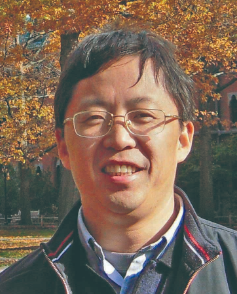 Jianxin Wang (王建新)合作论文数School of Computer Science and Engineering, Central South University15
 Shuying Rao合作论文数13Jing Wang合作论文数9Wangqing Luo合作论文数8
 Tao Zhang (张陶)合作论文数8
 Tian He (何田)合作论文数School of Computer Science and Engineering, Southeast University;JD.com, Inc8YiHe合作论文数Central South University6Ying Liu合作论文数6
 Chang Ruan (阮昌)合作论文数School of Computer Science and Engineering, Central South University, Changsha, 410083, China6
 Chaoliang Zeng合作论文数Hong Kong University of Science and Technology5
 Zhaoyi Li合作论文数5
 Amr Tolba合作论文数Math & Computer Science Department, Faculty of Science, Menoufia University;Department of Computer Science, College of Computer and Information Sciences, King Saud University5
 Junxue Zhang (张骏雪)合作论文数School of Computer Science and Technology, University of Science and Technology of China5
 Shaojun Zou (邹绍军)合作论文数School of Computer Science and Technology, Hainan University4Weihe Li (李伟河)合作论文数4Xiaodian Cheng合作论文数3Hong Xu合作论文数3
 Shiming He合作论文数3
 Hao Wang (王灏)合作论文数Division of Computer Science and Engineering, Louisiana State University3
 Liu Yang合作论文数Hong Kong University of Science and Technology3
 Fayez Hussain Alqahtani合作论文数College of Computer and Information Sciences, King Saud University3
 Zilong Wang (汪子龙)合作论文数Hong Kong University of Science and Technology3
 Jingling Liu (刘敬玲)合作论文数School of Computer Science and Engineering, Central South University3DengYong Zhang (章登勇)合作论文数3
 Xiuhan Li (李修函)合作论文数School of Electronic and Information Engineering, Beijing Jiaotong University3WANG Jin (王进)合作论文数2
 Yuanzhen Hu合作论文数2Wenxue Li合作论文数2
 Sen Liu合作论文数2
 Wenjun Lyu合作论文数Rutgers University, Piscataway, NJ, USA2
 Pradip Kumar Sharma合作论文数Dongguk Univ, Dept Multimedia Engn, Seoul 04620, South Korea2JianXin Wang (王建新)合作论文数2
 Kun Guo (郭昆)合作论文数College of Software, Fuzhou University2
 Min Zhu合作论文数2
 Yafei Ma合作论文数2
 Wenjun Lv合作论文数2
 Simon Sherratt合作论文数Department of Biomedical Engineering, School of Biological Sciences, University of Reading2Fahad Mohammed Alblehai合作论文数1Neal N. Xiong合作论文数1Shaohua Zhong (钟少华)合作论文数1
 Ran Huang合作论文数1Shuping Li (李淑平)合作论文数1Zhang Hai-xia合作论文数1
 Yijun Li合作论文数1
 Han Tian (田晗)合作论文数School of Computer Science and Technology, University of Science and Technology of China1




