Recently, the process of fish species classification has become one of the most challenging problems addressed by researchers. In this work, a robust scheme to classify fish images based on robust feature extraction from shape signatures is proposed. First, the image contour is fitted using one of the common approaches named radial basis function neural network (RBFNN) fitting to obtain image centroid. Afterward, prominent features from the shape signature are extracted. These features are representative of fish shapes because they can distinguish the characteristics of each class as well as being relatively robust to scale and rotation changes. Finally, for the classification process purpose, RBFNN is used again for image classification against one of the most commonly used classification techniques called support vector machine (SVM). The proposed paradigm has been applied to a standard fish dataset acquired from a live video dataset grouped into twenty-three clusters representing specific fish species. The resulting accuracy based on SVM and RBFNN was 90.41% and 98.04%, respectively.
Sentiment analysis attracts the attention of Egyptian Decision-makers in the education sector. It offers a viable method to assess education quality services based on the students' feedback as well as that provides an understanding of their needs. As machine learning techniques offer automated strategies to process big data derived from social media and other digital channels, this research uses a dataset for tweets' sentiments to assess a few machine learning techniques. After dataset preprocessing to remove symbols, necessary stemming and lemmatization is performed for features extraction. This is followed by several machine learning techniques and a proposed Long Short-Term Memory (LSTM) classifier optimized by the Salp Swarm Algorithm (SSA) and measured the corresponding performance. Then, the validity and accuracy of commonly used classifiers, such as Support Vector Machine, Logistic Regression Classifier, and Naive Bayes classifier, were reviewed. Moreover, LSTM based on the SSA classification model was compared with Support Vector Machine (SVM), Logistic Regression (LR), and Naive Bayes (NB). Finally, as LSTM based SSA achieved the highest accuracy, it was applied to predict the sentiments of students' feedback and evaluate their association with the course outcome evaluations for education quality purposes.
Agent-based modeling and simulation is a promising technique utilized to study and simulate interdependencies of complex infrastructures. This technique has two relevant properties which could be exploited in the field of healthcare, namely, the re-use of simulation models and the sharing of expertise. This research proposes a methodology to exploit the benefits of multi-agent systems with respect to the study of interdependencies between rehabilitation center personnel. The design procedure began by proposing an architectural layout which can best facilitate overall patient movement and improve healthcare services provided. Then, a simulation of the various personnel, along with the patients, was analyzed and implemented, using NetLogo, an agent-based simulation engine and environment. The simulation results showed how multi-agent systems could shed light on interdependent system performance and assist in their quantification. These results could then be used to make recommendations concerning the ideal number of personnel to be allocated to the rehabilitation center, thus ensuring its maximum performance.
Diagnosis is a critical preventive step in Coronavirus research which has similar manifestations with other types of pneumonia. CT scans and X-rays play an important role in that direction. However, processing chest CT images and using them to accurately diagnose COVID-19 is a computationally expensive task. Machine Learning techniques have the potential to overcome this challenge. This article proposes two optimization algorithms for feature selection and classification of COVID-19. The proposed framework has three cascaded phases. Firstly, the features are extracted from the CT scans using a Convolutional Neural Network (CNN) named AlexNet. Secondly, a proposed features selection algorithm, Guided Whale Optimization Algorithm (Guided WOA) based on Stochastic Fractal Search (SFS), is then applied followed by balancing the selected features. Finally, a proposed voting classifier, Guided WOA based on Particle Swarm Optimization (PSO), aggregates different classifiers' predictions to choose the most voted class. This increases the chance that individual classifiers, e.g. Support Vector Machine (SVM), Neural Networks (NN), k-Nearest Neighbor (KNN), and Decision Trees (DT), to show significant discrepancies. Two datasets are used to test the proposed model: CT images containing clinical findings of positive COVID-19 and CT images negative COVID-19. The proposed feature selection algorithm (SFS-Guided WOA) is compared with other optimization algorithms widely used in recent literature to validate its efficiency. The proposed voting classifier (PSO-Guided-WOA) achieved AUC (area under the curve) of 0.995 that is superior to other voting classifiers in terms of performance metrics. Wilcoxon rank-sum, ANOVA, and T-test statistical tests are applied to statistically assess the quality of the proposed algorithms as well.
Breast cancer is one of the most common types of cancer and early detection can significantly decrease the associated mortality rate. Different kinds of segmentation methods were applied to extract regions of interest from breast cancer images that are necessary to improve the classification. In this paper, a segmentation method for breast cancer from thermal images is introduced based on a proposed Chaotic Salp Swarm Algorithm (CSSA). Although the Salp Swarm Algorithm (SSA) shows superiority in single-objective optimization problems, it suffers from a low convergence rate and local optima stagnation. In the proposed method, a segmentation algorithm is formulated using the quick-shift method for superpixels extraction whose parameters are optimized by CSSA. The quick-shift method generates compact and nearly uniform superpixels by clustering the breast thermal image pixels. CSSA algorithm is developed based on ten chaotic maps to enhance the original SSA convergence rate while accuracy could be improved by controlling the balance between exploration and exploitation. The proposed algorithm is applied to real-world thermal images for the breast area. The results demonstrate that the proposed CSSA algorithm achieves fast convergence for the unimodal benchmark functions and outperforms the original SSA algorithm. Moreover, a dataset from Mastology Research with Infrared Image (DMR-IR) is used to test the performance of the proposed algorithm. In experiments, the proposed optimized segmentation algorithm extracts the breast area from the background accurately where the region of interest is focused on the breast area and removes the unwanted area such as underarms and stomach which intern can enhance the results of cancer detection. Furthermore, the proposed algorithms achieve robustness for the segmentation of different healthy and unhealthy cases images compared to the state-of-the-art methods.
Traffic congestion is an important socio-economic problem that swelled in the last few decades. It affects the social mobility of people, length of trips, quality of life, and the economy of countries. As a major problem in most countries, it has been tackled by governments, universities, and advanced research using intelligent transportation systems (ITS) to solve the problem or at least ease its adverse effects. Hidden Markov Models (HMM) represent one of the methods that are suitable for congestion prediction. In this paper, a new model, based on Hidden Markov Model and Contrast, is proposed to define the traffic states during peak hours in two dimensional space (2D). The proposed model uses mean speed and contrast to capture the variability in traffic patterns. Empirical evaluation shows that the proposed approach has improved prediction error in comparison to HMM related work and neuro-fuzzy approaches.
In recent years, scarce water resources became one of the main problems that endanger human species existence and the advancement of any nation. In this research, smart water meters were implemented, distributed, and installed in a regional area in Cairo while data were collected at uniform intervals then sent to the cloud instantly. The solution paradigm uses an Internet of Things (IoT) based on micro-services and containers. The design incorporates real-time streaming and infrastructure performance optimization to store data. A second layer to analyze the acquired data was used to model water consumption using Long Short-Term Memory (LSTM). The designed LSTM is validated and tested to be utilized in the forecast of future water demand. Moreover, two alternative machine learning methods, namely Support Vector Regression and Random Forest commonly utilized in time series forecasting applications, were used for a comparative analysis of which LSTM has proven to be superior. The proper integration of the system elements is the key to the proposed system success. Based on the success of the designed system, it can be applicable on a national scale. That can enable the optimal management of consumers' demand and improve water infrastructure utilization. The proposed paradigm presents a testbed for various scenarios that can be used in water resources management.
The segmentation of the lesion plays a core role in diagnosis and monitoring of multiple sclerosis (MS). Magnetic resonance imaging (MRI) is the most frequent image modality used to evaluate such lesions. Because of the massive amount of data, manual segmentation cannot be achieved within a sensible time that restricts the usage of accurate quantitative measurement in clinical practice. Therefore, the need for effective automated segmentation techniques is critical. However, a large spatial variability between the structure of brain lesions makes it more challenging. Recently, convolutional neural network (CNN), in particular, the region-based CNN (R-CNN), have attained tremendous progress within the field of object recognition because of its ability to learn and represent features. CNN has proven a last-breaking performance in various fields, such as object recognition, and has also gained more attention in brain imaging, especially in tissue and brain segmentation. In this paper, an automated technique for MS lesion segmentation is proposed, which is built on a 3D patch-wise R-CNN. The proposed system includes two stages: first, segmenting MS lesions in T2-w and FLAIR sequences using R-CNN, then an adaptive neuro-fuzzy inference system (ANFIS) is applied to fuse the results of the two modalities. To evaluate the performance of the proposed method, the public MICCAI2008 MS challenge dataset is employed to segment MS lesions. The experimental results show competitive results of the proposed method compared with the state-of-the-art MS lesion segmentation methods with an average total score of 83.25 and an average sensitivity of 61.8% on the MICCAI2008 testing set. Graphical Abstract The proposed system overview. First, the input of two modalities FLAIR and T2 are pre-processed to remove the skull and correct the bias field. Then 3D patches for lesion and non-lesion tissues are extracted and fed to R-CNN. Each R-CNN produces a probability map of the segmentation result that provides to ANFIS to fuse the results and obtain the final MS lesion segmentation. The MS lesions are shown on a pre-processed FLAIR image.
In this research, an efficient scheme to identify leaf types is proposed. In that scheme, the leaf boundary points are fitted in a continuous contour using Radial Basis Function Neural Networks (RBFNN) to calculate the centroid of the leaf shape. Afterwards, the distances between predetermined points and the centroid were computed and normalized. In addition, the time complexity of the features' extraction algorithm was calculated. The merit of this scheme is objects' independence to translation, rotation and scaling. Moreover, different classification techniques were evaluated against the leaf shape features. Those techniques included two of the most commonly used classification methods; RBFNN and SVM that were evaluated and compared with other researches that used complex features extraction algorithms with much higher dimensionality. Furthermore, a third classification method with an optimization technique for the SVM using Salp Swarm Algorithm (SSA) was utilized showing a significant improvement over RBFNN and SVM.
Traffic Congestion is a socio-economic problem that swelled in the past few decades.Intelligent Transportation Systems (ITS) has become the cutting edge solution to most traffic problems.One of the important problems is the prediction of the incoming traffic pattern.There are a number of available approaches for traffic congestion prediction.One approach using NeuroFuzzy is discussed here.The approach is modified into a hybrid one using Hidden Markov Models (HMM).HMM is implemented to take into consideration time factor.It is used to select the right NeuroFuzzy network suitable for this particular time period for efficient congestion prediction.The novelty in this research is: 1) showing that the right choice of traffic pattern for training affects the quality of the prediction dramatically.2) The results from the hybrid model showing 6% MAE rate which outperforms the standard standalone NeuroFuzzy approach of 15% error.
Adaptive possibilities of population, to a significant extent, are conditioned by the capability to transform and receive information. Music has overcome information borders of bioacoustic signals but it represents their organic development. At present, automatic interpretation of information hidden in emotionally coloured bioacoustic signals of non-human animals not to mention music, has not been realized. The paper deals with topical tasks, the solution of which relies upon the opportunity to decode the flows of nonverbal information of such a kind. The prospects of developments in this field based on new measurement methods using artificial intelligence, are shown.
Multiple sclerosis (MS) could be considered one of the most severe neurological diseases, which can cause damage to the central nervous system. Because of the regular change in size, location and anatomical variation of MS lesions, it is a challenge to accurately identify, characterize and quantify MS lesions on magnetic resonance imaging (MRI). Therefore, MS lesion segmentation and detection become an active point of research. Recently, deep neural networks (DNN) have seen a rapid advance in various medical image analysis fields, i.e., image registration, image segmentation, lesion detection, and shape modeling. Furthermore, convolution neural networks (CNN) have gained popularity in medical imaging, especially in brain imaging. In this study, an automated technique is proposed to segment MS lesions in MRI. This technique depends on a 3D patch-wise region-based convolution neural network (R-CNN) for MS lesion segmentation in T2-w and FLAIR. The proposed method is evaluated using the public MICCAI2008 MS lesion segmentation data set, which is compared to other MS lesion segmentation tools.
Fish image segmentation can be considered an essential process in developing a system for fish recognition. This task is challenging as different specimens, rotations, positions, illuminations, and backgrounds exist in fish images. In this research, a segmentation model is proposed for fish images using Salp Swarm Algorithm (SSA). The segmentation is formulated using Simple Linear Iterative Clustering (SLIC) method with initial parameters optimized by the SSA. The SLIC method is used to cluster image pixels to generate compact and nearly uniform superpixels. Finally, a thresholding using Otsu’s method helped to produce satisfactory results of extracted fishes from the original images under different conditions. A fish dataset consisting of real-world images was tested. In experiments, the proposed model shows robustness for different cases compared to conventional work.
Due to the extensive stretches of date plantation and topography of traditional grooves in countries such as Saudi Arabia and Egypt, the red palm weevil (RPW) early detection is a significant challenge. The RPW is a palm borer insect that develops within the soft tissues of the trunk and crown, eventually leading to tree death. Early detection of RPW infestation is crucial because, at an early stage of infestation, palms can be treated more efficiently and saved, while the determination of treatment efficacy is hugely vital to optimize palm rescue efforts. Detection is often particularly problematic since not all palms can be accessed and inspected directly. Thermography technique can determine the thermal properties of any objects of interest, and it is a non-destructive. In thermography, the invisible radiation patterns are transformed to visible images called thermal images. Those thermal images are acquired using specific sensors that can be coupled with many available optical systems. Due to the simple operating procedure and the noticeable reductions in equipment cost of thermal imaging systems, it gains popularity in pests' detection. This chapter discusses the state-of-the-art research concerning the detection methods for detecting infected Palm trees. The study will concentrate on the thermal imaging and its application on red palm weevil detection.
In the society there is a need for measuring expected emotional reactions of certain listener's category to a musical composition or excerpt performance, sounding of a musical instrument, speech intonation, and even advertisement. In the course of developing such an instrument that relies on the model of forming basic and complicated emotions, a method has been required that will enable recognition of emotions automatically. A Radial Basis Function Neural Network based on k-fold cross validation methodology can perform this function. Calculation-experimental investigations confirmed its efficiency and allowed clarifying the proposed transformation function of signals in the listener's brain.
Robust Recognition systems become more complicated over time. These systems are derived from features which can be extracted from different body members using extractor methods. Finger vein is suitable member that could be used to violate the weakness of finger print. Conventional extractor methods like matched filter and morphological methods can extricate patterns if the widths of veins are steady whereas repeated line tracking method extract vein patterns from a hazy picture. These strategies can't remove veins that are smaller extensive than the accepted widths which corrupts the precision of the individual recognizable proof or can't adequately extricate flimsy veins on the grounds. In turn, we have proposed a system that tackles these issues by checking the shape of the picture profiles and stressing just the centerlines of veins. Our system for distinguishing the most extreme bend positions is hearty against transient vacillations in vein width and splendor. This paper introduces a finger vein recognition system based on using histogram of gradient and multi class support vector machine and finger vein recognition is powered by using Gabor filter with classifier powered by multi class support vector machine. The proposed have great enhancement impact over relative to accuracy, sensitivity, F-measure and precision during evaluation.
Traffic Congestion is a complex dilemma facing most major cities. It has undergone a lot of research since the early 80s in an attempt to predict traffic in the short-term. Recently, Intelligent Transportation Systems (ITS) became an integral part of traffic research which helped in modeling and forecasting traffic conditions. In this paper, two frameworks for traffic congestion prediction are proposed. The first framework is based on NeuroFuzzy model which is well surveyed in traffic literature. The second framework is based on Hidden Markov Models (HMM) which is rarely used in traffic prediction. The methods are used to define traffic congestion during morning rush hours. The results of the two methods are compared.
Transportation simulations are an important part of today’s decision making process for transport infrastructure and management. While proposed changes are getting more and more complex, tools supporting the decision making process are struggling to keep up. Traditional, flow-based traffic assignment tools are limited in the number of different person groups that can be distinguished and do in most cases not offer fully time-dynamic results. Newer technologies like agent-based simulations overcome those problems. This paper presents a novel traffic simulation scheme capable of modeling chaotic motorway traffic. Different from other lane-based or following-based approaches, the proposed approach models traffic as a large navigational problem in an agent based simulation context. In addition, the approach is efficiently able to handle hard cases like overtaking, behavior at turning and aggressive driving behavior. The simulation was demonstrated at real-time rates using MATSim applied to Cairo Ring Road. It has been described as well how MATSim simulation was extended to incorporate aggressive and careless drivers' behavior.
Governments in developing countries are increasingly making efforts to provide more access to information and services for citizens, businesses, and civil servants through smart devices. However, providing strategically high impact m-services is facing numerous challenges, such as complexity of different mobile technologies, creating secured networks to deliver reliable service, and identifying the types of services that can be easily provided on mobile devices. Those problems could be solved by applying cloud computing model to the business process of E-government to build a government cloud. This research, proposes an environment for citizens to have greater access to their government and, in theory, makes citizen-to-government contact more inclusive. In addition, it examines an application that allows anyone to report and track non-emergency issues via the internet. It can also encourage citizens to become active in improving and taking care of their community by reporting issues in their neighborhood in order to improve the Egyptian e-government development index.
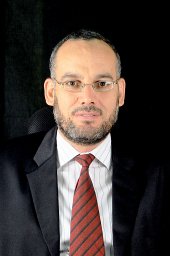 Ali Ahmed合作论文数Veterans Affairs Medical Center4
 John F. W. Zaki合作论文数Faculty of Engineering, Mansoura University4
 Abdelhameed Ibrahim合作论文数Mansoura University4F. Areed合作论文数Faculty of Engineering, Mansoura Univeristy3
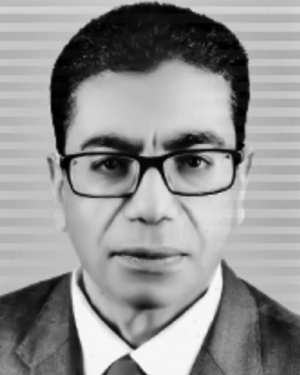 Metwally Rashad合作论文数Faculty of Computer Science & Information Systems, Mansoura University3Sabry F. Saraya合作论文数Faculty of Engineering, Mansoura University3
 Roald Taymanov合作论文数2
 Kseniia Sapozhnikova合作论文数2Sherif M. Badr合作论文数2
 Ehab Essa合作论文数Computer Science Department, Mansoura University2
 Amr Ali-Eldin合作论文数2El-Sayed M. El-kenawy合作论文数1Amr Ali Eldin合作论文数1Hesham Arafat Ali合作论文数1Iu Baksheeva合作论文数1Iu Baksheyeva合作论文数1Shaimaa Fouad Mohammed合作论文数Mansoura University1Marwa Metwally Eid合作论文数Delta Higher Institution of engineering and technology1Osama A. Hassan合作论文数1
 Malcolm Granat合作论文数School of Health and Society, University of Salford1
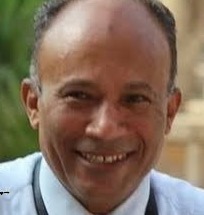 Aboul Ella Hassanien合作论文数Egyptian Scientific Research Group, Department of Information Technology, Faculty of Computers and Information, Cairo University1
 Seyedali Mirjalili合作论文数Centre for Artificial Intelligence Research and Optimization, Torrens University Australia;Óbuda University;Griffith University1
 Sarwat Zahwi合作论文数1




