In surgical scenarios such as thoracic procedures where target tissues locate behind sternums, the conventional rigid-long-straight ultrasonic scalpel is hard to operate. To solve the problem, this paper proposes a novel curved-waveguide ultrasonic scalpel (CWUS) with TC4 material. Through mathematical derivations and simulations, the dimension of CWUS is determined. Modal, transient, and fatigue life simulation by COMSOL demonstrate that the proposed CWUS effectively suppresses lateral vibrations in the scalpel body, and can output a comparable amplitude to conventional ultrasonic scalpels with an enough fatigue life. Consequently, the proposed novel CWUS is especially useful for doctors to perform complex operations in thoracic invasive surgery safer and more flexible.
Compared with planar transducers, focused transducers have higher ultrasound intensity and better lateral resolution in the focal zone. At present, the matching layer materials for focused transducers are mainly 0-3 composite materials, which have problems such as non-uniformity, difficulty to fabricate at high frequencies, and large sound attenuation. In this paper, finite element analysis is carried out to simulate lens-focused transducers with different matching layer structures and materials. It is found that the focused transducer with magnesium alloy matching layer has the best comprehensive performance. A lens-focused PZT-5H ultrasonic transducer was then fabricated with AZ31B magnesium alloy as the first matching layer. The measured results show that the center frequency of the transducer is 4.38 MHz, the -6-dB bandwidth is 68.35 % and the insertion loss is -13.88 dB. Benefiting from the high uniformity, high acoustic impedance and extremely low acoustic attenuation of magnesium alloy, the transducers in this research exhibit superior performances than other reported transducers with conventional matching layer. The current work suggests that AZ31B magnesium alloy is a promising matching layer material for ultrasonic transducers.
For designing flextensional transducers (FTs), driving material is an important innovation direction to improve performance. The third-generation single crystal: manganese-modified Pb(In1/2Nb1/2)O3-Pb(Mg1/3Nb2/3)O3PbTiO3 (Mn:PIN-PMN-PT) has superior piezoelectric and electromechanical properties. However, up to date, Mn: PIN-PMN-PT single crystals applied to practical FTs haven't been reported in the literature. In this paper, a broadband class VII FT based on [001]C poled Mn:PIN-PMN-PT is proposed. To fully utilize the excellent properties of Mn:PIN-PMN-PT, the structural parameters of the transducer were designed and optimized using the finite element method (FEM). Prototypes were fabricated and measured. Compared with the PZT-4 class VII FT, the bandwidth of the Mn:PIN-PMN-PT FT increased by 27.8%, and the transmitting voltage response (TVR) was 6.3 dB higher. This work verifies that Mn:PIN-PMN-PT single crystals have great potential as the driving material for broadband high-power FTs.
For designing underwater acoustic transducers, it is usually very difficult and time-consuming to determine multiple parameters simultaneously. Therefore, a novel design method that combines the particle swarm optimization (PSO) and finite element method (FEM) is proposed for low-frequency broadband flextensional transducers (FTs). This method can optimize multiple structural dimensions simultaneously and maximize the bandwidth performance of FTs efficiently. The validity of the PSO-FEM approach was verified by the optimization design and experiments of a class IV FT. Compared with previously reported design methods of FTs, this method is more efficient and avoids tedious operations. This work also provides a powerful and handy tool for the design of other underwater acoustic transducers.
Stable and fully developed gas flow field is crucial for realizing accurate measurement of gas ultrasonic flow meter. To reduce the flow field distortion, a flow conditioner is usually used. However, the traditional monotype flow conditioner can only improve the flow field distribution partly. The measurement accuracy of the transit time ultrasonic flow meter is still affected because of its serious flow field distortion in the complex pipeline conditions. In this paper, to further improve the flow field distribution, a combined conditioner is investigated. The combined flow conditioner is composed of fan-shaped section, turbulent mixing cavity, and honeycomb-shaped section. The effects of fan blade angle and cavity length on the flow field of the DN50 flow meter are studied using computational fluid dynamics (CFD) simulation. Simulation results indicate that compared with the monotype conditioner, the combined conditioner has better performance on effectively reducing the swirl and turbulence and providing more stable and repetitive velocity profiles. Experiments also validate the effectiveness of the combined conditioner. The flow meter with the combined conditioner has better repeatability of less than 0.2%, which is better than those of the monotype conditioners under the same conditions. This work is very useful for accurate measurement of gas ultrasonic flow meter, especially for the complex pipeline conditions.
The control applications of traveling wave ultrasonic motors (TWUSMs) suffer from the high nonlinearity and the dead zone caused by friction mechanism, and these challenges are not fully addressed in previous contact models for control design. In this paper, a contact model for control design of TWUSMs is proposed by modeling the friction interface via the static friction and considering the dead zone of vibration amplitude. Firstly, the friction characteristics of contact layer are analyzed and the simulation results clarify that the stick-slip friction can be simplified to the static friction in terms of friction properties and velocity characteristics. Then, the output characteristics of the TWUSM are derived by the static friction and further simplified by the least squares method. Moreover, the dead zone of vibration amplitude is modeled. The effectiveness and feasibility of the proposed model are verified by the simulations and the experiments. The experimental results show that the proposed model not only can effectively simplify the friction characteristics, but also is more accurate than the previous sliding friction based model. The proposed model could be very useful for the design of various controllers of TWUSMs. (C) 2020 Elsevier B.V. All rights reserved.
Resonant ultrasound spectroscopy (RUS) is a nondestructive technique for measuring the stiffness parameters of solid materials. Trying to achieve an improved automatic, elastic coefficients measurement via RUS, this work proposes a data fusion method based on Bayesian formulation and a probabilistic pairing approach. Several sets of RUS data have been acquired by measuring a novel piezoelectric crystal Ca3NbAl0.5Ga0.5Si2O14 (CNAGS) with a self-designed RUS measurement system. In order to suppress the influence of the phenomenon of frequency shifting, missing, and overlapping, a repeated measurement is executed to achieve the multiple measurement data fusion by using Bayesian formulation, and the posterior distribution of each parameter is estimated by reversible jump Markov chain Monte Carlo (RJ-MCMC) algorithm. Besides, an automatic probabilistic pairing method is proposed to solve the problem of frequency crossing so as to facilitate the frequency pairing process. The RUS measuring apparatus, the algorithm principle, and the calculation process are illustrated systematically in this paper. The algorithm is tested and analyzed based on the measured RUS data, and full sets of elastic coefficients of CNAGS specimen has been obtained in this work. Compared to the IEEE standard resonant method, the method proposed in this work can accomplish the characterization within a shorter time, and the relative error of the results is less than 2%.
Temperature rise is the main limiting factor that affects the performance of high power piezoelectric systems. Significant decrease of electromechanical conversion efficiency near the series resonance frequency results in more serious heating, which cannot be explained by the classical model. To understand the loss and heating mechanisms of transducers under actual operation conditions, we have systematically studied the dielectric loss. A series resistance is proposed in the equivalent circuit model to characterize the influence of dielectric loss. The active power and temperature rise of the transducer are measured under different conditions. Experimental results verify that our model can accurately quantify both mechanical and dielectric losses, and clarify that the dielectric loss is mainly responsible for the decrease of the efficiency and the thermal effect of the piezoelectric stack. Different from previous researches, we indicate that the dielectric loss is mainly related to the input current but not the applied voltage. This investigation could guide the design and control of high power piezoelectric systems. (C) 2019 Elsevier B.V. All rights reserved.
Traditional gas compressibility factor estimation methods such as AGA8-92DC and SGERG-88 usually use overly complex theoretical derivation and corresponding estimation model. This will cost most of the operating memory of the low-power gas flowmeter. Therefore, the previous models are not suitable for application on the flowmeter using the low-power embedded chips. To solve this problem, this paper proposed a novel efficient soft computing model for natural gas compressibility factor based on Group Method of Data Handling(GMDH) neural network. First, the signal of working conditions such as temperature, pressure and gas mole fraction of components are used to calculate pseudo-critical pressure and pseudo-critical temperature. Second, the soft computing model based on GMDH neural network with Corrected Akaike’s Information Criterion (AICc) is utilized by using pseudo-critical pressure and pseudo-critical temperature as training sets. For the four common natural gas types, the estimated results show that the mean absolute percentage error is only 0.0168% and the computing time is effectively reduced. It also proved that the GMDH neural network can significantly reduce the computing time and improve the accuracy of the compressibility factor. Feasibility and effectiveness of this model was verified. Our work provides a very useful way and also make it possible to real-timely estimate the natural gas compressibility factor in low-power flowmeter under the premise of satisfying the accuracy.
The dynamic ferroelectric hysteresis loops with internal bias field were investigated in poled and aged Mn-doped 0.24Pb(In1/2Nb1/2)O3–0.47Pb(Mg1/3Nb2/3)O3–0.29PbTiO3 single crystal.
The dielectric relaxation properties and freezing behavior of polar nanoregions (PNRs) of 0.24Pb(In1/2Nb1/2)O-3-0.47Pb(Mg1/3Nb2/3)O-3-0.29PbTiO(3) single crystals have been studied. The Burns temperature T-B, permittivity maximum temperature T-m, and freezing temperature T-f were determined, respectively. It was found that the temperature-dependent dielectric constant can be well described by the Lorenz-type relationship in the ergodic phase due to the existence of PNRs. The diffuseness factor is >30 and is basically not dependent on crystal orientation. The frequency dependence of T-m obeys the Vogel-Fulcher relationship. The residual effect of the poling electric field disappears and the remnant polarization has a sharp decrease near the freezing temperature T-f.
High-precision time-of-flight (ToF) measurement is the key to flow rate measurement of ultrasonic gas flowmeters. At present, the measurement accuracy of cross-correlation method, which is one of ToF measurement methods, depends on the high-speed ADCs. However, these high-speed ADCs, which have high cost, cannot be applied to low-power embedded systems and meet the practical requirement for actual industrial applications. To improve the accuracy and resolution of difference of ToF (dToF) measurement under the premise of satisfying the low-power, this paper proposes a novel signal processing method based on cross-correlation and interpolation. The echo signal is sampled by ADC in low-power embedded system, and the cross-correlation calculation is performed after digital filtering. Cubic spline interpolation is applied to improve the accuracy and resolution. The effectiveness of the proposed cross-correlation combined with interpolation method was verified and discussed. Experiment results show that this proposed method can significantly improve the resolution of dToF and the accuracy of ultrasonic gas flow rate measurement. This method provides a new tool and illuminates a good potential for real-time and high precision flow rate measurement in low-power embedded systems.
Nonlinearity and resonance frequency shift make it difficult to control the operation of the traveling-wave ultrasonic motors (TWUSMs) in a wide velocity and load range. In this paper, a velocity control scheme based on the stator vibration amplitude and the parallel resonance frequency (VCBVF) of TWUSMs is proposed. Then, the stator vibration amplitude (SVA) and parallel resonance frequency (fp) are detected by a transformer ratio-arm bridge. Based on the linear relationship between the velocity and the SVA of TWUSMs, the proposed scheme achieves the control of the mechanical loop and the electrical loop. The linear relationship between the velocity and the SVA makes the mechanical loop achieve the target velocity efficiently, according to the SVA, and the electrical loop could provide the target SVA quickly. Experimental results show that the response time of velocity is 3-4 ms under different load torques and the overshoot is less than 22%. In addition, the proposed scheme improves the efficiency of TWUSMs due to fp tracking. Due to directing the SVA control, the proposed scheme can heighten the velocity response and the load adaptability of TWUSMs, and promote the application of TWUSMs under various conditions.
The authors wish to make the following corrections to this paper [1]: [...].
Low frequency, high-power and broad bandwidth are always desirable for designing the class IV flextensional transducer (FT). Up to date, there are few literatures on shell's modification to improve the performance of FT. Only a FT with cutting splits into the shell was reported to broad the bandwidth and decrease resonant frequency, but the free-flooded cavity splits limits the TVR level of FT and the shell size wasn't optimized. We propose here a new FT structure by cutting double-grooves into the shell to solve this problem. Compared to traditional FT, double-grooves FT possess lower f(r),which decreases by 22.2%; has the significantly high BW level, which increases by 21.5% when keep competitive TVR level. After that, the sensitivity analysis is conducted to choose the groove's variables. The effects of the combination of the groove variables on FT were also discussed to get the reasonable design intervals of groove variables. The results show that the proposed FT with grooves not only possess higher bandwidth and smaller resonant frequency, its high TVR level is also remained. This affords a new way for the FT design and illuminates the immense potential of double-grooves shell in making low frequency, broad bandwidth and high-power FT. (C) 2019 Elsevier Ltd. All rights reserved.
As a crucial part of flextensional transducer (FT), the piezoelectric stack has an essential influence on the transducer. However, up to date, there are no literatures on considering the loss characteristics of the piezoelectric materials in the design of FT. Manganese-modified PIN-PMN-PT (Mn:PIN-PMN-PT) single crystals have greatly improved Qm values compared with the binary and ternary single crystals. In this paper, Class IV FTs based on Mn:PIN-42%PMN-32%PT and Mn:PIN-47%PMN-29%PT crystals were analyzed comprehensively on the heat losses, as well as transmitting voltage response (TVR), source level (SL), acoustic pressure (AP) and admittance. Compared with PIN-47%PMN-29%PT, PMN-28%PT and PZT4, the Mn:PIN-42%PMN-32%PT FT has a decrease of heat loss by 47.9%, 79.5% and 93.6%, respectively, under the same strain of 5 × 10⁻⁵. The results indicated that the Mn:PIN-PMN-PT FT possesses simultaneously the less heat loss and lower resonant frequency, the higher AP, TVR, SL and effective electromechanical coupling coefficient. This research provides a guide for the design of FT and illuminates the immense potential of Mn:PIN-PMN-PT single crystals in making low heat generation, low frequency and high power FT.
This paper presents a novel characterization method for high-loss piezoelectric composite material based on particle swarm optimization algorithm. This proposed method was applied to determine the properties parameters of 1-3 PZT5A/epoxy composite piezoelectric material with the thickness vibration mode. The analysis results show that this method has more accurate reconstructed values, faster convergence speed compared to the method using simulated annealing algorithm published in the literature under the same condition. Good agreement between the measured electrical impedance curve and the fitting one also verifies that this method can determine precise materials parameters. This is very useful for the accurate characterization of piezoelectric materials with the unknown parameters. (C) 2018 Elsevier Inc. All rights reserved.
In this work, we studied the temperature-dependent effective piezoelectric coefficient d33* along the arbitrary direction of a tetragonal 0.63Pb(Mg1/3Nb2/3)-0.37PbTiO3 single crystal. Results show that the crystal changes from a rotator ferroelectrics with the maximum d33* occurring along the nonpolar direction to a extender type with maximum piezoelectricity along [001]C. Two polymorphic phase transitions, orthorhombic-tetragonal and tetragonal-cubic, greatly influence the PS dynamics, leading to the change of d33* anisotropy with temperature. The [011]C oriented crystals possess both improved piezoelectricity and high thermal stability, hence are the best choice for practical applications.
 Ming Yang (杨明)合作论文数School of Automation and Intelligent Sensing, Shanghai Jiao Tong University26
 Wenwu Cao (曹文武)合作论文数College of Engineering and Applied Sciences, Nanjing University;School of Frontier Sciences, Nanjing University22
 Limei Zheng (郑立梅)合作论文数School of Physics, Shandong University12
 Rui Zhang (张锐)合作论文数School of Instrumentation Science and Engineering, Harbin Institute of Technology8
 Enwei Sun (孙恩伟)合作论文数School of Instrumentation Science and Engineering, Harbin Institute of Technology7
 Xudong Qi (戚旭东)合作论文数School of Physics & Electronic Engineering, Harbin Normal University6Zhuang Xiaoqi合作论文数6Cun-Cen Li (李存岑)合作论文数6
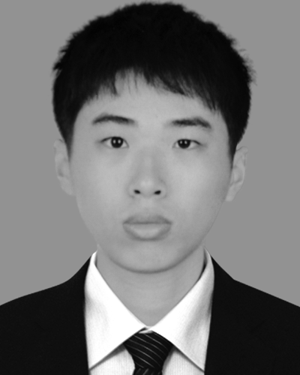 Tianyue Yang合作论文数5
 Weiming Lv (吕伟明)合作论文数Spintronics Institute, University of Jinan;School of Physics and Technology, University of Jinan;School of Physics, Harbin Institute of Technology5
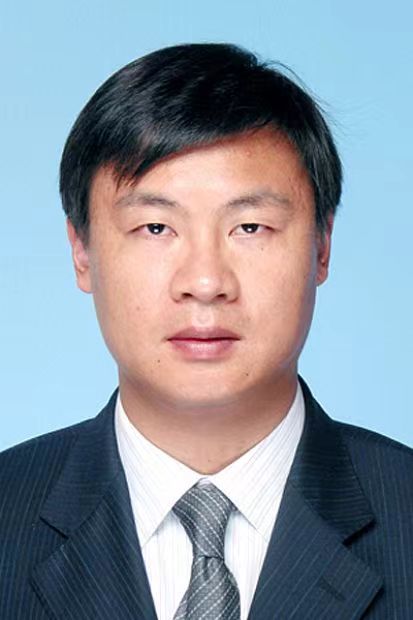 Cunyue Lu (鹿存跃)合作论文数School of Automation and Intelligent Sensing, Shanghai Jiao Tong University5Rongjing Guo合作论文数4Jingya Tao合作论文数4Bin Yang (杨彬)合作论文数School of Instrumentation Science and Engineering, Harbin Institute of Technology4
 Feifei Guo合作论文数4
 Xingyi Huang (黄兴溢)合作论文数School of Chemistry and Chemical Engineering, Shanghai Jiao Tong University4
 Jie Dong (董杰)合作论文数School of Materials Science and Engineering, Shanghai Jiaotong University4Yujia Jing合作论文数3Yaqi Yuan合作论文数3Jia Zheng合作论文数3Luan Lin合作论文数3
 Wei He合作论文数3
 Dawei An合作论文数3
 Yuanfei Zhu合作论文数3Zhiwei Fang合作论文数Engineering Research Center of Cell & Therapeutic Antibody, Ministry of Education, and School of Pharmacy, Shanghai Jiao Tong University3
 Wenhua Jiang合作论文数3
 Sihao Sun合作论文数Faculty of Aerospace Engineering, Delft University of Technology HS Delft3Ping Cai (蔡萍)合作论文数3Sang Shijing合作论文数3
 Tao Han (韩韬)合作论文数School of Automation and Intelligent Sensing, Shanghai Jiao Tong University3Ou Wenchu合作论文数3
 Xiaoyan Lu (路晓艳)合作论文数School of Civil Engineering, Harbin Institute of Technology3Zhaojiang Chen合作论文数Nanjing University, Nanjing University3
 Yafei Pang合作论文数3Tangan Li合作论文数2Deyue Li合作论文数2LV Zi-zhou (吕子洲)合作论文数2Xuan Sun合作论文数2Mingrui Li合作论文数2Liya Yang合作论文数2
 Chaodong Li合作论文数2Lin Ye合作论文数2DONG Yu (董彧)合作论文数2MAO Xiang-yang (毛向阳)合作论文数2Chao GUO (郭超)合作论文数2
 Zhaopeng Dong (董兆鹏)合作论文数College of Engineering Science and Technology, Shanghai Ocean University2Xiaoning Jiang合作论文数2
 Junhui Hu (胡俊辉)合作论文数State Key Laboratory of Mechanics and Control of Mechanical Structures, Nanjing University of Aeronautics and Astronautics;College of Aerospace Engineering, Nanjing University of Aeronautics and Astronautics2




