To reduce harmonic components, balance system impedance, and stabilize driving voltage, an additional matching circuit is required for ultrasonic motors (USMs) driver. However, the performance of inductor or capacitor matching can be seriously weakened with changes in driving frequency. Therefore, this paper presents a simple and effective LC matching method against driving frequency adjustment for USMs. First, the driving scheme of the USM is proposed and the electromechanical coupling model is analyzed. Subsequently, the output characteristics of the full-bridge inverter are derived theoretically when the driving frequency deviates from the mechanical resonant frequency. Then, the impedance circular transform method is proposed, which can intuitively analyze the effect of matching parameters on the voltage amplitude. A matching objective function is established that can consider both the voltage stabilization and harmonic suppression. The matching parameters are solved using random weight particle swarm optimization. Simulations and experiments demonstrate that within the operating frequency of the USM, the proposed matching method can effectively prevent overvoltage and suppress harmonic components. Furthermore, compared with the existing resonant matching method, the proposed matching method can realize more stable driving capability at different frequencies. The proposed method could be useful for USMs’ variable-frequency driver design.
Background: In recent years, intravascular micro-axial blood pumps have been increasingly used in the treatment of patients with cardiogenic shock. The flow rate of such blood pumps requires adjustment based on the patient’s physiological condition. Compared to a stable flow state with fixed rotation speed, adjusting the speed of blood pump impeller to alter flow rate may lead to additional hemolysis. This study aimed at elucidating the relationship between adjusting interval of a blood pump’s impeller speed and the hemolysis index. Methods: By comparing simulation results with P-Q characteristic curves of the blood pump measured by experiments, the accuracy of the blood pump flow field simulation model was confirmed. In this study, a drainage tube was employed as the device analogous to an intravascular micro-axial blood pump for achieving similar shear stress levels and residence times. The hemolysis finite element prediction method based on a power-law model was validated through hemolysis testing of porcine blood flow through the drainage tube. The validated models were subsequently utilized to investigate the impact of impeller speed adjusting intervals on hemolysis in the blood pump. Results: Compared to steady flow, the results demonstrate that the hemolysis index increased to 6.3% when changing the blood pump flow rate from 2 L/min to 2.5 L/min by adjusting the impeller speed within 0.072 s. Conclusions: An adjustment time of impeller speed longer than 0.072 s can avoid extra hemolysis when adjusting the intravascular micro-axial blood pump flow rate from 2 L/min to 2.5 L/min.
Right ventricular assist devices (RVADs) have been extensively used to provide hemodynamic support for patients with end-stage right heart (RV) failure. However, conventional in-parallel RVADs can lead to an elevation of pulmonary artery (PA) pressure, consequently increasing the right ventricular (RV) afterload, which is unfavorable for the relaxation of cardiac muscles and reduction of valve complications. The aim of this study is to investigate the hemodynamic effects of the pulsatile frequency of the RVAD on pulmonary artery. Firstly, a mathematical model incorporating heart, systemic circulation, pulmonary circulation, and RVAD is developed to simulate the cardiovascular system. Subsequently, the frequency characteristics of the pulmonary circulation system are analyzed, and the calculated results demonstrate that the pulsatile frequency of the RVAD has a substantive impact on the pulmonary artery pressure. Finally, to verify the analysis results, the hemodynamic effects of the pulsatile frequency of the RVAD on pulmonary artery are compared under diffident support modes. It is found that the pulmonary artery pressure decreases by approximately 6
Frequency tracking and amplitude control are essential for piezoelectric transducers. Frequency tracking ensures the piezoelectric transducer operates at the resonant frequency for maximum power output, and amplitude control regulates the mechanical motion of the output. This paper presents a novel driver based on a push–pull inverter for piezoelectric transducers. The proposed driver realizes the frequency tracking and amplitude control scheme by a voltage sensing bridge in the case of transformer secondary matching, guaranteeing automatic frequency tracking and precise mechanical functions regardless of environmental and load variations. The proposed scheme is verified by the ultrasonic scalpel and the ultrasonic motor (USM). The experimental results show that this scheme reduces the build-up time from 10 ms to 3 ms and loaded frequency variations from 250 Hz to 200 Hz. In addition, the amplitude control performance was further observed on USM for various loads. The overshoot is less than 5.4% under different load torques. Therefore, the proposed scheme improves the load adaptability and stability of piezoelectric transducers and promotes the application of piezoelectric transducers under various conditions.
Based on the changes in phase characteristics of blood flow and pressure, enhanced external counterpulsation (EECP) reduces cardiac load and improves cerebral perfusion in patients with cerebrovascular diseases. However, increased cerebral blood flow (CBF) is associated with the rise in blood pressure and its complications. Increased EECP frequency is a valuable solution when combined with the electrical equivalent impedance characteristics of the lumped parameter model (LPM) of the human blood circulation system. Herein, to investigate the effect of different EECP frequencies on CBF perfusion, an LPM was established with cardiopulmonary circulation and eight systemic blood flow units with cerebral autoregulation module of ischemic stroke patients. Then, using differential equations, we analyzed those parameters through hemodynamic simulations in four EECP modes. With related influencing parameters remaining constant, we adjusted the pressure frequency of EECP and found that when compared to the traditional sequential EECP mode, the relative increase rate of CBF was 16.68%, 18.95%, and 21.21% from 1 to 3 Hz, respectively. This study validates the effect of improving blood prefusion with increasing EECP frequency through numerical analysis.
The consistency of the two-phase mode responses is essential to ensure the mechanical performance and stability of traveling-wave ultrasonic motors. Due to the asymmetry of the stator, inevitable manufacturing errors, or imbalance of the excitation voltages, the amplitudes of the two-phase standing waves cannot be exactly the same, resulting in unstable operating of USM. To improve the stability of the motor and decrease the velocity fluctuation, a closed-loop velocity control scheme considering two-phase consistency compensation based on the vibration amplitude of the stator is proposed. This scheme is implemented under the framework of the stator vibration amplitude-based velocity control and parallel resonance frequency tracking (VCBVF). Based on the relationship between the velocity and stator vibration amplitude (SVA), two-phase excitation signals are adjusted individually and simultaneously. Compared with the single-phase feedback VCBVF control scheme, experimental results show that the proposed scheme can reduce the overshoot from 17.50% to 6.90% and velocity fluctuations from 7.69 rpm to 2.40 rpm, under different load torques. The proposed scheme can compensate for the two-phase electrical inconsistency and improve the velocity stability and output power of motor operation under various conditions.
Accurate and fast velocity feedback signal is essential for the velocity control of ultrasonic motors (USMs). However, the low operating velocity of USMs results in a long velocity detection dead time (VDDT) of incremental encoders, which seriously restricts the dynamic control performance of USMs. Therefore, this article presents a super-resolution velocity control (SRVC) scheme based on the velocity reconstruction for the USM. First, the mathematical model of the USM is derived from the mechanical characteristics and the electromechanical coupling characteristics. Then, the velocity reconstruction method is proposed by combining the model estimated velocity and the encoder measured velocity. The closed-loop control scheme using the reconstructed velocity is implemented by a self-designed driving circuit. Experimental results show the velocity reconstruction method not only can break through the limitation of the encoder resolution to reduce the VDDT but also has a high-velocity accuracy. Furthermore, compared with the existing encoder-based control scheme, the proposed SRVC scheme has a faster velocity response under different loads.
Significant variation in impedance under a wide range of loads increases the difficulty of frequency tracking and vibration control in high-power piezoelectric systems (HPPSs). This paper proposed a wide operating range driving and control scheme for HPPSs. We systematically analyzed the impedance characteristics and deduced the load optimization frequency. In order to provide sufficient drive capability, the inverter combined with an LC matching circuit is configured. With the aid of a transformer ratio arm bridge (TRAB) combined with a proposed pulse-based phase detector (PBPD), the proposed scheme can control the vibration amplitude and keep parallel resonance status under a wide range of loads. Experiments conducted under actual operating conditions verify the feasibility of the proposed scheme under the modal resistance range from 7.40 to 500 Ω and the vibration range from 20% to 100%. Moreover, with the aid of a laser displacement sensor, our scheme is verified to have a vibration amplitude control accuracy better than 2% over a tenfold load variation. This research could be helpful for the driving and control of HPPSs operating in a wide range.
在功率超声的应用中,精确的振幅控制是决定加工质量的重要因素.传统的检测控制结构需要复杂的外部仪器或检测电路,可能存在灵活性差及非线性等问题.针对此问题,提出了一种轻量级振幅检测与控制方案.该方案采用高速AD转换器采样换能器的工作电流和电压,实时计算可以反映振幅的动态支路电流.采用现场可编程逻辑门阵列(field-programmable gate array,简称FPGA)作为超声电源控制器,同时对换能器工作频率和动态支路电流进行闭环控制.在本设计中,超声电源工作在反谐振点以获取较高的能量传输效率.实验结果表明,该方案能够准确地控制振幅,并能在负载变化较大时稳定振幅.
The control applications of traveling wave ultrasonic motors (TWUSMs) suffer from the high nonlinearity and the dead zone caused by friction mechanism, and these challenges are not fully addressed in previous contact models for control design. In this paper, a contact model for control design of TWUSMs is proposed by modeling the friction interface via the static friction and considering the dead zone of vibration amplitude. Firstly, the friction characteristics of contact layer are analyzed and the simulation results clarify that the stick-slip friction can be simplified to the static friction in terms of friction properties and velocity characteristics. Then, the output characteristics of the TWUSM are derived by the static friction and further simplified by the least squares method. Moreover, the dead zone of vibration amplitude is modeled. The effectiveness and feasibility of the proposed model are verified by the simulations and the experiments. The experimental results show that the proposed model not only can effectively simplify the friction characteristics, but also is more accurate than the previous sliding friction based model. The proposed model could be very useful for the design of various controllers of TWUSMs. (C) 2020 Elsevier B.V. All rights reserved.
Temperature rise is the main limiting factor that affects the performance of high power piezoelectric systems. Significant decrease of electromechanical conversion efficiency near the series resonance frequency results in more serious heating, which cannot be explained by the classical model. To understand the loss and heating mechanisms of transducers under actual operation conditions, we have systematically studied the dielectric loss. A series resistance is proposed in the equivalent circuit model to characterize the influence of dielectric loss. The active power and temperature rise of the transducer are measured under different conditions. Experimental results verify that our model can accurately quantify both mechanical and dielectric losses, and clarify that the dielectric loss is mainly responsible for the decrease of the efficiency and the thermal effect of the piezoelectric stack. Different from previous researches, we indicate that the dielectric loss is mainly related to the input current but not the applied voltage. This investigation could guide the design and control of high power piezoelectric systems. (C) 2019 Elsevier B.V. All rights reserved.
Background Left ventricular assist devices (LVADs) with counter-pulsation mode have been widely used to support left ventricular function and improve coronary circulation. However, the frequency characteristics of the coronary system have not been considered. The aim of this study was to investigate the effects of pulsatile frequency of LVADs on coronary perfusion. Material/Methods First, a lumped parameter (LP) model incorporating coronary circulation, systemic circulation, left heart, and LVAD was established to simulate the cardiovascular system. Then, the frequency characteristics of the coronary system were analyzed and the calculation results showed that the pulsatile frequency of the LVAD has a substantial effect on coronary blood flow. To verify the accuracy of the theoretical analysis, the hemodynamic effects of the LVAD on the coronary artery were compared under 4 support modes: co-pulsation mode, and counter-pulsation modes in synchronization ratios of 1: 1, 2: 1, and 3: 1. Results We found that the coronary flow increased by 5% when the working mode changed from co-pulsation to counter-pulsation in a synchronization ratio of 1: 1, and by an additional 6% when the working mode changed from counter-pulsation in a synchronization ratio of 1: 1 to counter-pulsation in a synchronization ratio of 3: 1. Conclusions This work provides a useful method to increase coronary perfusion and may be beneficial for improving myocardial function in patients with end-stage heart failure, especially those with ischemic cardiomyopathy (ICM).
Nonlinearity and resonance frequency shift make it difficult to control the operation of the traveling-wave ultrasonic motors (TWUSMs) in a wide velocity and load range. In this paper, a velocity control scheme based on the stator vibration amplitude and the parallel resonance frequency (VCBVF) of TWUSMs is proposed. Then, the stator vibration amplitude (SVA) and parallel resonance frequency (fp) are detected by a transformer ratio-arm bridge. Based on the linear relationship between the velocity and the SVA of TWUSMs, the proposed scheme achieves the control of the mechanical loop and the electrical loop. The linear relationship between the velocity and the SVA makes the mechanical loop achieve the target velocity efficiently, according to the SVA, and the electrical loop could provide the target SVA quickly. Experimental results show that the response time of velocity is 3-4 ms under different load torques and the overshoot is less than 22%. In addition, the proposed scheme improves the efficiency of TWUSMs due to fp tracking. Due to directing the SVA control, the proposed scheme can heighten the velocity response and the load adaptability of TWUSMs, and promote the application of TWUSMs under various conditions.
 Ming Yang (杨明)合作论文数School of Automation and Intelligent Sensing, Shanghai Jiao Tong University11
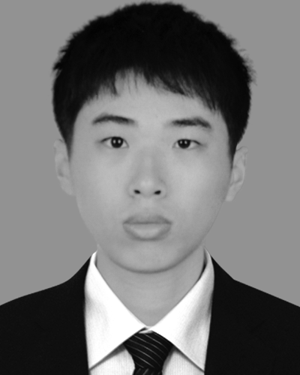 Tianyue Yang合作论文数8
 Zhiwei Fang合作论文数Engineering Research Center of Cell & Therapeutic Antibody, Ministry of Education, and School of Pharmacy, Shanghai Jiao Tong University5Fan Meng合作论文数3
 Shiyang Li合作论文数3
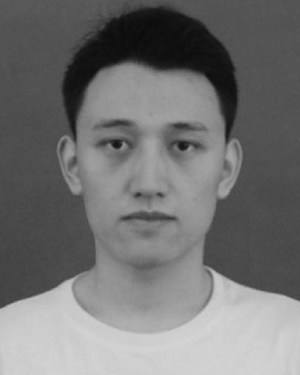 Xiaochen Gao合作论文数3Shangting Wang合作论文数2
 Siwei Ye合作论文数2
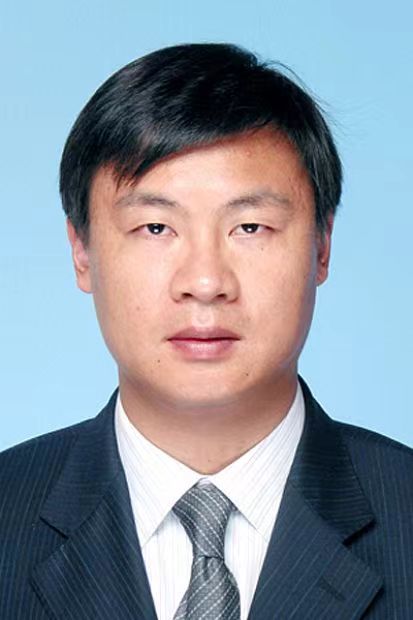 Cunyue Lu (鹿存跃)合作论文数School of Automation and Intelligent Sensing, Shanghai Jiao Tong University2Yan Zhang (张岩)合作论文数1Tangan Li合作论文数1Hao Mi (米浩)合作论文数1
 Dawei An合作论文数1jiaxin jin (金家欣)合作论文数1Haoyu Wu合作论文数1ZheXin Lu (路喆鑫)合作论文数1
 Wanlu Jiang (姜万录)合作论文数School of Mechanical Engineering, Yanshan University1
 Wenwu Cao (曹文武)合作论文数College of Engineering and Applied Sciences, Nanjing University;School of Frontier Sciences, Nanjing University1




