Recent critics of relational equality as an ideal of justice have questioned whether the ideal has any implications for justice between non-overlapping generations. In this paper, I argue that relational equality does have something important to say about what we owe to future generations, which is not captured by an exclusive focus on distributive equality: we owe future generations the capacity to relate to each other as equals. This capacity is undermined not only when resources or savings are significantly depleted by the present generation, but also when the present generation fails to transform the oppressive social categories by which we relate to others. While these categories were not set up by the present generation, I argue that we still have a duty to contribute to changing them, and failing to do so can result in a double wrong: a wrong against our fellow contemporaries, as well as future persons who are ascribed membership in these categories.
Unequal patterns of cultural exchange between the Global South and Global North are sometimes labeled "neo-colonial." What, if anything, is wrong with these patterns? Debates surrounding cultural globalization have traditionally divided proponents of free trade and cultural preservation. The article develops an alternative account grounded in a global application of the ideal of social equality. Citizens of privileged societies ought to regard and relate to citizens of disadvantaged societies as social equals. Patterns of cultural exchange play an important role in promoting these relationships. Historically, colonized peoples were often regarded as inferior based on perceived failures to produce cultural achievements. To the extent that unequal global cultural production and exchange persist, the colonial pattern remains. The duty to relate to foreigners as equals implies that Global North countries should stop pressing for cultural trade concessions and instead favor the import of cultural goods from the Global South.
With some recent exceptions, demands for global reparations have largely been ignored by former colonial countries. While the past two decades has seen renewed interest in colonial reparations in normative political theory and philosophy, this work has focused on determining responsibility for redress. By contrast, relatively little has been said on the further question of how redress might be sought in face of persistent colonial amnesia and apologia. This paper defends expropriation-unilateral public takeovers of ownership and/or control of foreign assets-as a justified response to overdue colonial reparations. In making this case, the paper (1) moves our focus beyond questions of responsibility for reparative justice to consider what victims of past injustice (and/or their descendants) are justified in doing to obtain their due and (2) explores distinctive issues that arise for political resistance at the global level.
This essay introduces the main arguments in Lucia Rafanelli's Promoting Justice Across Borders: The Ethics of Reform Intervention (Oxford University Press, 2021). I place the book within the context of literatures on foreign intervention and global justice more broadly, review the major arguments Rafanelli develops in her book, and foreshadow some of the main points of critique and appreciation put forth by four engaging responses from: Paulina Ochoa Espejo, David Owen, Jennifer Rubenstein, and Arash Abizadeh.
Christine Hobden's Citizenship in a Globalised World puts forth an innovative account of citizens' collective responsibility for state injustice. While this account adjusts the burden of rectifying collective responsibility in accordance to capacity, influence, and benefit, it nonetheless holds that everyone, regardless of their differentiated circumstances, is equally part of the collective that is morally responsible for the injustices that their state perpetrates. Furthermore, being responsible puts one on the moral hook for being blamed, included in collective punishment (wherever justified), and being asked to apologize and bear the burden of rectifying the injustice(s). This response paper questions whether a view that takes into account unequal positionality should or can endorse equal collective responsibility, and argues in the negative. Instead, I suggest that marginalized citizens' responsibility to correct for state injustice may be more plausibly construed as a responsibility to each other as subjects of common oppression.
COVID-19 vaccines are likely to be scarce for years to come. Many countries, from India to the U.K., have demonstrated vaccine nationalism. What are the ethical limits to this vaccine nationalism? Neither extreme nationalism nor extreme cosmopolitanism is ethically justifiable. Instead, we propose the fair priority for residents (FPR) framework, in which governments can retain COVID-19 vaccine doses for their residents only to the extent that they are needed to maintain a noncrisis level of mortality while they are implementing reasonable public health interventions. Practically, a noncrisis level of mortality is that experienced during a bad influenza season, which society considers an acceptable background risk. Governments take action to limit mortality from influenza, but there is no emergency that includes severe lockdowns. This “flu-risk standard” is a nonarbitrary and generally accepted heuristic. Mortality above the flu-risk standard justifies greater governmental interventions, including retaining vaccines for a country's own citizens over global need. The precise level of vaccination needed to meet the flu-risk standard will depend upon empirical factors related to the pandemic. This links the ethical principles to the scientific data emerging from the emergency. Thus, the FPR framework recognizes that governments should prioritize procuring vaccines for their country when doing so is necessary to reduce mortality to noncrisis flu-like levels. But after that, a government is obligated to do its part to share vaccines to reduce risks of mortality for people in other countries. We consider and reject objections to the FPR framework based on a country: (1) having developed a vaccine, (2) raising taxes to pay for vaccine research and purchase, (3) wanting to eliminate economic and social burdens, and (4) being ineffective in combating COVID-19 through public health interventions.
During a global health emergency, everyone is morally required to help to combat the disease. With approximately 8000–10 000 people dying every day from COVID-19, as of writing, only rapid and globally distributed vaccinations will end the pandemic. With the support of national governments, pharmaceutical companies have produced more than 250 vaccine candidates to date.
The international investment regime has come under increasing scrutiny, with several developing countries withdrawing from bilateral investment treaties in recent years. A central worry raised by critics is that investment treaties undermine national self-determination. Proposed reforms to the regime have focused on rebalancing the distribution of power between states and investors to restore 'enlarged regulatory space' for the former. Contra this critique from national self-determination, in this paper I argue that infringements on national self- determination cannot alone explain why the investment regime is morally problematic. Instead, on this egalitarian view, the regime is objectionable because it empowers a class of agents, whose interests are reliably opposed to egalitarian economic policy, to constrain national self-determination. In effect, the investment regime undermines states' capacity to address inequality within and between states and is unjust for that reason. The moral and practical upshot is that reforms to the regime ought to empower disadvantaged groups to exert disproportionate leverage over the terms and practice of international investment, and to appeal to global institutions to do so. In other words, our moral assessment of a given global institution or practice should not depend on whether it constrains national self-determination, but on who it empowers to do so.
An abstract is not available for this content so a preview has been provided. Please use the Get access link above for information on how to access this content.
Disagreement persists about when, if at all, disenfranchisement is a fitting response to criminal wrongdoing of type X. Positive retributivists endorse a permissive view of fittingness: on this view, disenfranchising a remarkably wide range of morally serious criminal wrongdoers is justified. But defining fittingness in the context of criminal disenfranchisement in such broad terms is implausible, since many crimes sanctioned via disenfranchisement have little to do with democratic participation in the first place: the link between the nature of a criminal act X (the ‘desert basis’) and a fitting sanction Y is insufficiently direct in such cases. I define a new, much narrower account of the kind of criminal wrongdoing which is a more plausible desert basis for disenfranchisement: ‘political wrongdoing’, such as electioneering, corruption, or conspiracy with foreign powers. I conclude that widespread blanket and post-incarceration disenfranchisement policies are overinclusive, because they disenfranchise persons guilty of serious, but non-political, criminal wrongdoing. While such overinclusiveness is objectionable in any context, it is particularly objectionable in circumstances in which it has additional large-scale collateral consequences, for instance by perpetuating existing structures of racial injustice. At the same time, current policies are underinclusive, thus hindering the aim of holding political wrongdoers accountable. Philosophy & Public Affairs (Early View, 2019). This is the accepted version. Please cite the published version (https://doi.org/10.1111/papa.12153). Over one in five African American citizens in Florida, Kentucky, Tennessee, and Virginia are currently disenfranchised due to a present or past felony conviction. 6.1 million US citizens were disenfranchised as of November 2016, although 1.4 million citizens became re-eligible to vote again on January 8, 2019, when Florida’s constitutional amendment 4 (Voting Rights Restoration for Felons Initiative) came into effect. Irrespective of these recent changes, however, the lasting political impact of criminal disenfranchisement remains significant, particularly in the US, where many states disenfranchise not only those currently serving prison time, but also parolees and exconvicts. Studies argue that even if the US had enfranchised only those felons who already I am grateful to Chuck Beitz, Ben Berger, Anuja Bose, Dan Butt, Shuk Ying Chan, Tom Christiano, Lars Christie, Stefan Eich, Cécile Laborde, Melissa Lane, David Miller, Jan Werner Müller, Alan Patten, Talia Schaffer, Leonie Schulte, audiences at Princeton University’s Political Theory seminar and the University of Oxford’s Nuffield Political Theory Workshop as well as students in the 2019 Princeton Prison Teaching Initiative class “Punishment: Theory and Practice”, and two anonymous editors of this journal, for their illuminating and generous comments. For insightful extensive written correspondence I am especially indebted to Cécile Fabre, Élise Rouméas, Annie Stilz, and Steve White. 2 Christopher Uggen, Ryan Larson, and Sarah Shannon, “6 Million Lost Voters: State-Level Estimates of Felony Disenfranchisement, 2016,” The Sentencing Project (2016): http://www.sentencingproject.org/publications/6-million-lost-voters-state-level-estimates-felonydisenfranchisement-2016/ 2 served their time in prison, Democrats might have controlled the Senate throughout the 1990s, and that the outcomes of several presidential elections—most notably in 2000—might have been different. More importantly, when blanket disenfranchisement policies are implemented in a wider empirical context of mass incarceration with salient disparate consequences for oppressed minorities, they risk further entrenching, and indeed exacerbating, conditions of structural racial injustice. But even if the number of people at risk of long-term democratic exclusion is lower in a given polity than it is in the US, criminal disenfranchisement raises difficult questions for democratic theory. The UK, where the prison population is much smaller, and thus, the number of disenfranchised prisoners is much lower, imposed a blanket disenfranchisement policy for all prisoners until the end of 2017. This number will be even lower going forward, since the UK government has recently, after a twelve year standoff, decided to change its policy to comply with a 2005 European Court of Human Rights judgment in the landmark case Hirst v. UK, which stated that the UK’s blanket ban violated Article 3 of Protocol No. 1 to the ECHR. Currently, the blanket ban continues to apply to all prisoners in principle, with a few exceptions: for those released on temporary licence or on home detention, those on remand, and those committed to prison for contempt of court or for default on paying fines. Yet it would be incorrect to infer that the practice is less objectionable given the comparatively smaller number of disenfranchised criminals, especially since the racially disparate, and thus structurally unjust, impact of disenfranchisement also applies to the UK. The view that temporary disenfranchisement, contemporaneous with an offender’s term of incarceration, is much less morally troubling than post-incarceration or permanent disenfranchisement is widespread. While it is plausible to think that, in general, temporary 3 Pamela Karlan, “Convictions and Doubts: Retribution, Representation, and the Debate over Felon Disenfranchisement,” Stanford Law Review 56 (2004): 1157; Hugh LaFollette, “Collateral Consequences of Punishment: Civil Penalties Accompanying Formal Punishment,” Journal of Applied Philosophy 22 (2005): 241. 4 In March 2018, there were 83,263 prisoners in England and Wales. This number includes short-term prisoners, those on remand, those subsequently acquitted, and foreign nationals. “Offender Management Statistics Bulletin,” London: UK Ministry of Justice (2017), https://assets.publishing.service.gov.uk/government/uploads/system/uploads/attachment_data/file/702297/o msq-q4-2017.pdf 5 Hirst v. UK (No. 2), ECtHR (2005), http://hudoc.echr.coe.int/eng?i=001-70442 6 “Communication from the United Kingdom Concerning the Case of Hirst (No. 2) v. the United Kingdom: Action plan DH-DD(2017)1229,” Council of Europe: Secretariat of the Committee of Ministers (2017): https://rm.coe.int/1680763233 7 For a UK-specific report on racial injustice and incarceration, see UK Ministry of Justice Analytical Services, “Exploratory analysis of 10-17 year olds in the youth secure estate by black and other minority ethnic groups,” https://assets.publishing.service.gov.uk/government/uploads/system/uploads/attachment_data/file/641481/E xploratory-analysis-of-10-17-year-olds-in-the-youth-secure-estate-by-bame-groups.pdf 3 punishments of type P are less severe than permanent punishments of the same type P, this general claim by itself does not have a clear necessary upshot for the issue at stake in this paper: whether criminal disenfranchisement, including in its temporary form, is morally permissible all things considered. The severity of a punishment is one obviously relevant consideration for determining whether imposing that punishment is morally permissible, since some severe punishments may be unduly burdensome for the criminal offender; but it not the only consideration: a plausible theory of punishment must also identify the proper positive normative justification for imposing punishment in the first place, such as the nature of the criminal act at stake and the associated benefits or aptness of a given punitive sanction. While such positive justifications underpinning views defending temporary disenfranchisement on deterrentist, expressivist, and positive retributivist grounds are more plausible prima facie than their respective counterparts demanding post-incarceration and permanent criminal disenfranchisement, we must still assess each positive justification’s merits in turn. I argue that we have strong reasons to reject each of these views in favour of a different, more restricted view. I define the set of rights that can be temporarily forfeited during criminal disenfranchisement as the full set of democratic participation rights—including, for instance, the right to vote, the right to run for office in a given election and to continue to hold public office once elected, or the right to contribute financially to political campaigns, but excluding the more general, higher-order right to free expression. This is a broader view of criminal disenfranchisement than the majority of contributors to the philosophical debate have adopted, many of whom focus exclusively on the right to vote, thus failing to consider other forms of (dis-)enfranchisement. Even if a criminal retains her right to vote, revoking other participation rights is a possible punishment, and in that case, it would be counterintuitive to say that she continues to be fully enfranchised. Her set of participation opportunities in democratic decision-making has been punitively limited. Therefore, criminal disenfranchisement is best construed as a broader notion, accommodating the intuition that disenfranchisement can be a matter of degree. This paper approaches criminal disenfranchisement from the view that there is a prima facie presumption in favour of universal suffrage, which implies an especially high justificatory threshold for any deviation from that presumption. As the ECtHR ruling in Hirst v. UK put it, “[a]ny departure from the principle of universal suffrage risks undermining the democratic validity of the legislature thus elected and the laws which it promulgates” (§62). The value of political inclusion is particularly high because the 8 Thanks to Chuck Beitz for pushing me to clarify this point. 4 realization of that value via universal suffrage is important for securing other important values and rights in a democratic state, including individual liberty rights. This is an instrumentalist jus
 R. J. Leland合作论文数2
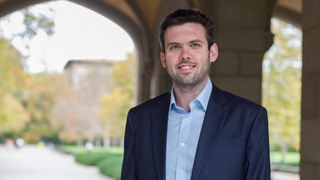 Daniel Halliday合作论文数School of Historical and Philosophical Studies, Faculty of Arts, The University of Melbourne2
 Kok-Chor Tan合作论文数Department of Philosophy, School of Arts & Sciences, University of Pennsylvania2
 Alan Patten合作论文数Department of Philosophy, Princeton University2
 G. Owen Schaefer合作论文数Yong Loo Lin School of Medicine, National University of Singapore2
 Cécile Fabre合作论文数All Souls College, University of Oxford2
 Allen E Buchanan合作论文数Department of Philosophy Social Sciences, College of Social & Behavioral Sciences, The University of Arizona2Ole Frithjof Norheim合作论文数2Christopher Heath Wellman合作论文数2Lisa Herzog合作论文数1Leonie Schulte合作论文数1
 Ryan Larson合作论文数Department of Sociology, University of Minnesota1
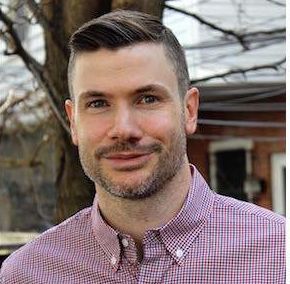 Matthew McCoy合作论文数Department of Medical Ethics and Health Policy, Perelman School of Medicine, University of Pennsylvania1
 Ezekiel J. Emanuel合作论文数Health Transformation Institute, Perelman School of Medicine, University of Pennsylvania;Department of Medical Ethics and Health Policy, Perelman School of Medicine, University of Pennsylvania;World Health Organization1
 Jonathan Wolff合作论文数Blavatnik School of Government, University of Oxford1
 Joseph Heath合作论文数Department of Philosophy, University of Toronto1
 Florencia Luna合作论文数1Carla Saenz合作论文数1
 Govind Persad合作论文数The Clinical Center, National Institutes of Health1




