Hormones are fundamental architects of plant reproduction, orchestrating the transition from pollination to fruit set. Recent advances have underscored the central roles of auxin and gibberellins in ovary growth, seed development, and parthenocarpy, while their intricate interplay with cytokinin, ethylene, abscisic acid, brassinosteroids, jasmonic acid, and salicylic acid fine-tunes early fruit development. A dynamic regulatory network involving transcription factors, miRNAs, and hormone-responsive genes modulates these processes, ensuring coordinated cellular events across diverse fruit types. Despite significant progress, the complexity of hormonal interactions and their species-specific nuances remain areas of active research. This review consolidates current insights into hormone-mediated fruit set, unraveling key molecular pathways and outstanding questions, with a focus on improving fruit production and crop resilience through targeted agricultural interventions.
Root lesion nematodes (RLN) of the genus Pratylenchus are causing significant damage in cereal production worldwide. Due to climate change and without efficient and environment-friendly treatments, the damages through RLNs are predicted to increase. Microscopic assessments of RLNs in the field and the greenhouses are time-consuming and laborious. As a result, cereal breeders have mostly ignored this pest. We present a method measuring RLN in infected cereal roots using a standardized PCR approach. Publicly available Pratylenchus neglectus primer combinations were evaluated. An optimal primer combination for RT-qPCR assay was identified to detect and quantify P. neglectus within infected cereal roots. Using the RT-qPCR detection assay, P. neglectus could be clearly distinguished from other plant parasitic nematodes. We could identify P. neglectus DNA in barley and wheat roots as low as 0.863 and 0.916 ng/µl of total DNA, respectively. A single P. neglectus individual was detected in water suspension and within barley and wheat roots. The RT-qPCR detection assay provides a robust and accurate alternative to microscopic nematode identification and quantification. It could be of interest for resistance breeding, where large populations must be screened to detect and quantify P. neglectus in farmer’s fields.
Summary Plant‐parasitic nematodes are severe pests in crop production worldwide. Chemical control of nematodes has been continuously reduced in recent decades owing to environmental and health concerns. Therefore, breeding nematode‐resistant crops is an important aim if we are to secure harvests. The beet cyst nematode impairs root development and causes severe losses in sugar beet production. The only sources for resistance are distantly related wild species of the genus Patellifolia . Nematode resistance had been introduced into the beet genome via translocations from P. procumbens . We sequenced three translocations and identified the translocation breakpoints. By comparative sequence analysis of three translocations, we localized the resistance gene Hs4 within a region c . 230 kb in size. A candidate gene was characterized by CRISPR‐Cas‐mediated knockout and overexpression in susceptible roots. The gene encodes a rhomboid‐like protease, which is predicted to be bound to the endoplasmic reticulum. Gene knockout resulted in complete loss of resistance, while overexpression caused resistance. The data confirm that the Hs4 gene alone protects against the pest. Thus, it constitutes a previously unknown mechanism of plants to combat parasitic nematodes. Its function in a nonrelated species suggests that the gene can confer resistance in crop species from different plant families.
During rapeseed domestication and breeding, genetic diversity allowed to adapt it to different eco-geographical regions and to shape its useful traits. Structural variations (SVs), including presence/absence variations (PAVs), are thought to play a major role in the genetic diversity and phenotypic plasticity of rapeseed. In this study, we detected a 598-bp PAV within the promoter region of an Arabidopsis ortholog of a major flowering time gene and a downstream target of FLC , SOC1 , which is one of the first genes that are upregulated in rapeseed during vernalization. Further analysis showed that the insertion is present predominantly in winter types while absent in spring types. The 589-bp sequence is present only in the A sub-genome indicating that it originated from Brassica rapa . Since the genomic region around Bna.SOC1.A05 showed a strong reduction in nucleotide diversity, the insertion might represent a larger selected sweep for rapeseed adaptation. Cis-element analysis showed that the insertion contains an ACGTG box, which is the strongest binding motif for the HY5 transcription factor in Arabidopsis . In addition, expression analyses showed that mRNA levels of Bna.SOC1.A05 were lower in accessions carrying the insertion compared to the ones that had no insertion.
Flowering time is a major determinant of adaptation, fitness and yield in the allopolyploid species rapeseed (Brassica napus). Despite being a close relative to Arabidopsis thaliana, little is known about the timing of floral transition and the genes that govern this process. Winter, semi-winter and spring type plants have important life history characteristics that differ in vernalization requirements for flowering and are important for growing rapeseed in different regions of the world. In this study, we investigated the timing of vernalization-driven floral transition in winter rapeseed and the effect of photoperiod and developmental age on flowering time and vernalization responsiveness. Microscopy and whole transcriptome analyses at the shoot apical meristems of plants grown under controlled conditions showed that floral transition is initiated within few weeks of vernalization. Certain Bna.SOC1 and Bna.SPL5 homeologs were among the induced genes, suggesting that they are regulating the timing of cold-induced floral transition. Moreover, the flowering response of plants with shorter pre-vernalization period correlated with a delayed expression of Bna.SOC1 and Bna.SPL5 genes. In essence, this study presents a detailed analysis of vernalization-driven floral transition and the aspects of juvenility and dormancy and their effect on flowering time in rapeseed.
Increasing genetic variation beyond natural variation is an important aim in plant breeding. In the past 70years, random mutagenesis by irradiation or by chemicals has created numerous mutants which have been frequently used in breeding. However, their application is hampered by the mutational load due to many background mutations. In the past 10years, new techniques for site-directed mutagenesis have been introduced to plant breeding which are commonly referred to as genome editing. Among these, the CRISPR/Cas9 system turned out to be the most efficient and easy to apply. DNA is cleaved by a nuclease precisely at a target site where a mutation is likely to be beneficial. The DNA is healed by the cellular repair system either by error-prone non-homologous end joining or by homologous recombination, by which small DNA fragments can be inserted at the target site. In this review, we describe the application of targeted mutagenesis to crop plants and the modification of agronomically important traits, which could have direct impacts on plant breeding.
The life cycle of flowering plants is partially defined by environmental cues like day length and temperature. In the model plant Arabidopsis thaliana and temperate cereals, such as barley (Hordeum vulgare) and wheat (Triticum spp.), differences in life cycle control have been associated with a natural variation in FLOWERING LOCUS C (FLC) and VERNALIZATION 1-3 (VRN1-3). In sugar beet (Beta vulgaris L.), variation in vernalization requirement and life cycle is determined by a major gene at the B locus. This gene has recently been identified as a pseudo-response regulator (PRR) gene BOLTING TIME CONTROL 1 (BTC1). A second gene in beet with homology to BTC1 and ARABIDOPSIS PSEUDO RESPONSE REGULATOR 7 (APRR7) in Arabidopsis was identified and termed Beta vulgaris PSEUDO RESPONSE REGULATOR 7 (BvPRR7). We functionally characterized BvPRR7 by transgenic analysis in Arabidopsis and expression profiling during development in beet. We show that BvPRR7 was diurnally regulated and responded to cold. Constitutive expression of BvPRR7 distorted diurnal rhythms and caused late flowering in Arabidopsis suggesting a conserved function of BvPRR7 in clock regulation. Conceivably, the retention of a functional role of BvPRR7 in clock regulation may have facilitated the evolution of a distinct role as major floral regulator of the second PRR7 homolog in beet, BTC1.
See also the Commentary by Rowe and Paul‐Victor
Constitutive expression of the FPF1 gene in hybrid aspen (Populus tremula L. × P. tremuloides Michx.) showed a strong effect on wood formation but no effect on flowering time. Gene expression studies showed that activity of flowering time genes PtFT1, PtCO2, and PtFUL was not increased in FPF1 transgenic plants. However, the SOC1/TM3 class gene PTM5, which has been related to wood formation and flowering time, showed a strong activity in stems of all transgenic lines studied. Wood density was lower in transgenic plants, despite significantly reduced vessel frequency which was overcompensated by thinner fibre cell walls. Chemical screening of the wood by pyrolysis GC/MS showed that FPF1 transgenics have higher fractions of cellulose and glucomannan products as well as lower lignin content. The latter observation was confirmed by UV microspectrophotometry on a cellular level. Topochemical lignin distribution revealed a slower increase of lignin incorporation in the developing xylem of the transgenics when compared with the wild-type plants. In line with the reduced wood density, micromechanical wood properties such as stiffness and ultimate stress were also significantly reduced in all transgenic lines. Thus, we provide evidence that FPF1 class genes may play a regulatory role in both wood formation and flowering in poplar.
BACKGROUND:Because of their known role as transcriptional regulators of key plant developmental processes, the diversification of MADS-box gene function is thought to be a major driving force in the developmental evolution of plants. Yet the function of some MADS-box gene subfamilies has remained elusive thus far. One such lineage, AGL6, has now been functionally characterized in three angiosperm species, but a phylogenetic framework for comparison of AGL6 gene function is currently missing.RESULTS:Based on phylogenetic analyses of newly isolated and EST-based sequences, we describe the duplication history of the AGL6 subfamily in angiosperms. Our analyses provide support for four ancient duplications in the evolution of the AGL6 lineage: one at the base of core eudicots resulting in euAGL6 and AGL6-like gene clades, one during basal angiosperm diversification and two in monocot evolution. To investigate whether the spatial domains in which AGL6 genes function have diverged after duplication, we use quantitative Real Time PCR. We show that the core eudicot AGL6-like clade acquired expression in vegetative tissues, while its paralog euAGL6 remains predominantly confined to reproductive tissues.CONCLUSIONS:These and previous data lead us to propose that the AGL6 lineage in core eudicots, in addition to functions related to the expression in reproductive structures, may have acquired a function in developmental transitions of vegetative shoots.
Plants have evolved annual and perennial life forms as alternative strategies to adapt reproduction and survival to environmental constraints. In isolated situations, such as islands, woody perennials have evolved repeatedly from annual ancestors(1). Although the molecular basis of the rapid evolution of insular woodiness is unknown, the molecular difference between perennials and annuals might be rather small, and a change between these life strategies might not require major genetic innovations(2,3). Developmental regulators can strongly affect evolutionary variation(4) and genes involved in meristem transitions are good candidates for a switch in growth habit. We found that the MADS box proteins SUPPRESSOR OF OVEREXPRESSION OF CONSTANS 1 ( SOC1) and FRUITFULL (FUL) not only control flowering time, but also affect determinacy of all meristems. In addition, downregulation of both proteins established phenotypes common to the lifestyle of perennial plants, suggesting their involvement in the prevention of secondary growth and longevity in annual life forms.
The genus Nicotiana contains species and varieties that respond differently to photoperiod for flowering time control as day-neutral, short-day and long-day plants. In classical photoperiodism studies, these varieties have been widely used to analyse the physiological nature for floral induction by day length. Since key regulators for flowering time control by day length have been identified in Arabidopsis thaliana by molecular genetic studies, it was intriguing to analyse how closely related plants in the Nicotiana genus with opposite photoperiodic requirements respond to certain flowering time regulators. SUPPRESSOR OF OVEREXPRESSION OF CONSTANS 1 (SOC1) and FRUITFULL (FUL) are two MADS box genes that are involved in the regulation of flowering time in Arabidopsis. SOC1 is a central flowering time pathway integrator, whereas the exact role of FUL for floral induction has not been established yet. The putative Nicotiana orthologs of SOC1 and FUL, NtSOC1 and NtFUL, were studied in day-neutral tobacco Nicotiana tabacum cv Hicks, in short-day tobacco N. tabacum cv Hicks Maryland Mammoth (MM) and long-day N. sylvestris plants. Both genes were similarly expressed under short- and long-day conditions in day-neutral and short-day tobaccos, but showed a different expression pattern in N. sylvestris. Overexpression of NtSOC1 and NtFUL caused flowering either in strict short-day (NtSOC1) or long-day (NtFUL) Nicotiana varieties under non-inductive photoperiods, indicating that these genes might be limiting for floral induction under non-inductive conditions in different Nicotiana varieties.
Mutant Arabidopsis thaliana taeniata (tae) plants are characterized by an altered morphology of leaves and the inflorescence. At the beginning of flowering, the inflorescence produces fertile flowers morphologically intermediate between a shoot and a flower. The recessive mutation tae also causes the formation of ectopic meristems and shoot rosettes on leaves. The expressivity of the mutant characters depend on the temperature and photoperiod. Analysis of the activity of KNOX class I genes in the leaves of the tae mutant has demonstrated the expression of genes KNAT2 and STM and an increase in the expression of genes KNAT1 and KNAT6 compared to wild-type leaves. These data indicate that the TAE gene negatively regulates the KNAT1, KNAT2, KNAT6, and STM genes.
Floral induction is a key developmental switch in plants that leads to the production of flowers, fruits and seeds, which are of paramount importance for human life. To meet the demands of several crop harvests per year, or the growth of crop plants in regions with short vegetation times and for the production of ornamental plants, the timing of the floral transition is very important. The discovery of genes that are involved in flowering time control in model plants should allow the modulation of this developmental switch also in plants with economic value. By using a transgenic approach, we showed that a single MADS box gene accelerated flowering and seed ripening in summer rape plants. The MADSB transgene also partially substituted for the strict temperature requirements for flowering in winter rape plants. Transgenic winter rape plants expressing the MADSB transgene also produced more rigid siliques than wild type winter rape plants, and this prevented precocious seed dispersal.
A gene sequence was isolated from a differential display experiment to find transcripts altered in expression by overexpression of FLORAL PROMOTING FACTOR 1 (FPF1) in Arabidopsis thaliana. The gene, ACD31.2, encodes an alpha-crystallin domain containing protein with homology to small heat shock proteins. In addition to down-regulation by FPF1 overexpression, the ACD31.2 transcript is also down-regulated by long days, floral induction, and by gibberellin in wild-type plants. Expression is highest in leaves and stems.
We have identified and characterized a FLOWERING PROMOTING FACTOR 1 ( FPF1 ) gene from tobacco ( NtFPF1 ). Over-expression of NtFPF1 leads to early flowering in the day-neutral tobacco Nicotiana tabacum cv. Hicks, and under inductive photoperiods also in the short-day Nicotiana tabacum cv. Hicks Maryland Mammoth ( MM ) tobacco and the long-day plant Nicotiana sylvestris . N. sylvestris wild-type plants remained in the rosette stage and never flowered under non-inductive short-days, whereas 35S:: NtFPF1 transgenic plants bolted but did not flower. However, if treated with gibberellins, transgenic N. sylvestris plants flowered much faster under non-inductive short days than corresponding wild type plants, indicating an additive effect of gibberellins and the NtFPF1 protein in flowering time control. The day-neutral wild type cv. Hicks and the short-day cv. Hicks MM plants exhibit an initial rosette stage, both under short- and long-days. In the transgenic lines, this rosette stage was completely abolished. Wild-type plants of cv. Hicks MM never flowered under long days; however, all transgenic lines over-expressing NtFPF1 flowered under this otherwise non-inductive photoperiod.
The putative role of gibberellins in the transition to flowering was investigated in Sinapis alba, a caulescent long-day (LD) plant. It was observed that: (1) physiological doses of exogenous gibberellins (GA 1 , GA 3 , GA 9 ) do not cause the floral shift of the meristem when applied to plants grown in short days but have some positive effect on the flowering response to a suboptimal LD; no inhibition was observed in any case; (2) GA-biosynthesis inhibitors (prohexadione-Ca and paclobutrazol) considerably inhibit stem growth but have some negative effect on flowering only when a suboptimal LD is given; and (3) the floral transition induced by one 22-h LD does not correlate with any detectable change in GA content of the apical bud, of the leaves, and of the phloem exudate reaching the apex. Taken together, these results suggest that GAs do not act as a major signal for photoperiodic flower induction in Sinapis.
 Klaus Apel合作论文数Boyce Thompson Institute16
 Christian Jung合作论文数Plant Breeding Institute, Christian-Albrechts-Universität zu Kiel5
 Roland Gleissner合作论文数4
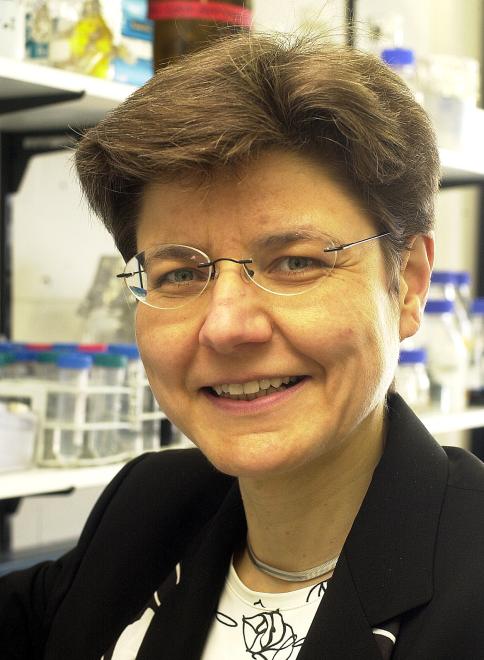 Dorothee Staiger合作论文数Fakultat fur Biologie, Bielefeld University4Claire Périlleux合作论文数3Birgit Kurz合作论文数3Laurent Corbesier合作论文数3C Heintzen合作论文数2Jerôme Gennen合作论文数2Avneesh Kumar合作论文数2
 Andreas E Muller合作论文数2Sarah Matar合作论文数2G Bernier合作论文数2John W Chandler合作论文数2Gerhard Menzel合作论文数Laboratoire de Biotechnologie Végétale, Université de Lausanne2
 Tom Beeckman合作论文数Center for Plant Systems Biology, Flanders Institute of Biotechnology, Ghent University2John Chandler合作论文数2Grit Kampmann合作论文数2
 Petr Smykal合作论文数Agritec Plant Research Ltd.2Dietmar J. Stahl合作论文数2
 Frederic Lens合作论文数Institute of Botany and Microbiology, K.U.Leuven2O. V. Lebedeva合作论文数1Andreas Klingberg合作论文数1
 Ehsan Fatemi合作论文数1K. Edwards合作论文数1
 Gaelle Kustermans合作论文数1Joe Tohme合作论文数1
 Bo Zhang (张波)合作论文数Dalian Institute of Chemical Physics, Chinese Academy of Sciences1
 Daniela Holtgrawe合作论文数1Gina Capistrano-Gossmann合作论文数1Olivier Grandjean合作论文数1
 Niharika Sashidhar合作论文数Plant Breeding Inst, Christian Albrechts Univ Kiel1
 Janina Braatz合作论文数1Dries Vekemans合作论文数1Bettina Hause合作论文数1
 Annette Becker合作论文数Plant Dev Lab, Hustus Liebig Univ1Venkatesh Ranganath合作论文数1D'Aloia Maria合作论文数1
 Panda Sayantan合作论文数Department of Botany, Savitribai Phule Pune University1
 Ingo Burgert合作论文数Department of Civil, Environmental and Geomatics Engineering, Institute for Building Materials, Eidgenossische Technische Hochschule Zurich1Lehnhardt Denise合作论文数1Fadia El-Sherif合作论文数Faculty of Agriculture, Suez Canal University1
 Hans-Joachim Harloff合作论文数Christian-Albrechts-Universität zu Kiel, University of Kiel1
 Jörg Fromm合作论文数Institute for Wood Biology, Department Biology, Faculty of Mathematics, Informatics and Natural Sciences, Universitat Hamburg1
 Koen Geuten合作论文数1
 Erik F Smets合作论文数1Andree Havelange合作论文数1
 Dirk Inzé合作论文数Center for Plant Systems Biology, Vlaams Instituut Voor Biotechnologie1
 Thomas Moritz合作论文数Department of Forest Genetics and Plant Physiology, Swedish University of Agricultural Sciences;Novo Nordisk Centre for Basic Metabolic Research, University of Copenhagen1




