Este artigo tem como objetivo a anAilise da seguranA§a cibernA©tica de veAculos autA´nomos (VA), os quais tem sido objeto de extensivos testes nos Aoltimos anos. Para esse trabalho, serA£o necessAirios conceitos de Internet das Coisas (IoT), SeguranA§a da InformaA§A£o e LA³gica Paraconsistente. A‰ definida uma classificaA§A£o dos nAveis de automaA§A£o de veAculos para sistemas autA´nomos. Os serviA§os bAisicos de seguranA§a, AutenticaA§A£o, Confiabilidade, Disponibilidade, Integridade e NA£o-RepudiaA§A£o, sA£o definidos e A© utilizado um modelo em que existem objetos de interesse entre os serviA§os. Para este modelo, hAi quatro planos de anAilise e o plano de seguranA§a cibernA©tica A© explorado. Em relaA§A£o A LA³gica Paraconsistente, A© explicado como ela pode ser aplicada para veAculos autA´nomos. Adicionalmente, sA£o analisados os resultados de alguns testes de fabricantes de VA e de guias de instituiA§Aµes automotivas americanas. Por fim, serA£o integrados os resultados de testes de direA§A£o de VA, guia para fabricantes com modelos de seguranA§a de informaA§A£o, verificando eventuais gaps.
In the telecommunications industry, currently to determine the quality of service of a cellular network in a certain area, measurements are made of some RF parameters; this operation is called a "Drive Test", and it is done using dedicated equipment which is often costly. This process is slow, expensive and must be repeated several times manually by some institutions (operators and government regulatory entities) in order to optimize the network. On the other hand, there is currently a great interest in transforming cities into smart cities. One way to do that is applying some techniques related to Industry 4.0, which aims to improve industrial processes using enabling technologies such as IoT and Cloud Computing, automating processes and making them smarter. This paper aims to characterize these enabling technologies applied to the scenario of the telecommunication industry. In this sense, to improve the test drive, an architecture is proposed for monitoring the quality of service for mobile telephony, collecting RF parameters and processing in real time. In addition, a proof of concept of the system with free platforms is presented.
This paper is focused the cybersecurity analysis of autonomous vehicles (AV), which have been extensively tested in recent years. For this work, this will be necessary concepts of Internet of Things (IoT), Information Security and Paraconsistent Logic. Initially, it is a defined the level of automation of vehicles based on the functions of the autonomous system. The basic security services, Authenticity, Reliability, Availability, Integrity and Non-repudiation, are defined and it is used a model which interests objects between them. For this model, there are four planes and the cyber security is explored. As for the Paraconsistent Logic, it is explained how it can be applied for the security analisys of autonomous vehicles. Additionally, it is analyzed the results of the tests from manufacturers of AV and some guidance from relevant American driving institutions. Then it will be understood how information security works on IoT devices and how are the tests of self-driving vehicles. Finally, the results are integrated from information security, VA´s driving test, guidance for manufacturers.
Este artigo tem como objetivo a analise da seguranca cibernetica de veiculos autonomos (VA), os quais tem sido objeto de extensivos testes nos ultimos anos. Para esse trabalho, serao necessarios conceitos de Internet das Coisas (IoT), Seguranca da Informacao e Logica Paraconsistente. E definida uma classificacao dos niveis de automacao de veiculos para sistemas autonomos. Os servicos basicos de seguranca, Autenticacao, Confiabilidade, Disponibilidade, Integridade e Nao-Repudiacao, sao definidos e e utilizado um modelo em que existem objetos de interesse entre os servicos. Para este modelo, ha quatro planos de analise e o plano de seguranca cibernetica e explorado. Em relacao a Logica Paraconsistente, e explicado como ela pode ser aplicada para veiculos autonomos. Adicionalmente, sao analisados os resultados de alguns testes de fabricantes de VA e de guias de instituicoes automotivas americanas. Por fim, serao integrados os resultados de testes de direcao de VA, guia para fabricantes com modelos de seguranca de informacao, verificando eventuais gaps.
This paper proposes the identification of polarization characteristics of antennas by using vector network analyzer (VNA) measurements. Parameters such as the axial ratio, phase difference and tilt angle are measured and calculated, which are sufficient for the characterization of the polarization ellipse. The proposed procedure is intended for measuring antennas in laboratory environments, for example antennas with uncertain polarization properties, and for comparing expected and measured parameters. Experiment results are presented, which agree to expected values.
Cognitive radio is a technology in which intelligent radios can change their parameters through software. The technology makes it possible for opportunistic users to occupy frequency bands allocated to licensed users that are not being used by these users for a certain period of time. A technique known as spectrum sensing can be employed in the search for these “free” frequency bands in a network. Therefore, spectrum sensing is one of the most essential characteristics of a cognitive radio to ensure that opportunist users do not interfere with licensed users. A number of theoretical studies have addressed spectrum sensing. In this work, a platform known as Universal Software Radio Peripheral (USRP) is used to experimentally analyze the process of sensing the spectrum in actual scenarios, exploring its advantages and limitations.
The aim of this work is to identify through time domain reflectometry -TDR, the electronics signature of Ribbon busbar connections versus the Wire busbar connections in polycrystalline solar cells. Nowadays it is common in the PV market the use of ribbon busbar in lamination process instead the use wire busbar in lamination process, the wire busbar idea is to decrease effective shading compared to the rectangular shape of the ribbon busbar. Besides that, the wire techonology could employs different materials such as cooper. The TDR simulations here presented, could be a very powerful tool to identify the signature of the overall grid connections in different solar cells technologies, bulk materials for R&D and manufacturing purposes.
Femtocells were proposed to be used in indoor environments and increase the capacity of the cellular network. They are not part of the cellular planning of the local operator but its frequency of operation is the same used in the macrocell network. In this way, they introduce interference in the system, being one of the biggest challenges the reduction of interference with the macrocell network. TV White Space (TVWS), which is the portion of reserved TV spectrum that is not used temporarily, is being considered as an opportunity to solve the spectrum shortage using cognitive radios. In this paper, the proposal to use TV White Space as the operating frequency of the femtocells is studied. It shows an overview, some key challenges for research, and deduces the search directions in the topic.
In this paper, it is presented a new temperature sensor designed for self-protection of Integrated Circuits (IC). This sensor mainly prevents damages caused by heating which can lead to burning or malfunctioning of electronic devices. The main objective is to create a small-area low-power consumption protection circuit that operates independently of an external circuitry and self-protects the IC against heating, in a temperature range of −20°C to 120°C. The sensor was designed using Cadence Virtuoso employing the System on a Chip (SoC) concept, for a standard 180nm CMOS technology to operate with a power supply voltage of 1.2V. The results show an effective sensor protection for a temperature range of −40°C to 140°C, which exceeds the range originally specified. The new designed circuit can be used as an excellent protector against heating of an IC.
Cognitive radios have been proposed for opportunistic users to make use of the frequency bands allocated to licensed users. For this to be possible, spectrum sensing should be performed in the search for free frequency bands. In this work, the spectrum sensing is investigated based on energy detection. Scenarios are studied where the noise distribution is Gaussian and scenarios considering the noise of uncertainty. The behavior of the probability of detection as a function of the probability of a false alarm for a parameterized number of samples and signal-to-noise ratio (SNR) is presented.
A current topic of interest in telecommunication is the efficient use of the frequency spectrum by means of cognitive radio technique, where an important issue is the spectrum sensing. In this paper, spectrum sensing techniques are discussed based on energy detection in the TV band. A study of these techniques is presented for the ISDB-TB standard. The performances of the addressed techniques are compared using probability of detection and false alarm; simulations for different scenarios are presented.
In this paper, we present a new design of a tamper resistance and a temperature sensor protection in Smart Cards to prevent both, physical and security attacks in the corners of their operating temperature range. Physical attacks are used for reverse engineering and temperature attacks normally result in malfunctions in the smart card processor, allowing the access to extra information. The purpose of this design is the protection of the chip of smart cards in a temperature range of -20 °C to 120 °C, and tamper resistance with a small area and low power consumption circuit. The sensor and tamper resistance were designed in Cadence using the System on a Chip (SoC) concept, employing a standard 90 nm CMOS technology that operates on a power supply voltage of 1.2 V. The obtained results show effective protection at the corners of the -40 °C to 140 °C temperature range and V dd = 1.2 V 10%. This new circuit design can effectively work as an excellent protector against security manipulation of Smart Cards.
This letter reports the concept and development of the first optically controlled reconfigurable antenna formillimeter-wave (mm-wave) applications. It is based on a slotted-waveguide antenna array and two photoconductive switches, which are used to control the slot electrical length. This novel photonics-based reconfigurable strategy enables frequency tunability and radiation pattern reconfiguration through the 28- and 38-GHz frequency bands. Numerical simulations and experimental results illustrate its applicability for mm-wave indoor applications. The measured gain is approximately 8.0 and 9.0 dBi at 28 and 38 GHz, respectively.
This letter presents a novel approach to design highly efficient multioctave bandwidth power amplifiers (PAs). The fundamental load impedances are slightly detuned out of their optimum values to reduce the in-band harmonics influence on output power and power-added efficiency. The design of the output matching network includes a 4: 1 planar Guanella transformer for wide bandwidth and low complexity. In the frequency band 0.5-2.7 GHz, the PA achieves 9.2 +/- 1.2 dB power gain and more than 20-W output power. The drain efficiency varies from 56% to 70% over the bandwidth.
Within this paper the development and design of a hybrid Ku-band block upconverter (BUC) with a GaN-HEMT amplifier is shown. The BUC is supposed to work within a very small aperture terminal (VSAT) where more often higher output power levels are required. Therefore the authors already developed GaN-HEMT power amplifiers up to Pout= 70 W. In here an integration of a 10 W amplifier within a newly developed BUC is shown that comes along with a small size and low weight, paired with a low amount of dissipated power. Additionally the BUC is equipped with a linearization technique that automatically improves the spectral regrowth for common modulation schemes (QPSK, 8PSK), as well as for future high order modulation (DVB-S2X, 5G). Finally the BUC is tested with a VSAT in a satellite link and demonstrates its function with up to data rates of 1 Mbit/s.
Low power wireless communication is essential for the realization of IoT devices connected because radio transceivers are one of the biggest sources of power drains. The low power Wake-up Receiver (WUR) is a promising technology that can facilitate this by enabling an on-demand and asynchronous wake-up signal. Although the concept of WUR is not new, only recently it has attracted significant attention from industries due to the development of IoT and energy efficiency that has become a design concern in high performance devices. On the other side, there is a strong effort on the minimization of energy consumption and dissipation associated to the analog and digital circuitry. Therefore, the strategy of AC-clocked power supply follows this tendency. In this work, CPAL JK flip-flops are evaluated regarding time violation, either for frequency shifting or phase shifting, considering the evaluate/hold state of the four-phase power-clock.
Chipless RFID tags in different flexible substrates with folded multi-layer C-sections intended for wireless pressure sensor are presented in this paper. These folded tags use of dispersive characteristics of C-sections in order to build structures with greater group delay dependent on the physical characteristics of the C-section. This increased group delay is a result of a more intense electromagnetic coupling due to the folding process on the tag. It has been discovered, using simulation on CST Microwave Studio, that the air within each layer of the tag destroys partially the electromagnetic coupling and that expelling this air applying pressure over the tag rebuilds it; hence it is possible the devise an instrument capable of detecting pressure using this concept. This work tested different substrates used to design these tags; and, it suggests that changing the substrate of the tag affects positively, depending on the type of the substrate used, the group delay and also can contribute to achieve economic constraints. In synthesis, this work implies, with its obtained results, the viability of the utilization of tags with multi-layer C-sections in temporal multi-frequency encoding technique based on group delay for pressure detection.
A 24GHz low-noise amplifier (LNA) with trimming capability is presented. It is demonstrated, that with the proposed trimming concept, frequency shifts due to model uncertainties, process variations, and underestimated parasitic capacitances can be compensated. The realized LNA showed a shift in peak gain of 2.5 GHz towards lower frequencies in the non-trimmed state. After trimming to the specified operating frequency of 24 GHz, a gain degradation of only 0.3 dB is observed. The trimmed LNA achieves a peak gain of 20 dB at 24 GHz with a 3 dB-bandwidth from 21 to 28 GHz, a noise figure of 3.7 dB, and an OIP3 of 15 dBm. Furthermore, it is equipped with ESD protection and can be supplied with a single voltage. The active die size and the power consumption are 0.13 mm(2) and 17 mW, respectively.
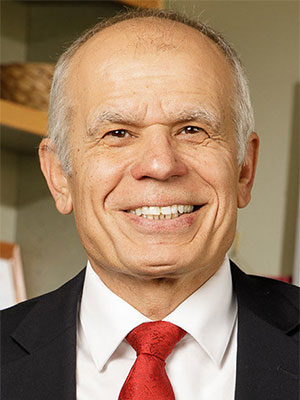 Christos Christodoulou合作论文数Antenna & RF Lab, Department of Electrical and Computer Engineering, School of Engineering, The University of New Mexico26
 Luiz Carlos Kretly合作论文数UNICAMP, Univ Estadual Campinas19
 Joseph Costantine合作论文数Elect & Comp Engn Dept, Amer Univ Beirut18
 Glauco Fontgalland合作论文数16
 Youssef Tawk合作论文数13
 Georg Boeck合作论文数11
 Ivson Ferreira Dos Anjos合作论文数7
 Marcelo B. Perotoni合作论文数7
 Victor M. Vergara合作论文数Department of Electrical and Computer Engineering, University of New Mexico7
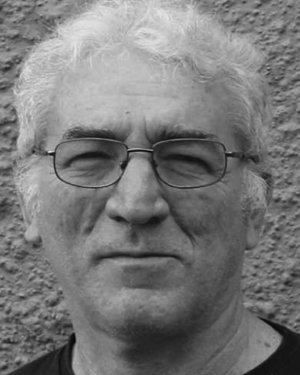 Raimundo Freire合作论文数6
 Frederic Andres合作论文数Digital Content and Media Sciences Research Division, National Institute of Informatics;Software Division, The Graduate University for Advanced Studies6Euler Edson Apaza Medina合作论文数5
 Humberto X. Araujo合作论文数Dept. of Microwave & Opt., Univ. of Campinas-Unicamp;c;Dept. of Microwave & Opt., Univ. of Campinas-Unicamp5
 Jarbas Lopes Cardoso Junior合作论文数5Soenke Vehring合作论文数4Zihui Zhang合作论文数4
 Robson Valmiro合作论文数4
 Carlos E. Capovilla合作论文数4
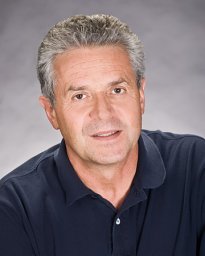 Ramiro Jordan合作论文数Electrical and Computer Engineering Department;University of New Mexico;Electrical and Computer Engineering Department, University of New Mexico4
 Alexandre Guitton合作论文数Birkbeck College;University of London;Birkbeck College, University of London4
 Jose Maria Palomo Gutierrez合作论文数3emerson z granemann合作论文数3
 P.F. Silva合作论文数3
 Luis Cartagena合作论文数3carmen aguilera合作论文数3
 M.Eulalia Pares Calaf合作论文数3
 Yaoshun Ding合作论文数3
 Mhd Tareq Arnous合作论文数Microwave Eng. Lab., Berlin Inst. of Technol.;c;Microwave Eng. Lab., Berlin Inst. of Technol.3
 Karlo G Lenzi合作论文数DRC (Convergent Networks Dept.),, CPqD R&D Center on Telecommun.;c;DRC (Convergent Networks Dept.),, CPqD R&D Center on Telecommun.3
 Ismael Colomina合作论文数3Luiz Garcia Reis, A.合作论文数Univ. Estadual de Campinas (UNICAMP),;c;Univ. Estadual de Campinas (UNICAMP),3
 Tapan K. Sarkar合作论文数Department of Electrical Engineering and Computer Science, College of Engineering & Computer Science, Syracuse University3
 Asanee Kawtrakul合作论文数3Chris Hill合作论文数3
 Joao Francisco Galera Monico合作论文数Departamento de Cartografia, Faculdade de Ciências e Tecnologia de Presidente Prudente, Universidade Estadual Paulista Júlio de Mesquita Filho3
 Miroslav Joler合作论文数University of New Mexico3
 Dominic Maurath合作论文数Chair of Microelectronics;Department of Microsystems Engineering3
 Friedel Gerfers合作论文数Institute of Microelectronics;University of Saarland;Institute of Microelectronics, University of Saarland3
 Paulo De Oliveira Camargo合作论文数Departamento de Cartografia PROGRAMA DE PÓS-GRADUAÇÃO3
 Magdalena Salazar Palma合作论文数Department of Signal Theory and Communications, Universidad Carlos III de Madrid;College of Engineering, Universidad Carlos III de Madrid3
 Mauricio Weber Benjo da Silva合作论文数2c m costa合作论文数2tiago peres合作论文数2gustavo streiff合作论文数2A Tavora合作论文数2Nieremberg J. P. de Lyra Ramos合作论文数2
 Felix Rautschke合作论文数2christian miranda合作论文数2
 Philipp Scholz合作论文数Berlin Univ. of Technol.;c;Berlin Univ. of Technol.2




