The death of an infant is devastating and life changing, eliciting profound grief for parents. Many mothers of stillborn infants and infants who die in the first days, weeks and months of life are faced with the complex task of managing the initial onset of breastmilk production or continuation of established lactation. In this case-study, we conducted focus groups with health professionals and interviews with grieving fathers to explore fathers’ awareness of and involvement in their partners’ lactation after infant death. We found that after the loss of a child fathers are often characterised as ‘supporters’. What was seen as ‘support’, however, was more akin to ‘care’, being evidenced by emotional expression and emotional interdependence. This vital attention to, and emphasis on men’s caring , allows a greater appreciation of the emotions present in men’s grief, including how care for others, particularly partners, allow men to express themselves emotionally after loss.
Who is truly to blame?The people who are to blame most are ourselves, european [sic] men.Strong men do not get ethnically replaced, strong men do not allow their culture to degrade, strong men do not allow their people to die.Weak men have created this situation and strong men are needed to fix it.
Objective: The study aimed to identify how, from the perspective of bereaved parents, hospital-based health professionals can better meet their lactation care needs. Methods: In-depth interviews were conducted with 17 mothers and 7 fathers bereaved by stillbirth, neonatal death, or older infant death. Participants were recruited from three large hospitals in Eastern Australia including two with human milk banks. Qualitative thematic data analysis identified bereaved parents' lactation experiences, needs, and how parents wanted lactation care to be provided. Results: Participants experienced lactation after infant death as hard and challenging, while at the same time they received limited lactation care. The negative impact of lactation, however, could be mediated by anticipatory guidance, assistance to make sense of lactation, support to make decisions from available lactation and breast milk management options, and support with breast care for as long as required. Bereaved parents explained lactation care was best provided by health professionals they had come to know and trust rather than by a particular professional role. Care should be provided with compassion, in a manner respectful of individual circumstances, inclusive of partners, and supplemented by quality written information. When bereaved parents felt supported to manage their lactation in a manner consistent with their unique needs, lactation for some could have a positive impact on grief. Conclusion: Bereaved parents have demonstrated that comprehensive lactation care is critical to their health and well-being. Such care should be more fully incorporated into hospital-based bereavement care policies and practices.
Using Reddit as a case study, this article blurs the boundary between the 'dark' and 'clear' web, arguing that in between these spaces there is what I describe as a 'brackish web', inhabited by 'brackish social spaces'. Reddit, I argue, sits in a murky space between the dark and clear, with its technological rationality, politics, and technological affordances exhibiting elements of both the clear and dark infrastructures. I study these similarities through examining Reddit's relationship to surveillance, arguing that it exhibits similarities to the dark web through a politics of anonymity and its practices of content moderation. Reddit, however, has slowly moved away from some of its 'dark' elements, in particular through a growing reliance on advertising revenue. This has pushed the platform to engage in more surveillance of its users, pushing it away from its dark web politics. This article challenges the dark and clear web binary, further nuancing our understandings of the politics, economics and technological rationality that underpins online digital platforms.
This paper examines how speed shapes internet culture. To do so, it analyses ‘memetic moments’ on Twitter, short-lived and rapidly circulated memes that quickly reach saturation. The paper examines two ‘memetic moments’ on Twitter in 2018 and 2019 to assess how they develop over time. Each case study comprises a week’s worth of relevant tweets that were analysed for temporal patterns. We analyse these ‘memetic moments’ through Lefebvre’s (2004) work on rhythmanalysis, arguing that the temporal patterns of memes on Twitter can be understood through his concepts of repetition, presence and dialogue. While seemingly trivial, memetic moments underscore the didactic relationship between social media and news media while also providing a way to approach complex social issues.
Young men are underrepresented in Australian research on family formation, especially young men who are nonmarital fathers, and are not university educated. In this pilot project, an interdisciplinary research team (demography, sociology, and gender studies) based in Australia set out to design an approach that would engage this particular group of young men on the topic of family formation. We decided to employ a nontraditional research method (which we call scripts) in order to engage young men indirectly on this sensitive issue. This article does not report on what we found; rather, our focus is on gender dynamics involving the research team’s imaginings of masculinity in the research process. We highlight and interrogate the gendered and heteronormative assumptions we made in the research design, anticipating that our experience can inform future research on masculinity and family formation.
Encompassed by the disputed term ‘fake news’, a variety of overtly or covertly biased, skewed, or falsified reports claiming to present factual information are now seen to constitute a critical challenge to the effective dissemination of news and information across established and emerging democratic societies. Such content – variously also classifiable as propaganda, selective reporting, conspiracy theory, inadvertent misinformation, and deliberate disinformation – in itself is not new; however, contemporary digital and social media networks enable its global dissemination and amplification, by human and algorithmic actors (Woolley & Howard 2017), ordinary users and professional agents, outside of, in opposition to, or sometimes also in collusion with, the mainstream media (Shao et al. 2017; Vargo et al. 2017). Various political, commercial, and state actors are suspected to have exploited this ‘fake news’ ecosystem to influence public opinion, in major votes ranging from the Brexit referendum to national elections, and/or to utilise discourse around ‘fake news’ to generally undermine trust in media, political, and state institutions. This panel brings together a number of perspectives that combine systematic, large-scale, mixed-methods analysis of the empirical evidence for the global dissemination of, engagement with, and visibility of problematic information in public debate with the study of the public discourse about ‘fake news’, and the operationalisation of this concept by politicians and other societal actors to downplay inconvenient facts or reject critical questions. In combination, its five papers present a substantive collection of innovative approaches to the ‘fake news’ concept, exploring the dissemination of problematic information itself at larger and smaller scales as well as examining the operationalisation of the idea of ‘fake news’ in pursuit of specific ideological aims. This produces a new and more comprehensive picture of the overall impact of ‘fake news’, in all its forms, on contemporary societies.
Action on climate change has enjoyed popular support in most Western countries. Despite this, successive governments have struggled to implement policy to tackle this issue. Using the case of opposition to the Clean Energy Act, passed in Australia to establish an emissions trading scheme, this paper argues that a growing and broad sentiment of distrust in political elites, described as ‘anti-politics’, can explain some of this contradiction. Particular forms of climate policy, in particular emissions trading schemes, have been successfully framed as policies that appeal to the interests of a new class of liberal elites while hurting ordinary working people. This frame was used successfully in Australia by conservative forces to oppose the Clean Energy Act. While used cynically by political leaders in this case, the paper argues that anti-political sentiment reflects genuine concerns about the detachment between the state and voting population. This detachment is reflected in neoliberal climate policies. Through briefly examining the cases of the Trump Administration’s withdrawal from the Paris Climate Agreement and the Gilets Jaunes protest movement, the paper argues that while formulating climate policy we must consider anti-political sentiment, developing responses to the climate crisis from a bottom-up rather than top-down approach.
: This paper studies the efficacy of the Reddit’s quarantine, increasingly implemented in the platform as a means of restricting and reducing misogynistic and other hateful material. Using the case studies of r/TheRedPill and r/Braincels, the paper argues the quarantine successfully cordoned off affected subreddits and associated hateful material from the rest of the platform. It did not, however, reduce the levels of hateful material within the affected spaces. Instead many users reacted by leaving Reddit for less regulated spaces, with Reddit making this hateful material someone else’s problem. The paper argues therefore that the success of the quarantine as a policy response is mixed.
Online abuse has become a matter of trust for social media platforms, whose role as a facilitator of public debate has been called into question. In response social media companies have become more active in regulating and banning particular users and channels. Through the use of affordances theory, this paper examines one example of the regulation of content on a social media site, the revamp of the quarantining function on Reddit in late 2018. Quarantines are designed to halt participation within and growth of subreddits without banning them outright. The paper uses quantitative and qualitative data to examine the consequences of this revamp on two subreddits, r/Braincels and r/TheRedPill. Through studying activity levels on these subreddits the paper argues that quarantines did limit discussion within these subreddits. However, it also argues that the revamp had unintended consequences, in particular a growth in distrust between subreddit users and Reddit as a site, and a shift of users away from Reddit to less regulated sites. The paper argues that quarantining shifted the affordances of Reddit, in this instance resulting in greater discouragement of activity on particular subreddits. Using the mechanisms and conditions framework (Davis and Chouinard, 2016) the paper however argues that users adapted to and circumvented this discouragement to continue engaging in particular behavior. While quarantining had short term benefits, using an affordances framework this paper argues it had unintended consequences, ones which can result in a continued radicalization of actions and beliefs, furthering distrust in the online sphere.
 Alan Greig合作论文数6
 Joshua M. Roose合作论文数6
 Michael Flood合作论文数Symposium on Engaging Men;Rio de Janeiro;Symposium on Engaging Men6
 Mark Robert Alfano合作论文数Program in Philosophy, CUNY Graduate Center6
 Katherine Carroll合作论文数3
 Naomi Smith合作论文数Institute of Education, Arts and Community, Federation University Australia2
 Debbie Noble-Carr合作论文数School of Sociology, College of Arts & Social Sciences, The Australian National University2
 Catherine Waldby合作论文数2Souleymane Coulibaly合作论文数1Thi Le合作论文数1Rohan Todd合作论文数1Katharine Gary合作论文数1
 Annetta Mallon合作论文数1
 Ben Lyall合作论文数Monash Univ1
 Abdul Karim Obeid合作论文数Sch Informat Syst, Queensland Univ Technol1
 Silvia Ximena Montana-Nino合作论文数Queensland University of Technology1
 Gemma Killen合作论文数Australian Natl Univ1
 Amber R. Crowell合作论文数Dept Sociol, Calif State Univ Fresno1
 Luke Mansillo合作论文数Dept Govt & Int Relat, Univ Sydney1
 Samantha Vilkins合作论文数Natl Ctr Epidemiol & Populat Hlth, Australian Natl Univ1
 Jennifer Le合作论文数Skaggs School of Pharmacy and Pharmaceutical Sciences, University of California, San Diego1
 Edward Hurcombe合作论文数Digital Media Res Ctr, Queensland Univ Technol1
 Francesca Tripodi合作论文数School of Information and Library Science, University of North Carolina at Chapel Hill1
 Sofya Glazunova合作论文数Queensland University of Technology1Laura Dunstan合作论文数1Alexia Maddox合作论文数1
 Bianca Manago合作论文数Vanderbilt University1Judy Rose合作论文数1
 Mikayla Novak合作论文数Australian Natl Univ1
 Timothy Graham合作论文数School of Communication, Queensland University of Technology1
 Matthew Wade合作论文数Sch Humanities & Social Sci, La Trobe Univ1e altmann合作论文数Wicking Dementia Res & Educ Ctr, Univ Tasmania1
 Elizabeth Humphrys合作论文数Social & Polit Sci Program, Univ Technol Sydney1
 Anna Jobin合作论文数ZeMKI, Univ Bremen1
 Naomi Barnes合作论文数Fac Educ, Queensland Univ Technol1
 Hedda Ransan-Cooper合作论文数College of Engineering and Computer Science, The Australian National University1
 Ann Evans合作论文数School of Demography, Research School of Social Sciences, College of Arts and Social Sciences, The Australian National University1
 Edith Gray合作论文数School of Demography, Research School of Social Sciences, College of Arts and Social Sciences, The Australian National University1
 Helen Keane合作论文数School of Sociology, Research School of Social Sciences, College of Arts and Social Sciences, The Australian National University1
 Daniel Angus合作论文数ARC Centre of Excellence for the Dynamics of Language, Faculty of Humanities and Social Sciences, The University of Queensland1
 Rebecca Olson合作论文数School of Social Science, Faculty of Humanities and Social Sciences, The University of Queensland1
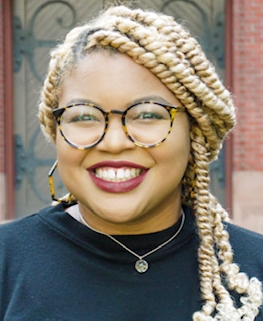 Apryl Williams合作论文数Department of Communication and Media, College of Literature, Science, and the Arts, University of Michigan;Digital Studies Institute, College of Literature, Science, and the Arts, University of Michigan;Mozilla1
 Jenny L. Davis合作论文数Department of Anthropology, College of Liberal Arts & Sciences, University of Illinois at Urbana-Champaign1
 Timothy Recuber合作论文数1
 Daniel Morrison合作论文数Department of Sociology, Vanderbilt University1
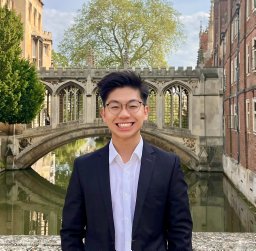 Mark Yu Zheng Wong合作论文数Singapore National Eye Center, Singapore Eye Research Institute1
 Compton D'Lane R合作论文数Department of Sociology, The University of New Orleans1
 Axel Bruns合作论文数Digital Media Research Centre, Queensland University of Technology1
 Scott Wright合作论文数1




