In pluripotent cells, a delicate activation-repression balance maintains pro-differentiation genes ready for rapid activation. The identity of transcription factors (TFs) that specifically repress pro-differentiation genes remains obscure. By targeting ~1,700 TFs with CRISPR loss-of-function screen, we found that ZBTB11 and ZFP131 are required for embryonic stem cell (ESC) pluripotency. ZBTB11 and ZFP131 maintain promoter-proximally paused Polymerase II at pro-differentiation genes in ESCs. ZBTB11 or ZFP131 loss leads to NELF pausing factor release, an increase in H3K4me3, and transcriptional upregulation of genes associated with all three germ layers. Together, our results suggest that ZBTB11 and ZFP131 maintain pluripotency by preventing premature expression of pro-differentiation genes and present a generalizable framework to maintain cellular potency. One-sentence summary A Transcription Factor-wide CRISPR screen identifies ZBTB11 and ZFP131 maintaining pluripotency by pausing POL II at pro-differentiation genes
The ubiquitin conjugating enzyme UBE2W catalyzes non-canonical ubiquitination on the N-termini of proteins, although its substrate repertoire remains unclear. To identify endogenous N-terminally-ubiquitinated substrates, we discover four monoclonal antibodies that selectively recognize tryptic peptides with an N-terminal diglycine remnant, corresponding to sites of N-terminal ubiquitination. Importantly, these antibodies do not recognize isopeptide-linked diglycine (ubiquitin) modifications on lysine. We solve the structure of one such antibody bound to a Gly-Gly-Met peptide to reveal the molecular basis for its selective recognition. We use these antibodies in conjunction with mass spectrometry proteomics to map N-terminal ubiquitination sites on endogenous substrates of UBE2W. These substrates include UCHL1 and UCHL5, where N-terminal ubiquitination distinctly alters deubiquitinase (DUB) activity. This work describes an antibody toolkit for enrichment and global profiling of endogenous N-terminal ubiquitination sites, while revealing functionally relevant substrates of UBE2W.
Methylation of histone 3 at lysine 9 (H3K9) constitutes a roadblock for cellular reprogramming. Interference with methyltransferases or activation of demethylases by the cofactor ascorbic acid (AA) facilitates the derivation of induced pluripotent stem cells (iPSCs), but possible interactions between specific methyltransferases and AA treatment remain insufficiently explored. We show that chemical inhibition of the methyltransferases EHMT1 and EHMT2 counteracts iPSC formation in an enhanced reprogramming system in the presence of AA, an effect that is dependent on EHMT1. EHMT inhibition during enhanced reprogramming is associated with rapid loss of H3K9 dimethylation, inefficient downregulation of somatic genes, and failed mesenchymal-to-epithelial transition. Furthermore, transient EHMT inhibition during reprogramming yields iPSCs that fail to efficiently give rise to viable mice upon blastocyst injection. Our observations establish novel functions of H3K9 methyltransferases and suggest that a functional balance between AA-stimulated enzymes and EHMTs supports efficient and less error-prone iPSC reprogramming to pluripotency.
Additional file 2: Supplementary Table S1-S5.
Methylation of histone 3 at lysine 9 (H3K9) is widely regarded as a major roadblock for cellular reprogramming and interference with associated methyltransferases such as EHMT1 and EHMT2 (also known as GLP and G9A, respectively) increases the efficiencies at which induced pluripotent stem cells (iPSCs) can be derived. Activation of histone and DNA demethylases by ascorbic acid (AA) has become a common approach to facilitate the extensive epigenetic remodeling required for iPSC formation, but possible functional interactions between the H3K9 methylation machinery and AA-stimulated enzymes remain insufficiently explored. Here we show that reduction of EHMT1/2 activity counteracts iPSC formation in an optimized reprogramming system in the presence of AA. Mechanistically, EHMT1/2 activity under these conditions is required for efficient downregulation of somatic genes and transition into an epithelial state. Of note, transient inhibition of EHMT1/2 during reprogramming yields iPSCs that fail to efficiently give rise to viable mice, suggesting persistent molecular defects in these cells. Genetic interference with the H3K9 demethylase KDM3B ameliorated the adverse effect of EHMT1/2 inhibition on iPSC formation. Together, our observations document novel functions of H3K9 methyltransferases during iPSC formation and suggest that the balancing of AA-stimulated enzymes by EHMT1/2 supports efficient and error-free iPSC reprogramming to pluripotency.
Activation of regulatory elements is thought to be inversely correlated with DNA methylation levels. However, it is difficult to determine whether DNA methylation is compatible with chromatin accessibility or transcription factor (TF) binding if assays are performed separately. We developed a fast, low-input, low sequencing depth method, EpiMethylTag, that combines ATAC-seq or ChIP-seq (M-ATAC or M-ChIP) with bisulfite conversion, to simultaneously examine accessibility/TF binding and methylation on the same DNA. Here we demonstrate that EpiMethylTag can be used to study the functional interplay between chromatin accessibility and TF binding (CTCF and KLF4) at methylated sites.
Developmental specification of germ cells lies at the heart of inheritance, as germ cells contain all of the genetic and epigenetic information transmitted between generations. The critical developmental event distinguishing germline from somatic lineages is the differentiation of primordial germ cells (PGCs), precursors of sex-specific gametes that produce an entire organism upon fertilization. Germ cells toggle between uni- and pluripotent states as they exhibit their own 'latent' form of pluripotency. For example, PGCs express a number of transcription factors in common with embryonic stem (ES) cells, including OCT4 (encoded by Pou5f1), SOX2, NANOG and PRDM14 (refs 2, 3, 4). A biochemical mechanism by which these transcription factors converge on chromatin to produce the dramatic rearrangements underlying ES-cell- and PGC-specific transcriptional programs remains poorly understood. Here we identify a novel co-repressor protein, CBFA2T2, that regulates pluripotency and germline specification in mice. Cbfa2t2(-/-) mice display severe defects in PGC maturation and epigenetic reprogramming. CBFA2T2 forms a biochemical complex with PRDM14, a germline-specific transcription factor. Mechanistically, CBFA2T2 oligomerizes to form a scaffold upon which PRDM14 and OCT4 are stabilized on chromatin. Thus, in contrast to the traditional 'passenger' role of a co-repressor, CBFA2T2 functions synergistically with transcription factors at the crossroads of the fundamental developmental plasticity between uni- and pluripotency.
Hantaviruses can cause hantavirus pulmonary syndrome or hemorrhagic fever with renal syndrome in humans. To enter cells, hantaviruses fuse their envelope membrane with host cell membranes. Previously, we have shown that the Gc envelope glycoprotein is the viral fusion protein sharing characteristics with class II fusion proteins. The ectodomain of class II fusion proteins is composed of three domains connected by a stem region to a transmembrane anchor in the viral envelope. These fusion proteins can be inhibited through exogenous fusion protein fragments spanning domain III (DIII) and the stem region. Such fragments are thought to interact with the core of the fusion protein trimer during the transition from its pre-fusion to its post-fusion conformation. Based on our previous homology model structure for Gc from Andes hantavirus (ANDV), here we predicted and generated recombinant DIII and stem peptides to test whether these fragments inhibit hantavirus membrane fusion and cell entry. Recombinant ANDV DIII was soluble, presented disulfide bridges and beta-sheet secondary structure, supporting the in silico model. Using DIII and the C-terminal part of the stem region, the infection of cells by ANDV was blocked up to 60% when fusion of ANDV occurred within the endosomal route, and up to 95% when fusion occurred with the plasma membrane. Furthermore, the fragments impaired ANDV glycoprotein-mediated cell-cell fusion, and cross-inhibited the fusion mediated by the glycoproteins from Puumala virus (PUUV). The Gc fragments interfered in ANDV cell entry by preventing membrane hemifusion and pore formation, retaining Gc in a non-resistant homotrimer stage, as described for DIII and stem peptide inhibitors of class II fusion proteins. Collectively, our results demonstrate that hantavirus Gc shares not only structural, but also mechanistic similarity with class II viral fusion proteins, and will hopefully help in developing novel therapeutic strategies against hantaviruses.
A series of five related publications describe an alternative pluripotent state that is dependent on continuous high levels of exogenous reprogramming factor expression. A comprehensive effort to molecularly compare the acquisition of this state to induced pluripotency aims at providing new insights into the mechanisms underlying cellular reprogramming.
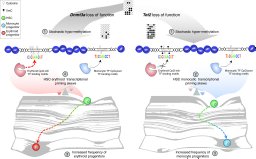
Cellular differentiation involves profound remodelling of chromatic landscapes, yet the mechanisms by which somatic cell identity is subsequently maintained remain incompletely understood. To further elucidate regulatory pathways that safeguard the somatic state, we performed two comprehensive RNA interference (RNAi) screens targeting chromatin factors during transcription-factor-mediated reprogramming of mouse fibroblasts to induced pluripotent stem cells (iPS cells). Subunits of the chromatin assembly factor-1 (CAF-1) complex, including Chaf1a and Chaf1b, emerged as the most prominent hits from both screens, followed by modulators of lysine sumoylation and heterochromatin maintenance. Optimal modulation of both CAF-1 and transcription factor levels increased reprogramming efficiency by several orders of magnitude and facilitated iPS cell formation in as little as 4 days. Mechanistically, CAF-1 suppression led to a more accessible chromatin structure at enhancer elements early during reprogramming. These changes were accompanied by a decrease in somatic heterochromatin domains, increased binding of Sox2 to pluripotency-specific targets and activation of associated genes. Notably, suppression of CAF-1 also enhanced the direct conversion of B cells into macrophages and fibroblasts into neurons. Together, our findings reveal the histone chaperone CAF-1 to be a novel regulator of somatic cell identity during transcription-factor-induced cell-fate transitions and provide a potential strategy to modulate cellular plasticity in a regenerative setting.
The differentiated state of somatic cells provides barriers for the derivation of induced pluripotent stem cells (iPSCs). To address why some cell types reprogram more readily than others, we studied the effect of combined modulation of cellular signaling pathways. Surprisingly, inhibition of transforming growth factor β (TGF-β) together with activation of Wnt signaling in the presence of ascorbic acid allows >80% of murine fibroblasts to acquire pluripotency after 1 week of reprogramming factor expression. In contrast, hepatic and blood progenitors predominantly required only TGF-β inhibition or canonical Wnt activation, respectively, to reprogram at efficiencies approaching 100%. Strikingly, blood progenitors reactivated endogenous pluripotency loci in a highly synchronous manner, and we demonstrate that expression of specific chromatin-modifying enzymes and reduced TGF-β/mitogen-activated protein (MAP) kinase activity are intrinsic properties associated with the unique reprogramming response of these cells. Our observations define cell-type-specific requirements for the rapid and synchronous reprogramming of somatic cells.
The assembly of signaling components and transcription factors in ordered subcellular structures is increasingly implicated as an important regulatory strategy for modulating the activity of cellular pathways. Here, we document the inducible formation of subnuclear foci formed by two mitogen-activated protein kinases (MAPKs) in Saccharomyces cerevisiae upon hyperosmotic stress. Specifically, we demonstrate that activation of the hyperosmotic stress response pathway induces the mating pathway MAPK Fus3 and the filamentation pathway MAPK Kss1 to form foci in the nucleus that are organized by their shared downstream transcription factor Ste12. Foci formation of colocalized Ste12, Fus3, and Kss1 requires the kinase activity of the hyperosmotic response MAPK Hog1 and correlates with attenuated signaling in the mating pathway. Conversely, activation of the mating pathway prevents foci formation upon subsequent hyperosmotic stress. These results suggest that Hog1-mediated spatial localization of Fus3 and Ste12 into subnuclear foci could contribute to uncoupling the pheromone and osmolarity pathways, which share signaling components, under high-osmolarity conditions.
The unfolded protein response (UPR) is an intracellular signaling pathway that counteracts variable stresses that impair protein folding in the endoplasmic reticulum (ER). As such, the UPR is thought to be a homeostat that finely tunes ER protein folding capacity and ER abundance according to need. The mechanism by which the ER stress sensor Ire1 is activated by unfolded proteins and the role that the ER chaperone protein BiP plays in Ire1 regulation have remained unclear. Here we show that the UPR matches its output to the magnitude of the stress by regulating the duration of Ire1 signaling. BiP binding to Ire1 serves to desensitize Ire1 to low levels of stress and promotes its deactivation when favorable folding conditions are restored to the ER. We propose that, mechanistically, BiP achieves these functions by sequestering inactive Ire1 molecules, thereby providing a barrier to oligomerization and activation, and a stabilizing interaction that facilitates de-oligomerization and deactivation. Thus BiP binding to or release from Ire1 is not instrumental for switching the UPR on and off as previously posed. By contrast, BiP provides a buffer for inactive Ire1 molecules that ensures an appropriate response to restore protein folding homeostasis to the ER by modulating the sensitivity and dynamics of Ire1 activity.
 Matthias Stadtfeld合作论文数Weill Cornell Graduate School of Medical Sciences, Cornell University10
 Effie Apostolou合作论文数Phyiology, Biophysics & Systems Biology, Weill Cornell Graduate School of Medical Sciences, Cornell University4
 Valentina Snetkova合作论文数Dept Mol Biol, Genentech Inc3
 Gunjan Sethia合作论文数Dept Pathol, NYU Langone Hlth3
 Kyu-Tae Kim合作论文数New York Genome Ctr, New York, NY 10013 USA3
 Priscillia Lhoumaud合作论文数New York University Langone Health, New York, NY, USA;3
 Shengjiang Tu合作论文数Howard Hughes Medical Institute, Department of Biochemistry, New York University School of Medicine, 522 First Avenue, New York, NY 10016, USA3
 Sana Badri合作论文数Dept Pathol, NYU3
 Aristotelis Tsirigos合作论文数Department of Pathology, Grossman School of Medicine, New York University3Jane Skok合作论文数Department of Pathology, Grossman School of Medicine, New York University3Theodore Sakellaropoulos合作论文数3
 Izzo Franco合作论文数Instituto de Biología y Medicina Experimental (IBYME), CONICET, Vuelta de Obligado 2490, Buenos Aires, 1428 ADN, Argentina. fizzo13@gmail.com.3Amlani Bhishma合作论文数3
 Chantal Marquez Badilla合作论文数3Sang Yong Kim合作论文数3
 Gonzalo A Mardones合作论文数National Institute of Child Health and Human Development;National Institutes of Health;National Institute of Child Health and Human Development, National Institutes of Health3Nicole Tischler-Dworschak合作论文数2Jorge Morales-Valencia合作论文数2
 Emily Swanzey合作论文数2Yixiao Gong合作论文数Perlmutter Canc Ctr, NYU2
 MacIntosh Cornwell合作论文数Dana Farber Canc Inst, Dept Med Oncol, Boston, MA 02215 USA2
 Hongsu Wang合作论文数2
 Eduardo A Bignon合作论文数Fdn Ciencia & Vida, Mol Virol Lab, Santiago, Chile2
 Esteban Mazzoni合作论文数Department of Biology, College of Arts & Science, New York University2Dan Landau合作论文数Computational Biology, Weill Cornell Graduate School of Medical Sciences, Cornell University2
 David Pincus合作论文数Department of Molecular Genetics and Cell Biology, The University of Chicago2Ee Ly-Sha合作论文数2Alexander Polyzos合作论文数Joan and Sanford I. Weill Department of Medicine, Weill Cornell Medicine, Cornell University2
 Garipler Görkem合作论文数Department of Molecular Biology and Genetics, Koç University2
 Hana El-Samad合作论文数University of California, San Francisco2
 Octavio Monasterio合作论文数Facultad de Ciencias, Universidad de Chile2Masashi Yamaji合作论文数1
 Aimee Badeaux合作论文数1B. H. Ross合作论文数1Lorena S. Lopez-Zepeda合作论文数1
 Begum Aydin合作论文数1Chaitanya Parikh合作论文数1
 Alexis Morrissey合作论文数1Trent Hinkle合作论文数MPL, Genentech1
 Kaushiki Chatterjee合作论文数Dept Med, Weill Cornell Med1Marietta Zinner合作论文数1Fernando Villalón-Letelier合作论文数1
 Gonzalo P Barriga合作论文数Lab Emerging Viruses, Univ Chile1Daniel J Wesche合作论文数1Maria Hubmann合作论文数Austrian Acad Sci IMBA, Inst Mol Biotechnol, Vienna Bioctr VBC, A-1030 Vienna, Austria1Carsten Schwerdtfeger合作论文数1Michaela Fellner合作论文数Res Inst Mol Pathol, A-1030 Vienna, Austria1
 Oliver Bell合作论文数Friedrich Miescher Inst Biomed Res, CH-4058 Basel, Switzerland1Tomás Aragón合作论文数Univ Calif San Francisco, Dept Biochem & Biophys, San Francisco, CA 94143 USA1




