Measurements of the EMC effect in the tritium and helium-3 mirror nuclei are reported. The data were obtained by the MARATHON Jefferson Lab experiment, which performed deep inelastic electron scattering from deuterium and the three-body nuclei, using a cryogenic gas target system and the high resolution spectrometers of the Hall A Facility of the Lab. The data cover the Bjorken x range from 0.20 to 0.83, corresponding to a squared four-momentum transfer Q^{2} range from 2.7 to 11.9 (GeV/c)^{2}, and to an invariant mass W of the final hadronic state greater than 1.84 GeV/c^{2}. The tritium EMC effect measurement is the first of its kind. The MARATHON experimental results are compared to results from previous measurements by DESY-HERMES and JLab-Hall C experiments, as well as with few-body theoretical predictions.
The spin structure functions of the proton and the deuteron were measured during the EG4 experiment at Jefferson Lab in 2006. Data were collected for longitudinally polarized electron scattering off longitudinally polarized NH_3 and ND_3 targets, for Q^2 values as small as 0.012 and 0.02 GeV^2, respectively, using the CEBAF Large Acceptance Spectrometer (CLAS). This is the archival paper of the EG4 experiment that summaries the previously reported results of the polarized structure functions g_1, A_1F_1, and their moments Γ_1, γ_0, and I_TT, for both the proton and the deuteron. In addition, we report on new results on the neutron g_1 extracted by combining proton and deuteron data and correcting for Fermi smearing, and on the neutron moments Γ_1, γ_0, and I_TT formed directly from those of the proton and the deuteron. Our data are in good agreement with the Gerasimov-Drell-Hearn sum rule for the proton, deuteron, and neutron. Furthermore, the isovector combination was formed for g_1 and the Bjorken integral Γ_1^p-n, and compared to available theoretical predictions. All of our results provide for the first time extensive tests of spin observable predictions from chiral effective field theory (χEFT) in a Q^2 range commensurate with the pion mass. They motivate further improvement in χEFT calculations from other approaches such as the lattice gauge method.
Inclusive electron scattering at carefully chosen kinematics can isolate scattering from the high-momentum nucleons in short-range correlations (SRCs). SRCs are produced by the hard, short-distance interactions of nucleons in the nucleus, and because the two-nucleon (2N) SRCs arise from the same N-N interaction in all nuclei, the cross section in the SRC-dominated regime is identical up to an overall scaling factor. This scaling behavior has been used to identify SRC dominance and to measure the contribution of SRCs in a wide range of nuclei. We examine this scaling behavior over a range of momentum transfers using new data on ^2H, ^3H, and ^3He, and find an expanded scaling region compared to heavy nuclei. Motivated by this improved scaling, we examine the ^3H and ^3He data in kinematics where three-nucleon SRCs may play an important role. The data for the largest struck nucleon momenta are consistent with isolation of scattering from three-nucleon SRCs, and suggest that the very highest momentum nucleons in ^3He have a nearly isospin-independent momentum configuration.
The ratio of the transverse and longitudinal components of polarization transfer to protons in the quasielastic ((e) over right arrow, e'(p) over right arrow) reaction, P'(x)/P'(z), is sensitive to the proton's electromagnetic form factor ratio, G(E)/G(M). To explore density-dependent in-medium modifications, a comparison of polarization transfer ratios involving protons from distinct nuclear shells, each with different local nuclear densities, has been proposed. In this study, we present such comparisons between four shells, 1s(1/2), 1p(3/2) in C-12 and 1d(3/2), 2s(1/2) in Ca-40. In an effort to account for other many-body effects that may differ between shells, we use a state-of-the-art relativistic distorted-wave impulse-approximation (RDWIA) calculation and present the double ratios (P'(x)/P'(z))(Data)/(P'(x)/P'(z))(RDWIA) as well as the superratios [(P'(x)/P'(z))(A)/(P'(x)/P'(z))(B)](Data)/[(P'(x)/P'(z))(A)/(P'(x)/P'(z))(B)](RDWIA), for chosen shells A and B, as a function of effective local nuclear densities. We find that double ratios for individual shells show a dependence on the probed effective nuclear densities. Studying the super-ratios, we observed a systematic variation between pairs of higher- and lower-density shells.
The ratio of the transverse and longitudinal component of polarization transfer to protons in quasi-elastic $(\vec{e}, e^{\prime} \vec{p}\,)$ reaction, $P^{\prime}_x/P^{\prime}_z$, is sensitive to the proton's electromagnetic form factor ratio, $G_E/G_M$. To explore density-dependent in-medium modifications, a comparison of polarization transfer ratios involving protons from distinct nuclear shells, each with different local nuclear densities, has been proposed. In this study, we present such comparisons between four shells, $1s_{1/2}$, $1p_{3/2}$ in $^{12}\mathrm{C}$ and $1d_{3/2}$, $2s_{1/2}$ in $^{40}\mathrm{Ca}$. In an effort to account for other many-body effects that may differ between shells, we use state-of-the-art relativistic distorted-wave impulse-approximation (RDWIA) calculation and present the double ratios, $(P^{\prime}_x/P^{\prime}_z)_{\rm Data}/(P^{\prime}_x/P^{\prime}_z)_{\rm RDWIA}$ as well as the super ratios, $\left[(P^{\prime}_x/P^{\prime}_z)_{\rm A}/(P^{\prime}_x/P^{\prime}_z)_{\rm B}\right]_{\rm Data}/\left[(P^{\prime}_x/P^{\prime}_z)_{\rm A}/(P^{\prime}_x/P^{\prime}_z)_{\rm B}\right]_{\rm RDWIA}$, for chosen shells A and B, as a function of effective local nuclear densities. We find that double ratios for individual shells show a dependence on the probed effective nuclear densities. Studying the ratios, we observed a systematic variation between pairs of higher- and lower-density shells.
A new neutron polarimeter for measuring the neutron's electric form factor was designed and constructed to complement the A1 spectrometer setup at the Mainz Microtron (MAMI). The design is based on a previous polarimeter with significant improvements to halve the error of the extracted form factor. A higher granularity of the polarimeter sections and a deeper first section on the one hand, and a faster readout employing Time-over-Threshold methods to measure the signal amplitudes combined with a high-precision FPGA-based TDC on the other hand will allow to achieve this goal. The performance of the new polarimeter during a first measurement campaign in 2019 using liquid hydrogen and deuterium targets will be discussed.
In 2In 2018, the E12-17-003 experiment was conducted at the Thomas Jefferson National Accelerator Facility (JLab) to explore the possible existence of an nn Lambda state in the reconstructed missing mass distribution from a tritium gas target [K. N. Suzuki et al., Prog. Theor. Exp. Phys. 2022, 013D01 (2022); B. Pandey et al., Phys. Rev. C 105, L051001 (2022)]. As part of this investigation, data were also collected using a gaseous hydrogen target, not only for a precise absolute mass scale calibration but also for the study of Lambda/Sigma(0) electroproduction. This dataset was acquired at Q(2) similar or equal to 0.5 ( GeV/c)(2), W = 2.14 GeV, and theta(c.m)(gamma K) similar or equal to 8 degrees. It covers forward angles where photoproduction data are scarce and a low-Q(2) region that is of interest for hypernuclear experiments. On the other hand, this kinematic region is at a slightly higher Q(2) than previous hypernuclear experiments, thus providing crucial information for understanding the Q(2) dependence of the differential cross sections for Lambda/Sigma(0) hyperon electroproduction. This paper reports on the Q(2) dependence of the differential cross section for the e + p. e ' + K+ + Lambda/Sigma(0) reaction at 0.2-0.8 (GeV/c)(2), and provides comparisons with the currently available theoretical models.
We present the findings of a study based on a new inelastic electron-scattering experiment on the ^12C nucleus focusing on the kinematic region of Q^2=0.8 GeV^2/c^2. The measured cross section is sensitive to the transverse response function and provides a stringent test of theoretical models, as well as of the theoretical assumptions made in Monte-Carlo event-generator codes developed for the interpretation of neutrino-nucleus experiments, such as DUNE and HyperK. We find that modern generators such as GENIE and GiBUU reproduce our new experimental data within 10%.
AbstractWe present the findings of a study based on a new inelastic electron-scattering experiment on the $${}^{12}$$ 12 C nucleus focusing on the kinematic region of $$Q^2=0.8\,\textrm{GeV}^2/{c}^2$$ Q 2 = 0.8 GeV 2 / c 2 . The measured cross section is sensitive to the transverse response function and provides a stringent test of theoretical models, as well as of the theoretical assumptions made in Monte-Carlo event-generator codes developed for the interpretation of neutrino-nucleus experiments, such as DUNE and HyperK. We find that modern generators such as GENIE and GiBUU reproduce our new experimental data within 10$$\%$$ % .
The ECCE detector has been recommended as the selected reference detector for the future Electron-Ion Collider (EIC). A series of simulation studies have been carried out to validate the physics feasibility of the ECCE detector. In this paper, detailed studies of heavy flavor hadron and jet reconstruction and physics projections with the ECCE detector performance and different magnet options will be presented. The ECCE detector has enabled precise EIC heavy flavor hadron and jet measurements with a broad kinematic coverage. These proposed heavy flavor measurements will help systematically study the hadronization process in vacuum and nuclear medium especially in the underexplored kinematic region.
In 2018, the E12-17-003 experiment was conducted at the Thomas Jefferson National Accelerator Facility (JLab) to explore the possible existence of an nnLambda state in the reconstructed missing mass distribution from a tritium gas target [K. N. Suzuki et al., Prog. Theor. Exp. Phys. 2022, 013D01 (2022), B. Pandey et al., Phys. Rev. C 105, L051001 (2022)]. As part of this investigation, data was also collected using a gaseous hydrogen target, not only for a precise absolute mass scale calibration but also for the study of Lambda/Sigma^0 electroproduction. This dataset was acquired at Q^2 0.5 (GeV/c)^2, W=2.14 GeV, and theta_gamma K^c.m. 8 deg. It covers forward angles where photoproduction data is scarce and a low-Q^2 region that is of interest for hypernuclear experiments. On the other hand, this kinematic region is at a slightly higher Q^2 than previous hypernuclear experiments, thus providing crucial information for understanding the Q^2 dependence of the differential cross sections for Lambda/Sigma^0 hyperon electroproduction. This paper reports on the Q^2 dependence of the differential cross section for the e + p -> e' + K^+ + Lambda/Sigma^0 reaction in the 0.2-0.8 (GeV/c)^2, and provides comparisons with the currently available theoretical models.
The electromagnetic form factors of the proton and neutron encode information on the spatial structure of their charge and magnetization distributions. While measurements of the proton are relatively straightforward, the lack of a free neutron target makes measurements of the neutron's electromagnetic structure more challenging and more sensitive to experimental or model-dependent uncertainties. Various experiments have attempted to extract the neutron form factors from scattering from the neutron in deuterium, with different techniques providing different, and sometimes large, systematic uncertainties. We present results from a novel measurement of the neutron magnetic form factor using quasielastic scattering from the mirror nuclei ^3H and ^3He, where the nuclear effects are larger than for deuterium but expected to largely cancel in the cross-section ratios. We extracted values of the neutron magnetic form factor for low-to-modest momentum transfer, 0.6<Q^2<2.9 GeV^2, where existing measurements give inconsistent results. The precision and Q^2 range of this data allow for a better understanding of the current world's data, and suggest a path toward further improvement of our overall understanding of the neutron's magnetic form factor.
This white paper summarizes the Workshop on Polarized Target Studies with Real Photons in Hall D at Jefferson Lab, that took place on 21 February 2024. The Workshop included about 45 participants both online and in person at Florida State University in Tallahassee. Contributions describe the experimental infrastructure available in Hall D and potential physics applications. The rate and detection capabilities of Hall D are outlined, as well as the properties of a circularly polarized photon beam and a polarized target. Possible physics measurements include light and strange quark baryon spectroscopy, the GDH sum rule, proton structure accessed through measurement of Generalized Parton Distributions and modification of nucleon structure within the nuclear medium.
We present the findings of a study based on a new inelastic electron-scattering experiment on the C-12 nucleus focusing on the kinematic region of Q(2)=0.8GeV(2)/c(2). The measured cross section is sensitive to the transverse response function and provides a stringent test of theoretical models, as well as of the theoretical assumptions made in Monte-Carlo event-generator codes developed for the interpretation of neutrino-nucleus experiments, such as DUNE and HyperK. We find that modern generators such as GENIE and GiBUU reproduce our new experimental data within 10%.
The evaluation of the measurement of double-spin asymmetries for charge-separated pions and kaons produced in deep-inelastic scattering from the proton using the ECCE detector design concept is presented, for the combinations of lepton and hadron beam energies of 5 x 41 GeV2 and 18 x 275 GeV2. The study uses unpolarised simulated data that are processed through a full GEANT simulation of the detector. These data are then reweighted at the parton level with DSSV helicity distributions and DSS fragmentation functions, in order to generate the relevant asymmetries, and subsequently analysed. The performed analysis shows that the ECCE detector concept provides the resolution and acceptance, with a broad coverage in kinematic phase space, needed for a robust extraction of asymmetries. This, in turn, allows for a precise extraction of sea-quark helicity distributions.
Exclusive heavy quarkonium photoproduction is one of the most popular processes in EIC, which has a large cross section and a simple final state. Due to the gluonic nature of the exchange Pomeron, this process can be related to the gluon distributions in the nucleus. The momentum transfer dependence of this process is sensitive to the interaction sites, which provides a powerful tool to probe the spatial distribution of gluons in the nucleus. Recently the problem of the origin of hadron mass has received lots of attention in determining the anomaly contribution $M_{a}$. The trace anomaly is sensitive to the gluon condensate, and exclusive production of quarkonia such as J/$ψ$ and $Υ$ can serve as a sensitive probe to constrain it. In this paper, we present the performance of the ECCE detector for exclusive J/$ψ$ detection and the capability of this process to investigate the above physics opportunities with ECCE.
The recently approved Electron-Ion Collider (EIC) will provide a unique new opportunity for searches of charged lepton flavor violation (CLFV) and other new physics scenarios. In contrast to the $e \leftrightarrow \mu$ CLFV transition for which very stringent limits exist, there is still a relatively large discovery space for the $e \to \tau$ CLFV transition, potentially to be explored by the EIC. With the latest detector design of ECCE (EIC Comprehensive Chromodynamics Experiment) and projected integral luminosity of the EIC, we find the $\tau$-leptons created in the DIS process $ep\to \tau X$ are expected to be identified with high efficiency. A first ECCE simulation study, restricted to the 3-prong $\tau$-decay mode and with limited statistics for the Standard Model backgrounds, estimates that the EIC will be able to improve the current exclusion limit on $e\to \tau$ CLFV by an order of magnitude.
The Electron-Ion Collider (EIC) is a cutting-edge accelerator facility that will study the nature of the "glue" that binds the building blocks of the visible matter in the universe. The proposed experiment will be realized at Brookhaven National Laboratory in approximately 10 years from now, with detector design and R D currently ongoing. Notably, EIC is one of the first large-scale facilities to leverage Artificial Intelligence (AI) already starting from the design and R D phases. The EIC Comprehensive Chromodynamics Experiment (ECCE) is a consortium that proposed a detector design based on a 1.5T solenoid. The EIC detector proposal review concluded that the ECCE design will serve as the reference design for an EIC detector. Herein we describe a comprehensive optimization of the ECCE tracker using AI. The work required a complex parametrization of the simulated detector system. Our approach dealt with an optimization problem in a multidimensional design space driven by multiple objectives that encode the detector performance, while satisfying several mechanical constraints. We describe our strategy and show results obtained for the ECCE tracking system. The AI-assisted design is agnostic to the simulation framework and can be extended to other sub-detectors or to a system of sub-detectors to further optimize the performance of the EIC detector.
Radiative corrections to elastic scattering represent an important part of the interpretation of electron-induced nuclear reactions at small energy transfers, where they represent a dominant part of the background. Here we present and validate a new event generator for simulating QED radiative processes in electron-carbon scattering that exactly calculates the coherent sum of the Bethe-Heitler amplitudes for the leading diagrams. We demonstrate that the generator describes the shape of the radiative tail of an elastic peak with a precision better than 10% over the whole energy range of the scattered electrons and can thus be reliably employed in the analyses of electron scattering experiments for more precise extraction of inelastic cross-sections.
We propose to conduct a measurement of the Virtual Compton Scattering reaction in Hall C that will allow the precise extraction of the two scalar Generalized Polarizabilities (GPs) of the proton in the region of $Q^2=0.05~(GeV/c)^2$ to $Q^2=0.50~(GeV/c)^2$. The Generalized Polarizabilities are fundamental properties of the proton, that characterize the system's response to an external electromagnetic (EM) field. They describe how easily the charge and magnetization distributions inside the system are distorted by the EM field, mapping out the resulting deformation of the densities in the proton. As such, they reveal unique information regarding the underlying system dynamics and provide a key for decoding the proton structure in terms of the theory of the strong interaction that binds its elementary quark and gluon constituents together. Recent measurements of the proton GPs have challenged the theoretical predictions, particularly in regard to the electric polarizability. The magnetic GP, on the other hand, can provide valuable insight to the competing paramagnetic and diamagnetic contributions in the proton, but it is poorly known within the region where the interplay of these processes is very dynamic and rapidly changing.The unique capabilities of Hall C, namely the high resolution of the spectrometers combined with the ability to place the spectrometers in small angles, will allow to pin down the dynamic signature of the GPs through high precision measurements combined with a fine mapping as a function of $Q^2$. The experimental setup utilizes standard Hall C equipment, as was previously employed in the VCS-I (E12-15-001) experiment, namely the HMS and SHMS spectrometers and a 10 cm liquid hydrogen target. A total of 59 days of unpolarized 75 $\mu A$ electron beam with energy of 1100 MeV (6 days) and 2200 MeV (53 days) is requested for this experiment.
 Douglas W. Higinbotham合作论文数Physics Division Operations, Jefferson Lab149
 Bogdan Wojtsekhowski合作论文数Division of Physics, Jefferson Lab128Michaels R合作论文数125
 Miha Mihovilovic合作论文数Jozef Stefan Inst, SL-1000 Ljubljana, Slovenia124J-P Chen合作论文数Thomas Jefferson National Accelerator Facility, Newport News, Virginia 23606, USA.121Hermann Merkel合作论文数114Alexandre Camsonne合作论文数Division of Physics, Thomas Jefferson National Accelerator Facility109
 Pete Markowitz合作论文数Department of Physics, Florida International University;The Honors College, Florida International University107R. Gilman合作论文数106
 Michael Distler合作论文数NeQxt GmbH103
 Konrad Aniol合作论文数Department of Physics and Astronomy, College of Natural & Social Sciences, California State University102Franco Garibaldi合作论文数101M. Potokar合作论文数93
 Salvatore Frullani合作论文数92S. Gilad合作论文数91
 Patrick Achenbach合作论文数Thomas Jefferson National Accelerator Facility90Nilanga Liyanage合作论文数Massachusetts Institute of Technology89Vincent Sulkosky合作论文数Laboratory for Nuclear Science, Massachusetts Institute of Technology85A Saha合作论文数84
 Kees de Jager合作论文数Jefferson Lab;University of Virginia83
 Carlos Ayerbe Gayoso合作论文数Old Dominion University83
 Damir Bosnar合作论文数Department of Physics, Faculty of Science, University of Zagreb82
 Todd Averett合作论文数Department of Physics, College of William and Mary82
 Eliezer Piasetzky合作论文数School of Physics and Astronomy, Raymond & Beverly Sackler Faculty of Exact Sciences, Tel Aviv University81
 Josef Pochodzalla合作论文数Institut fur Kernphysik, Johannes Gutenberg Universitat Mainz81
 Eugene Chudakov合作论文数Jefferson Lab79
 Jhonatan Gomez合作论文数79
 Albert Shahinyan合作论文数Yerevan Physics Institute79
 Guido Maria Urciuoli合作论文数Istituto Nazionale di Fisica Nucleare76
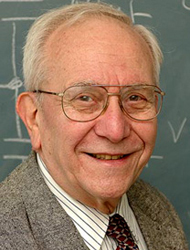 William Bertozzi合作论文数Massachusetts Institute of Technology75S. Nanda合作论文数72Demetrius Margaziotis合作论文数California State University71
 Werner U. Boeglin合作论文数Department of Physics, College of Arts, Sciences & Education, Florida International University71B. Moffit合作论文数70R. Böhm合作论文数69D. Meekins合作论文数69
 Zein-Eddine Meziani合作论文数Physics Division, Argonne National Laboratory, U.S. Department of Energy Office of Science69B. S. Schlimme合作论文数69B. Sawatzky合作论文数68Ramesh Subedi合作论文数68Jo Hansen合作论文数65S. Riordan合作论文数64
 A. Puckett合作论文数Univ Connecticut63
 Yao CHUN Qiang合作论文数Thomas Jefferson Natl Accelerator Facil, Newport News, VA 23606 USA63
 Ivica Friscic合作论文数Department of Physics, Faculty of Science, University of Zagreb62
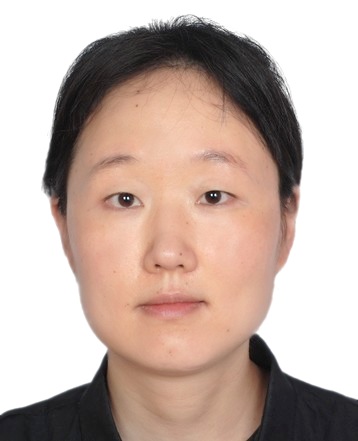 Xiaoning Zheng (郑小宁)合作论文数Department of Mathematics, College of Information Science and Technology, Jinan University62
 Zhaoting Ye合作论文数62R Lindgren合作论文数Univ Virginia, Charlottesville, VA 22904 USA61
 Alexandre Deur合作论文数Thomas Jefferson National Accelerator Facility61




