Net CO2 emissions and sequestration from European forests are the result of removal and growth of flora. To arrive at aggregated measurements of these processes at a country’s level, local observations of increments and harvest rates are up-scaled to national forest areas. Each country releases these statistics through their individual National Forest Inventory using their particular definitions and methodologies. In addition, five international processes deal with the harmonization and comparability of such forest datasets in Europe, namely the IPCC, SOEF, FAOSTAT, HPFFRE, FRA (definitions follow in the article). In this study, we retrieved living biomass dynamics from each of these sources for 27 European Union member states. To demonstrate the reproducibility of our method, we release an open source python package that allows for automated data retrieval and analysis, as new data becomes available. The comparison of the published values shows discrepancies in the magnitude of forest biomass changes for several countries. In some cases, the direction of these changes also differs between sources. The scarcity of the data provided, along with the low spatial resolution, forbids the creation or calibration of a pan-European forest dynamics model, which could ultimately be used to simulate future scenarios and support policy decisions. To attain these goals, an improvement in forest data availability and harmonization is needed.
High-throughput DNA sequencing technologies are increasingly used for the metagenomic characterisation of microbial biodiversity. However, basic issues, such as the choice of an appropriate DNA extraction method, are still not resolved for non-model microbial communities. This study evaluates four commonly used DNA extraction methods for marine periphyton biofilms in terms of DNA yield, efficiency, purity, integrity and resulting 16S rRNA bacterial diversity. Among the tested methods, the Plant DNAzol® Reagent (PlantDNAzol) and the FastDNA® SPIN Kit for Soil (FastDNA Soil) methods were best suited to extract high quantities of DNA (77-130 μg g wet wt-1). Lower amounts of DNA were obtained (<37 μg g wet wt-1) with the Power Plant® Pro DNA Isolation Kit (PowerPlant) and the Power Biofilm® DNA Isolation Kit (PowerBiofilm) methods, but integrity and purity of the extracted DNA were higher. Results from 16S rRNA amplicon sequencing demonstrate that the choice of a DNA extraction method significantly influences the bacterial community profiles generated. A higher number of bacterial OTUs were detected when DNA was extracted with the PowerBiofilm and the PlantDNAzol methods. Overall, this study demonstrates the potential bias in metagenomic diversity estimates associated with different DNA extraction methods.
Although an important fraction of the world’s lakes remains ice-covered during a large proportion of the year, little is known about the microorganisms that govern the biogeochemical processes occurring under-ice along the stratigraphic redox gradients. Reconstructed genomes provide evidence for anoxygenic photosynthesis involving fixation of carbon using reduced sulphur and iron as an electron donor in the anoxic zone of the sampled lake systems. In addition to anoxygenic photosynthesis, our molecular data reveals novel chemolithoautotrophic organisms and supports the existence of methanotrophs in bottom anoxic waters. Reconstructed genomes matched methanotrophs related to Methylobacter tundripaludum, phototrophic Chloroflexi and Chlorobia , as well as lithoautotrophic genomes affiliated to the Betaproteobacteria class and Planctomycetes phylum. Based on our in-depth characterization, complex metabolic interactomes emerge unique to each lake’s redox tower and with sulfur, iron and carbon cycling tightly intertwined through chemolithotrophy and anoxygenic photosynthesis.
Most free-living planktonic cells are streamlined and in spite of their limitations in functional flexibility, their vast populations have radiated into a wide range of aquatic habitats. Here we compared the metabolic potential of subgroups in the Alphaproteobacteria lineage SAR11 adapted to marine and freshwater habitats. Our results suggest that the successful leap from marine to freshwaters in SAR11 was accompanied by a loss of several carbon degradation pathways and a rewiring of the central metabolism. Examples for these are C1 and methylated compounds degradation pathways, the Entner-Doudouroff pathway, the glyoxylate shunt and anapleuretic carbon fixation being absent from the freshwater genomes. Evolutionary reconstructions further suggest that the metabolic modules making up these important freshwater metabolic traits were already present in the gene pool of ancestral marine SAR11 populations. The loss of the glyoxylate shunt had already occurred in the common ancestor of the freshwater subgroup and its closest marine relatives, suggesting that the adaptation to freshwater was a gradual process. Furthermore, our results indicate rapid evolution of TRAP transporters in the freshwater clade involved in the uptake of low molecular weight carboxylic acids. We propose that such gradual tuning of metabolic pathways and transporters toward locally available organic substrates is linked to the formation of subgroups within the SAR11 clade and that this process was critical for the freshwater clade to find and fix an adaptive phenotype.
Some bacteria can be preserved over time in deep sediments where they persist either in dormant or slow-growing vegetative stages. Here, we hypothesized that such cells can be revived when exposed to environmental conditions similar to those before they were buried in the sediments. To test this hypothesis, we collected bacteria from sediment samples of different ages (140-8500 calibrated years before present, cal BP) from three lakes that differed in the timing of their physical isolation from the Baltic Sea following postglacial uplift. After these bacterial communities were grown in sterile water from the Baltic Sea, we determined the proportion of 16S rRNA sequence reads associated with marine habitats by extracting the environment descriptive terms of homologous sequences retrieved from public databases. We found that the proportion of reads associated with marine descriptive term was significantly higher in cultures inoculated with sediment layers formed under Baltic conditions and where salinities were expected to be similar to current levels. Moreover, a similar pattern was found in the original sediment layers. Our study, therefore, suggests that remnants of marine bacterial communities can be preserved in sediments over thousands of years and can be revived from deep sediments in lakes of marine origin.
Understanding the distribution of taxa and associated traits across different environments is one of the central questions in microbial ecology. High-throughput sequencing (HTS) studies are presently generating huge volumes of data to address this biogeographical topic. However, these studies are often focused on specific environment types or processes leading to the production of individual, unconnected datasets. The large amounts of legacy sequence data with associated metadata that exist can be harnessed to better place the genetic information found in these surveys into a wider environmental context. Here we introduce a software program, seqenv, to carry out precisely such a task. It automatically performs similarity searches of short sequences against the "nt" nucleotide database provided by NCBI and, out of every hit, extracts – if it is available – the textual metadata field. After collecting all the isolation sources from all the search results, we run a text mining algorithm to identify and parse words that are associated with the Environmental Ontology (EnvO) controlled vocabulary. This, in turn, enables us to determine both in which environments individual sequences or taxa have previously been observed and, by weighted summation of those results, to summarize complete samples. We present two demonstrative applications of seqenv to a survey of ammonia oxidizing archaea as well as to a plankton paleome dataset from the Black Sea. These demonstrate the ability of the tool to reveal novel patterns in HTS and its utility in the fields of environmental source tracking, paleontology, and studies of microbial biogeography. To install, go to: https://github.com/xapple/seqenv
Summary The bacterioplankton diversity in large rivers has thus far been under‐sampled despite the importance of streams and rivers as components of continental landscapes. Here, we present a comprehensive dataset detailing the bacterioplankton diversity along the midstream of the Danube River and its tributaries. Using 16S rRNA‐gene amplicon sequencing, our analysis revealed that bacterial richness and evenness gradually declined downriver in both the free‐living and particle‐associated bacterial communities. These shifts were also supported by beta diversity analysis, where the effects of tributaries were negligible in regards to the overall variation. In addition, the river was largely dominated by bacteria that are commonly observed in freshwaters. Dominated by the acI lineage, the freshwater SAR11 (LD12) and the P olynucleobacter group, typical freshwater taxa increased in proportion downriver and were accompanied by a decrease in soil and groundwater‐affiliated bacteria. Based on views of the meta‐community and River Continuum Concept, we interpret the observed taxonomic patterns and accompanying changes in alpha and beta diversity with the intention of laying the foundation for a unified concept for river bacterioplankton diversity.
Thousands of net-heterotrophic and strongly stratifying lakes dominate the boreal landscape. Besides their central role as emitters of greenhouse gases, we have only recently begun to understand the microbial systems driving the metabolic processes and elemental cycles in these lakes. Using shotgun metagenomics, we show that the functional potential differs among lake types, with humic lakes being particularly enriched in carbon degradation genes. Most of the metabolic pathways exhibit oxygen- and temperature-dependent stratification over depth, coinciding with shifts in bacterial community composition, implying that stratification is a major factor controlling lake metabolism. In the bottom waters, rare and poorly characterized taxa, such as ε-Proteobacteria, but also autotrophs, such as photolithotrophic Chlorobia were abundant. These oxygen-depleted layers exhibited high genetic potential for mineralization, but also for fixation of carbon and nitrogen, and genetic markers for both methane production and oxidation were present. Our study provides a first glimpse of the genetic versatility of freshwater anoxic zones, and demonstrates the potential for complete turnover of carbon compounds within the water column.
As new sequencing technologies become cheaper and older ones disappear, laboratories switch vendors and platforms. Validating the new setups is a crucial part of conducting rigorous scientific research. Here we report on the reliability and biases of performing bacterial 16S rRNA gene amplicon paired-end sequencing on the MiSeq Illumina platform. We designed a protocol using 50 barcode pairs to run samples in parallel and coded a pipeline to process the data. Sequencing the same sediment sample in 248 replicates as well as 70 samples from alkaline soda lakes, we evaluated the performance of the method with regards to estimates of alpha and beta diversity. Using different purification and DNA quantification procedures we always found up to 5-fold differences in the yield of sequences between individually barcodes samples. Using either a one-step or a two-step PCR preparation resulted in significantly different estimates in both alpha and beta diversity. Comparing with a previous method based on 454 pyrosequencing, we found that our Illumina protocol performed in a similar manner – with the exception for evenness estimates where correspondence between the methods was low. We further quantified the data loss at every processing step eventually accumulating to 50% of the raw reads. When evaluating different OTU clustering methods, we observed a stark contrast between the results of QIIME with default settings and the more recent UPARSE algorithm when it comes to the number of OTUs generated. Still, overall trends in alpha and beta diversity corresponded highly using both clustering methods. Our procedure performed well considering the precisions of alpha and beta diversity estimates, with insignificant effects of individual barcodes. Comparative analyses suggest that 454 and Illumina sequence data can be combined if the same PCR protocol and bioinformatic workflows are used for describing patterns in richness, beta-diversity and taxonomic composition.
The HTSstation analysis portal is a suite of simple web forms coupled to modular analysis pipelines for various applications of High-Throughput Sequencing including ChIP-seq, RNA-seq, 4C-seq and re-sequencing. HTSstation offers biologists the possibility to rapidly investigate their HTS data using an intuitive web application with heuristically pre-defined parameters. A number of open-source software components have been implemented and can be used to build, configure and run HTS analysis pipelines reactively. Besides, our programming framework empowers developers with the possibility to design their own workflows and integrate additional third-party software. The HTSstation web application is accessible at http://htsstation.epfl.ch.
The bacterioplankton diversity in large rivers has thus far been undersampled, despite the importance of streams and rivers as components of continental landscapes. Here, we present a comprehensive dataset detailing the bacterioplankton diversity along the midstream of the Danube River and its tributaries. Using 16S rRNA-gene amplicon sequencing, our analysis revealed that bacterial richness and evenness gradually declined downriver in both the free-living and particle-associated bacterial communities. These shifts were also supported by beta diversity analysis, where the effects of tributaries were negligible in regards to the overall variation. In addition, the river was largely dominated by bacteria that are commonly observed in freshwaters. Dominated by the acI lineage, the freshwater SAR11 (LD12) and the Polynucleobacter group, typical freshwater taxa increased in proportion downriver and were accompanied by a decrease in soil and groundwater bacteria. Based on the River Continuum Concept, we explain these taxonomic patterns and the accompanying changes in alpha and beta diversity by the physical structure and chemical conditions coupled with the hydrologic cycle along the length of the river.(version 2.1 resubmitted to Environmental Microbiology 2014-Nov-17)
Aim: In molecular microbial ecology, pyrosequencing is gradually supplanting classical fingerprinting techniques such as terminal-restriction fragment length polymorphism (T-RFLP) combined with cloning-sequencing for enhanced characterization of microbiomes. Here, the PyroTRF-ID software was developed as a high-throughput approach to combine pyrosequencing and T-RFLP for the description of microbial communities with optimized lab and computational efforts. In contrast to existing bioinformatics methods for phylogenetic affiliation of T-RFs, the proposed strategy aims at conserving the entire microbial information contained in the samples taken from the investigated environments. Methods: PyroTRF-ID was encoded on the Vital-IT high performance computing platform of the Swiss Institute for Bioinformatics for mapping and massive digital T-RFLP profiling of full pyrosequencing datasets, for comparing digital and experimental fingerprints obtained from the same DNA extracts, and for identifying contributions of phylotypes to T-RFs. The method was used to characterize bacterial communities in groundwater samples from aquifers contaminated by chloroethenes and in aerobic granular sludge biofilm from wastewater treatment systems. Each DNA extract was subjected to amplification of 500 bp fragments of 16S rRNA gene pools, T-RFLP with HaeIII endonuclease, 454 tag encoded FLX amplicon pyrosequencing and PyroTRF-ID analysis. Greengenes was selected as mapping database. Results: PyroTRF-ID was efficient for high-throughput mapping and digital T-RFLP profiling of pyrosequencing datasets. After denoising, 20 min were required to reprocess at least 15 datasets of 6’000 to 35’000 reads of 500 bp. Digital and experimental profiles were aligned with maximum cross-correlation coefficients of 0.71 and 0.92 for high-complexity groundwater respectively low-complexity synthetic wastewater environments. 63±23% respectively 61±12% of all experimental T-RFs (73±16 and 47±14 peaks per sample) were affiliated to phylotypes. Bacterial dynamics were then optimally elucidated by T-RFLP. Conclusions: PyroTRF-ID enables high-throughput matching of pyrosequencing and T-RFLP datasets, and affiliation of T-RFs to precise phylotypes. This methodology is efficient for optimizing laboratory and computational efforts for high-resolved description of microbial community dynamics in various systems such as the ones investigated in environmental and medical sciences. Acknowledgements This research was financed by the Swiss National Science Foundation, Grants No. 120536, 138148 and 120627. We are grateful to Ioannis Xenarios for support at the Vital-IT High Performance Computing Center of the Swiss Institute for Bioinformatics.
Background In molecular microbial ecology, massive sequencing is gradually replacing classical fingerprinting techniques such as terminal-restriction fragment length polymorphism (T-RFLP) combined with cloning-sequencing for the characterization of microbiomes. Here, a bioinformatics methodology for pyrosequencing-based T-RF identification (PyroTRF-ID) was developed to combine pyrosequencing and T-RFLP approaches for the description of microbial communities. The strength of this methodology relies on the identification of T-RFs by comparison of experimental and digital T-RFLP profiles obtained from the same samples. DNA extracts were subjected to amplification of the 16S rRNA gene pool, T-RFLP with the Hae III restriction enzyme, 454 tag encoded FLX amplicon pyrosequencing, and PyroTRF-ID analysis. Digital T-RFLP profiles were generated from the denoised full pyrosequencing datasets, and the sequences contributing to each digital T-RF were classified to taxonomic bins using the Greengenes reference database. The method was tested both on bacterial communities found in chloroethene-contaminated groundwater samples and in aerobic granular sludge biofilms originating from wastewater treatment systems. Results PyroTRF-ID was efficient for high-throughput mapping and digital T-RFLP profiling of pyrosequencing datasets. After denoising, a dataset comprising ca. 10′000 reads of 300 to 500 bp was typically processed within ca. 20 minutes on a high-performance computing cluster, running on a Linux-related CentOS 5.5 operating system, enabling parallel processing of multiple samples. Both digital and experimental T-RFLP profiles were aligned with maximum cross-correlation coefficients of 0.71 and 0.92 for high- and low-complexity environments, respectively. On average, 63±18% of all experimental T-RFs (30 to 93 peaks per sample) were affiliated to phylotypes. Conclusions PyroTRF-ID profits from complementary advantages of pyrosequencing and T-RFLP and is particularly adapted for optimizing laboratory and computational efforts to describe microbial communities and their dynamics in any biological system. The high resolution of the microbial community composition is provided by pyrosequencing, which can be performed on a restricted set of selected samples, whereas T-RFLP enables simultaneous fingerprinting of numerous samples at relatively low cost and is especially adapted for routine analysis and follow-up of microbial communities on the long run.
 Alexander Eiler合作论文数Limnology/Department of Ecology and Evolution, Evolutionary Biology Centre, Norbyv. 20, SE-75236 Uppsala, Sweden9
 Lefebvre Gregory合作论文数3
 Stefan Bertilsson合作论文数Swedish University of Agricultural Sciences (SLU)3Jacques Rougemont合作论文数3
 Umer Zeeshan Ijaz合作论文数Mazumdar-Shaw Advanced Research Centre, University of Glasgow;University of Liverpool;James Watt School of Engineering, University of Glasgow3
 Noam Shani合作论文数Agroscope2
 Robert H. Mach合作论文数Department of Radiology, Perelman School of Medicine, University of Pennsylvania2
 Christof Holliger合作论文数Ecole Polytechnique Federale de Lausanne2
 Blaschke Alfred P合作论文数Inst Hydraul Engn & Water Resources Management, Vienna Univ Technol2
 Philipp Stadler合作论文数2
 Domenico Savio合作论文数2
 Sari Peura合作论文数2
 David Gregory Weissbrodt合作论文数Department of Biotechnology, Faculty of Applied Sciences, Delft University of Technology2Pierre Rossi合作论文数Laboratory for Environmental Biotechnology, Ecole Polytechnique Fédérale de Lausanne (EPFL)2
 Georg Heinze合作论文数Institute of Clinical Biometrics, Center for Medical Statistics, Informatics and Intelligent Systems, Medizinische Universitat Wien2
 Andreas Farnleitner合作论文数Interuniversity Cooperation Centre for Water & Health, Institute of Chemical, Environmental and Biological Engineering, Vienna University of Technology;Division Water Quality and Health, Karl Landsteiner University of Health Sciences2
 Günter Blöschl合作论文数Institute of Hydraulic Engineering and Water Resources Management, Vienna University of Technology;Centre for Water Resource Systems, Vienna University of Technology2
 Alexander Kirschner合作论文数Institute of General Biology;University of Vienna;Institute of General Biology, University of Vienna2
 Julien Maillard合作论文数2David Torrents合作论文数1Pilar Hernández合作论文数1
 Chris Quince合作论文数Earlham Institute1Martha Schattenhofer合作论文数1
 Katherine D. McMahon合作论文数Department of Bacteriology, University of Wisconsin-Madison1
 Yinghua Zha合作论文数Centre for Translational Microbiome Research, Karolinska Institute1
 Paul Rougieux合作论文数European Commiss, Joint Res Ctr JRC1
 Patrick Schwientek合作论文数DOE Joint Genome Inst, Walnut Creek, CA USA1
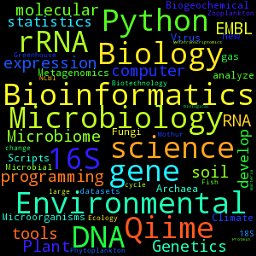 Md Sainur Samad合作论文数Inst Biodivers, Heinrich von Thunen Inst1
 Natalia Corcoll合作论文数Institute of Aquatic Ecology, University of Girona1
 Ramunas Stepanauskas合作论文数Single Cell Genomics Center, Bigelow Laboratory for Ocean Sciences1
 Siv Andersson合作论文数Department of Cell and Molecular Biology, Uppsala University1
 Pavloudi Christina合作论文数Hellenic Centre for Marine Research;University of Ghent, University of Bremen;University of Ghent, University of Bremen1
 Comte Jérôme合作论文数Groupe de Recherche Interuniversitaire en Limnologie (GRIL),, Université du Québec à Montréal1Carat Solenne合作论文数1
 Anastasis Oulas合作论文数Institute of Molecular Biology and Biotechnology-FORTH, Heraklion, Crete, Greece.1
 Daan Noordermeer合作论文数Sch Life Sci, Fed Inst Technol1
 Eva Lindström合作论文数Institutionen for Ekologi Och Genetik, Uppsala Universitet1
 Tanja Woyke合作论文数Joint Genome Institute, Lawrence Berkeley National Laboratory;School of Natural Sciences, University of California Merced1
 Alica Chronakova合作论文数1
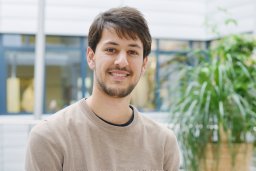 Weimann Aaron合作论文数Department of Algorithmic Bioinformatics, Heinrich Heine University Düsseldorf1Osman Omneya A合作论文数1
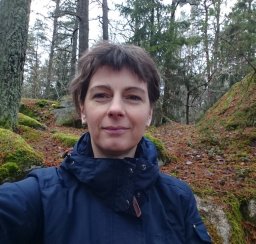 Mondav Rhiannon合作论文数School of Chemistry and Molecular Biosciences, University of Queensland1Jarosz Yohan合作论文数School of Life Sciences, Ecole Polytechnique Fédérale de Lausanne (EPFL),;Swiss Institute of Bioinformatics (SIB), Lausanne, Switzerland.;School of Life Sciences, Swiss Institute of Bioinformatics (SIB),1Delafontaine Julien合作论文数1Ali Zeeshan Ijaz合作论文数1
 Lars Juhl Jensen合作论文数Novo Nordisk Foundation Center for Protein Research, University of Copenhagen1
 Julia Schnetzer合作论文数Plötzlich Wissen!1
 Evangelos Pafilis合作论文数European Molecular Biology Laboratory, Heidelberg, Germany1
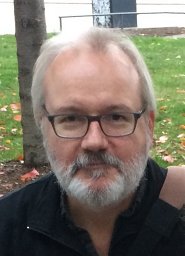 Douglas G. Scofield合作论文数Department of Biology;Indiana University;Department of Biology, Indiana University1




