This study reports on the findings of a mixed methods study that was undertaken to establish student perceptions of academic learning environments and the perceived impact of these on their articulation of employability skills. This was so student perspectives on employability could be used to inform reflection on pedagogic practices for their educators in higher education. Using a purposive sample of 250 students based in a recently modernised Sciences Complex Building in a Higher Education Institution (HEI), the study was cross sectional and descriptive by design. The social learning spaces researched were perceived by participants to provide optimal academic learning environments for their development of knowledge, skills and professionalism through certain signature pedagogies as they progressed through their programmes of study. Students also expressed the view that their acquisition of functional skills were significantly more important than any personal attributes/characteristics that they brought to programmes. What also mattered was whether the importance of certain graduate skills to the workplace had been made explicit to them so that they could see the relevance of their studies to practice. In defining 'graduateness', in employability terms the research concluded that it was necessary to consider how it was shaped by the context of delivery of subject disciplines, stages of academic progression, and the use of social learning spaces, as they all had a significant impact on the perceptions students held about their potential employability upon completion of their academic programmes.
A major aspect of staff development identified at the start of the 2010/11 academic session in the department of Computing, Engineering and Technology at the University of Sunderland was to develop the concept of the inspiring teacher. The motivations to address this concept primarily centred on the teaching of the computing disciplines and evolved from a desire to inspire students to learn and to want to learn and to enthuse them about their subjects. Additionally there were pragmatic motivations around student retention, employability and NSS results. This paper reviews the preliminary findings gathered from students and staff in 2011. Initial findings and comparisons indicate that there are both similarities and differences between student and staff perceptions in what is inspirational – and that these differences relate to both personality traits and to approaches used in curriculum delivery. Students were clear about what they felt to be non-inspiring teaching, yet from our very early discussions with academic staff, they were less clear about what is non-inspiring. The paper examines the preliminary findings and begins to consider reasons for the differences in perception between staff and students. Taking the project forward into 2012 the identified priorities, the comparison of different perspectives and the common themes will be used to create a series of staff development workshops. The purpose of the workshops will be to encourage staff to reflect on their practice and develop a common understanding of what it means to be an inspiring teacher and to implement changes where appropriate which will lead to more inspirational teaching for our students.
This paper describes a number of ‘good ideas’ designed to assist staff who are involved in the management, delivery or support of student project work. The ideas were formed from a Disciplinary Commons. The good ideas discussed include online forums, a project repository, alternative project structures, project preparation, progress reviews, instant supervision, peer support and anti-cheating mechanisms. Readers are encouraged to dip in, consider the ideas and implement those of most use for their own institutions.
'Integration' can mean the combining of elements in equal measure into a unified whole, or the act of integrating ethnic groups through behavioural and attitudinal change in order to 'fit' with dominant cultural norms. If Higher Education Institutions (HEI) are to properly embrace internationalisation, the former notion of equal participation is required so that international and home students and staff all engage in intercultural interaction and learning and work together to create new perspectives and values. This chapter addresses the reality of the international student experience: arriving with high expectations, students discover that where language and culture differ from the host nation's, difficulties often arise. Previous research has analysed the barriers they face in entering Western social, academic and workplace environments. Here, we suggest that the need to overcome these barriers can be the motivation to increase knowledge of self and other, explore cultural identities and practise language. We argue though that opportunities for improving linguistic and intercultural competence must be created and managed in order to engage both international and UK participants in the interaction. Without deliberate intervention, international students may remain isolated, their achievements compromised and contribution unrecognised. We present two models of intervention and discuss the students' perceptions of their impact.
The work described here initially formed part of a triangulation exercise to establish the effectiveness of the Query Term Order algorithm. It subsequently proved to be a reliable indicator for summarising English web documents. We utilised the human summaries from the Document Understanding Conference data, and generated queries automatically for testing the QTO algorithm. Six sentence weighting schemes that made use of Query Term Frequency and QTO were constructed to produce system summaries, and this paper explains the process of combining and balancing the weighting components. The summaries produced were evaluated by the ROUGE-1 metric, and the results showed that using QTO in a weighting combination resulted in the best performance. We also found that using a combination of more weighting components always produced improved performance compared to any single weighting component.
Students studying in Higher Education establishments around the world are increasingly required to interact with Virtual Learning Environments (VLEs) for their education, yet it is not widely understood whether or not factors such as language and culture affect the interaction and even perhaps place some students at a disadvantage to others. This study sought to elicit from students from various educational, cultural and linguistic backgrounds, their experiences and attitudes towards working within this medium. The results showed that language and culture do impact upon a person’s interaction with online materials and the primary research largely supported the work uncovered in the literature survey.
The aim of our research is to produce and assess short summaries to aid users' relevance judgements, for example for a search engine result page. In this paper we present our new metric for measuring summary quality based on representativeness and judgeability, and compare the summary quality of our system to that of Google. We discuss the basis for constructing our evaluation methodology in contrast to previous relevant open evaluations, arguing that the elements which make up an evaluation methodology: the tasks, data and metrics, are interdependent and the way in which they are combined is critical to the effectiveness of the methodology. The paper discusses the relationship between these three factors as implemented in our own work, as well as in SUMMAC/MUC/DUC.
In this paper, we describe the HAPPI (Helping Aphasic People Process Information) project which aims to develop web based systems to help Aphasic people gain access to web based information such as online news stories. It does this by simplifying the language and providing alternative means to help jog users' memories and hence improve their comprehension of the online material.
In this paper we describe an approach for spoken language analysis for helpdesk call routing using a combination of simple recurrent networks and support vector machines. In particular we examine this approach for its potential in a difficult spoken language classification task based on recorded operator assistance telephone utterances. We explore simple recurrent networks and support vector machines using a large, unique telecommunication corpus of spontaneous spoken language. The main contribution of the paper is a combination of techniques in the domain of call routing. First, we find that simple recurrent networks perform better than support vector machines for this task. Second, we claim that the combination of simple recurrent networks and support vector machines provides slightly improved performance compared to the performance of either simple recurrent networks or support vector machines.
We report on two experiments performed to test the importance of Term Order in automatic summarisation. Experiment one was undertaken as part of DUC 2004 to which three systems were submitted, each with a different summarisation approach. The system that used document Term Order outperformed those that did not use Term Order in the ROUGE evaluation. Experiment two made use of human evaluations of search engine results, comparing our Query Term Order summaries with a simulation of current Google search engine result summaries in terms of summary quality. Our QTO system's summaries aided users' relevance judgements to a significantly greater extent than Google's.
In this paper we describe our participation in task 1-very short single-document summaries in DUC 2004. The task chosen is related to our research project, which aims to produce abstracting summaries to improve search engine result summaries. DUC allowed us to produce summaries no longer than 75 characters, therefore we focused on feature selection to produce a set of key words as summaries instead of complete sentences. Three descriptions of our summarisers are given. Each of the summarisers performs very differently in the six ROUGE metrics. One of our summarisers which uses a simple algorithm to produce summaries without any supervised learning or complicated NLP technique performs surprisingly well among different ROUGE evaluations. Finally we give an analysis of ROUGE and participants’ results. ROUGE is an automatic evaluation of summaries package, which uses n-gram matching to calculate the overlapping between machine and human summaries, and indeed saves time for human evaluation. However, the different ROUGE metrics give different results and it is hard to judge which is the best for automatic summaries evaluation. Also it does not include complete sentences evaluation. Therefore we suggest some work needs to be done on ROUGE in the future to make it really effective.
 John I. Tait合作论文数Information Retrieval Facility in Vienna6Diane Westwood合作论文数5
 Shao Fen Liang合作论文数School of Computing and Technology, The University of Sunderland4
 John A. Carroll合作论文数Department of Computational Linguistics and Informatics, School of Engineering and Informatics, University of Sussex3Yvonne Canning合作论文数3Catherine Hayes合作论文数2catherine hayes合作论文数2
 Thomas Lancaster合作论文数Department of Computing, Imperial College London2
 Alastair Irons合作论文数Northumbria University2
 Leonor Barroca合作论文数The Open University2Tony Jenkins合作论文数2
 Darren Pearce合作论文数University of Sussex2Guido Minnen合作论文数2jeanluc cochard合作论文数1Andrew Bredenkamp合作论文数1philip beardmore合作论文数1iain garfield合作论文数1Michael Collins合作论文数1Nicola Peacock合作论文数1
 Judith Klein-Seetharaman合作论文数College of Health Solutions, Arizona State University;School of Molecular Sciences, Arizona State University1
 Jean-Pierre Koenig合作论文数Department of Linguistics, College of Arts and Sciences, University at Buffalo1
 Scott Schwenter合作论文数Ohio State University1
 Catherine Victoria Hayes合作论文数Zoology Department;University of Glasgow;Laboratory of Notre Dame;Laboratory of Notre Dame, University of Glasgow1Sheila Garfield合作论文数School of Computing and Technology, Centre for Hybrid Intelligent Systems, University of Sunderland1
 Gilles Fauconnier合作论文数1
 Joost Schilperoord合作论文数Communication & Cognition Research Group;Faculty of Humanities;Communication & Cognition Research Group|Faculty of Humanities1Klaus Netter合作论文数1
 Lewis Bingle合作论文数School of Biosciences, University of Birmingham1
 Stefan Wermter合作论文数Department of Computer Science; University of Dortmund1
 Elisabeth Murisasco合作论文数Université de Toulon1Joe Grady合作论文数1
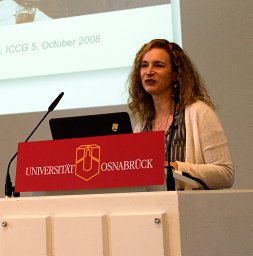 Laura A. Michaelis合作论文数University of Colorado at Boulder1
 Knud Lambrecht合作论文数Rice University1Jacques Le Maitre合作论文数Université du Sud Toulon-Var1




