Three anionic fluorene-based alternating conjugated polyelectrolytes (CPEs) have been synthesized that have 9,9-bis(4-phenoxy-butylsulfonate) fluorene-2,7-diyl and 1,4-phenylene (PBS-PFP), 4,4′-biphenylene (PBS-PFP2), or 4,4″-p-terphenylene (PBS-PFP3) groups, and the effect of the length of the oligophenylene spacer on their aggregation and photophysics has been studied. All form metastable dispersions in water, but can be solubilized using methanol, acetonitrile, or dioxane as cosolvents. This leads to increases in their emission intensities and blue shifts in fluorescence maxima due to break-up of aggregates. In addition, the emission maximum shifts to the blue and the loss of vibronic structure are observed when the number of phenylene rings is increased. Debsity Functional Theory (DFT) calculations suggest that this is due to increasing conformational flexibility as the number of phenylene rings increases. This is supported by increasing amplitude in the fast component in the fluorescence decay. The nonionic surfactant n-dodecylpentaoxyethylene glycol ether (C12E5) also breaks up aggregates, as seen by changes in fluorescence intensity and maximum. However, the loss in vibrational structure is less pronounced in this case, possibly due to a more rigid environment in the mixed surfactant-CPE aggregates. Further information on the aggregates formed with C12E5 was obtained by electrical conductivity measurements, which showed an initial increase in specific conductivity upon addition of surfactants, while at higher surfactant/CPE molar ratios a plateau was observed. The specific conductance in the plateau region decreased in the order PBS-PFP3 < PBS-PFP2 < PBS-PFP, in agreement with the change in charge density on the CPE. The reverse process of aggregate formation has been studied by injecting small volumes of solutions of CPEs dissolved at the molecular level in a good solvent system (50% methanol-water) into the poor solvent, water. Aggregation was monitored by changes in both fluorescence and light scattering. The rate of aggregation increases with hydrophobicity and concentration of sodium chloride but is only weakly dependent on temperature.
Poly(3,4-ethylenedioxythiophene) (PEDOT) has been electrochemically polymerized from 3,4-ethylenedioxythiophene (EDOT) monomers through a vertically oriented mesoporous silica matrix previously formed on FTO electrodes. The mesoporous silica thin films with pore channels of 3nm in diameter, closely packed in a hexagonal arrangement, were obtained by electrochemically-assisted self-assembly (EASA). The mesoporous silica/PEDOT films were characterized by SEM and TEM microscopy and by cyclic voltammety. They were also used to construct electrochromic devices (ECDs), which were fully characterized for switching speed, coloration efficiencies, and cycling and voltammetric responses.
In this paper we report the synthesis of a series of double-tailed BODIPY5 bearing twin alkoxy groups with long linear alkyl side chains (C10, C12, C14, C16) attached to the meso positioned phenyl unit. The compounds were fully characterized and exhibited the typical BODIPY strong absorbance in the visible region and emission maxima around 530 nm, with high fluorescence quantum yields (ca. 0.8) and small Stokes shifts. The goal was to improve the lipophilicity of the BODIPY5 without disturbing their excellent fluorescent properties. All synthetized BODIPYs were tested in vivo as fluorescent sensors for lipids and one of them (BD-C12) showed great potential to act as a lipid fluorescent probe. (C) 2017 Elsevier B.V. All rights reserved.
We report on a multiscale polymer-within-polymer structure of the cationic conjugated polyelectrolyte poly{[9,9-bis(6′-N,N,N-trimethylammonium)hexyl]fluorene–phenylene} (HTMA-PFP) in aqueous poly(vinyl alcohol) (PVA) sol. Molecular dynamics simulations and small-angle neutron scattering (SANS) data show that HTMA-PFP forms aggregates in water but becomes entangled by PVA (with a 1:1 molar ratio of HTMA-PFP to PVA) and eventually immersed in PVA clusters (with the ratio 1:4). This is attributed to the hydrophobic–hydrophilic balance. Contrast variation data with regular and deuterated PVA support a rigid body model, where HTMA-PFP is confined as locally isolated, but closely located, chains within PVA clusters, which alter correlation distances within the system. These results are supported by enhanced photoluminescence (PL) and ionic conductivity which, together with a red-shift in UV/vis absorption spectra, indicate the breakup of HTMA-PFP aggregates upon PVA addition.
Photodynamic therapy (PDT) is a selective and minimally invasive therapeutic approach, involving the combination of a light-sensitive compound, called a photosensitizer (PS), visible light and molecular oxygen. The interaction of these per se harmless agents results in the production of reactive species. This triggers a series of cellular events that culminate in the selective destruction of cancer cells, inside which the photosensitizer preferentially accumulates. The search for ideal PDT photosensitizers has been a very active field of research, with a special focus on porphyrins and porphyrin-related macrocycle molecules. The present study describes the photophysical characterization and in vitro phototoxicity evaluation of 5,10,15,20-tetra(quinolin-2-yl)porphyrin (2-TQP) as a potential PDT photosensitizer. Molar absorption coefficients were determined from the corresponding absorption spectrum, the fluorescence quantum yield was calculated using 5,10,15,20-tetraphenylporphyrin (TPP) as a standard and the quantum yield of singlet oxygen generation was determined by direct phosphorescence measurements. Toxicity evaluations (in the presence and absence of irradiation) were performed against HT29 colorectal adenocarcinoma cancer cells. The results from this preliminary study show that the hydrophobic 2-TQP fulfills several critical requirements for a good PDT photosensitizer, namely a high quantum yield of singlet oxygen generation (Φ∆ 0.62), absence of dark toxicity and significant in vitro phototoxicity for concentrations in the micromolar range.
Multinuclear ((1)H, (13)C, (95)Mo and (183)W) NMR spectroscopy, combined with DFT calculations, provides detailed information on the complexation between the Mo(VI) and W(VI) oxoions and 8-hydroxyquinoline-5-sulfonate (8-HQS) in aqueous solution. Over the concentration region studied, Mo(VI) and W(VI) oxoions form three homologous complexes with 8-HQS in water in the pH range 2-8. Two of these, detected at pH < 6, are mononuclear 1 : 2 (metal : ligand) isomers, with the metal centre (MO2(2+)) coordinated to two 8-HQS ligands. An additional complex, dominant at slightly higher pH values (5-8) for solutions with a 1 : 1 metal : ligand molar ratio, has a binuclear M2O5(2+) centre coordinated to two 8-HQS ligands. The two metal atoms are bridged by three oxygen atoms, two coming from 8-HQS, together with the M-O-M bridge of the bimetallic centre. We show that the long-range exchange corrected BOP functional with local response dispersion (LCBOPLRD), together with explicit solvent molecules, leads to geometries that readily converge to equilibrium structures having realistic bridging O8-HQS-M bonds. Previous attempts to calculate the structures of such binuclear complexes using DFT with the B3LYP functional have failed due to difficulties in treating the weak interaction in these bridged structures. We believe that the LCBOPLRD method may be of more general application in theoretical studies in related binuclear metal complexes. UV/visible absorption and luminescence spectra of all the complexes have also been recorded. The complex between Mo(vi) and 8-HQS is only weakly luminescent, in contrast to what has been observed with this ligand and many other metal ions. We suggest that this is due to the presence of low-lying ligand-to-metal charge transfer (LMCT) states close to the emitting ligand-based level which quench the emission. However, with W(VI), DFT calculations show that the LMCT states are now much higher in energy than the ligand based levels, leading to a marked increase in fluorescence.
The complexation of vanadium(v) with 8-HQS is accompanied by marked changes in the multinuclear NMR and UV/visible absorption spectra of 8-HQS, but does not lead to a significant increase in fluorescence.
The kinetically inert chromium(III) tris-(8-hydroxyquinolinate), Crq3, has been synthesized, crystallized from 90% methanol-water, and characterized by MALDI-TOF mass spectrometry, thermogravimetry, FTIR, NMR spectroscopy, and X-ray powder diffraction. It is formed as a methanol solvate, but the solvent can be removed by heating. Large paramagnetic shifts and spectral broadening in (1)H NMR spectra indicate electron delocalization between the metal and the ligand. DFT calculations show it is present as the meridional isomer, with the HOMO largely based on one of the metal 3d orbitals and the LUMO essentially localized on the ligands. Cyclic voltammetry (CV) in acetonitrile solutions shows four oxidation peaks and two, less intense reduction waves on the first scan. The HOMO energy determined from the first oxidation peak is fairly close to that obtained by DFT, in agreement with this being mainly metal based. Although the number of peaks decreases on subsequent CV scans, the complex shows markedly enhanced electrochemical stability compared with aluminium(III) tris-(8-hydroxyquinolinate). Solution UV/visible absorption and solid diffuse reflectance spectra have a weak, long wavelength band, assigned to the metal based d-d transition, in addition to the normal, ligand based bands seen in metal quinolates. The energy of the lowest energy band is identical to the HOMO-LUMO separation obtained by cyclic voltammetry, in agreement with the above description. The compound is only weakly luminescent, in contrast to many other metal quinolates, due to the lowest energy transition being metal rather than ligand based. The potential of this compound as an electron transporting/hole blocking layer in optoelectronic devices is indicated.
We report on the conjugated polyelectrolyte 12 mM poly[9,9-bis(4-sulfonylbutoxyphenyl) fluorene-2,7-diyl-2,2'-bithiophene] (PBS-PF2T) mixed in concentrated aqueous 680 mM tetraethylene glycol monododecyl ether (C12E4) in bulk and thin films. A blue-shift in the fluorescence spectrum demonstrates breakup of PBS-PF2T aggregates in bulk aqueous C12E4. Small-angle X-ray scattering data indicate that this mixture follows a very similar phase behaviour to binary mixtures of a pure surfactant with water, including a micellar phase below about 20 °C, a lamellar phase in between about 20 and 70 °C and a proposed coexistence of water and the liquid surfactant solution above 70 °C. Molecular dynamics simulations reproduce these transitions and suggest that PBS-PF2T is incorporated into the surfactant headgroup region, and is, on average, perpendicular to the alkyl chains. In wet thin films, grazing-incidence small-angle X-ray scattering shows that the phase window for the lamellar phase becomes much narrower, located at about 30-34 °C. Weakly ordered phases exist both below and above these temperatures. These phases are isotropic, but lamellae become aligned in a stacked manner on the surface whether approached from low or high temperatures. Dry films are disordered but can be reversibly ordered and disordered and aligned and misaligned by maintaining the temperature at 30-34 °C and switching relative outside humidity between 32% and 100%.
Multinuclear ((1)H, (13)C and (71)Ga) magnetic resonance spectroscopy (1D and 2D), DFT calculations and luminescence techniques have been used to study 8-hydroxyquinoline-5-sulfonate (8-HQS) and its complexes with Ga(III) in aqueous solutions. The study combines the high sensitivity of luminescence techniques and the selectivity of multinuclear NMR spectroscopy with the structural details accessible through DFT calculations, and aims to obtain a complete understanding of the complexation between the Ga(3+) ion and 8-HQS, and how this influences the luminescence behaviour. A full speciation study has been performed on this system and three complexes detected, with (metal : ligand) 1 : 1, 1 : 2 and 1 : 3 stoichiometries, the results being consistent with those previously found for the system Al(III)-8-HQS. Complexation in these systems is relevant to their potential biomedical, sensing and optoelectronic applications. On binding to Ga(III), a marked increase is seen in the intensity of the 8-HQS fluorescence band, which is accompanied by changes in the absorption spectra. These support the use of 8-HQS as a sensitive fluorescent sensor to detect Ga(3+) metal ions in surface waters, biological fluids, etc., and its metal complexes as an emitting or charge transport layer in light emitting devices. However, the fluorescence quantum yield of the Ga(III)-8-HQS 1 : 3 complex is about 35% of that of the corresponding system with Al(III). Although this may be due in part to a heavy atom effect favouring S(1)→ T(1) intersystem crossing with Ga(3+), this does not agree with transient absorption measurements on the triplet state yield, which is lower with the Ga(III) system than with Al(III). Instead, it is suggested that photolabilisation of ligand exchange plays a major role in nonradiative decay of the excited state and that this is more efficient with the Ga(3+) complex. Based on these results, suggestions are made of ways of enhancing fluorescence intensity in metal complexes with 8-HQS by inhibiting ligand exchange using surfactant complexation for applications in either sensing or optoelectronics.
Macromolecular Rapid CommunicationsVolume 34, Issue 9 p. 697-697 Cover PictureFree Access Macromol. Rapid Commun. 9/2013 Guangxue Feng, Guangxue Feng Department of Chemical and Biomolecular Engineering, 4 Engineering Drive 4, National University of Singapore, Singapore 117576Search for more papers by this authorJing Liang, Jing Liang Department of Chemical and Biomolecular Engineering, 4 Engineering Drive 4, National University of Singapore, Singapore 117576Search for more papers by this authorBin Liu, Corresponding Author Bin Liu [email protected] Department of Chemical and Biomolecular Engineering, 4 Engineering Drive 4, National University of Singapore, Singapore 117576 Institute of Materials Research and Engineering, 3 Research Link, Singapore 117602Department of Chemical and Biomolecular Engineering, 4 Engineering Drive 4, National University of Singapore, Singapore 117576.Search for more papers by this author Guangxue Feng, Guangxue Feng Department of Chemical and Biomolecular Engineering, 4 Engineering Drive 4, National University of Singapore, Singapore 117576Search for more papers by this authorJing Liang, Jing Liang Department of Chemical and Biomolecular Engineering, 4 Engineering Drive 4, National University of Singapore, Singapore 117576Search for more papers by this authorBin Liu, Corresponding Author Bin Liu [email protected] Department of Chemical and Biomolecular Engineering, 4 Engineering Drive 4, National University of Singapore, Singapore 117576 Institute of Materials Research and Engineering, 3 Research Link, Singapore 117602Department of Chemical and Biomolecular Engineering, 4 Engineering Drive 4, National University of Singapore, Singapore 117576.Search for more papers by this author First published: 02 May 2013 https://doi.org/10.1002/marc.201370027AboutPDF ToolsRequest permissionExport citationAdd to favoritesTrack citation ShareShare Give accessShare full text accessShare full-text accessPlease review our Terms and Conditions of Use and check box below to share full-text version of article.I have read and accept the Wiley Online Library Terms and Conditions of UseShareable LinkUse the link below to share a full-text version of this article with your friends and colleagues. Learn more.Copy URL Share a linkShare onEmailFacebookTwitterLinkedInRedditWechat Graphical Abstract Front Cover: Hyperbranched conjugated polyelectrolytes (HCPEs) possessing three-dimensional core-shell architecture can form single-molecular nanoparticles with amendable surface functional groups. Through further bioconjugation, HCPEs show wide biological applications, which include in vitro protein sensing, cell imaging, cell apoptosis detection, and in vivo fluorescence and magnetic resonance (MR) imaging. Further details can be found in the article by G. Feng, J. Liang, and B. Liu* on page 705. Volume34, Issue9Special Issue:Fluorescent BiosensorsMay 14, 2013Pages 697-697 RelatedInformation
The cationic, all-conjugated AB diblock copolymer poly[9,9-bis(2-ethylhexyl)fluorene]-b-poly[3-(6-trimethylammoniumhexyl) thiophene] bromide (PF2/6-b-P3TMAHT) shows dual fluorescence from the poly(fluorene) (PF) and poly(thiophene) (PT) blocks. A comparison of fluorescence quenching of the cationic PT block fluorescence with unquenched PF block provides a sensitive ratiometric method for anion sensing. The application to analysis of halide ions, single- and double-stranded DNA is demonstrated. High selectivity is observed with halide ions, with the strongest quenching being seen with iodide. The quenching with DNA can be used for nucleic acid quantification at sub-μM concentrations.
The fluorescence quenching of protonated β-carbolines has been investigated in acidic aqueous solutions and in w/o microemulsions using I − , Br − , Cu 2+ , SCN − , and Pb 2+ as quenchers. It was found that fluorescence quenching by these compounds is much more efficient in water than in microemulsions since quenching in microemulsions depends on the simultaneous occupancy of the water droplets by both fluorophore and quencher. Linear Stern-Volmer plots were obtained in all cases, leading to quenching rate constants of ca. 10 8 -10 10 M −1 s −1 in water and ca. 10 7 -10 8 M −1 s −1 in microemulsions. In the case of quenching by SCN − , ns flash photolysis studies indicate formation of (SCN) 2 ˙ − showing that at least part of the quenching process involves an electron transfer mechanism. This indicates that the singlet excited states of the protonated β-carbolines can act as relatively strong oxidants ( E ° > 1.6 V), capable of oxidizing many species, including the biologically relevant DNA base guanine. The observation of the (SCN) 2 ˙ − transient in microemulsions demonstrates that it is possible to have the protonated β-carboline and at least two thiocyanate ions in the same water pool.
Complexation of isotactic, syndiotactic, and atactic poly(methacrylic acid), PMA, with trivalent lanthanide ions has been studied in water at a degree of neutralization 0.5. Metal ion binding is shown by quenching of cerium(III) fluorescence, enhancement of Tb(III) luminescence, and lanthanide-induced line broadening in the PMA (1)H NMR spectra. Comparison with lanthanide-acetate complexation suggests carboxylate binds in a bidentate fashion, while Ce(III) luminescence quenching suggests an ≈3:1 carboxylate:metal ion stoichiometry, corresponding to charge neutralization. The presence of both free and bound Ce(III) cations in PMA solutions is confirmed from luminescence decays. Studies of Tb(3+) luminescence lifetime in H2O and D2O solutions show complexation is accompanied by loss of 5-6 water molecules, indicating that each bidentate carboxylate replaces two coordinated water molecules. The behavior depends on pH and polyelectrolyte stereoregularity, and stronger binding is observed with isotactic polyelectrolyte. Binding of cetylpyridinium chloride, CPC, in these systems is studied by luminescence, NMR, and potentiometry. NMR and Tb(3+) luminescence lifetime studies show the strongest binding with the isotactic polymer. Binding of surfactant to poly(methacrylate) in the presence of lanthanides is noncooperative, i.e., it binds to the free sites; binding isotherms in the presence of lanthanides are shifted to higher free surfactant concentrations, compared with sodium ions, have lower slopes and show a clear two-step binding mechanism. While CPC readily replaces the Na(+) ions of poly(methacrylate) and binds very strongly (low critical association concentrations), exchange is much more difficult with the strongly bound trivalent lanthanide ions. Effects of tacticity are seen, with surfactant interacting most strongly with isotactic chains in the initial stages of binding, while in the final stages of binding the interaction is strongest with atactic poly(methacrylate).
This chapter contains sections titled: Introduction Aggregation: from Disordered Clusters to Structured Vesicles Experimental Studies on Aggregation Conjugated Polyelectrolyte Aggregation in Solution Learning How to Control Aggregation Conclusions and Outlook References
The complexation of 8-hydroxyquinoline-5-sulfonic acid with cadmium(II) and mercury(II) has been studied in aqueous solutions using UV/visible absorption, fluorescence and H-1 NMR spectroscopy, accompanied by DFT calculations. Results are compared with the behavior of zinc(II) and show in all cases the dominant formation of a 1:2 (metal:ligand) complex. OFT calculations under PCM (water) conditions indicate a preference for hexacoordinated metal centers with two ligands and two water molecules. However, while the zinc(II) complex has a square bipyramidal geometry, with the two 8-HQS ligands and metal in the same plane and two coordinated water molecules mutually trans, with cadmium(II) and mercury(II), the isomers in which the water molecules are in the cis geometry are more stable. Changes in UV-Vis absorption, fluorescence spectra and fluorescence intensity are observed on complexation. Fluorescence quantum yields follow the order Zn/8-HQS < Cd/8-HQS > Hg/8-HQS. We believe two competing factors may be involved: an increase in fluorescence on going from Zn(II) to Cd(II) due to increased stability, and a decrease on going increasing atomic number of the metal ion due to the heavy atom effect which increases intersystem crossing. Triplet state quantum yields were measured for the Zn(II) and Cd(II) complexes, and the value for the cadmium(II) complex is higher, in agreement with the heavy atom effect. However, the sum of fluorescence and triplet quantum yields in these cases is less than unity. It is suggested that there is a competing non-radiative route for deactivation of the excited state through ligand or solvent exchange. This provides a ready explanation of increased fluorescence yields when meta1/8-HQS complexes are immobilized in solid matrices. (C) 2012 Elsevier Ltd. All rights reserved.
Films of neat and plasticized biodegradable poly(lactic acid) (PLA) matrices containing anionic conjugated polyelectrolytes, poly[9,9-bis(4-phenoxybutylsulfonate)]fluorene-2,7-diyl-alt-arylenes, with 1,4-phenylene and 4,4?-p-terphenylene, respectively, as arylene groups or a neutral poly(9,9-dialkylfluorene) for comparison were prepared by solution casting. These films were characterized using differential scanning calorimetry, thermogravimetry, scanning electron microscopy and fluorescence spectroscopy. In addition, the effects of plasticizer on the thermal properties and the oxygen permeability of the PLA films were measured through the oxygen transmission rate. Results show that it is possible to obtain thin, optically transparent and luminescent films with potential in oxygen sensing, exhibiting good thermal and photochemical stability. At high polyelectrolyte content, evidence is found for phase separation and aggregate formation and it is no longer possible to obtain completely homogeneous films. The possibility of incorporating the cationic metal complex tris(2,2'-bipyridyl)ruthenium(II) into plasticized PLA films containing conjugated polyelectrolytes for dual-wavelength ratiometric luminescence sensing is also discussed. Copyright (C) 2012 Society of Chemical Industry
Multinuclear ((1)H, (13)C and (27)Al) magnetic resonance spectroscopy (1D and 2D), DFT calculations and fluorescence have been used to study the complexation of 8-hydroxyquinoline-5-sulfonate (8-HQS) with Al(III). The study combines the high sensitivity of luminescence techniques, the selectivity of multinuclear NMR spectroscopy with the structural details accessible through DFT calculations, and aims to provide a detailed understanding of the complexation between the Al(3+) ion and 8-HQS. A full speciation study has been performed and over the concentration region studied, the Al(3+) ion forms complexes with 8-HQS in an aqueous solution in the pH range 2-6. At higher pH, the extensive hydrolysis of the metal limits complexation. Using Job's method, three complexes were detected, with 1 : 1, 1 : 2 and 1 : 3 (metal : ligand) stoichiometries. These results are in agreement with those previously reported using potentiometric and electrochemical techniques. The geometries of the complexes are proposed based on the combination of NMR results with optimized DFT calculations. All the complexes in aqueous solutions at 25 °C are mononuclear species, and have an approximately octahedral geometry with the metal coordinated to one molecule of 8-HQS and four molecules of water (1 : 1 complex), two molecules of 8-HQS and two molecules of water mutually cis (1 : 2 complex), and to three molecules of 8-HQS in non-symmetrical arrangement (mer-isomer), for the 1 : 3 (metal : ligand) complex. On binding to Al(III), 8-HQS shows a more marked fluorescence than the weakly fluorescent free ligand. In addition, as previously noted, there are marked changes in the absorption spectra, which support the use of 8-HQS as a sensitive optical sensor to detect Al(3+) metal ions in surface waters and biological fluids. These complexes also show potential for applications in organic light emitting diodes (OLEDs).
 Hugh Burrows合作论文数Department of Chemistry, University of Coimbra38
 Ullrich Scherf合作论文数School of Mathematics and Natural Sciences, University of Wuppertal13
 Matti Knaapila合作论文数Department of Physics;University of Durham;Department of Physics, University of Durham12
 M. Luísa Ramos合作论文数Department of Chemistry, University of Coimbra12
 Licinia L G Justino合作论文数9
 Maria Jose Tapia合作论文数8
 Artur J. M. Valente合作论文数Department of Chemistry;University of Coimbra;Department of Chemistry, University of Coimbra7
 Andy Monkman合作论文数Department of Physics, Faculty of Science, Durham University6
 Sérgio Seixas de Melo合作论文数Department of Chemistry, University of Coimbra6
 Swapna Pradhan合作论文数6Terence J. Kemp合作论文数5Samina Ahmed合作论文数5
 Pat Unwin合作论文数Department of Chemistry, University of Warwick5
 Ricardo Castro合作论文数Facultad de Medicina, Pontificia Universidad Católica de Chile4Andrea Gutacker合作论文数4
 Beverly Stewart合作论文数4
 Abilio Sobral合作论文数Universidade de Coimbra4
 Claudia Silva合作论文数3S Pradhan合作论文数3
 Joao Martins Pina合作论文数Departamento de Química, Universidade de Coimbra3
 Claudia Arranja合作论文数3Telma Costa合作论文数3
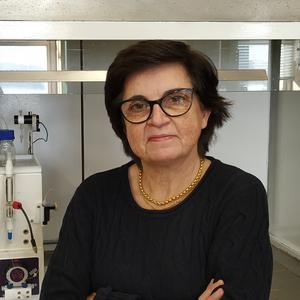 Teresa Margarida Vasconcelos Dias de Pinho e Melo合作论文数Department of Chemistry, University of Coimbra3
 Ricardo Mallavia合作论文数Instituto de Biología Molecular y Celular, Universidad Miguel Hernández3Joana Pragana合作论文数2
 Liliana Martelo合作论文数2
 Jorge L G F S Costa Pereira合作论文数2
 Guillermo C. Bazan合作论文数Department of Chemistry, Faculty of Science, National University of Singapore2
 Fernando Baiao Dias合作论文数Department of Physics, Faculty of Science, Durham University2
 Song Qiu合作论文数2de Sousa Andreia R E合作论文数2Marques Ana T合作论文数2
 Vasil Garamus合作论文数Department of Structural Research on Macromolecules, Helmholtz-Zentrum Hereon2
 Jorge Morgado合作论文数2
 Nitin Chattopadhyay合作论文数Department of Chemistry, Jadavpur University2Mika Torkkeli合作论文数2
 Ana M. Urbano合作论文数Faculdade de Ciências e Tecnologia, Universidade de Coimbra2
 Cláudio M. Nunes合作论文数Department of Chemistry, University of Coimbra2M. Emília Azenha合作论文数Departamento de Química, Universidade de Coimbra2
 Paulo E. Abreu合作论文数Department of Chemistry, University of Coimbra2
 Dina Maria Bairrada Murtinho合作论文数Department of Chemistry, University of Coimbra2
 Sylwia Adamczyk合作论文数Macromolecular Chemistry Group, Bergische Universität Wuppertal2
 Ana Charas合作论文数2M. Alexandra Esteves合作论文数2
 Rachel C. Evans合作论文数Department of Materials Science & Metallurgy, University of Cambridge;Senoptica Technologies2Sarah E. Rogers合作论文数2Jan Perlich合作论文数Department E13, Technische Universität München2José Rovisco合作论文数2
 Ksenija Kogej合作论文数Department of Chemistry and Biochemistry;Faculty of Chemistry and Chemical Technology;University of Ljubljana;Faculty of Chemistry and Chemical Technology, University of Ljubljana2




