Modern welfare states are rebuilding their capacity through “war‑dimensioned” crisis management, requiring an adaptive public administration that involves civil society and volunteers. This study examines organized and semi‑organized volunteerism using Sweden as an example, with comparative insights from Ukraine, focusing volunteers’ complementary roles, collaboration opportunities, coordination challenges and needs. ICT‑enabled co‑production is used analytical lens. The Ukrainian case illustrates how resilient and adaptable public administration can integrate volunteers across sectors and from international organizations to local grassroots networks. Supported by strong community trust, local volunteers assist with evacuations, first aid, logistics, sheltering, and rebuilding, relying on digital tools. In Sweden, both organized and semi‑organized volunteers show strong motivation to contribute to crisis response and civil defense. Currently, organized volunteers typically support food distribution, sheltering, and meeting affected populations, while semi‑organized groups bring operational experience from wildfires, out-of-hospital cardiac arrests, and traffic accidents. However, it is unclear whether public authorities will fully support integrating these complementary capacities, as structural and mandate‑related barriers persist. This is reflected in the lack of ICT, especially in tools for coordination and dynamic resource allocation. Taking a theoretical perspective ICT‑supported emergency response is more complex than earlier types on ICT-enabled co-production and requires further typology development.
Floods are the most common natural hazards causing disasters, with more than 3200 recorded events during the period 2000–2019. Due to projected and already observed effects of the climate change phenomena, the frequency and magnitude of extreme weather events are likely to increase, which will subsequently increase the occurrence of major flooding events. This will lead to challenges for the actors tasked with rescuing and protecting people and property from the floods. These actors need to determine which properties and infrastructure to protect to maintain critical societal services or to mitigate cascading hazards. This paper investigates the potential of a decision support tool for allocating resources for the protection of critical societal services during floods. It contributes to the literature on flood protection management by presenting a novel approach to the problem. The tool is centered around an integer programming model with input data based on flood level projections. Both quantitative and qualitative data collection methods were applied, involving professionals and experts from the domain studied. The allocations determined by the model in 320 instances of the problem were compared to reactive base case allocations. The results indicate that the model outperforms a reactive allocation approach, even when acting on uncertain information. The tool showed good potential in its ability to increase the task effectiveness and enhance the user performance. One of the conclusions is that proactive protection planning is better than reactive, since it enables protection of the most valuable critical services
In crisis management, most studies on Information and Communication Technology (ICT) focus on spontaneous volunteers using social media for information dissemination or self-deployment to the incident site. However, there is also growing research on more organized forms where volunteers act as first responders to small, frequent emergencies. They are potential useful but unused resources in larger crises contributing to community and society resilience. To identify their potential for dual use, we must first understand their contributions to small-scale emergencies. This study describes and compares different volunteer initiatives in Sweden in terms of recruitment, willingness to collaborate with other volunteers, tasks, ICT utilization, challenges and needs. The findings indicate that volunteers possess significant capacity for responding to small-scale emergencies, which can be utilized for large-scale crises. They demonstrate a strong willingness to collaborate with other volunteers, have dual roles with diverse skillsets and can stay a long-time span at incident sites supporting victims, e.g., distributing food and medicine.
PurposeVolunteers play an increasingly important role in emergency response logistics. However, to make most use of their capabilities, they need to be dispatched to the emergency site in an effective manner and coordinated on-site. The purpose of this study is to present a requirements specification and initial design proposal for ICT-enabled dispatch of volunteers as first responders as part of emergency response digitalized co-production initiatives.Design/methodology/approachThe study uses a case study approach inspired by action research and the theoretical lens of digitalized co-production. It includes a variety of methods for data collection, including interviews with volunteers, document analysis and participation in workshops.FindingsThe major themes identified are geofencing, dispatch coordination, dynamic resource allocation and communication and collaboration. First priority requirements include geofencing alert and positioning, a joint application programming interface, receipt of alert, receipt if arrival at incident site, withdrawal of resources, chat functionality and the ability to alert in descending order within the geofenced areas to avoid alarm fatigue. As to coordination and dynamic resource allocation, e.g. built-in alert restrictions, ability to pre-select profiles and to dispatch based on competence/training, capacity and equipment would enable a more optimized response.Originality/valueWhile previous research on digital volunteerism mainly embraces spontaneous volunteers and social media, this study addresses long-time collaboration with professional response organizations - digitalized co-production - with a focus on the dispatch, coordination and task allocation of volunteers that are central to their integration with emergency response logistics.
Participatory design (PD) has evolved over time to adapt to societal and technology changes, transitioning from industrial Taylorism to office teamwork, inter-organisational collaboration, and more recently to inter-agency collaboration involving increasing complexity due to the heterogeneity of user groups. This paper presents a stakeholder theory-driven PD approach for requirements elicitation for supporting inter-agency collaboration among a heterogeneous group of stakeholders with diverse roles and interests. The approach was applied for mapping stakeholders and guide the workshop process eliciting requirements of information systems support representing stakeholder management propositions-based requirements. It resulted in successful stakeholder engagement and requirements for improving several areas of inter-agency emergency management practices. We argue that the proposed stakeholder theory-driven PD approach addresses a gap in involving heterogeneous stakeholders across agencies and sectors in effective PD processes, moving from high-level needs to operational requirements.
Denna slutrapport från EMMUNE-projektet fokuserar på hur kunskap ominteraktioner mellan naturhändelser kan användas för att förbättra beredskap ochrespons i det svenska räddningssystemet. Projektet pågick mellan 2019 och 2025 ochfinansierades av MSB och Formas. Det omfattar fyra delstudier.Den första delstudien utvecklade ett nationellt ramverk för att identifiera och klassificerainteraktioner mellan naturhändelser i Sverige. Genom analys av litteratur, myndighetsdata ochexpertworkshops identifierades 77 parvisa interaktioner, särskilt kopplade till värmeböljor, kraftig nederbörd, översvämningar och skogsbränder. Dessa interaktioner kategoriseradesenligt ett ramverk som inkluderar kaskadeffekter, förändrad predisposition, ökad risk ochsamtidiga utbrott.Den andra delstudien analyserade behovet av beslutsstöd för hantering av denna typ avhändelser, genom intervjuer med aktörer som räddningstjänst, MSB och länsstyrelser. Medhjälp av aktivitetsteori identifierades 13 motsättningar i planerings- och beslutsaktiviteter,vilket tydliggjorde behovet av beslutsstödsverktyg för resursplanering och hantering avkomplexa händelser.De två avslutande delstudierna utvecklade och testade datorbaserade beslutsstödsverktyg. Detförsta verktyget optimerar placeringen av flygande brandbekämpningsresurser baserat påbrandriskprognoser. Det andra fördelar resurser för översvämningsskydd utifrån samhällsvärdeoch prognosdata. Båda verktygen visade god prestanda och användbarhet i simuleringar ochutvärderingar med slutanvändare.Rapporten bidrar både vetenskapligt och praktiskt genom att kombinera klimatrelateradriskforskning med konkret utveckling av beslutsstöd. Den visar hur evidensbaserad kunskapom naturhändelsers interaktioner kan operationaliseras i verktyg som stärker samhälletsförmåga att hantera framtida klimatrelaterade kriser.
This study explores the conditions and outcomes of information and communication technology (ICT)-enabled co-production of emergency response through the involvement of volunteer first responders in frequent emergencies. It focuses on a growing Swedish initiative where volunteers are recruited, trained, and equipped by local rescue services and dispatched to pre-defined small-scale incidents via mobile applications. Using a mixed-methods approach, we assess the volunteers' on-site performance and the conditions influencing their engagement. The results show that the volunteers often arrive before professionals and perform tasks such as cardiopulmonary resuscitation (CPR), traffic control, and fire extinguishing, contributing to reduced first response times and improved incident management. The volunteers also remain active after professional emergency responders arrive, reflecting a growing relationship of trust and shared responsibility. Key enabling factors include reliable ICT dispatch systems, proper training, sufficient equipment, and collaboration with professionals on- and off-site. Delayed alerts, app malfunctions, and limited volunteer influence over strategic decisions may, on the other hand, affect long-term motivation and performance. The study also reveals strong willingness among the volunteers to contribute to large-scale crisis response, provided that clear roles, coordination, and preparedness mechanisms are in place. In a broader public sector perspective, the findings can be seen as interdependent digitalised co-production, which has characteristics that previous typologies of ICT-enabled co-production do not capture, and which require increased institutional support and integrated ICT systems. The findings can also be used in the integration of volunteers into formal response systems.
There is an increased need for organized forms of volunteerism in emergency response but there is little research on how to implement them. We describe the form as interdependent digitalized co-production and contribute with a requirements specification of how local initiatives of collaboration between rescue services and volunteer first responders can expand through national coordination – for use in small emergencies and large-scale crises. Requirements are identified in relation to the individual, organization, society and information technology (ICT) support. Identified organizational and ICT-(inter)related challenges concern unclear mandatorship and brand, double private-state roles of the alarm operator, inability to make use of local knowledge and end-user perspectives in the ICT-development. Connecting this to theoretical contributions, we argue that there is a need to renew existing typologies of digitalized co-production, e.g., integrating perspectives from institutional isomorphisms.
In Sweden, a decade ago, digitalized co-production emergency response initiatives of a hybrid bottom-up type emerged. They targeted local efforts to recruit groups of citizens to provide first respons for other citizens in accidents. Benefits in terms of shorter response times, saved lives, reduced human suffering, and material damage have been demonstrated. Recently, national authorities recognized the need to support the initiatives to expand to all rescue services, and the potential to scale up the use of citizen first responders, also in large-scale crisis management and as part of civil preparedness. Previous research has studied the initiatives and developed three models aimed at supporting the implementation of digitalized co-production. In this study, we report from the initial phase of the nationwide effort, carry out an initial evaluation, and present revised models. The models are adapted to rural versus urban settings and complemented with a model providing national support. Information and communication technology plays a crucial role in all of them. We define the hybrid type as interdependent digitalized co-production where government citizen sourcing is not direct but includes the intermediate level of the rescue services. Implications are discussed, e.g., on how to achieve a balance between centralization and decentralization.
Using volunteers as first responders in frequent emergencies has during the recent decade received increased attention from research and practice. In this study, we focus on the ICT dispatch of volunteer first responders, and their on-site work and collaboration, e.g., as to ICT dispatch, response rates, response times, time-on-site, and tasks performed. We use incident reports filled in by the volunteers and the theoretical lens of digitalized co-production. The results point at a positive effect of using volunteers as first responders, e.g., shortened response times and concrete contributions in most cases, indicating cost-effectiveness. The ICT for dispatch, however, is a challenging part of the co-production, lacking above all, in geofencing, but also in functionality for dynamic resource allocation. Most of the volunteers are willing to contribute to large-scale crisis management, making them a future useful resource in this context. Implications for digitalized co-production are discussed.
Using volunteers as first responders in frequent emergencies has during the recent decade received increased attention from research and practice. In this study, we focus on the ICT dispatch of volunteer first responders, and their on-site work and collaboration, e.g., as to ICT dispatch, response rates, response times, time-on-site, and tasks performed. We use incident reports filled in by the volunteers and the theoretical lens of digitalized co-production. The results point at a positive effect of using volunteers as first responders, e.g., shortened response times and concrete contributions in most cases, indicating cost-effectiveness. The ICT for dispatch, however, is a challenging part of the co-production, lacking above all, in geofencing, but also in functionality for dynamic resource allocation. Most of the volunteers are willing to contribute to large-scale crisis management, making them a future useful resource in this context. Implications for digitalized co-production are discussed.
ICT-enabled co-production is a research phenomenon that refers to a digitally enabled form of collaboration between formal public-service producers and external partners (usually citizens). The concept demonstrates unprecedented benefits to formal authorities in terms of finding optimized solutions to public services provision that are cost-efficient, legitimate, and effective. Yet, co-production started to earn prevalence in academia in the last two decades due to the developments in information and communication technologies (ICT), specifically WEB 2.0 applications. In the realm of emergency response, ICT-enabled co-production with volunteers is proving a critical necessity by increasing the readiness of formal responders and thus saving lives and resources. All that is in light of strained resources and increased emergencies, whether natural or man-made. For that purpose, we conducted a literature review study to understand how the phenomenon is addressed in academia. However, because the phenomenon is inadequately discovered, we adopted a grounded-theory-oriented approach to establishing data gathering and analysis. Hence, we soon concluded that this digitally enabled collaboration with citizens takes two different shapes: 1- digital volunteerism in large-scale crises (more extensive among studies and focuses on spontaneous volunteerism), and 2- ICT-enabled co-production in frequent emergency response, e.g., house fries, car accidents (less discoursed and takes more organized and coordinated fashion). Therefore, we expanded the scope over these two shapes to explore their opportunities and challenges. As a result, we came across similarities and differences in terms of enablers and barriers, such as the degree of “needed” official intervention, legal framing, technological support, etc. Most importantly, we discovered that ICT-enabled co-production (even though officially supported) still lacks a more apparent legal definition and more sophisticated technologies. On the other hand, we explored that digital volunteerism (even though bottom-up established by volunteers) becomes more recognized and takes different extents of organization with regular responders. Finally, inspired by the results, we draw out the lines for future tracks to conceptualize the phenomenon in order to 1- explore its importance and limitations in micro settings (local incidents) and 2- to understand how digitalized co-production can be utilized under more hazardous circumstances, such as wartime and civil defense.
Evaluation after exercise and incidents—often called After Action Review or AAR—are important to enhance the emergency management (EM) response capability. However, evaluation support tools for event reconstruction after incidents and exercises are not yet fully available. We engaged EM stakeholders in a tabletop exercise based on snow chaos and car accidents scenarios to evaluate a fully functional prototype. The tool assists information sharing in real-time and enhances debriefing process of any EM response and exercise. Analysis of reflective discussions and an open question survey shows that the EM participants consider the features of the prototype to facilitate better learning from incidents. However, they have different attitudes concerning the adoption, management, and application of the tool in organizations. For instance, more security features are required to comply with regulations. We argue that the tool is an important first step to fill the gap on the need for “event reconstruction-based evaluation.”
The paper presents needs and requirements for information systems support for collaborative emergency management, developed in collaboration with emergency management stakeholders in Norway. The requirements focus on three basic elements for shared situation awareness (SA) in inter-agency emergency response: terminology harmonization, map-based common operational picture (COP), and support for evaluation and learning from incidents. Building on core design principles for emergency management information systems, prototypes have been developed for these three areas and validated with potential users. The paper contributes with a user-centric approach in identifying and designing information systems support for collaborative emergency management together with stakeholders, moving from needs to requirements to design proposals and covering core elements of COPs needed for shared SA. The collected requirements and prototypes developed may serve as a basis for further development of standardized solutions for inter-agency emergency operations.
Frivilliga i samarbete med kommunal räddningstjänst – civila insatspersoner, startade med initiativet Förstärkt Medmänniska i Medelpad för över ett decennium sedan. Det anammades först av landsbygd och små kommuner för att runt 2018 introduceras i storstad av Södertörns Brandsvarförbund. Vi har studerat konceptet från olika håll och som en form av hybrid samproduktion (de frivilliga är inte organiserade d v s tillhör en organisation men de är heller inte spontanfrivilliga) och tittat på exempelvis möjligheter, nytta, utmaningar, hinder och behov. Vi har också jämfört landsbygds- och storstadsmiljö. Vi vet civila insatspersoner där de finns – gör nytta. Liv har räddats, liksom material och restvärden. Trots detta har konceptet haft långsam spridning och många räddningstjänster uttrycker fortfarande ett motstånd mot samverkansformen. Hindren är dels organisatoriska, dels kopplade till IT-stödet för utlarmning, och är ofta interagerar de. Idag är civila insatspersoner mer aktuella än någonsin och ett antal räddningstjänster inför konceptet under 2023. Brandskyddsföreningen har tagit på sig en koordinerande roll för att stödja räddningstjänster i processen. Ökad krisberedskap och ett civilt försvar har också aktualiserat frågan om civila insatspersoner har en roll att spela även här. Den här studien är baserad på över 10 års forskning och erfarenhet runt konceptet civila insatserpersoner. Vi presenterar tre olika modeller som tillsammans kan stödja lokala initiativ och sprida konceptet nationellt. Två av modellerna är lokala (mikronivå) och är anpassade mot landsbygds- respektive storstadsmiljö. Den tredje är övergripande (makronivå) och ska kunna erbjuda stöd till de lokala modellerna och koordinering av civila insatspersoner. IT-stödet spelar en central roll i samtliga modeller och studiens resultat diskuteras i termer av implikationer för digitaliserad samproduktion.
Planning and decision making in emergency response systems face new challenges due to climate changes and the increased risk of multiple or compound natural hazards. This is especially the case in areas with inexperience of such events. The aim of this paper is to identify important activities concerning planning and decision-making during responses to natural hazards, and their potential need for decision support. The knowledge base of the study consists of interviews with 12 representatives from the Swedish emergency response system, supplemented by documents covering policies, operations, and responsibility. Thematic coding was applied to the interview data for identification of important planning and decision activities. Needs of decision support were identified by applying activity theory to the identified activities. We found needs of decision support connected to eight identified key activities concerning consequence analysis , national reinforcements , and resource management . The results illuminate a lack of technology to support response activities during both single and multiple natural hazards. The findings can inform policy makers of emergency response of where to concentrate the development of tools for collaborative preparedness and response work to cope with future challenges from natural hazards.
In Sweden, digitalized co-production emergency response initiatives of a “hybrid” type emerged a decade ago. They did not involve citizens on large-scale or the public but rather targeted local efforts to recruit groups of citizens to provide first response for other citizens in frequent accidents. Substantial benefits in terms of shorter response times, saved lives, reduced human suffering and material damage, have been recognized. Nevertheless, the initiatives' expansion to most municipality rescue services remains limited. Previous research has studied the co-production initiatives, focusing on digitalization/ICT as an enabler and on organizational and ICT-related hindrances. In this study, we develop three models aimed at making the local initiatives national. The presented models are adapted to rural versus urban settings and complemented with a model providing national support. Information and communication technology plays a crucial role in all models, and implications for digitalized co-production are discussed.
Organiserade frivilliga är en allt viktigare del av samhällets beredskap. Initiativ som Sms-livräddare och Civila Insatspersoner (CIP) kan stötta professionella responsorganisationer och möjliggöra snabbare respons till händelser som hjärtstopp eller mindre bränder. Att få personer att ställa upp som frivilliga och sedan fortsätta vara frivilliga är väsentligt för att dessa initiativ ska ha en samhällsnytta. Tidigare studier har visat att det finns många faktorer som motiverar personer att bli frivilliga. Det saknas dock forskning på vilka faktorer som är mest avgörande för att personer ska fortsätta vara engagerade som frivilliga. Därför genomfördes våren 2022 en enkätstudie av forskare inom Centrum för Forskning i Respons- och Räddningssystem (CARER), där 5 300 personer som var engagerade antingen som Sms-livräddare eller CIP:ar svarade på frågor om vad som motiverade dem att vara frivilliga och om de hade för avsikt att fortsätta vara frivilliga i framtiden. En explorativ faktor-analys genomfördes för att visa på de underliggande faktorer som var gemensamma i svaren. I denna faktoranalys upptäcktes totalt 12 underliggande faktorer baserat på de 48 frågorna i enkäten. Dessa faktorer analyserades därefter med en regressionsanalys för att undersöka vilka av dessa som är mest avgörande i frivilligas motivation att fortsätta vara frivilliga. Resultatet visade att de faktorer som hade störst positiv inverkan på motivationen att fortsätta vara frivillig var Socialt sammanhang, Självbild, och Kompetens. De faktorer som hade störst negativ inverkan var Larmtrötthet och Negativa upplevelser. Resultaten från studien kan användas för att genomföra interventioner för att öka frivilligas motivation, genom att till exempel motverka larmtrötthet genom smartare utlarmningsalgoritmer eller utbildningsinsatser som ökar de frivilligas kompetens, och då förhoppningsvis även behålla fler frivilliga över tid.
BACKGROUND:Organized volunteer initiatives can reduce response times and improve outcomes in emergencies such as cardiac arrests or fires. Retention of volunteers is important to maintain good coverage and capabilities. The current study explores factors underlying volunteers' motivation to continue as volunteers.METHODS:Data from 5347 active volunteers were collected through an online survey. An exploratory factor analysis was used to identify underlying factors that were then used in a regression analysis to predict intention to continue as a volunteer. Group differences based on, among others, number of alarms and prior professional experience in emergency response were explored.RESULTS:The results showed that the factors community, self-image, and competence were the strongest positive predictors for the motivation to continue, whereas alarm fatigue and negative experience were the strongest negative predictors. Volunteers with professional background had higher competence and lower Alarm fatigue. Volunteers from rural areas and small cities had higher community than those in large cities.CONCLUSIONS:Alarm fatigue can make it hard to retain volunteers, which could be addressed using improved dispatch algorithms. Support after dispatch is important to prevent negative experiences. Finally, increased competence, e.g. through education and training, can improve volunteer's motivation to continue.
 Timpka Toomas合作论文数Department of Health, Medicine and Caring Sciences, Linkoping University16
 Tobias Andersson Granberg合作论文数16
 Niklas Hallberg合作论文数Swedish Defence Research Agency14
 Kayvan Yousefi Mojir合作论文数11
 Jaziar Radianti合作论文数College, Agder University7
 Erik Prytz合作论文数Linköping University6
 Dennis Andersson合作论文数6
 Elina Ramsell合作论文数5
 Bjørn Erik Munkvold合作论文数Institutt for Informasjonssystemer, Fakultet for Samfunnsvitenskap, University of Agder5
 Rebecca Stenberg合作论文数5Wael Alkusaibati合作论文数4kayvan yosefi mojir合作论文数4Louise Yngström合作论文数4
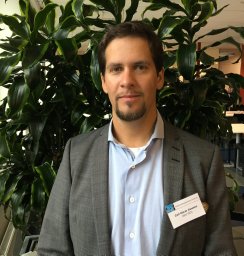 Carl-Oscar Jonson合作论文数4Jonas Hallberg合作论文数Dept . of Computer and Information Science;Linköping University4Kristoffer Lundholm合作论文数3martin waldemarsson合作论文数3Mikael Snaprud合作论文数3Tomasz Opach合作论文数The Chair of Cartography, University of Warsaw3
 Yngve Monfelt合作论文数3
 Jan Ketil Rød合作论文数Department of Geography3
 Viktor Skold Gustafsson合作论文数2Petter Norrblom合作论文数2
 Kristine Steen-Tveit合作论文数2
 Deborah Bunker合作论文数School of Health Sciences, Faculty of Medicine and Health, The University of Sydney2
 Anders Axelsson合作论文数2
 Tim A. Majchrzak合作论文数Univ Agder2
 Ida Lindgren合作论文数Division of Industrial2margaretha eriksson合作论文数1Helena Granlund合作论文数1
 David Karlsson合作论文数1tove watterstam合作论文数1Lars Ole Grottenberg合作论文数1Einar Holm合作论文数1Spreco Armin合作论文数1
 Anna Fredriksson合作论文数Department of Science and Technology, Linkoping University1
 Magnus Strömgren合作论文数1Dahlström Örjan合作论文数Linnaeus Centre HEAD, Linköping University1Lönnqvist Susanna合作论文数1
 Jorma Hinkula合作论文数Swedish Institute for Infectious Disease Control, Karolinska Institute1
 Henrik Eriksson合作论文数Department of Technology Management and Economics, Chalmers University of Technology1Hugo Quisbert合作论文数1Johanna Sefyrin合作论文数Mid Sweden University1
 Mattias Hjerpe合作论文数Ctr Climate Sci & Policy Res, Linkoping Univ1
 Erland Jungert合作论文数1Per-Ola Lindell合作论文数1
 Stewart Kowalski合作论文数Department of Computer and Systems Sciences;Stockholm University;Department of Computer and Systems Sciences, Stockholm University1Magnus Sparf合作论文数1Magnus Morin合作论文数1




