Few-Shot Class-Incremental Learning (FSCIL) aims to enable deep neural networks to incrementally learn new tasks from a limited number of labeled samples, while retaining knowledge of previously learned tasks, mimicking the way humans learn. In this paper, we introduce a novel approach called Prompt Learning for FSCIL (PL-FSCIL), which leverages the power of prompts alongside a pre-trained Vision Transformer (ViT) model to effectively tackle the challenges of FSCIL. Our approach explores the feasibility of directly applying visual prompts in FSCIL, using a simplified model architecture. PL-FSCIL integrates two key prompts: the Domain Prompt and the FSCIL Prompt. Both are tensors incorporated into the attention layer of the ViT network to enhance its capabilities. The Domain Prompt helps the model adapt to new data domains, while the FSCIL Prompt, in combination with a prototype classifier, boosts the model’s ability to handle incremental tasks. We evaluate the performance of PL-FSCIL on well-established benchmark datasets, including CIFAR-100 and CUB-200. The results demonstrate competitive performance, highlighting the method’s promising potential for real-world applications, particularly in scenarios where high-quality labeled data is scarce. The source code is at: https://github.com/JichengYuan81/PL-FSCIL.
Few-Shot Class-Incremental Learning (FSCIL) aims to learn new classes incrementally with a limited number of samples per class. It faces issues of forgetting previously learned classes and overfitting on few-shot classes. An efficient strategy is to learn features that are discriminative in both base and incremental sessions. Current methods improve discriminability by manually designing inter-class margins based on empirical observations, which can be suboptimal. The emerging Neural Collapse (NC) theory provides a theoretically optimal inter-class margin for classification, serving as a basis for adaptively computing the margin. Yet, it is designed for closed, balanced data, not for sequential or few-shot imbalanced data. To address this gap, we propose a Meta-learning- and NC-based FSCIL method, MetaNC-FSCIL, to compute the optimal margin adaptively and maintain it at each incremental session. Specifically, we first compute the theoretically optimal margin based on the NC theory. Then we introduce a novel loss function to ensure that the loss value is minimized precisely when the inter-class margin reaches its theoretically best. Motivated by the intuition that “learn how to preserve the margin” matches the meta-learning’s goal of “learn how to learn”, we embed the loss function in base-session meta-training to preserve the margin for future meta-testing sessions. Experimental results demonstrate the effectiveness of MetaNC-FSCIL, achieving superior performance on multiple datasets. The code is available at https://github.com/qihangran/metaNC-FSCIL.
Few-shot class-incremental learning (FSCIL) aims to learn new classes incrementally with a limited number of samples per class. Foundation models combined with prompt tuning showcase robust generalization and zero-shot learning (ZSL) capabilities, endowing them with potential advantages in transfer capabilities for FSCIL. However, existing prompt tuning methods excel in optimizing for stationary datasets, diverging from the inherent sequential nature in the FSCIL paradigm. To address this issue, taking inspiration from the “fast and slow mechanism” of the complementary learning systems (CLSs) in the brain, we present fast-and slow-update prompt tuning FSCIL (FSPT-FSCIL), a brain-inspired prompt tuning method for transferring foundation models to the FSCIL task. We categorize the prompts into two groups: fast-update prompts and slow-update prompts, which are interactively trained through meta-learning. Fast-update prompts aim to learn new knowledge within a limited number of iterations, while slow-update prompts serve as meta-knowledge and aim to strike a balance between rapid learning and avoiding catastrophic forgetting. Through experiments on multiple benchmark tests, we demonstrate the effectiveness and superiority of FSPT-FSCIL. The code is available at https://github.com/qihangran/FSPT-FSCIL.
Few-Shot Class-Incremental Learning (FSCIL) aims to enable deep neural networks to learn new tasks incrementally from a small number of labeled samples without forgetting previously learned tasks, closely mimicking human learning patterns. In this paper, we propose a novel approach called Prompt Learning for FSCIL (PL-FSCIL), which harnesses the power of prompts in conjunction with a pre-trained Vision Transformer (ViT) model to address the challenges of FSCIL effectively. Our work pioneers the use of visual prompts in FSCIL, which is characterized by its notable simplicity. PL-FSCIL consists of two distinct prompts: the Domain Prompt and the FSCIL Prompt. Both are vectors that augment the model by embedding themselves into the attention layer of the ViT model. Specifically, the Domain Prompt assists the ViT model in adapting to new data domains. The task-specific FSCIL Prompt, coupled with a prototype classifier, amplifies the model's ability to effectively handle FSCIL tasks. We validate the efficacy of PL-FSCIL on widely used benchmark datasets such as CIFAR-100 and CUB-200. The results showcase competitive performance, underscoring its promising potential for real-world applications where high-quality data is often scarce. The source code is available at: https://github.com/TianSongS/PL-FSCIL.
Symbolic regression (SR) is an important technique for discovering hidden mathematical expressions from observed data. Transformer-based approaches have been widely used for machine translation due to their high performance, and are recently highly expected to be used for SR. They input the data points, then output the expression skeleton, and finally optimize the coefficients. However, recent transformer-based methods for SR focus more attention on large scale training data and ignore the ill-posed problem: the lack of sufficient supervision, i.e., expressions that may be completely different have the same supervision because of their same skeleton, which makes it challenging to deal with data that may be from the same expression skeleton but with different coefficients. Therefore, we present a transformer-based model for SR with the ability to alleviate this problem. Specifically, we leverage a feature extractor based on pure residual MLP networks to obtain more information about data points. Furthermore, the core idea is that we propose a joint learning mechanism combining supervised contrastive learning, which makes features of data points from expressions with the same skeleton more similar so as to effectively alleviates the ill-posed problem. The benchmark results show that the proposed method is up to 25% higher with respect to the recovery rate of skeletons than typical transformer-based methods. Moreover, our method outperforms state-of-the-art SR methods based on reinforcement learning and genetic programming in terms of the coefficient of determination ($R^2$).
Large deep learning models are impressive, but they struggle when real-time data is not available. Few-shot class-incremental learning (FSCIL) poses a significant challenge for deep neural networks to learn new tasks from just a few labeled samples without forgetting the previously learned ones. This setup can easily leads to catastrophic forgetting and overfitting problems, severely affecting model performance. Studying FSCIL helps overcome deep learning model limitations on data volume and acquisition time, while improving practicality and adaptability of machine learning models. This paper provides a comprehensive survey on FSCIL. Unlike previous surveys, we aim to synthesize few-shot learning and incremental learning, focusing on introducing FSCIL from two perspectives, while reviewing over 30 theoretical research studies and more than 20 applied research studies. From the theoretical perspective, we provide a novel categorization approach that divides the field into five subcategories, including traditional machine learning methods, meta learning-based methods, feature and feature space-based methods, replay-based methods, and dynamic network structure-based methods. We also evaluate the performance of recent theoretical research on benchmark datasets of FSCIL. From the application perspective, FSCIL has achieved impressive achievements in various fields of computer vision such as image classification, object detection, and image segmentation, as well as in natural language processing and graph. We summarize the important applications. Finally, we point out potential future research directions, including applications, problem setups, and theory development. Overall, this paper offers a comprehensive analysis of the latest advances in FSCIL from a methodological, performance, and application perspective.
The incremental learning paradigm in machine learning has consistently been a focus of academic research. It is similar to the way in which biological systems learn, and reduces energy consumption by avoiding excessive retraining. Existing studies utilize the powerful feature extraction capabilities of pre-trained models to address incremental learning, but there remains a problem of insufficient utiliza-tion of neural network feature knowledge. To address this issue, this paper proposes a novel method called Pre-trained Model Knowledge Distillation (PMKD) which combines knowledge distillation of neu-ral network representations and replay. This paper designs a loss function based on centered kernel align-ment to transfer neural network representations knowledge from the pre-trained model to the incremental model layer-by-layer. Additionally, the use of memory buffer for Dark Experience Replay helps the model retain past knowledge better. Experiments show that PMKD achieved superior perfor-mance on various datasets and different buffer sizes. Compared to other methods, our class incremental learning accuracy reached the best performance. The open-source code is published athttps://github.-com/TianSongS/PMKD-IL.(c) 2023 The Author(s). Published by Elsevier B.V. This is an open access article under the CC BY license (http://creativecommons.org/licenses/by/4.0/).
The use of infrared or electroluminescence(EL) images of solar cell modules for defect detection is a very important method in non-destructive testing. Traditionally, this work is done by skilled technicians, which is time-consuming and susceptible to subjective factors. The surface defect detection method of solar cells based on machine learning has become one of the main research directions because of its high efficiency and convenience. For this reason, this paper proposes an improved fusion model based on VGGNet and U-Net++, which is used for defect detection and segmentation of EL images of solar cells. In the defect detection stage, the input image is processed pertinently, and by modifying the convolutional layer and the fully connected layer of the network, while improving the performance of the algorithm, it accelerates the convergence and avoids the phenomenon of over-fitting. In the defect segmentation stage, the defect location is marked based on the public data set, which is used for the training of each segmentation model, and the effect of different segmentation networks is compared to select a reasonable model. The experimental results show that the defect detection accuracy of the improved VGG16 network on the elpv-dataset is 95.2%, and the U-Net++ defect segmentation model has an average MIoU value of 0.955, which is better than other existing methods.
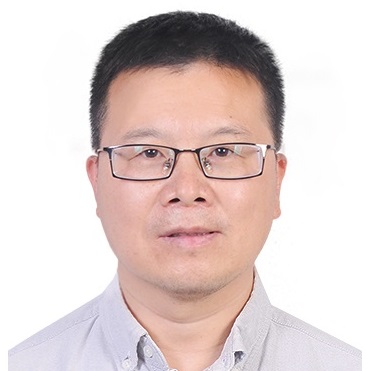 Weijun Li (李卫军)合作论文数Laboratory of High Speed Circuits and Neural Networks, Institute of Semiconductors, Chinese Academy of Sciences;Shenzhen Dapu Microelectronics Co.Ltd7
 宁欣合作论文数Institute of Semiconductors , Chinese Academy of Sciences6
 Hang Ran合作论文数5
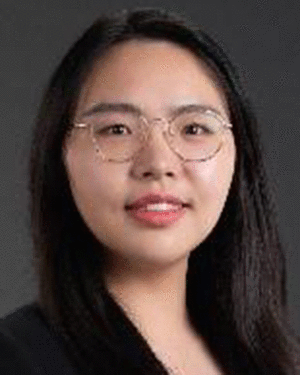 Lusi Li合作论文数Department of Electrical, Computer and Biomedical Engineering, University of Rhode Island, Kingston, USA5
 Prayag Tiwari合作论文数School of Information Technology, Halmstad University3
 Linjun Sun合作论文数College of Materials Science and Opto-Electronic Technology, University of Chinese Academy of Sciences2Hailong Shi合作论文数1Yugui Zhang合作论文数1Yanjie Li合作论文数1Min Wu合作论文数1Enhao Ning合作论文数1
 Wenqiang Li合作论文数Institute of Semiconductors, Chinese Academy of Sciences1Jingyi Liu合作论文数1
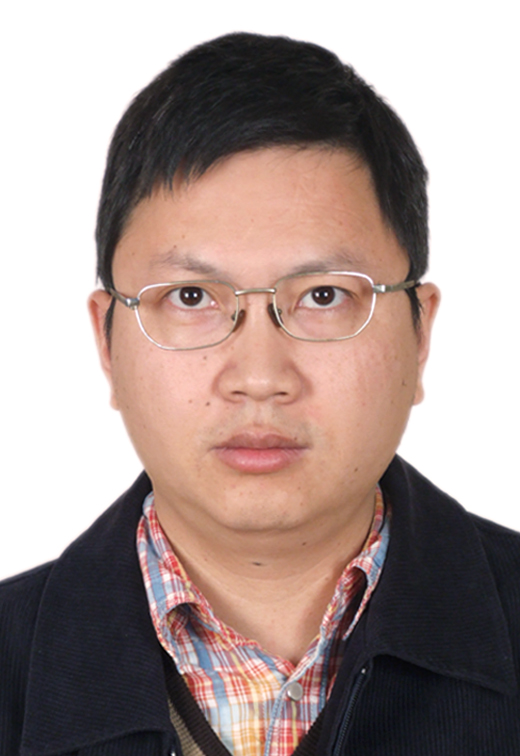 Xingyu Gao (高兴宇)合作论文数University of Chinese Academy of Sciences;Shanghai Advanced Research Institute, Chinese Academy of Sciences1Hong Qin合作论文数1
 Shuang Li (李爽)合作论文数School of Artificial Intelligence, Beihang University1
 Lina Yu合作论文数1
 Wenfa Li (李文法)合作论文数School of Intelligence Science and Technology, University of Science and Technology Beijing1




