Multi-view pedestrian detection, which aims to localize pedestrians by exploiting complementary information from multiple cameras, plays a pivotal role in intelligent surveillance, public security monitoring, and autonomous systems applications. However, its performance is often degraded by severe occlusions, perspective projection distortion, and unreliable cross-view information aggregation in crowded scenes. To address these issues, we propose DOA-AMF, a Density-guided Occlusion Augmentation and Adaptive Multi-view Fusion framework for robust multi-view pedestrian detection. Specifically, a 3D data augmentation strategy based on crowd density perception and multi-view geometric consistency is introduced to generate scene-adaptive occlusion patterns according to pedestrian density distributions while preserving cross-view spatial consistency. This enables the model to learn more occlusion-robust representations. Meanwhile, an adaptive multi-view feature fusion module based on deformable convolution is designed to dynamically align features that are spatially misaligned due to parallax. It enhances the model's ability to aggregate cross-view information by integrating complementary cues from multiple views and suppressing unreliable viewpoint-specific features. Experimental results on the Wildtrack and MultiviewX datasets verified the effectiveness of each component and demonstrated that the proposed DOA-AMF achieves superior performance over state-of-the-art methods, especially in heavily occluded scenarios.
Occluded person re-identification (re-ID) remains challenging due to incomplete body observations, weak semantic supervision, insufficient local discriminability, and limited pose diversity in training data. To address these issues, we propose ESD-Net, an Enhanced Semantic Distillation Network that improves occlusion-robust representation learning from data, feature, and supervision perspectives. First, a pose-guided diffusion reconstruction strategy generates pose-diverse reconstructed auxiliary views using COCO-selected pose references. These views provide enriched body-structure cues during training without requiring additional identity annotations or introducing inference overhead. Second, a dual-path feature enhancement module is designed to capture complementary representations. The Discriminative Fine-grained Feature Extraction (DFFE) branch strengthens local identity cues such as textures, contours, and accessories, while the Non-local Semantic Correlation Feature Extraction (NSCFE) branch models long-range semantic dependencies among visible regions. An Interactive Correlation Module (ICM) progressively fuses local, global, and non-local features. Third, a Consolidated Distillation (CD) module transfers structural knowledge from the reconstructed branch to the original-input branch through affinity-distribution alignment and directional consistency constraints. During inference, all reconstruction-related components are removed, and ESD-Net is deployed as a single-branch model. Extensive experiments on six occluded, partial, and holistic re-ID benchmarks demonstrate the effectiveness and generalization ability of ESD-Net. It achieves 76.20% Rank-1 on Occluded-Duke, 90.30% Rank-1 and 87.60% mAP on Occluded-REID, and 96.70% Rank-1 and 90.80% mAP on Market-1501.
Low-light image enhancement (LLIE) is a prerequisite for robust visual perception in multi-source information fusion systems. However, simultaneously achieving high-fidelity restoration, effective noise management, and computational efficiency remains a formidable challenge. To address this, we propose PPMNet (Physical Priors Mamba Network), a novel framework that synergizes physical priors with the Mamba architecture within the HVI (Horizontal/Vertical Intensity) domain. Central to our methodology is the Physics-based Signal-to-Noise Ratio (SNR) Estimation Module (PSEM), which explicitly models Poisson-Gaussian noise statistics to derive a pixel-wise reliability map. Unlike black-box models, we utilize this map as a dynamic gating signal in our proposed SNR-Aware Mamba Block. This mechanism transforms the generic state transition into a physically interpretable process, adaptively preserving long-range dependencies in signal-dominant regions while filtering out corruption in noise-dominant areas. Furthermore, we design a dual-branch architecture that implements distinct ”hard suppression” and ”soft gating” strategies for chromaticity and intensity, effectively resolving the conflict between denoising and detail preservation. Extensive experiments on multiple benchmarks demonstrate that PPMNet significantly outperforms state-of-the-art methods, particularly under extreme low-light conditions. Specifically, on the LOL-v2-Real dataset, our method achieves a 0.62 dB PSNR improvement over the recent HVI-based method, while maintaining a linear computational complexity suitable for real-time applications.
The precise pixel-level localization of 2D material flakes is crucial for high-throughput screening. However, traditional fully supervised methods rely on dense annotations, which are costly and time-consuming, severely limiting the practical deployment of segmentation models. This paper proposes TACoS, a specialized scribble segmentation framework tailored for 2D materials. First, we design a unified framework that integrates semi-supervised consistency learning with structured tree energy constraints. This framework comprises two core components: an unlabeled weak-strong distribution alignment module and a tree energy regularization module. The former employs cosine consistency constraints to enhance prediction alignment across views. Meanwhile, the latter utilizes minimum spanning trees to establish pixel affinity relationships and generate structure-aware soft pseudo labels for online semantic guidance. Next, we introduce asymmetric regional contrast learning. This approach fuses high-confidence predictions from the weak augmentation branch with scribbles to form augmented labels, and construct category prototypes in the representation space. Simultaneously, we prioritize contrastive constraints on challenging pixels in boundary-unlabeled regions. This strategy enhances intra-class cohesion and inter-class separation at the representation level, effectively reducing category confusion in low-contrast edges and complex backgrounds. Experiments conducted on the constructed graphene and MoS2 datasets demonstrate that our method TACoS achieves over 96
Anemia's high global prevalence and socio-economic burden necessitate early diagnosis, yet reliance on invasive blood testing creates significant barriers to diagnosis and treatment. To address this, we developed a deep learning model using the Detection Transformer framework for the rapid, non-invasive assessment of anemia severity in a real-world emergency department setting. Comparing a lip-focused model to a full-face approach, the former proved superior, achieving 85.0% accuracy. This significantly outperformed the full-face model (77.0%) and clinical judgments by both senior (59.3%) and junior (49.95%) physicians, with a rapid processing time of 127.50 ms. By integrating key medical knowledge to classify anemia into three severity levels, our model surpasses clinician performance, demonstrating its potential as a powerful, automated tool for clinical decision support.
Few-Shot Class-Incremental Learning (FSCIL) aims to enable deep neural networks to learn new tasks incrementally from a few samples while retaining prior knowledge. While dual-prompt tuning has shown promise in this domain, existing methods often struggle with prompt interference and suboptimal feature space structure. In this paper, we propose a synergistic framework named PDR-FSCIL, which systematically tackles these challenges through three interconnected components. First, our Prompt Decoupling Regularization (PDR) module enforces semantic orthogonality between the Overall Prompt (OP) and the Incremental Prompt (IP) using cosine similarity. This ensures the OP preserves general knowledge while the IP focuses on task-specific learning, fundamentally mitigating prompt-level interference. Second, we introduce a regularization strategy to cohesively refine the feature manifold by combining contrastive learning and center regularization. This approach employs contrastive learning to maximize inter-class separation while simultaneously using center regularization to enhance intra-class compactness. Third, a global contextual weighting mechanism is integrated into the prototype classifier to construct more robust and representative class prototypes by dynamically weighting samples. Built upon a Vision Transformer(ViT) backbone, our integrated approach was validated on five standard benchmarks (CIFAR-100, CUB-200, MiniImageNet, EuroSAT, and DTD), demonstrating its tremendous potential. Crucially, our approach addresses the significant computational challenges of applying large-scale ViT in continual learning. By freezing the vast majority of the model’s parameters and only fine-tuning lightweight prompts, our method drastically reduces the demand for computational resources and training time, making it a viable solution for real-time industrial and medical applications that rely on HPC infrastructure. This work underscores the importance of parameter-efficient strategies in deploying powerful, supercomputer-trained models in dynamic, real-world environments. Code address: https://github.com/C201918029/FSCIL/tree/master .
Multi-phase contrast-enhanced CT (CECT) provides complementary diagnostic information for liver tumor segmentation. However, in real clinical practice, random phase missingness makes it difficult for models relying on fixed phase combinations to stably capture multi-source information, thereby limiting their reliability in practical applications. To address this issue, we propose the Phase-Adaptive Robust Fusion Network (PARF-Net), a unified framework for robust segmentation under single-phase-missing settings. The proposed method integrates a Swin Transformer-based global branch with multi-branch CNNs to jointly model global semantic and local structural features. A phase-adaptive routing mechanism dynamically adjusts fusion weights based on phase availability and feature quality, while local-global feature interaction and consistency regularization enable stable cross-phase fusion and robust representation learning. Extensive experiments on the MPLL and PLC-CECT datasets demonstrate that PARF-Net achieves superior performance under both complete and missing-phase settings. In particular, under missing-phase settings, the proposed method maintains an average Dice score of over 72.5%. In the clinically critical portal venous phase-missing scenario, it achieves a performance gain of more than 6.0%, while providing consistent and reliable predictions across various phase combinations. These results suggest that PARF-Net can provide stable liver tumor segmentation support in real clinical scenarios and improve the clinical applicability of automated segmentation systems for incomplete multi-phase CECT data.
Single-modal MRI lesion segmentation for prostate cancer is often hindered by low contrast, blurred boundaries, and interference from heterogeneous background tissues, making the localization of tiny lesions and the suppression of false positives highly challenging. To this end, we propose DWGNet, a dual-stream frequency-spatial collaborative graph reasoning network with two key innovations: (1) An asymmetric frequency-spatial dual-stream decoupling module, DualWaveNet, is designed in the shallow encoder stages. It utilizes fixed wavelet decomposition to explicitly decouple spatial anatomical structures from high-frequency boundary textures, enhancing lesion edges and suppressing redundant background noise. (2) A global graph relation reasoning module, GraphRM, is embedded at the deep bottleneck. By constructing channelized semantic nodes and modeling global covariance relations, it captures long-range topological dependencies to perform semantic calibration on local lesion features, reducing mis-segmentation from visually similar background regions. Experimental results show that DWGNet yields Dice scores of 0.8951, 0.6514, and 0.4866 on the PROMISE12, HY, and PI-CAI datasets, respectively. Compared to the baseline, DWGNet improves Dice and IoU by 5.43 percent and 5.65 percent on HY, and by 2.95 percent and 2.53 percent on PI-CAI. These results validate the effectiveness of the proposed mechanisms for low-contrast prostate cancer MRI lesion segmentation.
Large-scale pre-trained vision-language models (VLMs) enable strong zero-shot transfer. However, parameter-efficient few-shot adaptation often overfits limited training samples and generalizes poorly across domains. We propose ProMML, a unified adaptation framework built on a frozen CLIP backbone, which improves information flow through progressive representation fusion. ProMML integrates Progressive Layer Fusion (PLF), Cross-Modal Fusion (CMF), and a Dynamic Prompt Generator (DPG) over learnable layer-wise representation tokens. PLF aggregates these tokens by cross-layer attention, CMF performs lightweight bidirectional fusion over representation tokens, and DPG provides auxiliary dynamic soft-prompt regularization by combining image-conditioned prompts with a shared prompt pool. Experiments on 11 datasets show competitive performance, achieving an average harmonic mean of 81.63% for base-to-novel generalization and 70.33% average accuracy for cross-dataset transfer, while remaining competitive on ImageNet domain generalization variants. Ablations verify that the three components are complementary and that multi-level fusion is important for novel-class generalization.
Few-Shot Class-Incremental Learning (FSCIL) focuses on enabling models to learn new classes from limited samples while preventing catastrophic forgetting of previously acquired knowledge. Existing methods often fail to differentiate between intrinsic class features and irrelevant background correlations, making models sensitive to shifts in data distribution during incremental learning, which limits their ability to generalize. To tackle this issue, we propose the Counterfactual Distribution Intervention (CDI) framework, which focuses on learning robust feature representations by mitigating non-discriminative interference through causal intervention. The framework consists of three key modules: In the base-class phase, Causal Feature Decoupling (CFD) explicitly separates features into causal and stylistic components. Building on this, Distribution-Shifted Counterfactual Intervention (DSCI) applies structured intervention to stylistic features, forcing the model to learn distribution-invariant causal representations. During the incremental stage, Random Sampling Counterfactual Intervention (RSCI) repurposes base-class style features to generate diverse counterfactual samples, efficiently utilizing limited data while maintaining feature stability. Extensive experiments on three benchmark datasets—CUB-200, CIFAR-100, and mini-ImageNet—demonstrate that the CDI framework significantly outperforms existing state-of-the-art methods, confirming its effectiveness in improving model generalization and preventing forgetting.
Workflow scheduling in dynamic edge computing environments faces challenges in minimizing completion time and energy consumption due to unpredictable workloads and limited resources. However, traditional methods cannot adapt to dynamic environmental change and often suffer from high computational complexity. We propose DQN-Edge, an efficient scheduling method using an attention-based Deep Q-Network (DQN) to learn optimal task prioritization and task allocation policies. DQN-Edge’s two-phase approach first prioritizes tasks using a modified upward ranking algorithm considering critical path dependencies, then employs a DQN with a context-aware attention mechanism to balance time and energy weights adaptively. We conducted a comprehensive evaluation of the proposed DQN-Edge by using real-world scientific workflows under various conditions, such as different arrival intervals of workflows and edge nodes computing capabilities. Compared with existing methods, DQN-Edge shortens makespan and reduces energy consumption across different scenarios while maintaining a high success rate.
Nanorobots have been used in smart health to collect time series data such as electrocardiograms and electroencephalograms. Real-time classification of dynamic time series signals in nanorobots is a challenging task. Nanorobots in the nanoscale range require a classification algorithm with low computational complexity. First, the classification algorithm should be able to dynamically analyze time series signals and update itself to process the concept drifts (CD). Second, the classification algorithm should have the ability to handle catastrophic forgetting (CF) and classify historical data. Most importantly, the classification algorithm should be energy-efficient to use less computing power and memory to classify signals in real-time on a smart nanorobot. To solve these challenges, we design an algorithm that can Prevent Concept Drift in Online continual Learning for time series classification (PCDOL). The prototype suppression item in PCDOL can reduce the impact caused by CD. It also solves the CF problem through the replay feature. The computation per second and the memory consumed by PCDOL are only 3.572M and 1KB, respectively. The experimental results show that PCDOL is better than several state-of-the-art methods for dealing with CD and CF in energy-efficient nanorobots.
Large-scale road surface reconstruction for autonomous systems faces critical computational challenges when processing extensive urban environments while maintaining multi-modal consistency across color, semantic, and geometric information. Existing methods employ hierarchical waypoint-based sampling that introduces computational bottlenecks through repeated dataset reconfiguration, limiting practical deployment. This study presents an efficient artificial intelligence (AI)-based neural reconstruction framework that leverages deep learning for multi-modal scene understanding and differentiable rendering optimization, targeting autonomous driving road mapping applications. The proposed approach achieves substantial computational speedup through curvature-aware direct frame sampling and unified multi-modal optimization. The framework eliminates intermediate waypoint extraction by directly computing frame-level sampling weights based on trajectory curvature analysis, reducing computational complexity from O(W & times;Cdataset +Favg) to O(J+Ftarget). A progressive two-stage optimization strategy ensures stable convergence by first optimizing scene features with fixed camera parameters, then jointly refining features and camera extrinsics. Experiments on the Karlsruhe Institute of Technology and Toyota Technological Institute (KITTI) and nuScenes autonomous driving datasets demonstrate substantial efficiency gains: 6.63 & times; speedup on KITTI sequence 00 (3724 meters, 4541 frames) and 1.34 & times; average speedup across six representative nuScenes scenes covering diverse road geometries including straight sections, curved intersections, and roundabouts, while maintaining competitive reconstruction quality with 26.43 peak signal-to-noise ratio (PSNR), 92.05% overall accuracy, and 74.24% mean intersection over union (mIoU) on nuScenes. The method achieves consistent acceleration across diverse road geometries with minimal memory overhead, making it suitable for resource-constrained mobile platforms in autonomous vehicles.
The one-class classification (OCC) problem has garnered considerable research attention owing to the inherent difficulty and high cost associated with acquiring abnormal samples in many application scenarios. Among the existing methodologies, support vector data description (SVDD) has emerged as a classical approach, spawning a wide array of variants. Despite its extensive development, several critical challenges persist. For instance, (i) existing SVDD-based methods exhibit limitations when addressing multimodal data, particularly when the dimensions of each modality differ; (ii) these methods are highly sensitive to the trade-off parameter; and (iii) many SVDD variants demonstrate inadequate performance in scenarios with a scarce number of abnormal samples. To overcome these issues, we propose a novel one-class classification framework termed distribution entropy regularized multimodal subspace SVDD (DEMS-SVDD). Our contributions are threefold. First, we design two novel regularization terms—the multimodal graph regularization and the sparse projection matrix regularization—which collectively exploit complementary information and preserve consistency across multimodal data even when abnormal samples are limited. Second, we introduce a new weighting scheme, derived from sample distribution and information entropy theories and denoted as distribution entropy-based weights, to assign adaptive importance to each sample. Third, our framework considers the uncertainty of classification, the amount of information contained, the importance of establishing hypersphere boundaries, as well as the sample distribution. The DEMS-SVDD is instantiated in two variants, namely linear and nonlinear, and extensive experiments on multiple real-world datasets demonstrate its superior performance and robustness compared with numerous existing algorithms.
To address the challenges of high signal similarity, significant spatial overlap, and complex discriminative features between normal and pathological tissues in prostate imaging, this study proposes the MSTNet feature optimization algorithm. The algorithm employs a dual-module architecture: 1) A multi-scale feature similarity dynamic fusion module dynamically optimizes shallow feature maps by calculating cosine similarity across multi-scale feature maps, while enhancing topological compactness among features at different scales; 2) A multi-strategy threshold optimization module dynamically screens deep features through feature enhancement and region reconstruction, effectively extracting more expressive deep semantic information. The proposed algorithm achieves an F1-score of 0.791 on the HYProstate dataset and 0.631 on the SICAPV2 dataset, demonstrating superior performance compared to other recent contrast algorithms.
A robust occluded person re-identifier aims to handle all types of occlusion encountered in real-world scenarios. However, existing methods exhibit limited adaptability, as they are primarily optimized for isolated occlusion types, and fail to account for the coupling effects of multi-scenario occlusions. In this paper, we propose the Synergistic Interaction Framework (SIF) with Perception-Aware Optimization to enhance person re-identification (Re-ID) performance in multi-occlusion scenarios. SIF consists of four key components implemented using artificial intelligence techniques. First, the multi-scenario occlusion enhancement module generates diverse occlusion samples by incorporating scene priors, enabling comprehensive coverage of multi-source coupled occlusions. Second, the interaction and fusion module establishes bidirectional knowledge transfer between heterogeneous features to ensure effective matching and improve semantic consistency. Third, the multi-scale aggregation module aggregates features at multiple scales to enforce the capture of discriminative features across varying granular regions, enhancing the model’s robustness to object size variations. Fourth, the adaptive attention regulation module dynamically suppresses background interference and focuses on salient regions, further boosting recognition accuracy. Experimental results on mainstream benchmark datasets, including occluded, partial, and conventional datasets, demonstrate that the proposed method exhibits excellent recognition performance and adaptability to occlusion environments, particularly achieving 76.2% Rank-1 accuracy and 65.8% mean Average Precision (mAP) on Occluded-Duke.
Cloth-changing person re-identification faces a fundamental challenge: identity-invariant and clothing-variant features are inherently entangled in low-level visual representations. Existing implicit disentanglement approaches lack explicit semantic supervision to define separation boundaries between identity and clothing attributes. Consequently, when individuals retain partial garments across observations, these methods produce spurious identity-clothing correlations that compromise recognition accuracy. We propose the Semantic-Hierarchical Disentanglement Network (SHD-Net), a framework that progressively decouples identity from clothing through multi-scale feature extraction and cross-architecture fusion. Our framework comprises three synergistic components. First, the Hierarchical Hybrid Feature Extraction Network employs dual CNN-ViT backbones with bidirectional cross-attention, fusing local textures and global semantics across shallow and deep layers to construct complementary multi-granularity identity representations. Second, the Semantic-Guided Disentanglement Module leverages semantic priors from large language models to explicitly supervise feature decomposition through a three-stage pipeline: initial separation, semantic-anchored refinement, and cross-attention recovery. Third, Confidence-Weighted Adaptive Fusion dynamically integrates purified features using prediction confidence as sample-specific weights, ensuring optimal feature combination. Extensive experiments demonstrate state-of-the-art performance across multiple benchmarks.
Modern energy systems are increasingly characterized by large-scale renewable integration, deep digitalization, and tight coupling between physical infrastructure and cyber intelligence. These trends have significantly amplified the volume, heterogeneity, and complexity of data generated across energy generation, transmission, distribution, and consumption. Data fusion, which integrates multi-modal, multi-source, and multi-scale information, has therefore become a foundational enabler for prediction, optimization, security, and resilience in modern energy systems. This Special Issue, entitled “Data Fusion in Modern Energy Systems”, brings together ten original research articles that collectively advance the state of the art in fusion-driven energy intelligence. The accepted contributions are organized into three major research directions: (i) predictive intelligence via spatio-temporal and multi-modal data fusion, (ii) fusion-driven optimization and operational decision-making, and (iii) trustworthy and resilient energy systems through cross-domain data fusion. Together, these works illustrate how data fusion is evolving from a supporting data-processing technique into a central paradigm for intelligent, secure, and resilient energy systems.
Point cloud processing based on deep learning typically relies on large-scale data annotations; however, extracting feature relationships remains highly challenging when point cloud data are incomplete or occluded. To address this issue, we propose a novel point cloud cross-domain adaptation framework, termed PointLMDA. In the pre-training stage, the framework employs a Local Masked Reconstruction (LMR) strategy, which reconstructs masked local structures to capture high-level latent features. In the fine-tuning stage, it introduces a Local Masked Point Cloud Structure Prediction (LMP) strategy that estimates the number of points, coordinates, and normals within a domain to predict the masked local structures. This design enables the model to embed both source and target data into a shared feature space. Furthermore, an Entropy-guided self-progressing global representation, based on an entropy strategy, is incorporated to further optimize the global alignment between the source and target domains. On the PointDA-10 dataset, PointLMDA achieves accuracies of 86.9%, 84.3%, 82.1%, and 78.9% on the M -> S, S -> M, S*-> M, and S*-> S tasks, respectively, outperforming existing methods by 0.7%, 0.8%, 0.9%, and 2.5%. These results demonstrate that combining local structure reconstruction with prediction substantially enhances the robustness of cross-domain adaptation.
 Weijun Li (李卫军)合作论文数Laboratory of High Speed Circuits and Neural Networks, Institute of Semiconductors, Chinese Academy of Sciences;Shenzhen Dapu Microelectronics Co.Ltd77
 LiPing Zhang合作论文数China University of Petroleum, University of Petroleum43
 Linjun Sun合作论文数College of Materials Science and Opto-Electronic Technology, University of Chinese Academy of Sciences32
 Xiao Bai (百晓)合作论文数School of Computer Science and Engineering, Beihang University29
 Prayag Tiwari合作论文数School of Information Technology, Halmstad University25
 Weiwei Cai合作论文数School of Artificial Intelligence and Computer Science, Jiangnan University;Graduate School, Northern Arizona University20
 Lina Yu合作论文数20
 Dongxiao Li (李东晓)合作论文数College of Information Science & Electronic Engineering, Zhejiang University16
 Changshuo Wang (王昌硕)合作论文数Department of Computer Science, Faculty of Engineering, University College London15
 Zaiyang Yu合作论文数12
 Lusi Li合作论文数Department of Electrical, Computer and Biomedical Engineering, University of Rhode Island, Kingston, USA11
 Jin Zheng (郑锦)合作论文数School of Computer Science & Engineering, Beihang University11
 Weijuan Tian合作论文数Sch Elect Engn, Xidian Univ10Shengwei Tian (田生伟)合作论文数School of Software, Xinjiang University10
 Xiaoli Dong (董晓莉)合作论文数University of Chinese Academy of Sciences;National Lab for Superconductivity, Institute of Physics, Chinese Academy of Sciences9
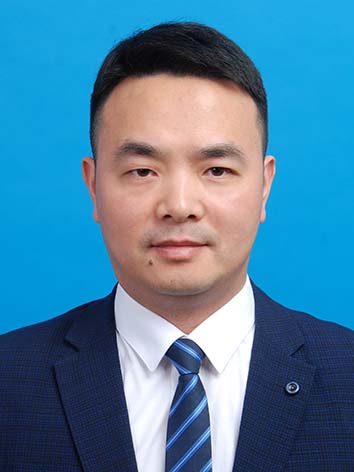 Pengjiang Qian (钱鹏江)合作论文数School of Artificial Intelligence and Computer Science, Jiangnan University8
 Long Cheng (程龙)合作论文数School of Control and Computer Engineering, North China Electric Power University8
 Yaxuan Lu合作论文数7
 Shuang Li (李爽)合作论文数School of Artificial Intelligence, Beihang University7
 Long Yu (禹龙)合作论文数School of Software, Xinjiang University7Meilan Hao合作论文数6Songsong Tian合作论文数6Huang Zhang合作论文数6Hang Ran合作论文数6
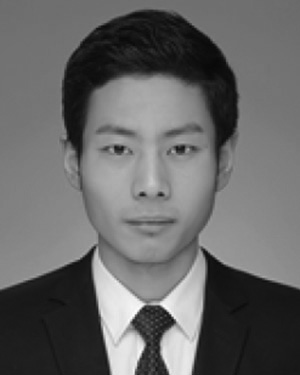 Shaohui Xu合作论文数6Min Wu合作论文数5
 Jian Xu合作论文数5
 Runmin Liu合作论文数AiTech Artificial Intelligence Res Inst5
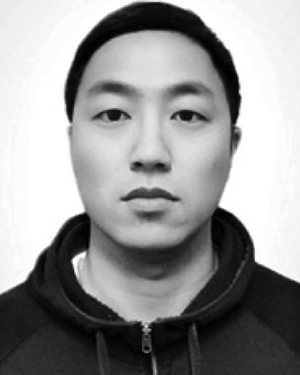 Hongfeng You合作论文数5
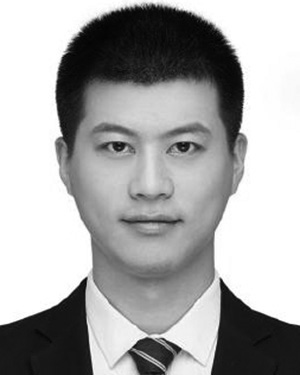 Chen Wang合作论文数Jiangxi Research Institute, Beihang University5
 Yuan Shi合作论文数Cognitive Computing Technology Wave Joint Laboratory, Beijing, China5
 Jun Zhou合作论文数School of Information and Communication Technology, Griffith University;Institute for Integrated and Intelligent Systems, Griffith University;ARC Research Hub for Driving Farming Productivity and Disease Prevention, Griffith University5
 Yizhang Jiang (蒋亦樟)合作论文数School of Artificial Intelligence and Computer Science, Jiangnan University5Peng Chen合作论文数4Yanjie Li合作论文数4Enhao Ning合作论文数4
 Ziheng Chen合作论文数Department of Applied Mathematics and Statistics, Stony Brook University4Feng He合作论文数University of Science and Technology of China4Jingyi Liu合作论文数4
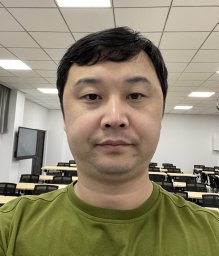 Ming Gao合作论文数Coll Sports Sci & Technol, Wuhan Sports Univ4Hong Qin合作论文数4
 Yakun Zhang (张雅坤)合作论文数School of Computer Science and Technology, Harbin Institute of Technology (Shenzhen)4
 Wenfa Li (李文法)合作论文数School of Intelligence Science and Technology, University of Science and Technology Beijing4
 Xiaohan Yu合作论文数Griffith University4Yusong Deng合作论文数3
 Lin Gu (谷林)合作论文数Center for Advanced Intelligence Project, RIKEN3Junfeng Miao合作论文数3Yuebao Wang合作论文数3




