We present a rigorous global optimization-based approach to a problem arising in discrete geometry: covering a rectangle with six identical circles while minimizing their radius. Our main contribution lies in formulating and solving this problem using mathematical programming combined with exact global optimization relying on interval-based computation. This approach not only enables the numerical proof of a theoretical result, but also certifies the accuracy of computed values by enclosing them within verified bounds, thus certifying decimal digits. This brings a strong evidence of the role of mathematical programming and rigorous exact global optimization in addressing geometric covering problems with provable precision.
This paper deals with the cyclic job shop problem where the task durations are uncertain and belong to a polyhedral uncertainty set. We formulate the cyclic job shop problem as a two-stage robust optimization model. The cycle time and the execution order of tasks executed on the same machines correspond to the here-and-now decisions and have to be decided before the realization of the uncertainty. The starting times of tasks corresponding to the wait-and-see decisions are delayed and can be adjusted after the uncertain parameters are known. In the last decades, different solution approaches have been developed for two-stage robust optimization problems. Among them, the use of affine policies, row and row-andcolumn generation algorithms are the most common. In this paper, we propose a branch-and-bound algorithm to tackle the robust cyclic job shop problem with cycle time minimization. The algorithm uses, at each node of the search tree, a robust version of the Howard's algorithm to derive a lower bound on the optimal cycle time. Moreover, we design a row generation algorithm and a column-and-row generation algorithm and compare it to the branch-and-bound method. Finally, encouraging preliminary results on numerical experiments performed on randomly generated instances are presented. (c) 2023 Elsevier B.V. All rights reserved.
This paper addresses the noise-minimal trajectory optimization problem for a specific type of aircraft: rotorcraft. It relies on a realistic noise footprint computation software provided by industry that is black-box. Locally optimal trajectories are computed through a tailored solution approach based on the Mesh-Adaptive Direct Search algorithm. We propose multiple surrogates defined according to our knowledge of the problem, including a surrogate relying on the physics of the problem (approximating the rotorcraft noise model), and another based on a machine learning (neural network) method. The proposed solution approach is further enhanced by the computation of an appropriate starting guess through a path planning algorithm tailored to the problem, and by the reduction of the variable space domain. The performance of the proposed methodology both in terms of quality of the solutions (trajectories exhibiting significant noise reduction compared to those currently flown in practice) and computing time is illustrated through numerical experiments on real-world case studies.
We introduce two new optimization models for the aircraft conflict avoidance problem that aims at issuing decisions on both speed and heading-angle deviations to keep aircraft pairwise separated by a given separation distance. The first model is a new mixed-integer nonlinear formulation. The second model is a continuous optimization formulation, less typical in aircraft conflict avoidance. The advantages of the two models are combined within a three-phase method that we propose to solve the problem to global optimality. Computational experiments on various instances from the literature yield very promising results, and show the effectiveness of the proposed models and of the three-phase solution approach. (c) 2023 Published by Elsevier B.V.
Could continuous optimization address efficiently logical constraints? We propose a continuous-optimization alternative to the usual discrete-optimization (big-M and complementary) formulations of logical constraints, that can lead to effective practical methods. Based on the simple idea of guiding the search of a continuous-optimization descent method towards the parts of the domain where the logical constraint is satisfied, we introduce a smooth penalty-function formulation of logical constraints, and related theoretical results. This formulation allows a direct use of state-of-the-art continuous optimization solvers. The effectiveness of the continuous quadrant penalty formulation is demonstrated on an aircraft conflict avoidance application.
This paper introduces recent developments in the computation of rotorcraft noise footprint, implemented in an Airbus Helicopters' internal software. The paper presents the main ingredients that have led to enhance the efficiency and accuracy of such noise footprint computation. This includes taking into account both the particularities of turns in noise emission and the influence of the wind on noise propagation. Furthermore, the software is able to assess a real traffic environmental impact, since computations are done within a realistic 3D simulation environment, taking into account both the curvature of the Earth and the topography of the ground. A variety of noise annoyance indicators can be computed thanks to the coupling with demographic and background noise data. Such realistic noise footprint computation is embedded in a tailored algorithmic scheme aiming at optimizing rotorcraft trajectories in such a way that their associated noise footprint is minimized. The proposed optimization approach has been tested on multiple real-world case studies, showing significant prospective noise reduction compared to reference trajectories.
Extended aircraft arrival management under uncertainty has been previously studied in the literature using two-stage stochastic optimization in the case of a single initial approach fix (IAF) and a single runway. In this paper, we propose an extension taking into account: (i) multiple IAFs feeding the landing runway, (ii) aircraft having different initial flight status (at-departure-gate or airborne) when making first-stage decisions, and (iii) a time-deviation cost function to minimize that is based on reference values depending on aircraft type and flight phase. Two problem variants are modeled according to the degree of freedom on IAF assignment to aircraft. In the first variant, IAFs are to be assigned to aircraft, as a first-stage decision. In the second variant, IAF assignment is fixed and considered as a problem input. Numerical results on realistic instances from Paris Charles-de-Gaulle airport confirm the benefit of taking into account uncertainty through two-stage stochastic programming, and through re-assignment of IAFs.
In this paper, we show how a reliable global Branch and Bound optimization method based on interval arithmetic can be used efficiently to numerically prove a conjecture in geometry about how to cover a rectangle by 6 circles of equal radius.
EUROPT, the Continuous Optimization working group of EURO, celebrated its 20 years of activity in 2020. We trace the history of this working group by presenting the major milestones that have led to its current structure and organization and its major trademarks, such as the annual EUROPT workshop and the EUROPT Fellow recognition.
—This paper presents a centralized and strategical approach for Unmanned aircraft systems Traffic Management (UTM) to design optimal 4D trajectories minimizing the total flight time of all vehicles over a given time window. Potential losses of pairwise separation between vehicles are modeled and solved. A 4D trajectory is modeled by choosing an horizontal path (with an associated nominal speed profile), a departure slot and a cruising flight level. The problem is formulated as a mixed-integer linear program. A two-step solution approach is proposed that takes into account operational requirements, such as late flight intention deposits, or static and dynamic geofences; and that is able to deal with very high traffic density (up to 6300 vehicles in an horizon of one hour). Experimental results show that it is possible, by delaying flights at the departure or modifying their 4D route (vertically or horizontally), to obtain Unmanned Aircraft Systems (UAS) flyable trajectories that avoid losses of separation and minimize the total flown time.
Structural topology optimization aims to design mechanical structures by seeking the optimal material layout within a given design space. Within this framework, this paper addresses the minimization of the structural mass under stress and buckling constraints, formulated as a nonlinear combinatorial optimization problem. An algorithm is proposed for such a problem, that follows a topological gradient-based approach. The adjoint method is applied to efficiently compute the constraint gradients. An iterative algorithm for buckling analysis, featuring low memory requirements, is also proposed. Numerical results, including a real application arising in the aeronautical field, illustrate the efficiency of the two proposed algorithms. (C) 2021 Elsevier Inc. All rights reserved.
We address the problem of covering a rectangle with six identical circles, whose radius is to be minimized. We focus on open cases from Melissen and Schuur (Discrete Appl Math 99:149–156, 2000). Depending on the rectangle side lengths, different configurations of the circles, corresponding to the different ways they are placed, yield the optimal covering. We prove the optimality of the two configurations corresponding to open cases. For the first one, we propose a mathematical mixed-integer nonlinear optimization formulation, that allows one to compute global optimal solutions. For the second one, we provide an analytical expression of the optimal radius as a function of one of the rectangle side lengths. All open cases are thus closed for the optimal covering of a rectangle with six circles.
The extended aircraft arrival management problem, as an extension of the classic aircraft landing problem, seeks to preschedule aircraft on a destination airport a few hours before their planned landing times. A two-stage stochastic mixed-integer programming model enriched by chance constraints is proposed in this paper. The first-stage optimization problem determines an aircraft sequence and target times over a reference point in the terminal area, called initial approach fix (IAF), so as to minimize the landing sequence length. Actual times over the IAF are assumed to deviate randomly from target times following known probability distributions. In the second stage, actual times over the IAF are assumed to be revealed, and landing times are to be determined in view of minimizing a time-deviation impact cost function. A Benders reformulation is proposed, and acceleration techniques to Benders decomposition are sketched. Extensive results on realistic instances from Paris Charles-de-Gaulle airport show the benefit of two-stage stochastic and chance-constrained programming over a deterministic policy.
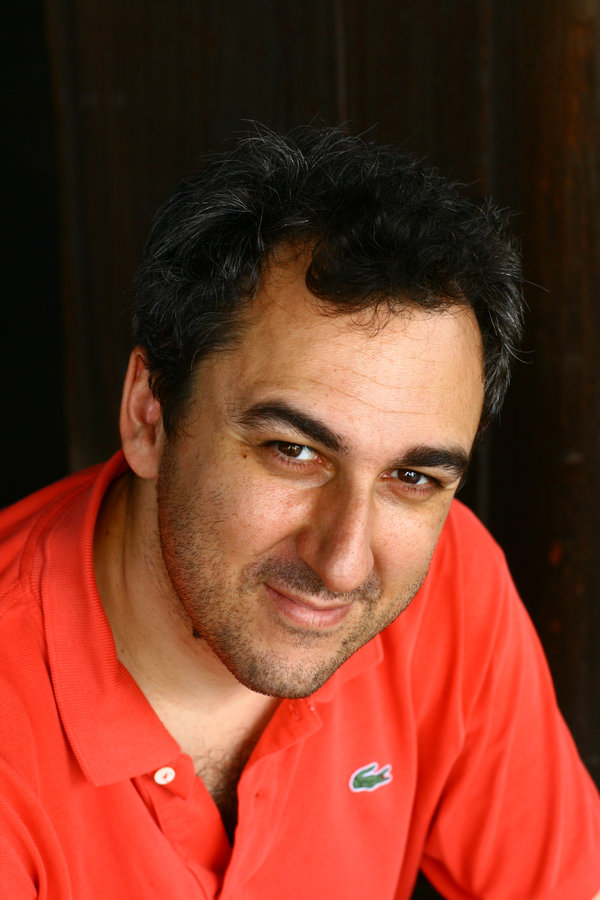 Leo Liberti合作论文数LIX19
 Frederic Messine合作论文数ENSEEIHT-IRIT16
 Marcel Mongeau合作论文数Faculty of Mathematics N2L 3G1, University of Waterloo10
 Hamaz Idir合作论文数LIRMM UMR 5506, Université de Montpellier7
 Pierre Hansen合作论文数Department of Decision Science, HEC Montreal7
 Laurent Houssin合作论文数Laboratoire d’Ingénierie des Systèmes Automatisés, 62 Avenue Notre-Dame du Lac, 49000 Angers, France7
 Jon Lee合作论文数Industrial and Operations Engineering, College of Engineering, University of Michigan-Ann Arbor6
 Daniel Delahaye合作论文数Science Departement, French Civil Aviation University;3IA ANITI5Marco D'Apuzzo合作论文数5
 Loïc Cellier合作论文数ÉNAC-Univ. of Toulouse5V. De Simone合作论文数4Pierre Dieumegard合作论文数4Ahmed Khassiba合作论文数4
 Alberto Costa合作论文数LIX, École Polytechnique4
 Fabian Bastin合作论文数Succ. Centre-Ville, Université de Montréal4
 Mohammed Sbihi合作论文数Laboratoire de Mathématiques de Besançon 16, Université de Franche Comté4Daniela Di Serafino合作论文数Department of Mathematics, Second University of Naples4
 Pietro Belotti合作论文数Department of Mathematical Sciences, Clemson University;Operations Research Group, Dipartimento di Elettronica, Informazione e Bioingegneria, Politecnico di Milano4
 Florian Mitjana合作论文数3
 Jun Zhou合作论文数3
 Christian Bès合作论文数3
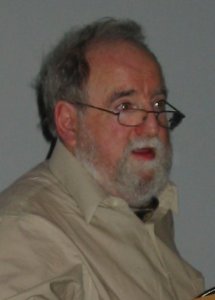 Andrew R. Conn合作论文数Department of Mathematical Sciences
IBM T.J. Watson Research Center;Numerical Analysis Group3
Andrew R. Conn合作论文数Department of Mathematical Sciences
IBM T.J. Watson Research Center;Numerical Analysis Group3 R. John Hansman合作论文数International Center for Air Transportation, Department of Aeronautics and Astronautics, MIT;Laboratory for Aviation and the Environment, MIT3
 Florian Bugarin合作论文数Université de Toulouse;Ecole Mines Albi;Ecole Mines Albi, Université de Toulouse3
 Gerardo Toraldo合作论文数Argonne National Laboratory Mathematics and Computer Science Division 9700 South Cass Avenue 60439 Argonne IL USA3Frederic Monies合作论文数3D. Delahaye合作论文数2Andrija Vidosavljevic合作论文数2
 Del Nobile Matteo Alessandro合作论文数Department of Agricultural Food and Environment, University of Foggia2Riadh Omheni合作论文数2
 Nicolas Durand合作论文数2Marcella Mastromatteo合作论文数2
 Valentina De Simone合作论文数2
 Gilles Caporossi合作论文数Department of Management Sciences2
 Lucas Létocart合作论文数CEDRIC-CNAM2
 Christian Gogu合作论文数2
 Nenad Mladenovic合作论文数Department of Engineering Systems and Management, Khalifa University of Science Technology;Laboratoire d’Automatique, de Mécanique et d’Informatique Industrielles et Humaines, Université Polytechnique Hauts-de-France;Faculty of Organizational Sciences, University of Belgrade;Mathematical Institute of the Serbian Academy of Sciences and Arts2
 Stefania Chillo合作论文数2
 Sylvain Perron合作论文数GERAD and HEC, Montreal, Canada2
 Bernard Gendron合作论文数Département d'informatique et de recherche opérationnelle (DIRO)
Université de Montréal2A. Mucherino合作论文数1Isabelle Danis合作论文数1marco dapuzzo合作论文数1Andrew J. Miller合作论文数1
Bernard Gendron合作论文数Département d'informatique et de recherche opérationnelle (DIRO)
Université de Montréal2A. Mucherino合作论文数1Isabelle Danis合作论文数1marco dapuzzo合作论文数1Andrew J. Miller合作论文数1 B. Nogarede合作论文数1
 David Rey合作论文数School of Civil & Environmental Engineering, Faculty of Engineering, The University of New South Wales1
 Antonio Mucherino合作论文数Institute of Food & Agricultural Information Technology Office, University of Florida1




