Training stable biological foundation models requires rethinking attention mechanisms: we find that using sigmoid attention as a drop in replacement for softmax attention a) produces better learned representations: on six diverse single-cell datasets, sigmoid achieves 25
Large language models (LLMs) have convincing performance in a variety of downstream tasks. However, these systems are prone to generating undesirable outputs such as harmful and biased text. In order to remedy such generations, the development of guardrail (or detector) models has gained traction. Motivated by findings from developing a detector for social bias, we adopt the notion of a use-mention distinction - which we identified as the primary source of under-performance in the preliminary versions of our social bias detector. Armed with this information, we describe a fully extensible and reproducible synthetic data generation pipeline which leverages taxonomy-driven instructions to create targeted and labeled data. Using this pipeline, we generate over 300K unique contrastive samples and provide extensive experiments to systematically evaluate performance on a suite of open source datasets. We show that our method achieves competitive performance with a fraction of the cost in compute and offers insight into iteratively developing efficient and capable guardrail models. Warning: This paper contains examples of text which are toxic, biased, and potentially harmful.
Training data attribution (TDA) is concerned with understanding model behavior in terms of the training data. This paper draws attention to the common setting where one has access only to the final trained model, and not the training algorithm or intermediate information from training. We reframe the problem in this "final-model-only" setting as one of measuring sensitivity of the model to training instances. To operationalize this reframing, we propose further training, with appropriate adjustment and averaging, as a gold standard method to measure sensitivity. We then unify existing gradient-based methods for TDA by showing that they all approximate the further training gold standard in different ways. We investigate empirically the quality of these gradient-based approximations to further training, for tabular, image, and text datasets and models. We find that the approximation quality of first-order methods is sometimes high but decays with the amount of further training. In contrast, the approximations given by influence function methods are more stable but surprisingly lower in quality.
Despite the increasing use of large language models (LLMs) for context-grounded tasks like summarization and question-answering, understanding what makes an LLM produce a certain response is challenging. We propose Multi-Level Explanations for Generative Language Models (MExGen), a technique to provide explanations for context-grounded text generation. MExGen assigns scores to parts of the context to quantify their influence on the model's output. It extends attribution methods like LIME and SHAP to LLMs used in context-grounded tasks where (1) inference cost is high, (2) input text is long, and (3) the output is text. We conduct a systematic evaluation, both automated and human, of perturbation-based attribution methods for summarization and question answering. The results show that our framework can provide more faithful explanations of generated output than available alternatives, including LLM self-explanations. We open-source code for MExGen as part of the ICX360 toolkit: https://github.com/IBM/ICX360.
Substituting constituents within concrete with lower impact materials is of utmost importance for the sustainable transition of the concrete industry. Systematic analyses of knowledge within the published literature can facilitate industrial practice and focus research inquiry. To address the prohibitive workload of manual review and the multifaceted linguistic complexity of communication within the domain, this study develops an automatic literature mining framework combining lightweight large language models (LLMs) (pythia-2.8B) with multiple-choice instructions. The current landscape, temporal trends, and future directions of concrete material substitution studies were analyzed using the extracted information. Although supplementary cementitious materials (SCMs) have remained a research hotspot, results revealed a systematic shift in recent studies from commercial SCMs to other materials. Geopolymer and fine aggregate studies have surged in the recent period, while clinker feedstock and filler studies have declined. Lime-pozzolan cement has been an underexplored application but emerges as a potentially promising future research direction.
Low-rank adapters (LoRA) and their variants are popular parameter-efficient fine-tuning (PEFT) techniques that closely match full model fine-tune performance while requiring only a small number of additional parameters. These additional LoRA parameters are specific to the base model being adapted. When the base model needs to be deprecated and replaced with a new one, all the associated LoRA modules need to be re-trained. Such re-training requires access to the data used to train the LoRA for the original base model. This is especially problematic for commercial cloud applications where the LoRA modules and the base models are hosted by service providers who may not be allowed to host proprietary client task data. To address this challenge, we propose $\textit{Trans-LoRA}$ --- a novel method for lossless, nearly data-free transfer of LoRAs across base models. Our approach relies on synthetic data to transfer LoRA modules. Using large language models, we design a synthetic data generator to approximate the data-generating process of the $\textit{observed}$ task data subset. Training on the resulting synthetic dataset transfers LoRA modules to new models. We show the effectiveness of our approach using both LLama and Gemma model families. Our approach achieves lossless (mostly improved) LoRA transfer between models within and across different base model families, and even between different PEFT methods, on a wide variety of tasks.
This paper questions the effectiveness of a modern predictive uncertainty quantification approach, called evidential deep learning (EDL), in which a single neural network model is trained to learn a meta distribution over the predictive distribution by minimizing a specific objective function. Despite their perceived strong empirical performance on downstream tasks, a line of recent studies by Bengs et al. identify limitations of the existing methods to conclude their learned epistemic uncertainties are unreliable, e.g., in that they are non-vanishing even with infinite data. Building on and sharpening such analysis, we 1) provide a sharper understanding of the asymptotic behavior of a wide class of EDL methods by unifying various objective functions; 2) reveal that the EDL methods can be better interpreted as an out-of-distribution detection algorithm based on energy-based-models; and 3) conduct extensive ablation studies to better assess their empirical effectiveness with real-world datasets. Through all these analyses, we conclude that even when EDL methods are empirically effective on downstream tasks, this occurs despite their poor uncertainty quantification capabilities. Our investigation suggests that incorporating model uncertainty can help EDL methods faithfully quantify uncertainties and further improve performance on representative downstream tasks, albeit at the cost of additional computational complexity.
This paper explores a modern predictive uncertainty estimation approach, called evidential deep learning (EDL), in which a single neural network model is trained to learn a meta distribution over the predictive distribution by minimizing a specific objective function. Despite their strong empirical performance, recent studies by Bengs et al. identify a fundamental pitfall of the existing methods: the learned epistemic uncertainty may not vanish even in the infinite-sample limit. We corroborate the observation by providing a unifying view of a class of widely used objectives from the literature. Our analysis reveals that the EDL methods essentially train a meta distribution by minimizing a certain divergence measure between the distribution and a sample-size-independent target distribution, resulting in spurious epistemic uncertainty. Grounded in theoretical principles, we propose learning a consistent target distribution by modeling it with a mixture of Dirichlet distributions and learning via variational inference. Afterward, a final meta distribution model distills the learned uncertainty from the target model. Experimental results across various uncertainty-based downstream tasks demonstrate the superiority of our proposed method, and illustrate the practical implications arising from the consistency and inconsistency of learned epistemic uncertainty.
We consider the issue of calibration in large language models (LLM). Recent studies have found that common interventions such as instruction tuning often result in poorly calibrated LLMs. Although calibration is well-explored in traditional applications, calibrating LLMs is uniquely challenging. These challenges stem as much from the severe computational requirements of LLMs as from their versatility, which allows them to be applied to diverse tasks. Addressing these challenges, we propose THERMOMETER, a calibration approach tailored to LLMs. THERMOMETER learns an auxiliary model, given data from multiple tasks, for calibrating a LLM. It is computationally efficient, preserves the accuracy of the LLM, and produces better-calibrated responses for new tasks. Extensive empirical evaluations across various benchmarks demonstrate the effectiveness of the proposed method.
Large language models (LLMs) are susceptible to a variety of risks, from non-faithful output to biased and toxic generations. Due to several limiting factors surrounding LLMs (training cost, API access, data availability, etc.), it may not always be feasible to impose direct safety constraints on a deployed model. Therefore, an efficient and reliable alternative is required. To this end, we present our ongoing efforts to create and deploy a library of detectors: compact and easy-to-build classification models that provide labels for various harms. In addition to the detectors themselves, we discuss a wide range of uses for these detector models - from acting as guardrails to enabling effective AI governance. We also deep dive into inherent challenges in their development and discuss future work aimed at making the detectors more reliable and broadening their scope.
Here, we present a computational framework, combining machine learning models with inverse optimization, which can accelerate and optimize concrete mix design with respect to climate impact and/or cost. Our approach leverages a novel amortized Gaussian process (GP) model trained on a large industry dataset to predict concrete strength based on mix proportions. The resulting GP model has an R2 value, RMSE, and MAPE of -0.88, -909 psi (6.3 MPa), and -10.8 %, respectively. We integrated the GP model with an inverse optimization scheme to predict optimal mix designs that minimize cost and/or climate impact. The results show that this integrated framework can generate reasonable concrete mixes that offer up to -30 % and -60 % reductions in cost and climate impact, respectively, compared with industry mixes with similar 28-day strength. This study highlights the potential environmental and economic benefits of data-driven approaches to designing and optimizing concrete mixes.
Estimating uncertainty or confidence in the responses of a model can be significant in evaluating trust not only in the responses, but also in the model as a whole. In this paper, we explore the problem of estimating confidence for responses of large language models (LLMs) with simply black-box or query access to them. We propose a simple and extensible framework where, we engineer novel features and train a (interpretable) model (viz. logistic regression) on these features to estimate the confidence. We empirically demonstrate that our simple framework is effective in estimating confidence of Flan-ul2, Llama-13b, Mistral-7b and GPT-4 on four benchmark Q&A tasks as well as of Pegasus-large and BART-large on two benchmark summarization tasks with it surpassing baselines by even over 10% (on AUROC) in some cases. Additionally, our interpretable approach provides insight into features that are predictive of confidence, leading to the interesting and useful discovery that our confidence models built for one LLM generalize zero-shot across others on a given dataset.
Test log-likelihood is commonly used to compare different models of the same data or different approximate inference algorithms for fitting the same probabilistic model. We present simple examples demonstrating how comparisons based on test log-likelihood can contradict comparisons according to other objectives. Specifically, our examples show that (i) approximate Bayesian inference algorithms that attain higher test log-likelihoods need not also yield more accurate posterior approximations and (ii) conclusions about forecast accuracy based on test log-likelihood comparisons may not agree with conclusions based on root mean squared error.
It is known that neural networks have the problem of being over-confident when directly using the output label distribution to generate uncertainty measures. Existing methods mainly resolve this issue by retraining the entire model to impose the uncertainty quantification capability so that the learned model can achieve desired performance in accuracy and uncertainty prediction simultaneously. However, training the model from scratch is computationally expensive and may not be feasible in many situations. In this work, we consider a more practical post-hoc uncertainty learning setting, where a well-trained base model is given, and we focus on the uncertainty quantification task at the second stage of training. We propose a novel Bayesian meta-model to augment pre-trained models with better uncertainty quantification abilities, which is effective and computationally efficient. Our proposed method requires no additional training data and is flexible enough to quantify different uncertainties and easily adapt to different application settings, including out-of-domain data detection, misclassification detection, and trustworthy transfer learning. We demonstrate our proposed meta-model approach's flexibility and superior empirical performance on these applications over multiple representative image classification benchmarks.
Due to privacy or commercial constraints, large pre-trained language models (PLMs) are often offered as black-box APIs. Fine-tuning such models to downstream tasks is challenging because one can neither access the model’s internal representations nor propagate gradients through it. This paper addresses these challenges by developing techniques for adapting PLMs with only API access. Building on recent work on soft prompt tuning, we develop methods to tune the soft prompts without requiring gradient computation. Further, we develop extensions that in addition to not requiring gradients also do not need to access any internal representation of the PLM beyond the input embeddings. Moreover, instead of learning a single prompt, our methods learn a distribution over prompts allowing us to quantify predictive uncertainty. Ours is the first work to consider uncertainty in prompts when only having API access to the PLM. Finally, through extensive experiments, we carefully vet the proposed methods and find them competitive with (and sometimes even improving on) gradient-based approaches with full access to the PLM.
Background: Applying machine-learning algorithms to large datasets such as those available in Huntington's disease offers the opportunity to discover hidden patterns, often not discernible to clinical observation. Objectives: To develop and validate a model of Huntington's disease progression using probabilistic machine learning methods. Methods: Longitudinal data encompassing 2079 assessment measures from four observational studies (PREDICT-HD, REGISTRY, TRACK-HD, and Enroll-HD) were integrated and machine-learning methods (Bayesian latent-variable analysis and continuous-time hidden Markov models) were applied to develop a probabilistic model of disease progression. The model was validated using a separate Enroll-HD dataset and compared with existing clinical reference assessments (Unified Huntington's Disease Rating Scale [UHDRS] diagnostic confidence level, total functional capacity, and total motor scores) and CAG-age product. Results: Nine disease states were discovered based on 44 motor, cognitive, and functional measures, which correlated with reference assessments. The validation set included 3158 participants (mean age, 48.4 years) of whom 61.5% had manifest disease. Analysis of transition times showed that "early-disease" states 1 and 2, which occur before motor diagnosis, lasted similar to 16 years. Increasing numbers of participants had motor onset during "transition" states 3 to 5, which collectively lasted similar to 10 years, and the "late-disease" states 6 to 9 also lasted similar to 10 years. The annual probability of conversion from one of the nine identified disease states to the next ranged from 5% to 27%. Conclusions: The natural history of Huntington's disease can be described by nine disease states of increasing severity. The ability to derive characteristics of disease states and probabilities for progression through these states will improve trial design and participant selection. (C) 2021 International Parkinson and Movement Disorder Society
Gaussian processes (GPs) are used to make medical and scientific decisions, including in cardiac care and monitoring of atmospheric carbon dioxide levels. Notably, the choice of GP kernel is often somewhat arbitrary. In particular, uncountably many kernels typically align with qualitative prior knowledge (e.g. function smoothness or stationarity). But in practice, data analysts choose among a handful of convenient standard kernels (e.g. squared exponential). In the present work, we ask: Would decisions made with a GP differ under other, qualitatively interchangeable kernels? We show how to answer this question by solving a constrained optimization problem over a finite-dimensional space. We can then use standard optimizers to identify substantive changes in relevant decisions made with a GP. We demonstrate in both synthetic and real-world examples that decisions made with a GP can exhibit non-robustness to kernel choice, even when prior draws are qualitatively interchangeable to a user.
In consequential decision-making applications, mitigating unwanted biases in machine learning models that yield systematic disadvantage to members of groups delineated by sensitive attributes such as race and gender is one key intervention to strive for equity. Focusing on demographic parity and equality of opportunity, in this paper we propose an algorithm that improves the fairness of a pre-trained classifier by simply dropping carefully selected training data points. We select instances based on their influence on the fairness metric of interest, computed using an infinitesimal jackknife-based approach. The dropping of training points is done in principle, but in practice does not require the model to be refit. Crucially, we find that such an intervention does not substantially reduce the predictive performance of the model but drastically improves the fairness metric. Through careful experiments, we evaluate the effectiveness of the proposed approach on diverse tasks and find that it consistently improves upon existing alternatives.
This tutorial presents an open source Python package (https://github.com/IBM/UQ360) named Uncertainty Quantification 360 (UQ360), a toolkit that provides a broad range of capabilities for quantifying, evaluating, improving, and communicating uncertainty in the AI application development lifecycle. We will first introduce the concepts in uncertainty quantification through an interactive experience (http://uq360.mybluemix.net) followed by use cases with different quantification algorithms and evaluation metrics. The hands-on experience gained from tutorial will aid researchers and developers in producing and evaluating high-quality uncertainties from AI models in an efficient manner.
The clinical presentation of amyotrophic lateral sclerosis (ALS), a fatal neurodegenerative disease, varies widely across patients, making it challenging to determine if potential therapeutics slow progression. We sought to determine whether there were common patterns of disease progression that could aid in the design and analysis of clinical trials. We developed an approach based on a mixture of Gaussian processes to identify clusters of patients sharing similar disease progression patterns, modeling their average trajectories and the variability in each cluster. We show that ALS progression is frequently nonlinear, with periods of stable disease preceded or followed by rapid decline. We also show that our approach can be extended to Alzheimer’s and Parkinson’s diseases. Our results advance the characterization of disease progression of ALS and provide a flexible modeling approach that can be applied to other progressive diseases.
 Prasanna Sattigeri合作论文数IBM Research;MIT-IBM Watson AI Lab14
 Kenney Ng合作论文数IBM Research10
 Kristen A Severson合作论文数MIT Dept Chem Engn Cambridge MA 02139 USA9
 Zhaonan Sun合作论文数Biogen9
 Jianying Hu合作论文数8
 Yu Cheng (成宇)合作论文数The Chinese University of Hong Kong;Skywork AI6
 Maohao Shen合作论文数Department of Electrical Engineering and Computer Science, Massachusetts Institute of Technology5
 Mikhail Yurochkin合作论文数MIT-IBM Watson AI Lab;IBM Research5
 Cristina Sampaio合作论文数Department of Neurology, Universidade de Lisboa;Instituto de Medicina Molecular, Universidade de Lisboa;CHDI Foundation5
 Erik B. Sudderth合作论文数Department of Computer Science, Donald Bren School of Information & Computer Sciences, University of California, Irvine;Department of Statistics, Donald Bren School of Information & Computer Sciences, University of California, Irvine5
 Finale Doshi-Velez合作论文数Center for Biomedical Informatics, Harvard Medical School;John A. Paulson School of Engineering and Applied Sciences, Harvard University5
 Jiayu Yao合作论文数Chengdu University of Information Technology5
 Subhro Das合作论文数Microsoft5Amrita Mohan合作论文数School of Informatics, Indiana University5
 Kristjan Greenewald合作论文数Jump Trading Group4
 Jane Mulligan合作论文数Department of Computer Science, University of Colorado at Boulder4Ricardo Vilalta合作论文数University of Houston;Department of Computer Science4
 Kush R. Varshney合作论文数Trustworthy Machine Intelligence Department, IBM Thomas J. Watson Research Center4
 Inkit Padhi合作论文数IBM Research4
 Karthikeyan Natesan Ramamurthy合作论文数Thomas J. Watson Research Center, IBM Research AI4
 Yuheng Bu合作论文数4
 Manish Nagireddy合作论文数3
 Ajjen Joshi合作论文数Boston University3
 Mayank Agarwal合作论文数Birla Institute of Technology and Science3
 Sameer K. Deshpande合作论文数Wharton Statistics3
 Anand Vibha合作论文数Indiana Univ Sch Med Childrens Hlth Serv Res3
 Pan Weiwei合作论文数Hebei University of Engineering, Hebei Engineering University3
 Tomasz F Stepinski合作论文数Department of Geography, University of Cincinnati3
 Gregory W. Wornell合作论文数Department of Electrical Engineering and Computer Science, MIT3
 Ying Li合作论文数Regeneron Pharmaceuticals, Inc.3
 Tin Nguyen合作论文数Quantbot Technologies LP3
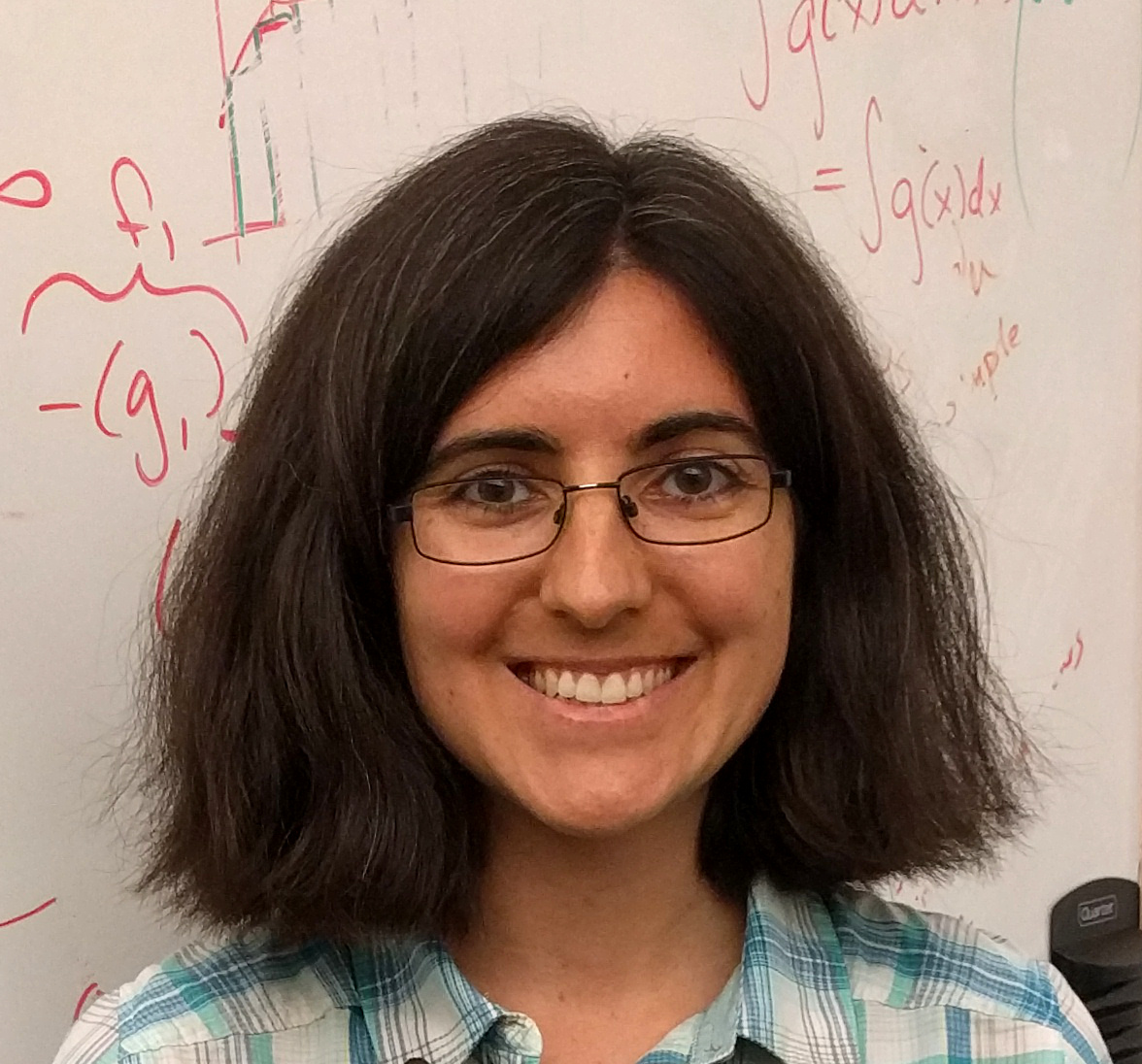 Tamara Broderick合作论文数Department of Electrical Engineering and Computer Science, Massachusetts Institute of Technology3
 Amit Dhurandhar合作论文数Thomas J. Watson Research Center, IBM3
 Nghia Hoang合作论文数School of Electrical Engineering and Computer Science, Washington State University3
 Margrit Betke合作论文数Department of Computer Science, Boston University Arts & Sciences;Faculty of Computing & Data Sciences, Boston University3
 Dennis Wei合作论文数Trustworthy AI Department, IBM Research3L. M. Chahine合作论文数2Luba Smolensky合作论文数2Greg Wornell合作论文数2
 Joe Davison合作论文数BambooHR2Divya Ramamoorthy合作论文数Department of Chemistry, University of South Florida2
 Melanie F Pradier合作论文数Signal Theory and Communications Department, University Carlos III in Madrid2
 Jonathan Glass合作论文数Emory ALS Center, Department of Neurology, School of Medicine, Emory University2Fournier Christina N合作论文数2Berry James D合作论文数2
 Hanspeter Pfister合作论文数Harvard John A. Paulson School of Engineering and Applied Sciences, Harvard University2
 Yunfeng Zhang合作论文数Grammarly2
 Karen Sachs合作论文数Microbiology and Immunology Department, Stanford University2




