Transition Radiation Detectors (TRDs) are useful for electron identification and hadron suppression in high energy nuclear and particle physics experiments. Conventional wire-chamber TRDs face operational limitations due to space charge effects, motivating the replacement of the amplification stage with MicroPattern Gaseous Detectors (MPGDs). This work explores different MPGD technologies-Gas Electron Multiplier (GEM), Micro-Mesh Gaseous Structure (Micromegas), and Resistive Micro-Well (& micro;RWELL)-as alternative TRD amplification stages. We report on the design, construction, and in-beam characterization of multiple MPGD-based TRD prototypes exposed to 3-20 GeV mixed electron-hadron beams at the Fermilab Test Beam Facility and at the CERN SPS H8 beamline. Each detector consisted of a multi-layered radiator, an approximately 2 cm deep drift region, an MPGD amplification stage optimized for X-ray transition radiation detection in a Xe:CO2 (90:10) gas mixture, and a two-dimensional readout. The GEM-based TRD prototype achieved a pion suppression factor of about 8 at 90% electron efficiency, while the Micromegas-based prototype-with an added GEM preamplification layer-demonstrated improved operational stability and clear TR photon discrimination. The & micro;RWELL prototype achieved stable operation but limited signal gain.Geant4-based studies confirmed the observed trends and highlighted the sensitivity of the TR yield to cathode material and radiator configuration. These studies represent the first in-beam measurements of Micromegas-and & micro;RWELL-based TRDs, along with discussion of the performance capabilities of a triple-GEM-TRD. The results demonstrate the feasibility of MPGDs as scalable, high-rate amplification structures for next-generation TRD applications.
We report the first measurement of the azimuthal anisotropy of J/psi at forward rapidity (1.2 < vertical bar eta vertical bar < 2.2) in Au + Au collisions at root s(NN) = 200 GeV at the BNL Relativistic Heavy Ion Collider. The data were collected by the PHENIX experiment in 2014 and 2016 with integrated luminosity of 14.5 nb(-1). The second Fourier coefficient (v(2)) of the azimuthal distribution of J/psi is determined as a function of the transverse momentum (p(T)) using the event-plane method. The measurements were performed for several selections of collision centrality: 0%-50%, 10%-60%, and 10%-40%. We find that in all cases the values of v(2) (p(T)), which quantify the elliptic flow of J/psi, are consistent with zero. Within uncertainties, the results are consistent with measurements at midrapidity, indicating no significant elliptic flow of the J/psi within the quark-gluon-plasma medium at collision energies of root s(NN) = 200 GeV.
The jet cross section and jet-substructure observables in p +p collisions at root s =200 GeV were measured by the PHENIX Collaboration at the Relativistic Heavy Ion Collider (RHIC). Jets are reconstructed from charged-particle tracks and electromagnetic-calorimeter clusters using the anti-k(t) algorithm with a jet radius of R =0.3 for jets with transverse momentum within 8.0 < p(T) <40.0 GeV/c and pseudorapidity |eta| <0.15. Measurements include the jet cross section, as well as distributions of SoftDrop-groomed momentum fraction (z(g)), charged-particle transverse momentum with respect to jet axis (j(T)), and radial distributions of charged particles within jets (r). Also measured was the distribution of xi =-ln(z), where z is the fraction of the jet momentum carried by the charged particle. The measurements are compared to theoretical next-to and next-to-next-to-leading-order calculations, the pythia and herwig event generators, and to other existing experimental results. Indicated from these measurements is a lower particle multiplicity in jets at RHIC energies when compared to models. Also noted are implications for future jet measurements with sPHENIX at RHIC as well as at the future Electron-Ion Collider.
PHENIX presents a simultaneous measurement of the production of direct γ and π^{0} in d+Au collisions at sqrt[s_{NN}]=200 GeV over a p_{T} range of 7.5 to 18 GeV/c for different event samples selected by event activity, i.e., charged-particle multiplicity detected at forward rapidity. Direct-photon yields are used to empirically estimate the contribution of hard-scattering processes in the different event samples. Using this estimate, the average nuclear-modification factor, R_{dAu,EXP}^{π^{0}}, is 0.925±0.023(stat)±0.15(scale), consistent with unity for minimum-bias (MB) d+Au collisions. For event classes with low and moderate event activity, R_{dAu,EXP}^{π^{0}} is consistent with the MB value within 5% uncertainty. This result confirms that the previously observed enhancement of high-p_{T} π^{0} production found in small-system collisions with low event activity is a result of a bias in interpreting event activity within the Glauber framework. In contrast, for the top 5% of events with the highest event activity, R_{dAu,EXP}^{π^{0}} is suppressed by 20% relative to the MB value with a significance of 4.5σ, which may be due to final-state effects. This suppression corresponds to a p_{T} shift of δp_{T}=0.213±0.055 Gev/c at 9 Gev/c.
We present the first forward-rapidity measurements of elliptic anisotropy of open-heavy-flavor muons at the Relativistic Heavy Ion Collider. The measurements are based on data samples of Au + Au collisions at root s(NN) = 200 GeV collected by the PHENIX experiment in 2014 and 2016 with integrated luminosity of 14.5 nb(-1). The measurements are performed in the pseudorapidity range 1.2 < vertical bar eta vertical bar < 2 and cover transverse momenta 1 < p(T) < 4 GeV/c. The elliptic flow of charged hadrons as a function of transverse momentum is also measured in the same kinematic range. We observe significant elliptic flow for both charged hadrons and heavy-flavor muons. The results show clear mass ordering of elliptic flow of light- and heavy-flavor particles. The magnitude of the measured v(2) is comparable to that in the midrapidity region. This indicates that there is no strong longitudinal dependence in the quark-gluon-plasma evolution between midrapidity and the rapidity range of this measurement at root s(NN) = 200 GeV.
The J/ψ and ψ(2S) charmonium states, composed of cc̅ quark pairs and known since the 1970s, are widely believed to serve as ideal probes to test quantum chromodynamics in high-energy hadronic interactions. However, there is not yet a complete understanding of the charmonium-production mechanism. Recent measurements of J/ψ production as a function of event charged-particle multiplicity at the collision energies of both the Large Hadron Collider (LHC) and the Relativistic Heavy Ion Collider (RHIC) show enhanced J/ψ production yields with increasing multiplicity. One potential explanation for this type of dependence is multiparton interactions (MPI). We carry out the first measurements of self-normalized J/ψ yields and the ψ(2S) to J/ψ ratio at both forward and backward rapidities as a function of self-normalized charged-particle multiplicity in p+p collisions at √(s)=200 GeV. In addition, detailed pythia studies tuned to RHIC energies were performed to investigate the MPI impacts. We find that the PHENIX data at RHIC are consistent with recent LHC measurements and can only be described by pythia calculations that include MPI effects. The forward and backward ψ(2S) to J/ψ ratio, which serves as a unique and powerful approach to study final-state effects on charmonium production, is found to be less dependent on the charged-particle multiplicity.
High-momentum two-particle correlations are a useful tool for studying jet-quenching effects in the quark-gluon plasma. Angular correlations between neutral-pion triggers and charged hadrons with transverse momenta in the range 4–12 GeV/c and 0.5–7 GeV/c, respectively, have been measured by the PHENIX experiment in 2014 for Au+Au collisions at √(s__NN)=200 GeV. Suppression is observed in the yield of high-momentum jet fragments opposite the trigger particle, which indicates jet suppression stemming from in-medium partonic energy loss, while enhancement is observed for low-momentum particles. The ratio and differences between the yield in Au+Au collisions and p+p collisions, I_AA and Δ_AA, as a function of the trigger-hadron azimuthal separation, Δϕ, are measured for the first time at the Relativistic Heavy Ion Collider. These results better quantify how the yield of low-p_T associated hadrons is enhanced at wide angle, which is crucial for studying energy loss as well as medium-response effects.
The PHENIX experiment measured the centrality dependence of two-pion Bose-Einstein correlation functions in root sNN = 200 GeV Au + Au collisions at the Relativistic Heavy Ion Collider at Brookhaven National Laboratory. The data are well represented by Levy-stable source distributions. The extracted source parameters are the correlation-strength parameter lambda, the Levy index of stability a, and the Levy-scale parameter R as a function of transverse mass m(T) and centrality. The lambda(m(T)) parameter is constant at larger values of m(T), but decreases as m(T) decreases. The Levy-scale parameter R(m(T)) decreases with mT and exhibits proportionality to the length scale of the nuclear overlap region. The Levy exponent alpha(m(T)) is independent of m(T) within uncertainties in each investigated centrality bin, but shows a clear centrality dependence. At all centralities, the Levy exponent a is significantly different from that of Gaussian ( alpha= 2) or Cauchy ( alpha = 1) source distributions. Comparisons to the predictions of Monte-Carlo simulations of resonance-decay chains show that, in all but the most peripheral centrality class (50%-60%), the obtained results are inconsistent with the measurements, unless a significant reduction of the in-medium mass of the eta meson is included. In each centrality class, the best value of the in-medium eta mass is compared to the mass of the. meson, as well as to several theoretical predictions that consider restoration of U-A(1) symmetry in hot hadronic matter.
High-momentum two-particle correlations are a useful tool for studying jet-quenching effects in the quarkgluon plasma. Angular correlations between neutral-pion triggers and charged hadrons with transverse momenta in the range 4-12 GeV/c and 0.5-7 GeV/c, respectively, have been measured by the PHENIX experiment in 2014 for Au + Au collisions at root sNN = 200 GeV. Suppression is observed in the yield of high-momentum jet fragments opposite the trigger particle, which indicates jet suppression stemming from in-medium partonic energy loss, while enhancement is observed for low-momentum particles. The ratio and differences between the yield in Au + Au collisions and p + p collisions, I-AA and Delta(AA), as a function of the trigger-hadron azimuthal separation, Delta phi, are measured for the first time at the BNL Relativistic Heavy Ion Collider. These results better quantify how the yield of low-pT associated hadrons is enhanced at wide angle, which is crucial for studying energy loss as well as medium-response effects.
The invariant yield of electrons from open-heavy-flavor decays for $1
The PHENIX experiment has performed a systematic study of identified charged-hadron ( p +/-, K +/-, p, p) production at midrapidity in p + Al, He-3+Au, and Cu + Au collisions at root s(NN) = 200 GeV and U + U collisions at root s(NN) = 193 GeV. Identified charged-hadron invariant transverse-momentum (p(T)) and transverse-mass (m(T)) spectra are presented and interpreted in terms of radially expanding thermalized systems. The particle ratios of K/ p and p/ p have been measured in different centrality ranges of large (Cu + Au and U + U) and small ( p + Al and He-3+Au) collision systems. The values of K/pi ratios measured in all considered collision systems were found to be consistent with those measured in p + p collisions. However, the values of p/pi ratios measured in large collision systems reach the values of approximate to 0.6, which is a factor of approximate to 2 larger than in p + p collisions. These results can be qualitatively understood in terms of the baryon enhancement expected from hadronization by recombination. Identified charged-hadron nuclear-modification factors (R-AB) are also presented. Enhancement of proton R-AB values over meson RAB values was observed in central He-3+Au, Cu + Au, and U + U collisions. The proton R-AB values measured in the p + Al collision system were found to be consistent with R-AB phi values of phi, pi(+/-), K-+/-, and pi(0) mesons, which may indicate that the size of the system produced in p + Al collisions is too small for recombination to cause a noticeable increase in proton production.
The measurement of the direct-photon spectrum from Au+Au collisions at root s(NN) = 200 GeV is presented by the PHENIX Collaboration using the external-photon-conversion technique for 0%-93% central collisions in a transverse-momentum (p(T)) range of 0.8-10 GeV/c. An excess of direct photons, above prompt-photon production from hard-scattering processes, is observed for p(T) < 6 GeV/c. Nonprompt direct photons are measured by subtracting the prompt component, which is estimated as Ncoll-scaled direct photons from p + p collisions at 200 GeV, from the direct-photon spectrum. Results are obtained for 0.8 < p(T) < 6.0 GeV/c and suggest that the spectrum has an increasing inverse slope from approximate to 0.2 to 0.4 GeV/c with increasing p(T), which indicates a possible sensitivity of the measurement to photons from earlier stages of the evolution of the collision. In addition, like the direct-photon production, the p(T) -integrated nonprompt direct-photon yields also follow a power-law scaling behavior as a function of collision-system size. The exponent, a, for the nonprompt component is found to be consistent with 1.1 with no apparent p(T) dependence.
The ECCE detector has been recommended as the selected reference detector for the future Electron-Ion Collider (EIC). A series of simulation studies have been carried out to validate the physics feasibility of the ECCE detector. In this paper, detailed studies of heavy flavor hadron and jet reconstruction and physics projections with the ECCE detector performance and different magnet options will be presented. The ECCE detector has enabled precise EIC heavy flavor hadron and jet measurements with a broad kinematic coverage. These proposed heavy flavor measurements will help systematically study the hadronization process in vacuum and nuclear medium especially in the underexplored kinematic region.
The evaluation of the measurement of double-spin asymmetries for charge-separated pions and kaons produced in deep-inelastic scattering from the proton using the ECCE detector design concept is presented, for the combinations of lepton and hadron beam energies of 5 x 41 GeV2 and 18 x 275 GeV2. The study uses unpolarised simulated data that are processed through a full GEANT simulation of the detector. These data are then reweighted at the parton level with DSSV helicity distributions and DSS fragmentation functions, in order to generate the relevant asymmetries, and subsequently analysed. The performed analysis shows that the ECCE detector concept provides the resolution and acceptance, with a broad coverage in kinematic phase space, needed for a robust extraction of asymmetries. This, in turn, allows for a precise extraction of sea-quark helicity distributions.
Exclusive heavy quarkonium photoproduction is one of the most popular processes in EIC, which has a large cross section and a simple final state. Due to the gluonic nature of the exchange Pomeron, this process can be related to the gluon distributions in the nucleus. The momentum transfer dependence of this process is sensitive to the interaction sites, which provides a powerful tool to probe the spatial distribution of gluons in the nucleus. Recently the problem of the origin of hadron mass has received lots of attention in determining the anomaly contribution $M_{a}$. The trace anomaly is sensitive to the gluon condensate, and exclusive production of quarkonia such as J/$ψ$ and $Υ$ can serve as a sensitive probe to constrain it. In this paper, we present the performance of the ECCE detector for exclusive J/$ψ$ detection and the capability of this process to investigate the above physics opportunities with ECCE.
A. Adare,12 C. Aidala,39,45 N. N. Ajitanand,63,* Y. Akiba,57,58,† R. Akimoto,11 J. Alexander,63 M. Alfred,24 H. Al-Ta’ani,52 A. Angerami,13 K. Aoki,32,57 N. Apadula,29,64 Y. Aramaki,11,57 H. Asano,35,57 E. C. Aschenauer,7 E. T. Atomssa,64 T. C. Awes,54 B. Azmoun,7 V. Babintsev,25 A. Bagoly,17 M. Bai,6 B. Bannier,64 K. N. Barish,8 B. Bassalleck,51 S. Bathe,5,58 V. Baublis,56 S. Baumgart,57 A. Bazilevsky,7 R. Belmont,12,69 A. Berdnikov,60 Y. Berdnikov,60 D. S. Blau,34,50 M. Boer,39 J. S. Bok,51,52,72 K. Boyle,58 M. L. Brooks,39 J. Bryslawskyj,5,8 H. Buesching,7 V. Bumazhnov,25 S. Butsyk,51 S. Campbell,13,64 V. Canoa Roman,64 P. Castera,64 C.-H. Chen,58,64 C. Y. Chi,13 M. Chiu,7 I. J. Choi,26 J. B. Choi,10,* S. Choi,62 R. K. Choudhury,4 P. Christiansen,41 T. Chujo,68 O. Chvala,8 V. Cianciolo,54 Z. Citron,64,70 B. A. Cole,13 M. Connors,21,58,64 M. Csanád,17 T. Csörgő,18,71 S. Dairaku,35,57 T. W. Danley,53 A. Datta,44 M. S. Daugherity,1 G. David,7,64 K. DeBlasio,51 K. Dehmelt,64 A. Denisov,25 A. Deshpande,58,64 E. J. Desmond,7 K. V. Dharmawardane,52 O. Dietzsch,61 L. Ding,29 A. Dion,29,64 J. H. Do,72 M. Donadelli,61 L. D’Orazio,43 O. Drapier,36 A. Drees,64 K. A. Drees,6 J. M. Durham,39,64 A. Durum,25 S. Edwards,6 Y. V. Efremenko,54 T. Engelmore,13 A. Enokizono,54,57,59 S. Esumi,68 K. O. Eyser,7,8 B. Fadem,46 W. Fan,64 N. Feege,64 D. E. Fields,51 M. Finger,9 M. Finger, Jr.,9 F. Fleuret,36 S. L. Fokin,34 J. E. Frantz,53 A. Franz,7 A. D. Frawley,20 Y. Fukao,57 Y. Fukuda,68 T. Fusayasu,48 K. Gainey,1 C. Gal,64 P. Gallus,14 P. Garg,3,64 A. Garishvili,66 I. Garishvili,38 H. Ge,64 A. Glenn,38 X. Gong,63 M. Gonin,36 Y. Goto,57,58 R. Granier de Cassagnac,36 N. Grau,2 S. V. Greene,69 M. Grosse Perdekamp,26 T. Gunji,11 L. Guo,39 H.-Å. Gustafsson,41,* T. Hachiya,57,58 J. S. Haggerty,7 K. I. Hahn,19 H. Hamagaki,11 S. Y. Han,19 J. Hanks,13,64 S. Hasegawa,30 T. O. S. Haseler,21 K. Hashimoto,57,59 E. Haslum,41 R. Hayano,11 X. He,21 T. K. Hemmick,64 T. Hester,8 J. C. Hill,29 K. Hill,12 A. Hodges,21 R. S. Hollis,8 K. Homma,23 B. Hong,33 T. Horaguchi,68 Y. Hori,11 T. Hoshino,23 N. Hotvedt,29 J. Huang,7 S. Huang,69 T. Ichihara,57,58 H. Iinuma,32 Y. Ikeda,57,68 J. Imrek,16 M. Inaba,68 A. Iordanova,8 D. Isenhower,1 M. Issah,69 D. Ivanishchev,56 B. V. Jacak,64 M. Javani,21 Z. Ji,64 J. Jia,7,63 X. Jiang,39 B. M. Johnson,7,21 K. S. Joo,47 V. Jorjadze,64 D. Jouan,55 D. S. Jumper,26 J. Kamin,64 S. Kaneti,64 B. H. Kang,22 J. H. Kang,72 J. S. Kang,22 J. Kapustinsky,39 K. Karatsu,35,57 S. Karthas,64 M. Kasai,57,59 G. Kasza,17,18 D. Kawall,44,58 A. V. Kazantsev,34 T. Kempel,29 V. Khachatryan,64 A. Khanzadeev,56 K. M. Kijima,23 B. I. Kim,33 C. Kim,8,33 D. J. Kim,31 E.-J. Kim,10 H. J. Kim,72 K.-B. Kim,10 M. Kim,62 M. H. Kim,33 Y.-J. Kim,26 Y. K. Kim,22 D. Kincses,17 E. Kinney,12 Á. Kiss,17 E. Kistenev,7 J. Klatsky,20 D. Kleinjan,8 P. Kline,64 T. Koblesky,12 Y. Komatsu,11,32 B. Komkov,56 J. Koster,26 D. Kotchetkov,53 D. Kotov,56,60 A. Král,14 F. Krizek,31 S. Kudo,68 G. J. Kunde,39 B. Kurgyis,17 K. Kurita,57,59 M. Kurosawa,57,58 Y. Kwon,72 G. S. Kyle,52 R. Lacey,63 Y. S. Lai,13 J. G. Lajoie,29 A. Lebedev,29 B. Lee,22 D. M. Lee,39 J. Lee,19,65 K. B. Lee,33 K. S. Lee,33 S. H. Lee,29,64 S. R. Lee,10 M. J. Leitch,39 M. A. L. Leite,61 M. Leitgab,26 Y. H. Leung,64 B. Lewis,64 N. A. Lewis,45 X. Li,39 S. H. Lim,39,72 L. A. Linden Levy,12 M. X. Liu,39 S. Lökös,17,18 B. Love,69 D. Lynch,7 C. F. Maguire,69 Y. I. Makdisi,6 M. Makek,70,73 A. Manion,64 V. I. Manko,34 E. Mannel,7,13 H. Masuda,59 S. Masumoto,11,32 M. McCumber,12,39 P. L. McGaughey,39 D. McGlinchey,12,20,39 C. McKinney,26 M. Mendoza,8 B. Meredith,26 W. J. Metzger,18 Y. Miake,68 T. Mibe,32 A. C. Mignerey,43 D. E. Mihalik,64 A. Milov,70 D. K. Mishra,4 J. T. Mitchell,7 G. Mitsuka,58 Y. Miyachi,57,67 S. Miyasaka,57,67 A. K. Mohanty,4 S. Mohapatra,63 H. J. Moon,47 T. Moon,72 D. P. Morrison,7 S. I. Morrow,69 S. Motschwiller,46 T. V. Moukhanova,34 T. Murakami,35,57 J. Murata,57,59 A. Mwai,63 T. Nagae,35 K. Nagai,67 S. Nagamiya,32,57 K. Nagashima,23 J. L. Nagle,12 M. I. Nagy,17,71 I. Nakagawa,57,58 H. Nakagomi,57,68 Y. Nakamiya,23 K. R. Nakamura,35,57 T. Nakamura,57 K. Nakano,57,67 C. Nattrass,66 A. Nederlof,46 M. Nihashi,23,57 R. Nouicer,7,58 T. Novák,18,71 N. Novitzky,31,64 A. S. Nyanin,34 E. O’Brien,7 C. A. Ogilvie,29 K. Okada,58 J. D. Orjuela Koop,12 J. D. Osborn,45 A. Oskarsson,41 M. Ouchida,23,57 K. Ozawa,11,32,68 R. Pak,7 V. Pantuev,27 V. Papavassiliou,52 B. H. Park,22 I. H. Park,19,65 J. S. Park,62 S. Park,57,62,64 S. K. Park,33 S. F. Pate,52 L. Patel,21 M. Patel,29 H. Pei,29 J.-C. Peng,26 W. Peng,69 H. Pereira,15 D. V. Perepelitsa,7,12,13 G. D. N. Perera,52 D.Yu. Peressounko,34 C. E. PerezLara,64 R. Petti,7,64 C. Pinkenburg,7 R. P. Pisani,7 M. Proissl,64 A. Pun,53 M. L. Purschke,7 H. Qu,1 P. V. Radzevich,60 J. Rak,31 I. Ravinovich,70 K. F. Read,54,66 D. Reynolds,63 V. Riabov,50,56 Y. Riabov,56,60 E. Richardson,43 D. Richford,5 T. Rinn,29 D. Roach,69 G. Roche,40,* S. D. Rolnick,8 M. Rosati,29 Z. Rowan,5 J. Runchey,29 B. Sahlmueller,64 N. Saito,32 T. Sakaguchi,7 H. Sako,30 V. Samsonov,50,56 M. Sano,68 M. Sarsour,21 K. Sato,68 S. Sato,30 S. Sawada,32 B. K. Schmoll,66 K. Sedgwick,8 R. Seidl,57,58 A. Sen,21,29,66 R. Seto,8 A. Sexton,43 D. Sharma,64,70 I. Shein,25 T.-A. Shibata,57,67 K. Shigaki,23 M. Shimomura,29,49,68 K. Shoji,35,57 P. Shukla,4 A. Sickles,7,26 C. L. Silva,29,39 D. Silvermyr,41,54 K. S. Sim,33 B. K. Singh,3 C. P. Singh,3 V. Singh,3 M. J. Skoby,45 M. Slunečka,9 R. A. Soltz,38 W. E. Sondheim,39 S. P. Sorensen,66 I. V. Sourikova,7 P. W. Stankus,54 E. Stenlund,41 M. Stepanov,44,* A. Ster,71 S. P. Stoll,7 T. Sugitate,23 A. Sukhanov,7 J. Sun,64 J. Sziklai,71 E. M. Takagui,61 A. Takahara,11 A Takeda,49 A. Taketani,57,58 Y. Tanaka,48 S. Taneja,64 K. Tanida,30,58,62 M. J. Tannenbaum,7 S. Tarafdar,3,69 A. Taranenko,50,63 G. Tarnai,16 E. Tennant,52 H. Themann,64 R. Tieulent,42 A. Timilsina,29 T. Todoroki,57,68 L. Tomášek,28 M. Tomášek,14,28 H. Torii,23 C. L. Towell,1 R. S. Towell,1 I. Tserruya,70 Y. Tsuchimoto,11 T. Tsuji,11 Y. Ueda,23 B. Ujvari,16 C. Vale,7 H. W. van Hecke,39 M. Vargyas,17,71 S. Vazquez-Carson,12 E. Vazquez-Zambrano,13 A. Veicht,13 J. Velkovska,69 R. Vértesi,71 M. Virius,14 A. Vossen,26 V. Vrba,14,28 E. Vznuzdaev,56 X. R. Wang,52,58 Z. Wang,5 D. Watanabe,23 K. Watanabe,68 Y. Watanabe,57,58 Y. S. Watanabe,11 F. Wei,29,52 R. Wei,63 S. N. White,7 D. Winter,13 S. Wolin,26 C. L. Woody,7 M. Wysocki,12,54 B. Xia,53 C. Xu,52 Q. Xu,69
The recently approved Electron-Ion Collider (EIC) will provide a unique new opportunity for searches of charged lepton flavor violation (CLFV) and other new physics scenarios. In contrast to the $e \leftrightarrow \mu$ CLFV transition for which very stringent limits exist, there is still a relatively large discovery space for the $e \to \tau$ CLFV transition, potentially to be explored by the EIC. With the latest detector design of ECCE (EIC Comprehensive Chromodynamics Experiment) and projected integral luminosity of the EIC, we find the $\tau$-leptons created in the DIS process $ep\to \tau X$ are expected to be identified with high efficiency. A first ECCE simulation study, restricted to the 3-prong $\tau$-decay mode and with limited statistics for the Standard Model backgrounds, estimates that the EIC will be able to improve the current exclusion limit on $e\to \tau$ CLFV by an order of magnitude.
The Electron-Ion Collider (EIC) is a cutting-edge accelerator facility that will study the nature of the "glue" that binds the building blocks of the visible matter in the universe. The proposed experiment will be realized at Brookhaven National Laboratory in approximately 10 years from now, with detector design and R D currently ongoing. Notably, EIC is one of the first large-scale facilities to leverage Artificial Intelligence (AI) already starting from the design and R D phases. The EIC Comprehensive Chromodynamics Experiment (ECCE) is a consortium that proposed a detector design based on a 1.5T solenoid. The EIC detector proposal review concluded that the ECCE design will serve as the reference design for an EIC detector. Herein we describe a comprehensive optimization of the ECCE tracker using AI. The work required a complex parametrization of the simulated detector system. Our approach dealt with an optimization problem in a multidimensional design space driven by multiple objectives that encode the detector performance, while satisfying several mechanical constraints. We describe our strategy and show results obtained for the ECCE tracking system. The AI-assisted design is agnostic to the simulation framework and can be extended to other sub-detectors or to a system of sub-detectors to further optimize the performance of the EIC detector.
Received 2 October 2023DOI:https://doi.org/10.1103/PhysRevC.108.049905©2023 American Physical SocietyPhysics Subject Headings (PhySH)Research AreasParticle correlations & fluctuationsQuark-gluon plasmaRelativistic heavy-ion collisionsPhysical SystemsBose-Einstein condensatesPionsNuclear Physics
Reported here are transverse single-spin asymmetries ($A_{N}$) in the production of charged hadrons as a function of transverse momentum ($p_T$) and Feynman-$x$ ($x_F$) in polarized $p^{\uparrow}$+$p$, $p^{\uparrow}$+Al, and $p^{\uparrow}$+Au collisions at $\sqrt{s_{_{NN}}}=200$ GeV. The measurements have been performed at forward and backward rapidity ($1.4<|\eta|<2.4$) over the range of $1.50$) in $p^{\uparrow}$+$p$ collisions, whereas the $p^{\uparrow}$+Al and $p^{\uparrow}$+Au results show smaller asymmetries. This finding provides new opportunities to investigate the origin of transverse single-spin asymmetries and a tool to study nuclear effects in $p$+$A$ collisions.
 Yasuyuki Akiba合作论文数RHIC Physics Research Laboratory, Nishina Center for Accelerator-Based Science, RIKEN209
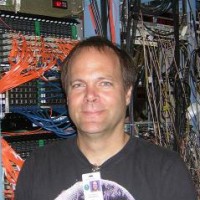 Christopher Pinkenburg合作论文数Physics Department, Brookhaven National Laboratory208
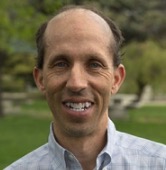 Ron Soltz合作论文数Nuclear and Chemical Sciences Division, Lawrence Livermore National Laboratory208
 S. F. Pate合作论文数207
 Alexander Milov合作论文数Department of Particle Physics and Astrophysics, Faculty of Physics, Weizmann Institute of Science207M. L. Purschke合作论文数207
 Kenneth F Read Jr合作论文数Physics Division, Oak Ridge National Laboratory;University of Tennessee207
 Edouard Kistenev合作论文数Brookhaven National Laboratory207
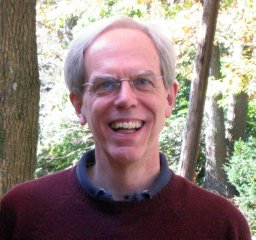 John Haggerty合作论文数Physics Department, Brookhaven National Laboratory206R. Nouicer合作论文数205P. L. McGaughey合作论文数Los Alamos National Laboratory205I. Nakagawa合作论文数204
 Julia Velkovska合作论文数202
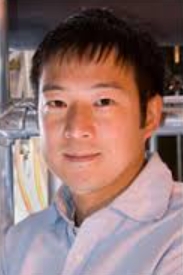 Mickey Chiu合作论文数Physics Department, Brookhaven National Laboratory;NEXO;PHENIX202N. Grau合作论文数202
 Marzia Rosati合作论文数Department of Physics and Astronomy, Iowa State University202
 M. X. Liu合作论文数los alamos national laboratory200
 Michael J. Tannenbaum合作论文数Physics Department, Brookhaven National Laboratory199D. Morrison合作论文数199S. Bathe合作论文数198
 Artur Durum合作论文数198A. Enokizono合作论文数198A. S. Nyanin合作论文数198
 Axel Drees合作论文数Department of Physics and Astronomy, Stony Brook University;College of Arts and Sciences, Stony Brook University198M. Mccumber合作论文数198V. Bumazhnov合作论文数197
 Taku Gunji (郡司卓)合作论文数Center for Nuclear Study, Graduate School of Science, The University of Tokyo197
 Itzhak Tserruya合作论文数Department of Particle Physics & Astrophysics, Faculty of Physics, Weizmann Institute of Science197T.-A. Shibata合作论文数197Shimomura Maya (下村真弥)合作论文数Faculty Division of Natural Sciences Research Group of Physics, Nara Women's University197
 Thomas Hemmick合作论文数Department of Physics and Astronomy, College of Arts and Sciences, Stony Brook University196Abhay Deshpande合作论文数Brookhaven National Laboratory196V. Papavassiliou合作论文数196
 Victoria Greene合作论文数Department of Physics and Astronomy, Vanderbilt University196
 Kazuyoshi Kurita (栗田和好)合作论文数Department of Physics, College of Science, Rikkyo University;Center for Development and Support of Higher Education, Rikkyo University196J. M. Durham合作论文数196Barbara H Fadem合作论文数196A. Bazilevsky合作论文数195
 Melvin L. Brooks合作论文数Los Alamos National Laboratory195Anders Oskarsson合作论文数Division of Particle and Nuclear Physics, Department of Physics, Faculty of Science, Lund University195S. D. Rolnick合作论文数Univ Calif Riverside195
 Mate Csanad合作论文数Faculty of Natural Sciences, Eötvös Loránd University;Department of Atomic Physics, Eötvös Loránd University195M. Grosse Perdekamp合作论文数Department of Physics, University of California195
 Bob Azmoun合作论文数Physics Department, Brookhaven National Laboratory195
 Donald Isenhower合作论文数Department of Engineering and Physics, Abilene Christian University194E. Mannel合作论文数194A. Sickles合作论文数194Walter Sondheim合作论文数Los Alamos National Laboratory194
 Toru Sugitate (杉立徹)合作论文数Hiroshima University194




