Widely used computer-aided translation (CAT) tools divide documents into segments, such as sentences, and arrange them side-by-side in a spreadsheet-like view. We present the first controlled evaluation of these design choices on translator performance, measuring speed and accuracy in three experimental text-processing tasks. We find significant evidence that sentence-by-sentence presentation enables faster text reproduction and within-sentence error identification compared to unsegmented text, and that a top-and-bottom arrangement of source and target sentences enables faster text reproduction compared to a side-by-side arrangement. For revision, on the other hand, we find that presenting unsegmented text results in the highest accuracy and time efficiency. Our findings have direct implications for best practices in designing CAT tools.
We apply phrase-based and neural models to a core task in interactive machine translation: suggesting how to complete a partial translation. For the phrase-based system, we demonstrate improvements in suggestion quality using novel objective functions, learning techniques, and inference algorithms tailored to this task. Our contributions include new tunable metrics, an improved beam search strategy, an n-best extraction method that increases suggestion diversity, and a tuning procedure for a hierarchical joint model of alignment and translation. The combination of these techniques improves next-word suggestion accuracy dramatically from 28.5% to 41.2% in a large-scale English-German experiment. Our recurrent neural translation system increases accuracy yet further to 53.0%, but inference is two orders of magnitude slower. Manual error analysis shows the strengths and weaknesses of both approaches.
Old questions being answered with both AI and HCI.
AbstractThe fields of artificial intelligence (AI) and human-computer interaction (HCI) are influencing each other like never before. Widely used systems such as Google Translate, Facebook Graph Search, and RelateIQ hide the complexity of large-scale AI systems behind intuitive interfaces. But relations were not always so auspicious. The two fields emerged at different points in the history of computer science, with different influences, ambitions, and attendant biases. AI aimed to construct a rival, and perhaps a successor, to the human intellect. Early AI researchers such as McCarthy, Minsky, and Shannon were mathematicians by training, so theorem-proving and formal models were attractive research directions. In contrast, HCI focused more on empirical approaches to usability and human factors, both of which generally aim to make machines more useful to humans. Many of the attendees at the first CHI conference in 1983 were psychologists and engineers. Papers were presented with titles such as "Design principles for human-computer interfaces" and "Psychological issues in the use of icons in command menus," hardly appealing fare for most mainstream AI researchers.
We present an incremental adaptation approach for statistical machine translation that maintains a flexible hierarchical domain structure within a single consistent model. Both weights and rules are updated incrementallyonastreamofpost-edits. Our multi-level domain hierarchy allows the system to adapt simultaneously towards local context at dierent levels of granularity, including genres and individual documents. Our experiments show consistent improvements in translation quality from all components of our approach.
Analyses of computer aided translation typically focus on either frontend interfaces and human effort, or backend translation and machine learnability of corrections. However, this distinction is artificial in practice since the frontend and backend must work in concert. We present the first holistic, quantitative evaluation of these issues by contrasting two assistive modes: postediting and interactive machine translation (MT). We describe a new translator interface, extensive modifications to a phrasebased MT system, and a novel objective function for re-tuning to human corrections. Evaluation with professional bilingual translators shows that post-edit is faster than interactive at the cost of translation quality for French-English and EnglishGerman. However, re-tuning the MT system to interactive output leads to larger, statistically significant reductions in HTER versus re-tuning to post-edit. Analysis shows that tuning directly to HTER results in fine-grained corrections to subsequent machine output.
Segmentation of clitics has been shown to improve accuracy on a variety of Arabic NLP tasks. However, state-of-the-art Arabic word segmenters are either limited to formal Modern Standard Arabic, performing poorly on Arabic text featuring dialectal vocabulary and grammar, or rely on linguistic knowledge that is hand-tuned for each dialect. We extend an existing MSA segmenter with a simple domain adaptation technique and new features in order to segment informal and dialectal Arabic text. Experiments show that our system outperforms existing systems on newswire, broadcast news and Egyptian dialect, improving segmentation F-1 score on a recently released Egyptian Arabic corpus to 95.1%, compared to 90.8% for another segmenter designed specifically for Egyptian Arabic.
We present a new version of Phrasal, an open-source toolkit for statistical phrasebased machine translation.This revision includes features that support emerging research trends such as (a) tuning with large feature sets, (b) tuning on large datasets like the bitext, and (c) web-based interactive machine translation.A direct comparison with Moses shows favorable results in terms of decoding speed and tuning time.
We describe Stanford’s participation in the French-English and English-German tracks of the 2014 Workshop on Statistical Machine Translation (WMT). Our systems used large feature sets, word classes, and an optional unconstrained language model. Among constrained systems, ours performed the best according to uncased BLEU: 36.0% for French-English and 20.9% for English-German.
Scalable discriminative training methods are now broadly available for estimating phrase-based, feature-rich translation models. However, the sparse feature sets typically appearing in research evaluations are less attractive than standard dense features such as language and translation model probabilities: they often overfit, do not generalize, or require complex and slow feature extractors. This paper introduces extended features, which are more specific than dense features yet more general than lexicalized sparse features. Large-scale experiments show that extended features yield robust BLEU gains for both Arabic-English (+1.05) and Chinese-English (+0.67) relative to a strong feature-rich baseline. We also specialize the feature set to specific datadomains, identifyanobjectivefunction that is less prone to overfitting, and release fast, scalable, and language-independent tools for implementing the features.
The standard approach to computer-aided language translation is post-editing: a machine generates a single translation that a human translator corrects. Recent studies have shown this simple technique to be surprisingly effective, yet it underutilizes the complementary strengths of precision-oriented humans and recall-oriented machines. We present Predictive Translation Memory, an interactive, mixed-initiative system for human language translation. Translators build translations incrementally by considering machine suggestions that update according to the user's current partial translation. In a large-scale study, we find that professional translators are slightly slower in the interactive mode yet produce slightly higher quality translations despite significant prior experience with the baseline post-editing condition. Our analysis identifies significant predictors of time and quality, and also characterizes interactive aid usage. Subjects entered over 99% of characters via interactive aids, a significantly higher fraction than that shown in previous work.
Multiword expressions lie at the syntax/semantics interface and have motivated alternative theories of syntax like Construction Grammar. Until now, however, syntactic analysis and multiword expression identification have been modeled separately in natural language processing. We develop two structured prediction models for joint parsing and multiword expression identification. The first is based on context-free grammars and the second uses tree substitution grammars, a formalism that can store larger syntactic fragments. Our experiments show that both models can identify multiword expressions with much higher accuracy than a state-of-the-art system based on word co-occurrence statistics. We experiment with Arabic and French, which both have pervasive multiword expressions. Relative to English, they also have richer morphology, which induces lexical sparsity in finite corpora. To combat this sparsity, we develop a simple factored lexical representation for the context-free parsing model. Morphological analyses are automatically transformed into rich feature tags that are scored jointly with lexical items. This technique, which we call a factored lexicon, improves both standard parsing and multiword expression identification accuracy.
This paper reports on the first shared task on statistical parsing of morphologically rich languages (MRLs). The task features data sets from nine languages, each available both in constituency and dependency annotation. We report on the preparation of the data sets, on the proposed parsing scenarios, and on the evaluation metrics for parsing MRLs given different representation types. We present and analyze parsing results obtained by the task participants, and then provide an analysis and comparison of the parsers across languages and frameworks, reported for gold input as well as more realistic parsing scenarios.
We present a fast and scalable online method for tuning statistical machine translation models with large feature sets. The standard tuning algorithm—MERT—only scales to tens of features. Recent discriminative algorithms that accommodate sparse features have produced smaller than expected translation quality gains in large systems. Our method, which is based on stochastic gradient descent with an adaptive learning rate, scales to millions of features and tuning sets with tens of thousands of sentences, while still converging after only a few epochs. Large-scale experiments on Arabic-English and Chinese-English show that our method produces significant translation quality gains by exploiting sparse features. Equally important is our analysis, which suggests techniques for mitigating overfitting and domain mismatch, and applies to other recent discriminative methods for machine translation.
Language translation is slow and expensive, so various forms of machine assistance have been devised. Automatic machine translation systems process text quickly and cheaply, but with quality far below that of skilled human translators. To bridge this quality gap, the translation industry has investigated post-editing, or the manual correction of machine output. We present the first rigorous, controlled analysis of post-editing and find that post-editing leads to reduced time and, surprisingly, improved quality for three diverse language pairs (English to Arabic, French, and German). Our statistical models and visualizations of experimental data indicate that some simple predictors (like source text part of speech counts) predict translation time, and that post-editing results in very different interaction patterns. From these results we distill implications for the design of new language translation interfaces.
We describe the Stanford University NLP Group submission to the 2013 Workshop on Statistical Machine Translation Shared Task. We demonstrate the eectiveness of a new adaptive, online tuning algorithm that scales to large feature and tuning sets. For both English-French and English-German, the algorithm produces feature-rich models that improve over a dense baseline and compare favorably to models tuned with established methods.
 Christopher Manning合作论文数Department of Linguistics, Stanford University;Department of Computer Science, Stanford University;AIX Ventures21
 Daniel Cer合作论文数Google6
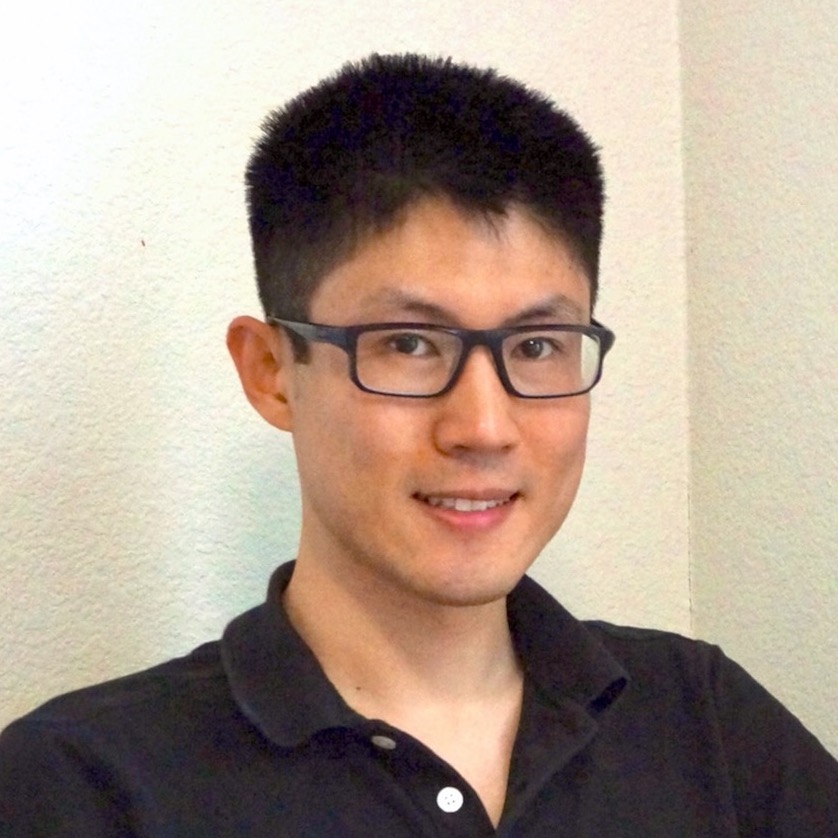 Sida I. Wang合作论文数Facebook AI Research5
 Jeffrey Michael Heer合作论文数Paul G. Allen School of Computer Science & Engineering, University of Washington;Interactive Data Lab, University of Washington5
 John Denero合作论文数Department of Electrical Engineering & Computer Sciences, University of California, Berkeley;Lilt Inc.4
 julia neidert合作论文数3
 Sebastian Schuster合作论文数Faculty of Computer Science, University of Vienna3
 John Bauer合作论文数Vicarious AI3
 Joern Wuebker合作论文数Lilt AI3
 Jason Chuang合作论文数Mozilla3Richárd Farkas合作论文数2
 Adam Przepiórkowski合作论文数Institute of Philosophy, University of Warsaw;Institute of Computer Science, Polish Academy of Sciences;W Jednostce Zakład Semiotyki Logicznej, University of Warsaw2natalia silveira合作论文数2
 Nizar Habash合作论文数Department of Computer Science, College of Arts & Science, New York University2
 Rob Voigt合作论文数Department of Linguistics, Weinberg College of Arts and Sciences, Northwestern University2Mark Dredze合作论文数Department of Computer Science, Whiting School of Engineering, Johns Hopkins University2
 Marie-Catherine de Marneffe合作论文数Ecole de Langues et Lettres, Faculté de Philosophie, Arts et Lettres, Université Catholique de Louvain;Pôle de Recherche en Linguistique, Institut Langage et Communication, Université Catholique de Louvain2Wolfgang Maier合作论文数2
 Joakim Nivre合作论文数Department of Linguistics and Philology, Faculty of Languages, Uppsala University;Research Institutes of Sweden2
 Sandra Kubler合作论文数Indiana University2
 Jinho D. Choi合作论文数Department of Computer Science, Emory University2Kevin Reschke合作论文数2
 Yannick Versley合作论文数University of Tübingen2
 Veronika Vincze合作论文数Hungarian Academy of Sciences2
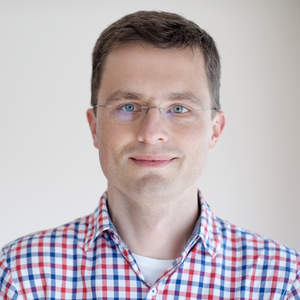 Marco Kuhlmann合作论文数Department of Computer and Information Science (IDA) ; Human-Centered Systems (HCS)2
 Eric Villemonte De La Clergerie合作论文数INRIA2Alina Wroblewska合作论文数Institute of Computer Science, Polish Academy of Sciences2
 Yoav Goldberg合作论文数Department of Computer Science and Artificial Intelligence, Faculty of Exact Sciences, Bar Ilan University2
 Ryan Roth合作论文数Center for Computational Learning Systems;Columbia University;Center for Computational Learning Systems, Columbia University2Iakes Goenaga合作论文数University of the Basque Country2
 Nicholas Andrews合作论文数Human Language Technology Center of Excellence, Johns Hopkins University;Department of Computer Science, Whiting School of Engineering, Johns Hopkins University;Data Science and AI Institute, Johns Hopkins University2Reut Tsarfaty合作论文数University of Amsterdam2
 Djamé Seddah合作论文数University Paris Sorbonne2Marcin Wolinski合作论文数Institute of Computer Science, Polish Academy of Sciences2
 Marie Candito合作论文数Laboratoire de Linguistique Formelle, Université Paris Cité2
 Koldo Gojenola合作论文数EHU;University of the Basque Country UPV2Wolfgang Seeker合作论文数University of Stuttgart2Sasa Hasan合作论文数1google translate合作论文数1Matthieu Constant合作论文数1
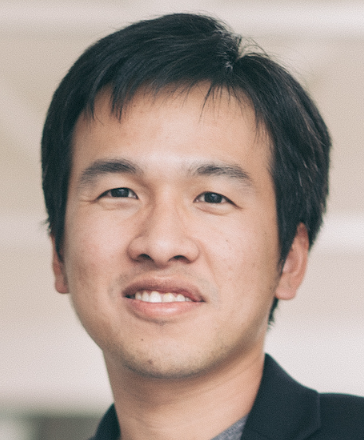 Thang Luong合作论文数Google DeepMind;VietAI1
 Will Monroe合作论文数Duolingo1
 Jennifer Foster合作论文数School of Computing, Dublin City University;Faculty of Engineering and Computing, Dublin City University1
 Geza Kovacs合作论文数Konkoly Observatory1Conal Sathi合作论文数1
 Rico Sennrich合作论文数Institut für Computerlinguistik, Universität Zürich;School of Informatics, University of Edinburgh1
 Samuel Läubli合作论文数Supertext1
 Pi-Chuan Chang合作论文数Google1
 Matthew R. Gormley合作论文数Machine Learning Department, School of Computer Science, Carnegie Mellon University;Language Technologies Institute, Carnegie Mellon University;Solventum1




