Zero-knowledge proof (ZKP) provers remain costly because multi-scalar multiplication (MSM) and number-theoretic transforms (NTTs) dominate runtime as they need significant computation. AI ASICs such as TPUs provide massive matrix throughput and SotA energy efficiency. We present MORPH, the first framework that reformulates ZKP kernels to match AI-ASIC execution. We introduce Big-T complexity, a hardware-aware complexity model that exposes heterogeneous bottlenecks and layout-transformation costs ignored by Big-O. Guided by this analysis, (1) at arithmetic level, MORPH develops an MXU-centric extended-RNS lazy reduction that converts high-precision modular arithmetic into dense low-precision GEMMs, eliminating all carry chains, and (2) at dataflow level, MORPH constructs a unified-sharding layout-stationary TPU Pippenger MSM and optimized 3/5-step NTT that avoid on-TPU shuffles to minimize costly memory reorganization. Implemented in JAX, MORPH enables TPUv6e8 to achieve up-to 10x higher throughput on NTT and comparable throughput on MSM than GZKP. Our code: https://github.com/EfficientPPML/MORPH.
Machine learning models are increasingly served behind APIs. This renders private prediction, i.e., privatizing a model's outputs rather than its parameters, a natural privacy target: model outputs are lower-dimensional and far more stable to training-data changes than weights. While differential privacy (DP) cannot effectively exploit this as it calibrates noise to worst-case sensitivity that is intractable to bound for non-convex models, we argue that PAC privacy is a natural fit for private prediction. It is instance-based, and calibrates noise to a black-box function's empirical stability to control mutual-information (MI) leakage. The missing ingredient is efficient, adaptive composition. Serving predictions means answering a long stream of adaptively chosen queries from untrusted users; existing composition either fails under adaptivity, grows quadratically, or reverts to input-independent, DP-like noise. We close this gap with a new adversarial composition result via adaptive noise calibration and prove that MI accumulates only linearly under adaptive and adversarial querying. Experiments across modalities show that prediction stability enables high utility even at a tiny per-query budget: on CIFAR-10, we achieve 87.79
We introduce PACZero, a family of PAC-private zeroth-order mechanisms for fine-tuning large language models that delivers usable utility at $I(S^*; Y_{1:T})=0$. This privacy regime bounds the membership-inference attack (MIA) posterior success rate at the prior, an MIA-resistance level the DP framework matches only at $\varepsilon=0$ and infinite noise. All DP-ZO comparisons below are matched at the MIA posterior level. The key insight is that PAC Privacy charges mutual information only when the release depends on which candidate subset is the secret. Sign-quantizing subset-aggregated zeroth-order gradients creates frequent unanimity, steps at which every candidate subset agrees on the update direction; at these steps the released sign costs zero conditional mutual information. We propose two variants that span the privacy-utility trade-off: PACZero-MI (budgeted MI via exact calibration on the binary release) and PACZero-ZPL ($I=0$ via a uniform coin flip on disagreement steps). We evaluate on SST-2 and SQuAD with OPT-1.3B and OPT-6.7B in both LoRA and full-parameter tracks. On SST-2 OPT-1.3B full fine-tuning at $I=0$, PACZero-ZPL reaches ${88.99\pm0.91}$, within $2.1$pp of the non-private MeZO baseline ($91.1$ FT). No prior method produces usable utility in the high-privacy regime $\varepsilon<1$, and PACZero-ZPL obtains competitive SST-2 accuracy and nontrivial SQuAD F1 across OPT-1.3B and OPT-6.7B at $I=0$.
In this work, we model the end-to-end pipeline of the advertising ecosystem, allowing us to identify two main issues with the current trajectory of private advertising proposals. First, prior work has largely considered ad targeting and engagement metrics individually rather than in composition. This has resulted in privacy notions that, while reasonable for each protocol in isolation, fail to compose to a natural notion of privacy for the ecosystem as a whole, permitting advertisers to extract new information about the audience of their advertisements. The second issue serves to explain the first: we prove that perfect privacy is impossible for any, even minimally, useful advertising ecosystem, due to the advertisers' expectation of conducting market research on the results. Having demonstrated that leakage is inherent in advertising, we re-examine what privacy could realistically mean in advertising, building on the well-established notion of sensitive data in a specific context. We identify that fundamentally new approaches are needed when designing privacy-preserving advertising subsystems in order to ensure that the privacy properties of the end-to-end advertising system are well aligned with people's privacy desires.
Provable privacy typically requires involved analysis and is often associated with unacceptable accuracy loss. While many empirical verification or approximation methods, such as Membership Inference Attacks (MIA) and Differential Privacy Auditing (DPA), have been proposed, these do not offer rigorous privacy guarantees. In this paper, we apply recently-proposed Probably Approximately Correct (PAC) Privacy to give formal, mechanized, simulation-based proofs for a range of practical, black-box algorithms: K-Means, Support Vector Machines (SVM), Principal Component Analysis (PCA) and Random Forests. To provide these proofs, we present a new simulation algorithm that efficiently determines anisotropic noise perturbation required for any given level of privacy. We provide a proof of correctness for this algorithm and demonstrate that anisotropic noise has substantive benefits over isotropic noise. Stable algorithms are easier to privatize, and we demonstrate privacy amplification resulting from introducing regularization in these algorithms; meaningful privacy guarantees are obtained with small losses in accuracy. We propose new techniques in order to reduce instability in algorithmic output and convert intractable geometric stability verification into efficient deterministic stability verification. Thorough experiments are included, and we validate our provable adversarial inference hardness against state-of-the-art empirical attacks.
Cyberphysical systems have disseminated devices that can be untrustworthy or compromised. Nevertheless, the privacy and integrity of computation and data can be guaranteed through cryptographic protocols. We address the computational burden posed by cryptography, and argue for a synergistic approach of designing programmable hardware accelerators for cryptography, followed by tailoring cryptographic protocols to this hardware.
Transient execution side-channel attacks, such as Spectre, have been shown to break almost all isolation primitives. We introduce a new security property we call relaxed microarchitectural isolation (RMI) that allows sensitive programs that are not-constant-time to share memory with an attacker while restricting the information leakage to that of non-speculative execution. Although this type of speculative security property is typically challenging to enforce, we show that we can leverage the enclave setup to achieve it. In particular, we use microarchitectural isolation to restrict attacker's observations in conjunction with straightforward hardware mechanisms to limit speculation. This new design point presents a compelling trade-off between security, usability, and performance, making it possible to efficiently enforce RMI for any program. We demonstrate our approach by implementing and evaluating two simple defense mechanisms that satisfy RMI: (1) Safe mode, which disables speculative accesses to shared memory, and (2) Burst mode, a localized performance optimization that requires simple program analysis on small code snippets. Our end-to-end prototype, Citadel, consists of an FPGA-based multicore processor that boots Linux and runs secure applications, including cryptographic libraries and private inference, with less than 5
This article discusses a new privacy definition called probably approximately correct (PAC) Privacy, which offers a formal probabilistic characterization of privacy risk aligned with general privacy concerns. PAC Privacy enables automated, universal, and provable privatization for any (possibly black-box) computation.
We present Argos, a simple approach for adding verifiability to fully homomorphic encryption (FHE) schemes using trusted hardware. Traditional approaches to verifiable FHE require expensive cryptographic proofs, which incur an overhead of up to seven orders of magnitude on top of FHE, making them impractical. With Argos, we show that trusted hardware can be securely used to provide verifiability for FHE computations, with minimal overhead relative to the baseline FHE computation. An important contribution of Argos is showing that the major security pitfall associated with trusted hardware, microarchitectural side channels, can be completely mitigated by excluding any secrets from the CPU and the memory hierarchy. This is made possible by focusing on building a platform that only enforces program and data integrity and not confidentiality (which is sufficient for verifiable FHE, since all data remain encrypted at all times). All secrets related to the attestation mechanism are kept in a separate coprocessor (e.g., a TPM)---inaccessible to any software-based attacker. Relying on a discrete TPM typically incurs significant performance overhead, which is why (insecure) software-based TPMs are used in practice. As a second contribution, we show that for FHE applications, the attestation protocol can be adapted to only incur a fixed cost. Argos requires no dedicated hardware extensions and is supported on commodity processors from 2008 onward. Our prototype implementation introduces 3% overhead for FHE evaluation, and 8% for more complex protocols. In particular, we show that Argos can be used for real-world applications of FHE, such as private information retrieval (PIR) and private set intersection (PSI), where providing verifiability is imperative. By demonstrating how to combine cryptography with trusted hardware, Argos paves the way for widespread deployment of FHE-based protocols beyond the semi-honest setting, without the overhead of cryptographic proofs.
We initiate a formal study on the concept of learnable obfuscation and aim to answer the following question: is there a type of data encoding that maintains the "learnability" of encoded samples, thereby enabling direct model training on transformed data, while ensuring the privacy of both plaintext and the secret encoding function? This long-standing open problem has prompted many efforts to design such an encryption function, for example, NeuraCrypt and TransNet. Nonetheless, all existing constructions are heuristic without formal privacy guarantees, and many successful reconstruction attacks are known on these constructions assuming an adversary with substantial prior knowledge. We present both generic possibility and impossibility results pertaining to learnable obfuscation. On one hand, we demonstrate that any non-trivial, property-preserving transformation which enables effectively learning over encoded samples cannot offer cryptographic computational security in the worst case. On the other hand, from the lens of information-theoretical security, we devise a series of new tools to produce provable and useful privacy guarantees from a set of heuristic obfuscation methods, including matrix masking, data mixing and permutation, through noise perturbation. Under the framework of PAC Privacy, we show how to quantify the leakage from the learnable obfuscation built upon obfuscation and perturbation methods against adversarial inference. Significantly sharpened utility-privacy tradeoffs are achieved compared to state-of-the-art accounting methods when measuring privacy against data reconstruction and membership inference attacks.
Fully Homomorphic Encryption (FHE) enables computing on encrypted data, letting clients securely offload computation to untrusted servers. While enticing, FHE has two key challenges that limit its applicability: it has high performance overheads (10,000× over unencrypted computation) and it is extremely hard to program. Recent hardware accelerators and algorithmic improvements have reduced FHE’s overheads and enabled large applications to run under FHE. These large applications exacerbate FHE’s programmability challenges. Writing FHE programs directly is hard because FHE schemes expose a restrictive, low-level interface that prevents abstraction and composition. Specifically, FHE requires packing encrypted data into large vectors (tens of thousands of elements long), FHE provides limited operations on these vectors, and values have noise that grows with each operation, which creates unintuitive performance tradeoffs. As a result, translating large applications, like neural networks, into efficient FHE circuits takes substantial tedious work. We address FHE’s programmability challenges with the Fhelipe FHE compiler. Fhelipe exposes a simple, numpy-style tensor programming interface, and compiles high-level tensor programs into efficient FHE circuits. Fhelipe’s key contribution is automatic data packing , which chooses data layouts for tensors and packs them into ciphertexts to maximize performance. Our novel framework considers a wide range of layouts and optimizes them analytically. This lets compile large FHE programs efficiently, unlike prior FHE compilers, which either use inefficient layouts or do not scale beyond tiny programs. We evaluate on both a state-of-the-art FHE accelerator and a CPU. is the first compiler that matches or exceeds the performance of large hand-optimized FHE applications, like deep neural networks, and outperforms a state-of-the-art FHE compiler by gmean 18.5. At the same time, dramatically simplifies programming, reducing code size by 10–48.
Zero-Knowledge Proofs (ZKPs) are a cryptographic tool that enables one party (a prover) to prove to another (a verifier) that a statement is true, without requiring the prover to disclose any data to the verifier. ZKPs have many use cases, such as letting clients delegate computation to servers with cryptographic correctness guarantees, while enabling the server to use secret data in these computations. ZKP applications span verifiable machine learning (ML) and databases, online auctions, electronic voting, and blockchains. While ZKPs are already widely used in blockchains, the prohibitive costs of proof generation limit them to proving very simple computations. We present a novel accelerator, NoCap, that leverages hardware-algorithm co-design to achieve transformative speedups. NoCap generates proofs 586x faster than a 32-core CPU, and 41x faster than PipeZK, a state-of-the-art ZKP accelerator. We leverage recent algorithmic developments to achieve these speedups: we identify and combine two recent hash-based ZKP algorithms, Orion and Spartan, which have similar performance on CPUs to the ZKPs targeted by prior accelerators, but are much more amenable to hardware acceleration. Though these algorithms result in larger proofs, we show that the end-to-end speedups (including prover time, proof transmission, and verification time) more than justify this size increase. We contribute a novel hardware organization to exploit these acceleration opportunities: NoCap is a programmable vector processor with functional units tailored to the needs of hash-based ZKPs. We also contribute a co-designed implementation of the Spartan+Orion ZKP tailored to accelerators, with optimizations that improve parallelism and reduce memory traffic. As a result, NoCap achieves speedups that enable new use cases for ZKP.
We study the fundamental problem of the construction of optimal randomization in Differential Privacy (DP). Depending on the clipping strategy or additional properties of the processing function, the corresponding sensitivity set theoretically determines the necessary randomization to produce the required security parameters. Towards the optimal utility-privacy tradeoff, finding the minimal perturbation for properly-selected sensitivity sets stands as a central problem in DP research. In practice, l2/l1-norm clippings with Gaussian/Laplace noise mechanisms are among the most common setups. However, they also suffer from the curse of dimensionality. For more generic clipping strategies, the understanding of the optimal noise for a high-dimensional sensitivity set remains limited. This raises challenges in mitigating the worst-case dimension dependence in privacy-preserving randomization, especially for deep learning applications. In this paper, we revisit the geometry of high-dimensional sensitivity sets and present a series of results to characterize the non-asymptotically optimal Gaussian noise for Rényi DP (RDP). Our results are both negative and positive: on one hand, we show the curse of dimensionality is tight for a broad class of sensitivity sets satisfying certain symmetry properties; but if, fortunately, the representation of the sensitivity set is asymmetric on some group of orthogonal bases, we show the optimal noise bounds need not be explicitly dependent on either dimension or rank. We also revisit sampling in the high-dimensional scenario, which is the key for both privacy amplification and computation efficiency in large-scale data processing. We propose a novel method, termed twice sampling, which implements both sample-wise and coordinate-wise sampling, to enable Gaussian noises to fit the sensitivity geometry more closely. With closed-form RDP analysis, we prove twice sampling produces asymptotic improvement of the privacy amplification given an additional l∞ -norm restriction, especially for small sampling rate. We also provide concrete applications of our results on practical tasks. Through tighter privacy analysis combined with twice sampling, we efficiently train ResNet22 in low sampling rate on CIFAR10, and achieve 69.7% and 81.6% test accuracy with (ε=2,δ=10-5) and (ε=8,δ=10-5) DP guarantee, respectively.
We study the bias introduced in Differentially-Private Stochastic Gradient Descent (DP-SGD) with clipped or normalized per-sample gradient. As one of the most popular but artificial operations to ensure bounded sensitivity, gradient clipping enables composite privacy analysis of many iterative optimization methods without additional assumptions on either learning models or input data. Despite its wide applicability, gradient clipping also presents theoretical challenges in systematically instructing improvement of privacy or utility. In general, without an assumption on globally-bounded gradient, classic convergence analyses do not apply to clipped gradient descent. Further, given limited understanding of the utility loss, many existing improvements to DP-SGD are heuristic, especially in the applications of private deep learning.In this paper, we provide meaningful theoretical analysis validated by thorough empirical results of DP-SGD. We point out that the bias caused by gradient clipping is underestimated in previous works. For generic non-convex optimization via DP-SGD, we show one key factor contributing to the bias is the sampling noise of stochastic gradient to be clipped. Accordingly, we use the developed theory to build a series of improvements for sampling noise reduction from various perspectives. From an optimization angle, we study variance reduction techniques and propose inner-outer momentum. At the learning model (neural network) level, we propose several tricks to enhance network internal normalization and BatchClipping to carefully clip the gradient of a batch of samples. For data preprocessing, we provide theoretical justification of recently proposed improvements via data normalization and (self-)augmentation.Putting these systematic improvements together, private deep learning via DP-SGD can be significantly strengthened in many tasks. For example, in computer vision applications, with an (ϵ = 8, δ = 10 −5 ) DP guarantee, we successfully train ResNet20 on CIFAR10 and SVHN with test accuracy 76.0% and 90.1%, respectively; for natural language processing, with (ϵ = 4, δ = 10 −5 ), we successfully train a recurrent neural network on IMDb data with test accuracy 77.5%.
Hypervisors have played a critical role in cloud security, but they introduce a large trusted computing base (TCB) and incur a heavy performance tax. As of late, hypervisor offloading has become an emerging trend, where privileged functions are sunk into specially-designed hardware devices (e.g., Amazon's Nitro, AMD's Pensando) for better security with closer-to-baremetal performance. In light of this trend, this project rearchitects a classic security task that is often relegated to the hypervisor, memory introspection, while only using widely-available devices. Remote direct memory introspection (RDMI) couples two types of commodity programmable devices in a novel defense platform. It uses RDMA NICs for efficient memory access and programmable network devices for efficient computation, both operating at ASIC speeds. RDMI also provides a declarative language for users to articulate the introspection task, and its compiler automatically lowers the task to the hardware substrate for execution. Our evaluation shows that RDMI can protect baremetal machines without requiring a hypervisor, introspecting kernel state and detecting rootkits at high frequency and zero CPU overhead.
We propose and study a new privacy definition, termed Probably Approximately Correct (PAC) Privacy. PAC Privacy characterizes the information-theoretic hardness to recover sensitive data given arbitrary information disclosure/leakage during/after any processing. Unlike the classic cryptographic definition and Differential Privacy (DP), which consider the adversarial (input-independent) worst case, PAC Privacy is a simulatable metric that quantifies the instance-based impossibility of inference. A fully automatic analysis and proof generation framework is proposed: security parameters can be produced with arbitrarily high confidence via Monte-Carlo simulation for any black-box data processing oracle. This appealing automation property enables analysis of complicated data processing, where the worst-case proof in the classic privacy regime could be loose or even intractable. Moreover, we show that the produced PAC Privacy guarantees enjoy simple composition bounds and the automatic analysis framework can be implemented in an online fashion to analyze the composite PAC Privacy loss even under correlated randomness. On the utility side, the magnitude of (necessary) perturbation required in PAC Privacy is not lower bounded by Theta(\sqrt{d}) for a d-dimensional release but could be O(1) for many practical data processing tasks, which is in contrast to the input-independent worst-case information-theoretic lower bound. Example applications of PAC Privacy are included with comparisons to existing works.
In this work, we study the best arm identification problem in the adversarial multi-armed bandits framework. We define a strongly-adaptive adversarial model in this framework, based on strongly-adaptive adversaries in security and distributed systems. On the negative side, we show the increased strength of the adversarial model by proving that it is impossible for any best-arm identification algorithm to return an arm with rank $\boldsymbol{\leq}\left\lfloor\frac{\boldsymbol{\epsilon}\boldsymbol{K}}{ \mathbf{1}\boldsymbol{+}\boldsymbol{\epsilon}_{\mathbf{0}}}\right\rfloor$ , where $K$ is the number of arms, $\epsilon$ is the adversary's budget and $\epsilon_{0}$ is the breaking point of the robust mean estimation subroutine. On the positive side, we construct a novel sequential elimination algorithm which returns a near-optimal arm (with rank $\boldsymbol{\leq}\left\lceil(\mathbf{1}\boldsymbol{+}\boldsymbol{\lambda}) \left\lfloor\frac{\boldsymbol{\epsilon}\boldsymbol{K}}{\boldsymbol{\epsilon}_{ \mathbf{0}}}\right\rfloor\right\rceil$ where $\boldsymbol{\lambda}\boldsymbol{>}\mathbf{0}$ is a function of $\epsilon$ and $\epsilon_{0}$ and tends to 0 for small $\epsilon$ ) with high probability. We evaluate our algorithm on both synthetic and real-world datasets and empirically demonstrate that our algorithm returns a near-optimal arm under a strongly-adaptive adversarial model.
We argue to use Differentially-Private Local Stochastic Gradient Descent (DP-LSGD) in both centralized and distributed setups, and explain why DP-LSGD enjoys higher clipping efficiency and produces less clipping bias compared to classic Differentially-Private Stochastic Gradient Descent (DP-SGD). For both convex and non-convex optimization, we present generic analysis on noisy synchronized-only iterates in LSGD, the building block of federated learning, and study its applications to differentially-private gradient methods with clipping-based sensitivity control. We point out that given the current {\em decompose-then-compose} framework, there is no essential gap between the privacy analysis of centralized and distributed learning, and DP-SGD is a special case of DP-LSGD. We thus build a unified framework to characterize the clipping bias via the second moment of local updates, which initiates a direction to systematically instruct DP optimization by variance reduction. We show DP-LSGD with multiple local iterations can produce more concentrated local updates and then enables a more efficient exploitation of the clipping budget with a better utility-privacy tradeoff. In addition, we prove that DP-LSGD can converge faster to a small neighborhood of global/local optimum compared to regular DP-SGD. Thorough experiments on practical deep learning tasks are provided to support our developed theory.
Enclaves or Trusted Execution Environments are trusted-hardware primitives that make it possible to isolate and protect a sensitive program from an untrusted operating system. Unfortunately, almost all existing enclave platforms are vulnerable to microarchitectural side channels and transient execution attacks, and the one academic proposal that is not does not allow programs to interact with the outside world. We present Citadel, to our knowledge, the first enclave platform with microarchitectural isolation to run realistic secure programs on a speculative out-of-order multicore processor. We show how to leverage hardware/software co-design to enable shared memory between an enclave and an untrusted operating system while preventing speculative transmitters between the enclave and a potential adversary. We then evaluate our secure baseline and present further mechanisms to achieve reasonable performance for out-of-the-box programs. Our multicore processor runs on an FPGA and boots untrusted Linux from which users can securely launch and interact with enclaves. To demonstrate our platform capabilities, we run a private inference enclave that embed a small neural network trained on MNIST. A remote user can remotely attest the enclave integrity, perform key exchange and send encrypted input for secure evaluation. We open-source our end-to-end hardware and software infrastructure, hoping to spark more research and bridge the gap between conceptual proposals and FPGA prototypes.
 Marten Van Dijk合作论文数Department of Electrical and Computer Engineering, University of Connecticut;Department of Computer Security, Centrum Wiskunde & Informatica;Department of Computer Science, Vrije Universiteit Amsterdam81
 Kurt Keutzer合作论文数Department of Electrical Engineering and Computer Sciences, University of California, Berkeley;Graduate School, University of California, Berkeley51
 Edward Suh合作论文数NVIDIA45
 Blaise Gassend合作论文数Massachusetts Institute of Technology39
 Mieszko Lis合作论文数Department of Electrical and Computer Engineering, Faculty of Applied Science, The University of British Columbia35
 Ling Ren合作论文数33
 Dwaine E. Clarke合作论文数University of the West Indies (UWI)31
 Omer Khan合作论文数University of Connecticut31
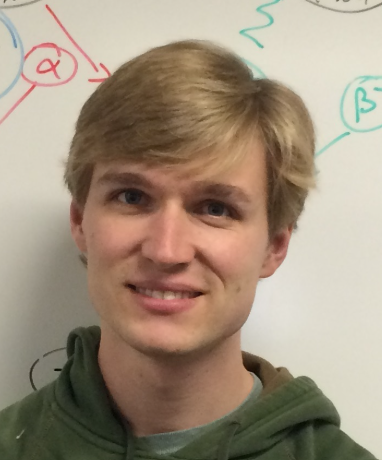 Christopher W. Fletcher合作论文数Department of Electrical Engineering and Computer Sciences, University of California, Berkeley29A. Richard Newton合作论文数27Keun Sup Shim合作论文数Massachusetts Institute of Technology26
 Xiangyao Yu合作论文数25
 José C. Monteiro合作论文数Cadence European Laboratories24
 Abhijit Ghosh合作论文数University of California23
 Myong Hyon Cho合作论文数Massachusetts Institute of Technology23Ashar, P.合作论文数20
 Charles W. O'Donnell合作论文数Massachusetts Institute of Technology20
 Albert Kwon合作论文数Division of Pediatric Surgery, Brown Medical School19
 Larry Rudolph合作论文数Boston Neurodynamics;Massachusetts Institute of Technology;Two Sigma18Hanshen Xiao合作论文数17
 Ilia A. Lebedev合作论文数University of California at Berkeley16
 Meng-Day Yu合作论文数KU Leuven16
 Michel A. Kinsy合作论文数Department of Electrical and Computer Engineering, School of Computing and Augmented Intelligence, Texas A & M University16
 Bonnie Berger合作论文数Computer Science & Artificial Intelligence Laboratory, Massachusetts Institute of Technology;Department of Mathematics, Massachusetts Institute of Technology14
 Sharad Malik合作论文数Department of Electrical and Computer Engineering, School of Engineering and Applied Science, Princeton University14
 Alberto L. Sangiovanni-Vincentelli合作论文数Department of Electrical Engineering and Computer Sciences, University of California at Berkeley13
 Daniel Sanchez合作论文数Electrical Engineering & Computer Science Department, School of Engineering, Massachusetts Institute of Technology12
 Jérôme Waldispühl合作论文数Sch Comp Sci, McGill Univ12Stan Liao合作论文数12
 Anant Agarwal合作论文数Computer Science & Artificial Intelligence Laboratory, Massachusetts Institute of Technology;2U/edX10George Kurian合作论文数Massachusetts Institute of Technology10
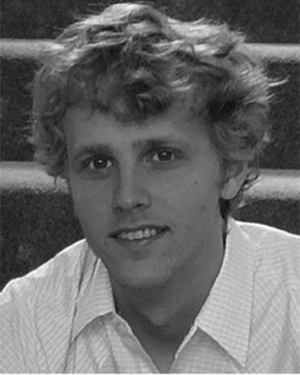 Charles Herder合作论文数9
 Sacha Servan-Schreiber合作论文数Brown University, MIT CSAIL8
 Emil Stefanov合作论文数Department of Electrical Engineering and Computer Sciences, University of California, Berkeley8
 Victor Costan合作论文数Google8
 Farinaz Koushanfar合作论文数Department of Electrical and Computer Engineering, Jacobs School of Engineering, University of California, San Diego;Center for Machine-Intelligence, Computing and Security, Jacobs School of Engineering, University of California, San Diego8HKT Ma合作论文数7zdenek paral合作论文数7Simon Langowski合作论文数MIT CSAIL7
 Elaine Shi合作论文数Department of Electrical and Computer Engineering, College of Engineering, Carnegie Mellon University;Computer Science Department, School of Computer Science, Carnegie Mellon University7Luis F. G. Sarmenta合作论文数Department of Information Systems and Computer Science Ateneo de Manila University Loyola Schools7
 Andy Pavlo合作论文数Computer Science Department, Carnegie Mellon University7
 Daihyun Lim合作论文数Computer Science and Artificial Intelligence Lab, MIT7
 Peter Clote合作论文数Department of Biology, Morrissey College of Arts and Sciences, Boston College7
 Henry Hoffmann合作论文数Department of Computer Science, University of Chicago7
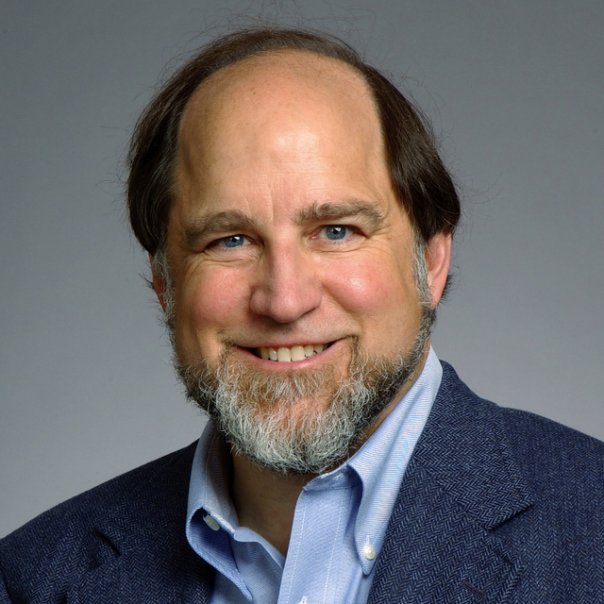 Ronald L. Rivest合作论文数Department of Electrical Engineering and Computer Science, Massachusetts Institute of Technology7
 Jules Drean合作论文数MIT, Comp Sci & Artificial Intelligence Lab, 77 Massachusetts Ave, Cambridge, MA 02139 USA6
 Sabrina M. Neuman合作论文数Harvard University; USA6