Ancient Buddhist literature features frequent, yet often unannotated, textual parallels spread across diverse languages: Sanskrit, Pāli, Buddhist Chinese, Tibetan, and more. The scale of this material makes manual examination prohibitive. We present the MITRA framework, which consists of a novel pipeline for multilingual parallel passage mining, MITRA-parallel, a large-scale corpus of 1.74 million parallel sentence pairs between Sanskrit, Chinese, and Tibetan, and the development of the domain-specific pretrained language model Gemma 2 MITRA. We present Gemma 2 MITRA-MT, a version of this base model fine-tuned on machine translation tasks, reaching state-of-the-art performance for machine translation of these languages into English and outperforming even much larger open-source models. We also present Gemma 2 MITRA-E, a semantic embedding model that shows state-of-the-art performance on a novel, detailed semantic embedding benchmark. We make the parallel dataset, model weights, and semantic similarity benchmark openly available to aid both NLP research and philological studies in Buddhist and classical Asian literature.
There is a growing demand for agentic AI technologies for a range of downstream applications like customer service and personal assistants. For applications where the agent needs to interact with a person, real-time low-latency responsiveness is required; for example, with voice-controlled applications, under 1 second of latency is typically required for the interaction to feel seamless. However, if we want the LLM to reason and execute an agentic workflow with tool calling, this can add several seconds or more of latency, which is prohibitive for real-time latency-sensitive applications. In our work, we propose Speculative Interaction Agents to enable real-time interaction even for agents with complex multi-turn tool calling. We propose Asynchronous I/O, which decouples the core agent reason-and-act thread from waiting for additional information from either the user or environment, thereby allowing for overlapping agentic processing while waiting on external delays. We also propose Speculative Tool Calling as a method to manage task execution when the agent is still unsure if it has received the full information or if additional user information may later be provided. For strong cloud models, our method can be applied out-of-the-box to existing real-time cloud APIs, providing 1.3-1.7× speedups with minor accuracy loss. To enable real-time interaction with small edge-scale models, we also present a clock-based training methodology that adapts the model to handle streaming inputs and asynchronous responses, and demonstrate a synthetic data generation strategy for SFT. Altogether, this approach provides 1.6-2.2× speedups with the Qwen2.5-3B-Instruct and Llama-3.2-3B-Instruct models across multiple tool calling benchmarks.
Video diffusion models have achieved remarkable generative performance, but their substantial computational and memory costs pose significant challenges for deployment, especially on consumer GPUs. As recent advances in attention optimization mitigate previous computational bottlenecks, linear layers now dominate both computational cost and inference memory. In this work, we focus on quantizing both weights and activations to 4 bits to accelerate these layers. Previous methods, such as SVDQuant, overlook the highly dynamic nature of activations across denoising timesteps, where outlier channels and magnitudes vary dramatically. However, video data inherently exhibits strong activation similarity among neighboring tokens in space and time, which we term \textbf{spatiotemporal activation similarity}, analogous to how video codecs exploit intra- and inter-frame redundancy. Leveraging this property, we introduce \textbf{DeltaQuant}, which partitions activations into local 3D spatiotemporal cubes and uses each cube's mean token as a \coretoken, quantizing only the small differences (delta tokens) to 4 bits while keeping core tokens in FP8. This decomposition substantially reduces quantization error with minimal overhead.For weight quantization, DeltaQuant incorporates SVDQuant's low-rank decomposition to further reduce quantization error.We also implement an efficient kernel that translates DeltaQuant's computational benefits into real-world speedups.Extensive experiments on Wan 2.2 I2V, Wan 2.2 T2V, and LTX-Video T2V demonstrate that DeltaQuant maintains high generation fidelity.On Wan 2.2, it compresses model size by 2.9× and reduces memory footprint by 2.3×. DeltaQuant is compatible with efficient attention mechanisms and few-step distillation. When integrated with these techniques, it achieves an additional 3.0× acceleration, for a total 111.8× end-to-end speedup. Code and models will be released upon publication.
Diffusion Large Language Models (dLLMs) have emerged as a promising alternative to purely autoregressive language models because they can decode multiple tokens in parallel. However, state-of-the-art block-wise dLLMs rely on a "remasking" mechanism that decodes only the most confident tokens and discards the rest, effectively wasting computation. We demonstrate that recycling computation from the discarded tokens is beneficial, as these tokens retain contextual information useful for subsequent decoding iterations. In light of this, we propose Residual Context Diffusion (RCD), a module that converts these discarded token representations into contextual residuals and injects them back for the next denoising step. RCD uses a decoupled two-stage training pipeline to bypass the memory bottlenecks associated with backpropagation. We validate our method on both long CoT reasoning (SDAR) and short CoT instruction following (LLaDA) models. We demonstrate that a standard dLLM can be efficiently converted to the RCD paradigm with merely 1 billion tokens. RCD consistently improves frontier dLLMs by 5-10 points in accuracy with minimal extra computation overhead across a wide range of benchmarks. Notably, on the most challenging AIME tasks, RCD nearly doubles baseline accuracy and attains up to 4-5x fewer denoising steps at equivalent accuracy levels.
Test-time scaling for complex reasoning tasks shows that leveraging inference-time compute, for example by independently sampling and aggregating multiple solutions, results in significantly better task outcomes. However, a critical bottleneck is : sampling is only effective if correct solutions can be reliably identified among candidates. While existing approaches typically evaluate candidates independently via scalar scoring, we demonstrate that models are substantially stronger at . Leveraging this insight, we introduce , a framework that unifies generation and verification through efficient pairwise ranking. V1 comprises two components: , an uncertainty-guided algorithm using a tournament-based ranking that dynamically allocates self-verification compute to candidate pairs whose relative correctness is most uncertain; and , an RL framework that a single model as both generator and pairwise self-verifier, ensuring the verifier adapts to the generator's evolving distribution. On code generation (LiveCodeBench, CodeContests) and math reasoning (AIME, HMMT) benchmarks, V1-Infer improves Pass@1 by up to 10\% over pointwise verification and outperforms recent test-time scaling methods while being significantly more efficient. Furthermore, V1-PairRL achieves 7-9\% test-time scaling gains over standard RL and pointwise joint training, and improves base Pass@1 by up to 8.7\% over standard RL.
Scaling has driven the entire integrated circuit implementation register transfer level (RTL) to graphic data system II design flow from one which uses primarily standalone synthesis, placement, and routing algorithms to an integrated construction and analysis flow for design closure. This chapter addresses how the challenges of rising interconnect delay led to a new way of thinking about and integrating design closure tools. It describes what drove the design flow from a set of separate design steps to a fully integrated approach, and what further changes we see coming to address the latest challenges. Basic routing, partitioning, and placement algorithms were invented. Partitioning is one of the fundamental steps in the physical design flow. In the implementation era, a design flow could be pasted together from a sequence of discrete steps. High-level synthesis translated a Verilog or VHDL description into an RTL netlist.
We show that verifier-free evolution is bottlenecked by both diversity and efficiency: without external correction, repeated evolution accelerates collapse toward narrow modes, while the uniform use of a high-cost model wastes compute and quickly becomes economically impractical. We introduce Squeeze Evolve, a unified multi-model orchestration framework for verifier-free evolutionary inference. Our approach is guided by a simple principle: allocate model capability where it has the highest marginal utility. Stronger models are reserved for high-impact stages, while cheaper models handle the other stages at much lower costs. This principle addresses diversity and cost-efficiency jointly while remaining lightweight. Squeeze Evolve naturally supports open-source, closed-source, and mixed-model deployments. Across AIME 2025, HMMT 2025, LiveCodeBench V6, GPQA-Diamond, ARC-AGI-V2, and multimodal vision benchmarks, such as MMMU-Pro and BabyVision, Squeeze Evolve consistently improves the cost-capability frontier over single-model evolution and achieves new state-of-the-art results on several tasks. Empirically, Squeeze Evolve reduces API cost by up to ∼3× and increases fixed-budget serving throughput by up to ∼10×. Moreover, on discovery tasks, Squeeze Evolve is the first verifier-free evolutionary method to match, and in some cases exceed, the performance of verifier-based evolutionary methods.
Large language models (LLMs) are trained for downstream tasks by updating their parameters (e.g., via RL). However, updating parameters forces them to absorb task-specific information, which can result in catastrophic forgetting and loss of plasticity. In contrast, in-context learning with fixed LLM parameters can cheaply and rapidly adapt to task-specific requirements (e.g., prompt optimization), but cannot by itself typically match the performance gains available through updating LLM parameters. There is no good reason for restricting learning to being in-context or in-weights. Moreover, humans also likely learn at different time scales (e.g., System 1 vs 2). To this end, we introduce a fast-slow learning framework for LLMs, with model parameters as "slow" weights and optimized context as "fast" weights. These fast "weights" can learn from textual feedback to absorb the task-specific information, while allowing slow weights to stay closer to the base model and persist general reasoning behaviors. Fast-Slow Training (FST) is up to 3x more sample-efficient than only slow learning (RL) across reasoning tasks, while consistently reaching a higher performance asymptote. Moreover, FST-trained models remain closer to the base LLM (up to 70
Recently, continuous normalizing flows (CNFs) and diffusion models (DMs) have been studied using the unified theoretical framework. Although such models can generate high-quality data points from a noise distribution, the sampling demands multiple iterations to solve an ordinary differential equation (ODE) with high computational complexity. Most existing methods focus on reducing the number of time steps during the sampling process to improve efficiency. In this work, we explore a complementary direction in which the quality-complexity tradeoff can be dynamically controlled in terms of time steps and in the length of the neural network. We achieve this by rewiring the blocks in the transformer-based architecture to solve an inner discretized ODE w.r.t. its length. Then, we employ time- and length-wise consistency terms during flow matching training, and as a result, the sampling can be performed with an arbitrary number of time steps and transformer blocks. Unlike others, our ODE$_t$(ODE$_l$) approach is solver-agnostic in time dimension and decreases both latency and memory usage. Compared to the previous state of the art, image generation experiments on CelebA-HQ and ImageNet show a latency reduction of up to 3$\times$ in the most efficient sampling mode, and a FID score improvement of up to 3.5 points for high-quality sampling. We release our code and model weights with fully reproducible experiments.
Data selection seeks to identify a compact yet informative subset from large-scale training corpora, balancing sample quality against collection diversity. We formulate this problem as a Weighted Independent Set (WIS) on a similarity graph, where nodes represent data samples weighted by influence, and edges connect semantically redundant pairs. This formulation naturally yields subsets that are simultaneously high-quality and diverse. However, two challenges arise in practice: naive node weights fail to distinguish informative signals from gradient noise, and edge construction under heterogeneous domain distributions produces structurally imbalanced graphs that bias selection toward sparse regions. To address these issues, we introduce two principled refinements from a unified graph perspective: (1) node value calibration that restricts influence estimation to the bilateral salient subspace to ground node importance in task-relevant signals rather than surface-level statistics; (2) local scale normalization that adapts edge thresholds to local neighborhood density, mitigating graph imbalance induced by cross-domain distribution shifts. Together, these components yield a robust and scalable data selection pipeline dubbed SEED. We further construct , a compact multimodal dataset curated by SEED. Extensive experiments show that SEED consistently outperforms state-of-the-art methods on instruction tuning, visual instruction tuning, and semantic segmentation across diverse model families.
Photorealistic 3D reconstruction of street scenes is a critical technique for developing real-world simulators for autonomous driving. Despite the efficacy of Neural Radiance Fields (NeRF) for driving scenes, 3D Gaussian Splatting (3DGS) emerges as a promising direction due to its faster speed and more explicit representation. However, most existing street 3DGS methods require tracked 3D vehicle bounding boxes to decompose the static and dynamic elements for effective reconstruction, limiting their applications for in-the-wild scenarios. To facilitate efficient 3D scene reconstruction without costly annotations, we propose a self-supervised street Gaussian S3Gaussian method to decompose dynamic and static elements from 4D consistency. We represent each scene with 3D Gaussians to preserve the explicitness and further accompany them with a spatial-temporal field network to compactly model the 4D dynamics. We conduct extensive experiments on the challenging Waymo-Open dataset to evaluate the effectiveness of our method. Our S3Gaussian demonstrates the ability to decompose static and dynamic scenes and achieves the best performance without using 3D annotations.
Block-wise diffusion language models (DLMs) generate multiple tokens in any order, offering a promising alternative to the autoregressive decoding pipeline. However, they still remain bottlenecked by memory-bound attention in long-context scenarios. Naive sparse attention fails on DLMs due to a KV Inflation problem, where different queries select different prefix positions, making the union of accessed KV pages large. To address this, we observe that between consecutive denoising steps, only a small fraction of active tokens exhibit significant hidden-state changes, while the majority of stable tokens remain nearly constant. Based on this insight, we propose LOSA (Locality-aware Sparse Attention), which reuses cached prefix-attention results for stable tokens and applies sparse attention only to active tokens. This substantially shrinks the number of KV indices that must be loaded, yielding both higher speedup and higher accuracy. Across multiple block-wise DLMs and benchmarks, LOSA preserves near-dense accuracy while significantly improving efficiency, achieving up to +9 points in average accuracy at aggressive sparsity levels while maintaining 1.54x lower attention density. It also achieves up to 4.14x attention speedup on RTX A6000 GPUs, demonstrating the effectiveness of the proposed method.
Reinforcement learning (RL) is essential for enhancing the complex reasoning capabilities of large language models (LLMs). However, existing RL training pipelines are computationally inefficient and resource-intensive, with the rollout phase accounting for over 70
Continuous normalizing flows (CNFs) and diffusion models (DMs) generate high-quality data from a noise distribution. However, their sampling process demands multiple iterations to solve an ordinary differential equation (ODE) with high computational complexity. State-of-the-art methods focus on reducing the number of discrete time steps during sampling to improve efficiency. In this work, we explore a complementary direction in which the quality-complexity tradeoff can also be controlled in terms of the neural network length. We achieve this by rewiring the blocks in the transformer-based architecture to solve an inner discretized ODE w.r.t. its depth. Then, we apply a length consistency term during flow matching training, and as a result, the sampling can be performed with an arbitrary number of time steps and transformer blocks. Unlike others, our ODEt(ODEl) approach is solver-agnostic in time dimension and reduces both latency and, importantly, memory usage. CelebA-HQ and ImageNet generation experiments show a latency reduction of up to 2× in the most efficient sampling mode, and FID improvement of up to 2.8 points for high-quality sampling when applied to prior methods. We open-source our code and checkpoints at github.com/gudovskiy/odelt.
Recent work such as AlphaEvolve has shown that combining LLM-driven optimization with evolutionary search can effectively improve programs, prompts, and algorithms across domains. In this paradigm, previously evaluated solutions are reused to guide the model toward new candidate solutions. Crucially, the effectiveness of this evolution process depends on the search strategy: how prior solutions are selected and varied to generate new candidates. However, most existing methods rely on fixed search strategies with predefined knobs (e.g., explore-exploit ratios) that remain static throughout execution. While effective in some settings, these approaches often fail to adapt across tasks, or even within the same task as the search space changes over time. We introduce EvoX, an adaptive evolution method that optimizes its own evolution process. EvoX jointly evolves candidate solutions and the search strategies used to generate them, continuously updating how prior solutions are selected and varied based on progress. This enables the system to dynamically shift between different search strategies during the optimization process. Across nearly 200 real-world optimization tasks, EvoX outperforms existing AI-driven evolutionary methods including AlphaEvolve, OpenEvolve, GEPA, and ShinkaEvolve on the majority of tasks.
Test-time scaling has become a standard way to improve performance and boost reliability of neural network models. However, its behavior on agentic, multi-step tasks remains less well-understood: small per-step errors can compound over long horizons; and we find that naive policies that uniformly increase sampling show diminishing returns. In this work, we present CATTS, a simple technique for dynamically allocating compute for multi-step agents. We first conduct an empirical study of inference-time scaling for web agents. We find that uniformly increasing per-step compute quickly saturates in long-horizon environments. We then investigate stronger aggregation strategies, including an LLM-based Arbiter that can outperform naive voting, but that can overrule high-consensus decisions. We show that uncertainty statistics derived from the agent's own vote distribution (entropy and top-1/top-2 margin) correlate with downstream success and provide a practical signal for dynamic compute allocation. Based on these findings, we introduce Confidence-Aware Test-Time Scaling (CATTS), which uses vote-derived uncertainty to allocate compute only when decisions are genuinely contentious. CATTS improves performance on WebArena-Lite and GoBrowse by up to 9.1% over React while using up to 2.3x fewer tokens than uniform scaling, providing both efficiency gains and an interpretable decision rule.
Process Reward Models (PRMs) are rapidly becoming the backbone of LLM reasoning pipelines, yet we demonstrate that state-of-the-art PRMs are systematically exploitable under adversarial optimization pressure. To address this, we introduce a three-tiered diagnostic framework that applies increasing adversarial pressure to quantify these vulnerabilities. Static perturbation analysis uncovers a fluency-logic dissociation: high invariance to surface-level style changes reward changes <0.1, yet inconsistent detection of logically-corrupted reasoning, with different models failing on different attack types. Adversarial optimization demonstrates that gradient-based attacks inflate rewards on invalid trajectories, with reward landscapes exhibiting wide, exploitable peaks. RL-induced reward hacking exposes the critical failure mode: policies trained on AIME problems achieve near-perfect PRM rewards (>0.9), while ground-truth accuracy remains low (below 4
Spatial intelligence in vision-language models (VLMs) attracts research interest with the practical demand to reason in the 3D world.Despite promising results, most existing methods follow the conventional 2D pipeline in VLMs and use pixel-aligned representations for the vision modality. However, correspondence-based models with implicit 3D scene understanding often fail to achieve spatial consistency, and representation-based models with 3D geometric priors lack efficiency in vision sequence serialization. To address this, we propose a Proxy3D method with compact yet comprehensive 3D proxy representations for the vision modality. Given only video frames as input, we employ semantic and geometric encoders to extract scene features and then perform their semantic-aware clustering to obtain a set of proxies in the 3D space. For representation alignment, we further curate the SpaceSpan dataset and apply multi-stage training to adopt the proposed 3D proxy representations with the VLM. When using shorter sequences for vision information, our method achieves competitive or state-of-the-art performance in 3D visual question answering, visual grounding and general spatial intelligence benchmarks.
Diffusion Transformers (DiTs) have become a leading backbone for video generation, yet their quadratic attention cost remains a major bottleneck. Sparse attention reduces this cost by computing only a subset of attention blocks. However, prior methods often either drop the remaining blocks, which incurs information loss, or rely on learned predictors to approximate them, introducing training overhead and potential output distribution shifting. In this paper, we show that the missing contributions can be recovered without training: after semantic clustering, keys and values within each block exhibit strong similarity and can be well summarized by a small set of cluster centroids. Based on this observation, we introduce SVG-EAR, a parameter-free linear compensation branch that uses the centroid to approximate skipped blocks and recover their contributions. While centroid compensation is accurate for most blocks, it can fail on a small subset. Standard sparsification typically selects blocks by attention scores, which indicate where the model places its attention mass, but not where the approximation error would be largest. SVG-EAR therefore performs error-aware routing: a lightweight probe estimates the compensation error for each block, and we compute exactly the blocks with the highest error-to-cost ratio while compensating for skipped blocks. We provide theoretical guarantees that relate attention reconstruction error to clustering quality, and empirically show that SVG-EAR improves the quality-efficiency trade-off and increases throughput at the same generation fidelity on video diffusion tasks. Overall, SVG-EAR establishes a clear Pareto frontier over prior approaches, achieving up to 1.77× and 1.93× speedups while maintaining PSNRs of up to 29.759 and 31.043 on Wan2.2 and HunyuanVideo, respectively.
Recent advancements in world models have revolutionized dynamic environment simulation, allowing systems to foresee future states and assess potential actions. In autonomous driving, these capabilities help vehicles anticipate the behavior of other road users, perform risk-aware planning, accelerate training in simulation, and adapt to novel scenarios, thereby enhancing safety and reliability. Current approaches exhibit deficiencies in maintaining robust 3D geometric consistency or accumulating artifacts during occlusion handling, both critical for reliable safety assessment in autonomous navigation tasks. To address this, we introduce GeoDrive, which explicitly integrates robust 3D geometry conditions into driving world models to enhance spatial understanding and action controllability. Specifically, we first extract a 3D representation from the input frame and then obtain its 2D rendering based on the user-specified ego-car trajectory. To enable dynamic modeling, we propose a dynamic editing module during training to enhance the renderings by editing the positions of the vehicles. Extensive experiments demonstrate that our method significantly outperforms existing models in both action accuracy and 3D spatial awareness, leading to more realistic, adaptable, and reliable scene modeling for safer autonomous driving. Additionally, our model can generalize to novel trajectories and offers interactive scene editing capabilities, such as object editing and object trajectory control.
 Amir Gholami合作论文数Institute of Transportation Studies, University of California, Berkeley59
 Srini Devadas合作论文数Computer Science and Artificial Intelligence Laboratory, Massachusetts Institute of Technology51
 Michael Mahoney合作论文数Lawrence Berkeley National Laboratory;International Computer Science Institute43
 Zhen Dong合作论文数University of California at Berkeley40
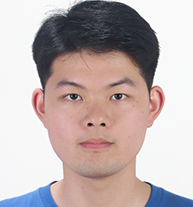 Chenfeng Xu合作论文数Mechanical Systems Control Lab, University of California, Berkeley;NVIDIA39
 Shanghang Zhang (仉尚航)合作论文数Institute for Visual Technology, School of Computer Science, Peking University;Institute for Artificial Intelligence, Peking University36
 Masayoshi Tomizuka合作论文数Mechanical Systems Control Lab, Department of Mechanical Engineering, University of California, Berkeley28
 Bichen Wu合作论文数28
 Jike Chong合作论文数University of California27
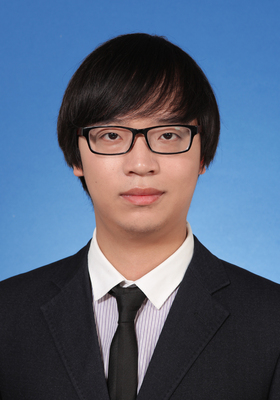 Zhewei Yao合作论文数Snowflake25
 Joseph E. Gonzalez合作论文数Division of Computer Science, Department of Electrical Engineering and Computer Science, University of California, Berkeley25
 David Chinnery合作论文数Department of Electrical Engineering and Computer Sciences, University of California at Berkeley25
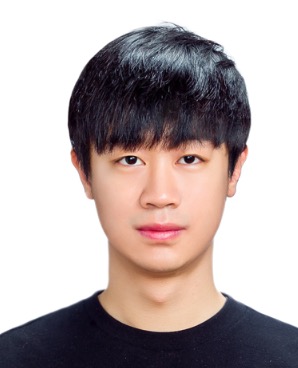 Sehoon Kim合作论文数Berkeley Artificial Intelligence Research Lab, Department of Electrical Engineering and Computer Sciences, University of California, Berkeley;NVIDIA24
 Sicheng Zhao (赵思成)合作论文数Department of Psychological and Cognitive Sciences, Tsinghua University24
 Coleman Hooper合作论文数Electrical Engineering and Computer Science Department, University of California, Berkeley21
 Sheng Shen合作论文数University of California, Berkeley21
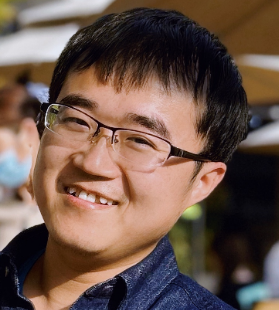 Xiangyu Yue (岳翔宇)合作论文数Multimedia Lab, Department of Information Engineering, Faculty of Engineering, The Chinese University of Hong Kong20
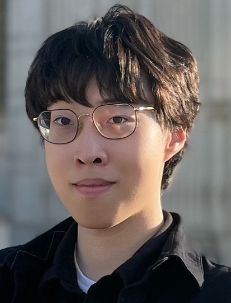 Xiuyu Li (李岫宇)合作论文数Berkeley Artificial Intelligence Research Lab, University of California, Berkeley;Meta19
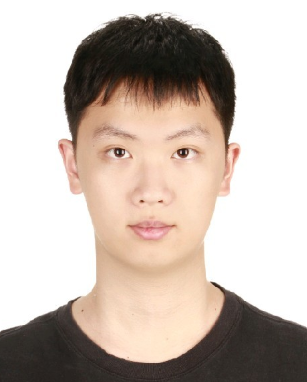 Haocheng Xi合作论文数Berkeley AI Research, University of California, Berkeley18
 Sharad Malik合作论文数Department of Electrical and Computer Engineering, School of Engineering and Applied Science, Princeton University18
 Alberto L. Sangiovanni-Vincentelli合作论文数Department of Electrical Engineering and Computer Sciences, University of California at Berkeley18
 Trevor Darrell合作论文数Department of Electrical Engineering and Computer Science, University of California, Berkeley18
 Ion Stoica合作论文数Department of Electrical Engineering and Computer Sciences, University of California, Berkeley;Anyscale;Databricks17
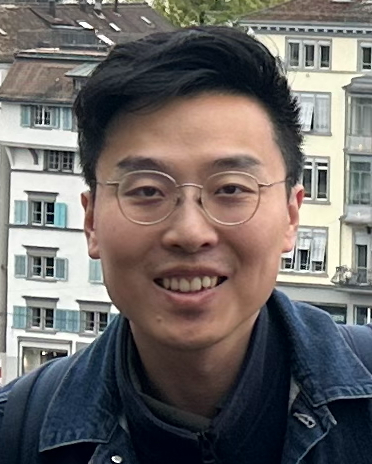 Wenzhao Zheng (郑文钊)合作论文数Department of EECS, University of California, Berkeley17
 Ekaterina Gonina合作论文数Worktrace AI17
 Song Han (韩松)合作论文数Electrical Engineering & Computer Science Department, School of Engineering, Massachusetts Institute of Technology;NVIDIA16
 Forrest Iandola合作论文数Meta16
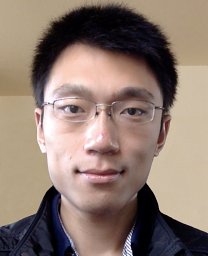 Wei Zhan合作论文数Applied Intuition;Mechanical Systems Control Lab, University of California, Berkeley;Berkeley DeepDrive15
 Bryan Catanzaro合作论文数NVIDIA15
 Niraj Shah合作论文数15
 Matthew W. Moskewicz合作论文数University of California at Berkeley15
 Huanrui Yang (杨幻睿)合作论文数Department of Electrical and Computer Engineering, College of Engineering, University of Arizona13
 James Demmel合作论文数Computer Science Division, Department of Mathematics, University of California at Berkeley13
 Kaushik Ravindran合作论文数Facebook13Christian Sauer合作论文数13
 Michael Anderson合作论文数12
 Tomoyuki Okuno合作论文数Panasonic, Holdings Corporation11
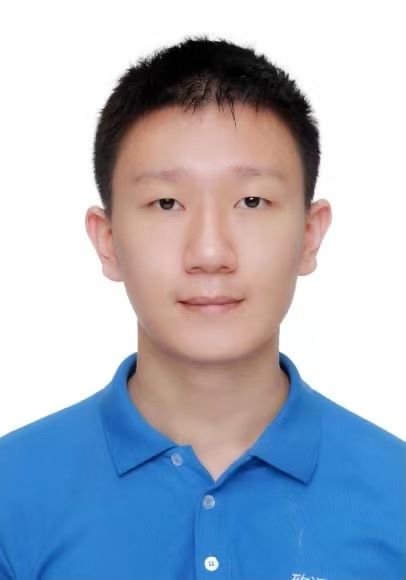 Shuo Yang合作论文数Sky Computing Lab, University of California, Berkeley11
 Bor-Yiing Su合作论文数Cruise11
 Pengfei Xu合作论文数Didi Chuxing11
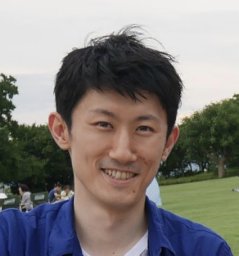 Yohei Nakata合作论文数Graduate School of System Informatics, Kobe University11
 William Plishker合作论文数University of California11
 Denis Gudovskiy合作论文数Panasonic North America11
 Colorado Reed合作论文数Apple10
 Nicholas Lee合作论文数10
 Matthias Gries合作论文数Munich Research Center, Huawei Technologies Duesseldorf GmbH10
 Narayanan Sundaram合作论文数Facebook10
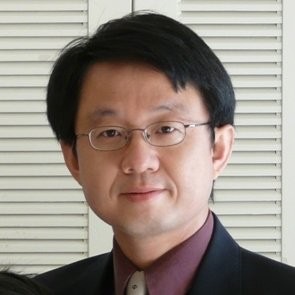 Pinhong Chen合作论文数Cadence Design Systems10
 Nadathur Satish合作论文数Facebook;Intel10