The Indian National Curriculum Framework has as one of its objectives the development of mathematical thinking and problem solving ability. However, recent studies conducted in Indian metros have expressed concern about students' mathematics learning. Except in some private coaching academies, regular classroom teaching does not include problem solving in mathematics, but is limited to mere practice exercises and drills of known exercises. For describing mathematical thinking, Schoenfeld gave a framework containing four components: resources, heuristics, controls and beliefs. Beginning in childhood we develop an ontology for the ideas we learn, and this ontology evolves as we continue learning. Ontologies used for teaching need to incorporate elements of mathematical thinking popularized by problem solving experts. So teaching that makes use of such ontologies of problems, problem solving strategies, and tasks would be beneficial to students. In this paper we identify the gaps in the literature on teaching problem solving, and discuss how and why ontologies can be used for teaching problem solving in mathematics at the high school level. As a proof of concept, we describe the method by which an ontology named MONTO has been created for teaching problem solving in mathematics, and give examples of its use. We describe the MONTO ontology and compare it with some other teaching ontologies described in the literature. We developed and evaluated the MONTO ontology for Surface Area and Volume (3D Solids) problems taught as part of the national curriculum in India, and the results obtained were satisfactory: MONTO was found to be 94% robust against unseen problems in different curricula for the same domain.
Information and communication technologies have made a major impact on education. This raises hopes in countries like India which are undergoing rapid growth in their educational efforts. Will Information and Communication Technologies create a revolution in the education sector? What can we expect in the way of impact due to the spread of access to the Internet? Will Internet access over the mobile phone make rapid advances possible in rural areas? What evidence is available to judge popular claims and predictions regarding dramatic growth of Internet usage as a result of the widespread use of cell phones? Can we identify the impeding factors that limit progress in using technology for education at middle schools, secondary schools and higher secondary schools? The paper addresses these questions, focusing mainly on Indian data and surveys progress in the spread of access to the Internet, including access using cell phones. It presents information on expenditure levels to offer insight into relevant socio-economic factors. It discusses the problem of language and the nature of content available over the World Wide Web. The whole effort reported in this paper is to get a realistic view of the current and potential impact of the Internet and Communication Technologies on education in India. Evangelists of technology have a way of creating unsustainable hopes by ignoring social and economic reality, and therefore a critical examination of available information is necessary. The paper concludes by discussing technologies and initiatives worth considering for ameliorating the situation mentioned above.
This paper demonstrates how to use MONTO—machine-readable ontology for teaching word problems in mathematics. MONTO is a combination of various ontologies. After presenting a review of the literature of problem solving and math education, this paper presents a framework that is used for evaluation of the systems available in the literature for teaching problem solving in mathematics. This paper analyzes the existing systems and evaluates them against the framework to state the gaps. It also describes MONTO and demonstrates its use. This paper also discusses how the use of MONTO bridges the gaps found in the literature of tutoring systems used for teaching problem solving. A description of the system implemented using MONTO is included along with the key functionalities of the system derived from the ontology. A discussion of how these functionalities are useful for teaching word problems is included too. This paper also presents the results of a small-scale study conducted to evaluate the functionalities that are derived from the ontology.
Dynamic power management features are now an integral part of processor chip and system design. Dynamic voltage and frequency scaling (DVFS), core folding and per-core power gating (PCPG) are power control actuators (or "knobs") that are available in modern multi-core systems. However, figuring out the actuation protocol for such knobs in order to achieve maximum efficiency has so far remained an open research problem. In the context of specific system utilization dynamics, the desirable order of applying these knobs is not easy to determine. For complexity-effective algorithm development, DVFS, core folding and PCPG control methods have evolved in a somewhat decoupled manner. However, as we show in this paper, independent actuation of these techniques can lead to conflicting decisions that jeopardize the system in terms of power-performance efficiency. Therefore, a more robust coordination protocol is necessary in orchestrating the power management functions. Heuristics for achieving such coordinated control are already becoming available in server systems. It remains an open research problem to optimally adjust power and performance management options at runtime for a wide range of time-varying workload applications, environmental conditions, and power constraints. This research paper contributes a novel approach for a systematically architected, robust, multi-knob power management protocol, which we empirically analyze on live server systems. We use a latest generation POWER7+ multi-core system to demonstrate the benefits of our proposed new coordinated power management algorithm (called PAMPA). We report measurement-based analysis to show that PAMPA achieves comparable power-performance efficiencies (relative to a baseline decoupled control system) while achieving conflict-free actuation and robust operation.
The development of customer centric eGovernment systems, for better services and reliable information to citizen, is increasing in developed and developing countries as part of eGovernment initiatives. This provides an opportunity to redesign government processes and also to improve efficiency and effectiveness within government institution. A review of literature indicates that the majority of eGovernment–fordevelopment projects fail either totally or partially. The gap between design and the ground reality is defined as „designreality gaps‟. This is attributed as the cause of failure. Therefore, this research study has been undertaken to propose a business process model for customer centric eGovernment system that will help to reduce the gap due to business process representation in Information System. This study has revealed that work system in eGovernment can be described as an event (Request) driven system with a pattern Request-ProcessResponse. This paper reports that Process Aware Information System (PAIS) is one of the suitable Information Systems for a customer centric eGovernment system. The process model chosen in PAIS is tightly-framed and workflow system, which includes P2A(Person-to-Application) and A2A(Application-toApplication) process model. The structure of process model proposed for eGovernment system is a multi-tier, non-linear and iterative structure and can be with multiple interconnected descriptive task chains. The work articulation can be represented as descriptive task chains to follow a planned task sequence determined by conditions and situations emerged during process cycle. This process model has been validated with a typical citizen centric eGovernment system.
In this paper, we describe an approach to populate an existing ontology with instance information present in the natural language text provided as input.An ontology is defined as an explicit conceptualization of a shared domain [18].This approach starts with a list of relevant domain ontologies created by human experts, and techniques for identifying the most appropriate ontology to be extended with information from a given text.Then we demonstrate heuristics to extract information from the unstructured text and for adding it as structured information to the selected ontology.This identification of the relevant ontology is critical, as it is used in identifying relevant information in the text.We extract information in the form of semantic triples from the text, guided by the concepts in the ontology.We then convert the extracted information about the semantic class instances into Resource Description Framework (RDF 3 ) and append it to the existing domain ontology.This enables us to perform more precise semantic queries over the semantic triple store thus created.We have achieved 95% accuracy of information extraction in our implementation.
We developed a Virtual Power Management (VPM) simulation methodology for pre-silicon design and validation of power management hardware and firmware. VPM integrates a realistic hardware interface with high-level workload and power models to achieve fast and effective system-wide simulation. VPM models are used independently for algorithmic and architectural exploration, and in conjunction with the Simics simulation environment to execute real firmware for verification. In this paper, we present an overview of the VPM architecture and results from two studies using the simulation framework.
This paper describes the design and implementation a student-oriented visualizer-cum-editor for locating information through topic maps. The focus is on ease of use for novice users. Another focus of this work was inspired by the idea of knowledge as a network of propositions. The model was generalized to treat knowledge as a network of triples including triples that are nonpropositional sentence fragments. The system implemented offers a provision to visualize reified associations (RAs)between "topics" and easy linking of such RAs to relevant documents.
Use of web pages providing unstructured information poses variety of problems to the user, such as use of arbitrary formats, unsuitability for machine processing and likely incompleteness of information. Structured data alleviates these problems but we require more. Very often yellow page systems are implemented using a centralized database. In some cases, human intermediaries accessible over the phone network examine a centralized database and use their reasoning ability to deal with the user's need for information. Scaling up such systems is difficult. This paper explores an alternative - a highly distributed system design meeting a variety of needs - considerably reducing efforts required at a central organization, enabling large numbers of vendors to enter information about their own products and services, enabling end-users to contribute information such as their own ratings, using an ontology to describe each domain of application in a flexible manner for uses foreseen and unforeseen, enabling distributed search and mash-ups, use of vendor independent standards, using reasoning to find the best matches to a given query, geo-spatial reasoning and a simple, interactive, mobile application/interface. We give importance to geo-spatial information and mobile applications because of the very wide-spread use of mobile phones and their inherent ability to provide some information about the current location of the user. We have created a prototype using the Jena Toolkit and geo-spatial extensions to SPARQL. We have tested this prototype by asking a group of typical users to use it and to provide structured feedback. We have summarized this feedback in the paper. We believe that the technology can be applied in many contexts in addition to yellow page systems.
 Raman Chandrasekar合作论文数Microsoft Research8
 Kishor S. Trivedi合作论文数High Availability Assurance Laboratory, Department of Electrical and Computer Engineering, Pratt School of Engineering, Duke University;Duke Kunshan University6gordon b bell合作论文数5anjaneyulu seetha rama kuchibhotla合作论文数5
 Aparna Lalingkar合作论文数5Anil Krishna合作论文数5darpan goel合作论文数4anil kumar合作论文数4
 Balakrishnan Dasarathy合作论文数4
 Srinivasu Godavari合作论文数4kartik sudeep合作论文数3jeffrey haskell derby合作论文数3K. S. R. Anjaneyulu合作论文数Copyright © 2002-2003 ACT-R Research Group
Department of Psychology, Carnegie Mellon University webmaster@act-r.psy.cmu.edu3
Srinivasu Godavari合作论文数4kartik sudeep合作论文数3jeffrey haskell derby合作论文数3K. S. R. Anjaneyulu合作论文数Copyright © 2002-2003 ACT-R Research Group
Department of Psychology, Carnegie Mellon University webmaster@act-r.psy.cmu.edu3 Chandrashekar Ramanathan合作论文数International Institute of Information Technology3
 Heather Hanson合作论文数University of Texas at Austin3Malcolm S. Allen-Ware合作论文数2Venkatagiri Sirigiri合作论文数2
 Kumaraswamy, Y.S.合作论文数2Bishop Brock合作论文数2
 Michael S. Floyd合作论文数2Tejas S. Karkhanis合作论文数2Raghu Anantharangachar合作论文数Hewlett Packard Global Delivery India Center2gregory s still合作论文数1gordon t davis合作论文数1john steven dodson合作论文数1jordan r keuseman合作论文数1H. Walter合作论文数1S. Rajagopalan合作论文数1vishal kasera合作论文数1
 Sasikumar Mukundan合作论文数1
 Augusto Vega合作论文数IBM Corporation1
 Mohammad Peyravian合作论文数IBM Corporation1
 Sriganesh Madhvanath合作论文数Ebay1
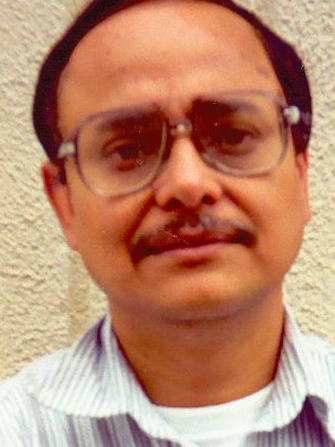 Pradip Bose合作论文数Department of Computer Science, IBM T.J. Watson Research Center1A. Krishna合作论文数1A Bhandarkar合作论文数1
 Andrea Colaco合作论文数Media Laboratory, Massachusetts Institute of Technology1G. Datta Prasad合作论文数1Brian Rogers合作论文数1Udo Ruppert合作论文数1
 T. J. Rosedahl合作论文数1Malcolm S. Ware合作论文数1Rahul Jaywant合作论文数1Johann Terrier合作论文数1
 Katerina Goseva-Popstojanova合作论文数Lane Department of Computer Science and Electrical Engineering, West Virginia University1
 Karthick Rajamani合作论文数1
 Kenneth L Wright合作论文数H. Lee Moffitt Cancer Center, University of South Florida1Yogesh Sankarasubramaniam合作论文数School of Electrical and Computer Engineering
Georgia Institute of Technology, Atlanta, GAE_mail: yogi_at_ece_dot_gatech_dot_edu1
Kenneth L Wright合作论文数H. Lee Moffitt Cancer Center, University of South Florida1Yogesh Sankarasubramaniam合作论文数School of Electrical and Computer Engineering
Georgia Institute of Technology, Atlanta, GAE_mail: yogi_at_ece_dot_gatech_dot_edu1 Anbumani Subramanian合作论文数Hewlett-Packard Labs India1




