Despite substantial progress in machine learning for scientific discovery in recent years, truly de novo design of small molecules which exhibit a property of interest remains a significant challenge. We introduce LambdaZero, a generative active learning approach to search for synthesizable molecules. Powered by deep reinforcement learning, LambdaZero learns to search over the vast space of molecules to discover candidates with a desired property. We apply LambdaZero with molecular docking to design novel small molecules that inhibit the enzyme soluble Epoxide Hydrolase 2 (sEH), while enforcing constraints on synthesizability and drug-likeliness. LambdaZero provides an exponential speedup in terms of the number of calls to the expensive molecular docking oracle, and LambdaZero de novo designed molecules reach docking scores that would otherwise require the virtual screening of a hundred billion molecules. Importantly, LambdaZero discovers novel scaffolds of synthesizable, drug-like inhibitors for sEH. In in vitro experimental validation, a series of ligands from a generated quinazoline-based scaffold were synthesized, and the lead inhibitor N-(4,6-di(pyrrolidin-1-yl)quinazolin-2-yl)-N-methylbenzamide (UM0152893) displayed sub-micromolar enzyme inhibition of sEH.
3D imaging enables accurate diagnosis by providing spatial information about organ anatomy. However, using 3D images to train AI models is computationally challenging because they consist of 10x or 100x more pixels than their 2D counterparts. To be trained with high-resolution 3D images, convolutional neural networks resort to downsampling them or projecting them to 2D. We propose an effective alternative, a neural network that enables efficient classification of full-resolution 3D medical images. Compared to off-the-shelf convolutional neural networks, our network, 3D Globally-Aware Multiple Instance Classifier (3D-GMIC), uses 77.98%-90.05% less GPU memory and 91.23%-96.02% less computation. While it is trained only with image-level labels, without segmentation labels, it explains its predictions by providing pixel-level saliency maps. On a dataset collected at NYU Langone Health, including 85,526 patients with full-field 2D mammography (FFDM), synthetic 2D mammography, and 3D mammography, 3D-GMIC achieves an AUC of 0.831 (95% CI: 0.769-0.887) in classifying breasts with malignant findings using 3D mammography. This is comparable to the performance of GMIC on FFDM (0.816, 95% CI: 0.737-0.878) and synthetic 2D (0.826, 95% CI: 0.754-0.884), which demonstrates that 3D-GMIC successfully classified large 3D images despite focusing computation on a smaller percentage of its input compared to GMIC. Therefore, 3D-GMIC identifies and utilizes extremely small regions of interest from 3D images consisting of hundreds of millions of pixels, dramatically reducing associated computational challenges. 3D-GMIC generalizes well to BCS-DBT, an external dataset from Duke University Hospital, achieving an AUC of 0.848 (95% CI: 0.798-0.896).
Retrosynthesis involves determining a sequence of reactions to synthesize complex molecules from simpler precursors. As this poses a challenge in organic chemistry, machine learning has offered solutions, particularly for predicting possible reaction substrates for a given target molecule. These solutions mainly fall into template-based and template-free categories. The former is efficient but relies on a vast set of predefined reaction patterns, while the latter, though more flexible, can be computationally intensive and less interpretable. To address these issues, we introduce METRO (Molecule-Edit Templates for RetrOsynthesis), a machine-learning model that predicts reactions using minimal templates - simplified reaction patterns capturing only essential molecular changes - reducing computational overhead and achieving state-of-the-art results on standard benchmarks.
Designing compounds with desired properties is a key element of the drug discovery process. However, measuring progress in the field has been challenging due to the lack of realistic retrospective benchmarks, and the large cost of prospective validation. To close this gap, we propose a benchmark based on docking, a widely used computational method for assessing molecule binding to a protein. Concretely, the goal is to generate drug-like molecules that are scored highly by SMINA, a popular docking software. We observe that various graph-based generative models fail to propose molecules with a high docking score when trained using a realistically sized training set. This suggests a limitation of the current incarnation of models for de novo drug design. Finally, we also include simpler tasks in the benchmark based on a simpler scoring function. We release the benchmark as an easy to use package available at https://github.com/cieplinski-tobiasz/smina-docking-benchmark. We hope that our benchmark will serve as a stepping stone toward the goal of automatically generating promising drug candidates.
De novo molecule design algorithms often result in chemically unfeasible or synthetically inaccessible molecules. A natural idea to mitigate this problem is to bias these algorithms toward more easily synthesizable molecules using a proxy score for synthetic accessibility. However, using currently available proxies can still result in highly unrealistic compounds. Here, we propose a novel approach, RetroGNN, to estimate synthesizability. First, we search for routes using synthesis planning software for a large number of random molecules. This information is then used to train a graph neural network to predict the outcome of the synthesis planner given the target molecule, in which the regression task can be used as a synthesizability scorer. We highlight how RetroGNN can be used in generative molecule-discovery pipelines together with other scoring functions. We evaluate our approach on several QSAR-based molecule design benchmarks, for which we find synthesizable molecules with state-of-the-art scores. Compared to the virtual screening of 5 million existing molecules from the ZINC database, using RetroGNNScore with a simple fragment-based de novo design algorithm finds molecules predicted to be more likely to possess the desired activity exponentially faster, while maintaining good druglike properties and being easier to synthesize. Importantly, our deep neural network can successfully filter out hard to synthesize molecules while achieving a 105 times speedup over using retrosynthesis planning software.
3D imaging enables accurate diagnosis by providing spatial information about organ anatomy. However, using 3D images to train AI models is computationally challenging because they consist of 10x or 100x more pixels than their 2D counterparts. To be trained with high-resolution 3D images, convolutional neural networks resort to downsampling them or projecting them to 2D. We propose an effective alternative, a neural network that enables efficient classification of full-resolution 3D medical images. Compared to off-the-shelf convolutional neural networks, our network, 3D Globally-Aware Multiple Instance Classifier (3D-GMIC), uses 77.98%-90.05% less GPU memory and 91.23%-96.02% less computation. While it is trained only with image-level labels, without segmentation labels, it explains its predictions by providing pixel-level saliency maps. On a dataset collected at NYU Langone Health, including 85,526 patients with full-field 2D mammography (FFDM), synthetic 2D mammography, and 3D mammography, 3D-GMIC achieves an AUC of 0.831 (95% CI: 0.769-0.887) in classifying breasts with malignant findings using 3D mammography. This is comparable to the performance of GMIC on FFDM (0.816, 95% CI: 0.737-0.878) and synthetic 2D (0.826, 95% CI: 0.754-0.884), which demonstrates that 3D-GMIC successfully classified large 3D images despite focusing computation on a smaller percentage of its input compared to GMIC. Therefore, 3D-GMIC identifies and utilizes extremely small regions of interest from 3D images consisting of hundreds of millions of pixels, dramatically reducing associated computational challenges. 3D-GMIC generalizes well to BCS-DBT, an external dataset from Duke University Hospital, achieving an AUC of 0.848 (95% CI: 0.798-0.896).
3D imaging enables accurate diagnosis by providing spatial information about organ anatomy. However, using 3D images to train AI models is computationally challenging because they consist of 10x or 100x more pixels than their 2D counterparts. To be trained with high-resolution 3D images, convolutional neural networks resort to downsampling them or projecting them to 2D. We propose an effective alternative, a neural network that enables efficient classification of full-resolution 3D medical images. Compared to off-the-shelf convolutional neural networks, our network, 3D Globally-Aware Multiple Instance Classifier (3D-GMIC), uses 77.98%-90.05% less GPU memory and 91.23%-96.02% less computation. While it is trained only with image-level labels, without segmentation labels, it explains its predictions by providing pixel-level saliency maps. On a dataset collected at NYU Langone Health, including 85,526 patients with full-field 2D mammography (FFDM), synthetic 2D mammography, and 3D mammography, 3D-GMIC achieves an AUC of 0.831 (95% CI: 0.769-0.887) in classifying breasts with malignant findings using 3D mammography. This is comparable to the performance of GMIC on FFDM (0.816, 95% CI: 0.737-0.878) and synthetic 2D (0.826, 95% CI: 0.754-0.884), which demonstrates that 3D-GMIC successfully classified large 3D images despite focusing computation on a smaller percentage of its input compared to GMIC. Therefore, 3D-GMIC identifies and utilizes extremely small regions of interest from 3D images consisting of hundreds of millions of pixels, dramatically reducing associated computational challenges. 3D-GMIC generalizes well to BCS-DBT, an external dataset from Duke University Hospital, achieving an AUC of 0.848 (95% CI: 0.798-0.896).
Self-supervised learning holds promise to revolutionize molecule property prediction - a central task to drug discovery and many more industries - by enabling data efficient learning from scarce experimental data. Despite significant progress, non-pretrained methods can be still competitive in certain settings. We reason that architecture might be a key bottleneck. In particular, enriching the backbone architecture with domain-specific inductive biases has been key for the success of self-supervised learning in other domains. In this spirit, we methodologically explore the design space of the self-attention mechanism tailored to molecular data. We identify a novel variant of self-attention adapted to processing molecules, inspired by the relative self-attention layer, which involves fusing embedded graph and distance relationships between atoms. Our main contribution is Relative Molecule Attention Transformer (R-MAT): a novel Transformer-based model based on the developed self-attention layer that achieves state-of-the-art or very competitive results across a~wide range of molecule property prediction tasks.
Deep neural networks (DNNs) show promise in image-based medical diagnosis, but cannot be fully trusted since they can fail for reasons unrelated to underlying pathology. Humans are less likely to make such superficial mistakes, since they use features that are grounded on medical science. It is therefore important to know whether DNNs use different features than humans. Towards this end, we propose a framework for comparing human and machine perception in medical diagnosis. We frame the comparison in terms of perturbation robustness, and mitigate Simpson’s paradox by performing a subgroup analysis. The framework is demonstrated with a case study in breast cancer screening, where we separately analyze microcalcifications and soft tissue lesions. While it is inconclusive whether humans and DNNs use different features to detect microcalcifications, we find that for soft tissue lesions, DNNs rely on high frequency components ignored by radiologists. Moreover, these features are located outside of the region of the images found most suspicious by radiologists. This difference between humans and machines was only visible through subgroup analysis, which highlights the importance of incorporating medical domain knowledge into the comparison.
We hypothesize that due to the greedy nature of learning in multi-modal deep neural networks, these models tend to rely on just one modality while under-fitting the other modalities. Such behavior is counter-intuitive and hurts the models’ generalization, as we observe empirically. To estimate the model’s dependence on each modality, we compute the gain on the accuracy when the model has access to it in addition to another modality. We refer to this gain as the conditional utilization rate. In the experiments, we consistently observe an imbalance in conditional utilization rates between modalities, across multiple tasks and architectures. Since conditional utilization rate cannot be computed efficiently during training, we introduce a proxy for it based on the pace at which the model learns from each modality, which we refer to as the conditional learning speed. We propose an algorithm to balance the conditional learning speeds between modalities during training and demonstrate that it indeed addresses the issue of greedy learning. The proposed algorithm improves the model’s generalization on three datasets: Colored MNIST, ModelNet40, and NVIDIA Dynamic Hand Gesture.
Large-scale transformer-based methods are gaining popularity as a tool for predicting the properties of chemical compounds, which is of central importance to the drug discovery process. To accelerate their development and dissemination among the community, we are releasing HuggingMolecules -- an open-source library, with a simple and unified API, that provides the implementation of several state-of-the-art transformers for molecular property prediction. In addition, we add a comparison of these methods on several regression and classification datasets. HuggingMolecules package is available at: github.com/gmum/huggingmolecules.
The central challenge in automated synthesis planning is to be able to generate and predict outcomes of a diverse set of chemical reactions. In particular, in many cases, the most likely synthesis pathway cannot be applied due to additional constraints, which requires proposing alternative chemical reactions. With this in mind, we present Molecule Edit Graph Attention Network (MEGAN), an end-to-end encoder-decoder neural model. MEGAN is inspired by models that express a chemical reaction as a sequence of graph edits, akin to the arrow pushing formalism. We extend this model to retrosynthesis prediction (predicting substrates given the product of a chemical reaction) and scale it up to large datasets. We argue that representing the reaction as a sequence of edits enables MEGAN to efficiently explore the space of plausible chemical reactions, maintaining the flexibility of modeling the reaction in an end-to-end fashion, and achieving state-of-the-art accuracy in standard benchmarks. Code and trained models are made available online at https://github.com/molecule-one/megan.
The early phase of training a deep neural network has a dramatic effect on the local curvature of the loss function. For instance, using a small learning rate does not guarantee stable optimization because the optimization trajectory has a tendency to steer towards regions of the loss surface with increasing local curvature. We ask whether this tendency is connected to the widely observed phenomenon that the choice of the learning rate strongly influences generalization. We first show that stochastic gradient descent (SGD) implicitly penalizes the trace of the Fisher Information Matrix (FIM), a measure of the local curvature, from the start of training. We argue it is an implicit regularizer in SGD by showing that explicitly penalizing the trace of the FIM can significantly improve generalization. We highlight that poor final generalization coincides with the trace of the FIM attaining a large value early in training, to which we refer as catastrophic Fisher explosion. Finally, to gain insight into the regularization effect of penalizing the trace of the FIM, we show that it limits memorization by reducing the learning speed of examples with noisy labels more than that of the examples with clean labels.
Disentangling the encodings of neural models 001 is a fundamental aspect for improving inter-002 pretability, semantic control and downstream 003 task performance in Natural Language Process-004 ing. Currently, most disentanglement methods 005 are unsupervised or rely on synthetic datasets 006 with known generative factors. We argue that 007 recurrent syntactic and semantic regularities 008 in textual data can be used to provide the 009 models with both structural biases and gener-010 ative factors. We leverage the semantic struc-011 tures present in a representative and semanti-012 cally dense category of sentence types, defi-013 nitional sentences, for training a Variational 014 Autoencoder to learn disentangled represen-015 tations. Our experimental results show that 016 the proposed model outperforms unsupervised 017 baselines on several qualitative and quantita-018 tive benchmarks for disentanglement, and it 019 also improves the results in the downstream 020 task of definition modeling. 021
During the coronavirus disease 2019 (COVID-19) pandemic, rapid and accurate triage of patients at the emergency department is critical to inform decision-making. We propose a data-driven approach for automatic prediction of deterioration risk using a deep neural network that learns from chest X-ray images and a gradient boosting model that learns from routine clinical variables. Our AI prognosis system, trained using data from 3,661 patients, achieves an area under the receiver operating characteristic curve (AUC) of 0.786 (95% CI: 0.745-0.830) when predicting deterioration within 96 hours. The deep neural network extracts informative areas of chest X-ray images to assist clinicians in interpreting the predictions and performs comparably to two radiologists in a reader study. In order to verify performance in a real clinical setting, we silently deployed a preliminary version of the deep neural network at New York University Langone Health during the first wave of the pandemic, which produced accurate predictions in real-time. In summary, our findings demonstrate the potential of the proposed system for assisting front-line physicians in the triage of COVID-19 patients.
During the COVID-19 pandemic, rapid and accurate triage of patients at the emergency department is critical to inform decision-making. We propose a datadriven approach for prediction of deterioration risk using a deep neural network that learns from chest X-ray images, and a gradient boosting model that learns from routine clinical variables. Our AI prognosis system, trained using data from 3,661 patients, achieves the AUC of 0.786 (95% CI: 0.742-0.827) when predicting deterioration within 96 hours. Our deep neural network indicates informative areas of chest X-ray images to assist clinicians in interpreting the predictions, and performs comparably to two experienced chest radiologists in a reader study. In summary, our findings demonstrate the potential of the proposed system for assisting front-line physicians in the triage of COVID-19 patients.
Deep neural networks (DNNs) show promise in breast cancer screening, but their robustness to input perturbations must be better understood before they can be clinically implemented. There exists extensive literature on this subject in the context of natural images that can potentially be built upon. However, it cannot be assumed that conclusions about robustness will transfer from natural images to mammogram images, due to significant differences between the two image modalities. In order to determine whether conclusions will transfer, we measure the sensitivity of a radiologist-level screening mammogram image classifier to four commonly studied input perturbations that natural image classifiers are sensitive to. We find that mammogram image classifiers are also sensitive to these perturbations, which suggests that we can build on the existing literature. We also perform a detailed analysis on the effects of low-pass filtering, and find that it degrades the visibility of clinically meaningful features called microcalcifications. Since low-pass filtering removes semantically meaningful information that is predictive of breast cancer, we argue that it is undesirable for mammogram image classifiers to be invariant to it. This is in contrast to natural images, where we do not want DNNs to be sensitive to low-pass filtering due to its tendency to remove information that is human-incomprehensible.
Non-linear source separation is a challenging open problem with many applications. We extend a recently proposed Adversarial Non-linear ICA (ANICA) model and introduce Cramer-Wold ICA (CW-ICA). In contrast to ANICA, we use a simple, closed–form optimization target instead of a discriminator–based independence measure. Our results show that CW-ICA achieves comparable results to ANICA while foregoing the need for adversarial training.
We investigate neural network training and generalization using the concept of stiffness. We measure how stiff a network is by looking at how a small gradient step on one example affects the loss on another example. In particular, we study how stiffness depends on 1) class membership, 2) distance between data points in the input space, 3) training iteration, and 4) learning rate. We experiment on MNIST, FASHION MNIST, and CIFAR-10 using fully-connected and convolutional neural networks. Our results demonstrate that stiffness is a useful concept for diagnosing and characterizing generalization. We observe that small learning rates reliably lead to higher stiffness at a given epoch as well as at a given training loss. In addition, we measure how stiffness between two data points depends on their mutual input-space distance, and establish the concept of a dynamical critical length that characterizes the distance over which datapoints react similarly to gradient updates. The dynamical critical length decreases with training and the higher the learning rate, the smaller the critical length.
Designing compounds with desired properties is a key element of the drug discovery process. However, measuring progress in the field has been challenging due to the lack of realistic retrospective benchmarks, and the large cost of prospective validation. To close this gap, we propose a benchmark based on docking, a popular computational method for assessing molecule binding to a protein. Concretely, the goal is to generate drug-like molecules that are scored highly by SMINA, a popular docking software. We observe that popular graph-based generative models fail to generate molecules with a high docking score when trained using a realistically sized training set. This suggests a limitation of the current incarnation of models for de novo drug design. Finally, we propose a simplified version of the benchmark based on a simpler scoring function, and show that the tested models are able to partially solve it. We release the benchmark as an easy to use package available at https://github.com/cieplinski-tobiasz/smina-docking-benchmark. We hope that our benchmark will serve as a stepping stone towards the goal of automatically generating promising drug candidates.
 Yoshua Bengio (约书亚·本希奥)合作论文数Departement d'informatique et de Recherche Operationnelle, Faculte des Arts et des Sciences, Universite de Montreal;Mila - Quebec Artificial Intelligence Institute;LawZero15
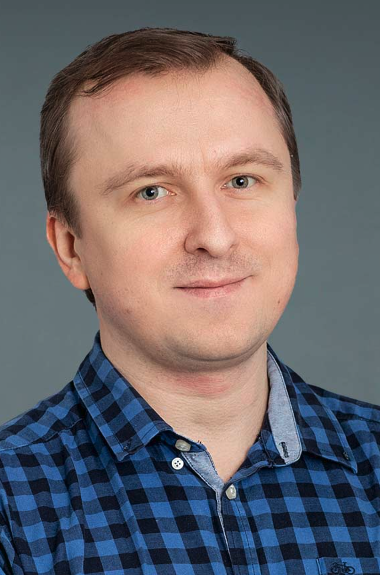 Krzysztof J. Geras合作论文数Department of Radiology, NYU Grossman School of Medicine, New York University;Department of Computer Science, Courant Institute of Mathematical Sciences, New York University;Center for Data Science, New York University12
 Nicolas Ballas合作论文数Meta AI Research11
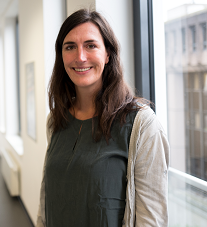 Asja Fischer合作论文数Faculty of Mathematics, Ruhr-Universitat Bochum10
 Jacek Tabor合作论文数Institute of Mathematics, Jagiellonian University9
 Devansh Arpit合作论文数Modelable AI9
 Amos Storkey合作论文数Institute for Adaptive and Neural Computation, School of Informatics, University of Edinburgh9
 Zachary Kenton合作论文数Jagiellonian University8
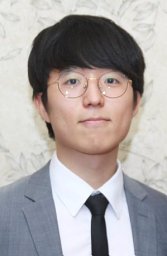 Jungkyu Park合作论文数Computer Science,University of California at Irvine,Irvine,USA7Sabina Podlewska合作论文数Polish Academy of Sciences, Maj Institute of Pharmacology7
 Linda Moy合作论文数Division of Breast Imaging, Department of Radiology, New York University Grossman School of Medicine7
 Kyunghyun Cho合作论文数Center for Data Science, New York University;Courant Institute of Mathematical Sciences, New York University;Genentech Research & Early Development7
 Igor Sieradzki合作论文数Faculty of Mathematics and Computer Science, Jagiellonian University6
 Laura Heacock合作论文数Weill College of Medicine, Cornell University6Damian Leśniak合作论文数5
 Tomasz Danel合作论文数Ardigen, Cracow, Poland5
 Jan Witowski合作论文数Jagiellonian Univ, Med Coll, Dept Gen Surg 2, 21 Kopernika St, PL-31501 Krakow, Poland5
 Kristine M. Pysarenko合作论文数Division of Breast Imaging, Department of Radiology, New York University5
 Wojciech Marian Czarnecki合作论文数Google DeepMind5Reig Beatriu合作论文数5
 Nan Wu合作论文数Harvey5James Park合作论文数4
 Taro Makino合作论文数Center for Data Science, New York University4Linda Du合作论文数4Sushma Gaddam合作论文数4
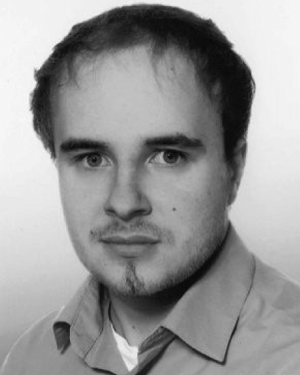 Lukasz Maziarka合作论文数Jagiellonian Univ, Fac Math & Comp Sci, Lojasiewicza 6, PL-30348 Krakow, Poland4Alana A. Lewin合作论文数Division of Breast Imaging, Department of Radiology, New York University4
 Stanislav Fort合作论文数Stealth Startup4
 Andrzej Bojarski合作论文数Department of Medicinal Chemistry, Institute of Pharmacology, Polish Academy of Sciences4
 Jakub Chłędowski合作论文数Jagiellonian University4Paweł Włodarczyk-Pruszyński合作论文数3Melanie Wegener合作论文数3Anastasia Plaunova合作论文数3Sardius Chen合作论文数3Yanqi Xu合作论文数3Shalin Patel合作论文数3Ujas Parikh合作论文数3Alexandra Millet合作论文数3
 Maksym Korablyov合作论文数Dept Physics, Georgia Tech3
 Eric Kim合作论文数Department of Psychology, Faculty of Arts, The University of British Columbia3
 Yiqiu Shen合作论文数Department of Radiology, School of Medicine, New York University3
 Dzmitry Bahdanau合作论文数Periodic Labs3
 Segler Marwin合作论文数University of Münster3
 Chenghao Liu合作论文数Salesforce Research Asia3I. T. Podolak合作论文数Institute of Computer Science;Jagiellonian University3
 Emmanuel Bengio合作论文数Recursion Pharmaceuticals3Maciej Szymczak合作论文数2Piotr Gaiński合作论文数2Duo Wang合作论文数2




