The key issue for the implementation of a metamaterial is to demonstrate the existence of collective modes corresponding to coherent oscillations of the meta-atoms. Atoms of natural materials interact with electromagnetic fields as quantum two-level systems. Artificial quantum two-level systems can be made, for example, using superconducting nonlinear resonators cooled down to their ground state. Here we perform an experiment in which 20 of these quantum meta-atoms, so-called flux qubits, are embedded into a microwave resonator. We observe the dispersive shift of the resonator frequency imposed by the qubit metamaterial and the collective resonant coupling of eight qubits. The realized prototype represents a mesoscopic limit of naturally occurring spin ensembles and as such we demonstrate the AC-Zeeman shift of a resonant qubit ensemble. The studied system constitutes the implementation of a basic quantum metamaterial in the sense that many artificial atoms are coupled collectively to the quantized mode of a photon field.
Single magnetic atoms on non-magnetic surfaces have magnetic moments that are usually destabilized within a microsecond, too speedily to be useful, but here the magnetic moments of single holmium atoms on a highly conductive metallic substrate can reach lifetimes of the order of minutes.
For the model of a linearly driven quantum anharmonic oscillator, the role of damping is investigated. We compare the position of the stable points in phase space obtained from a classical analysis to the result of a quantum mechanical analysis. The solution of the full master equation shows that the stable points behave qualitatively similar to the classical solution but with small modifications. Both the quantum effects and additional effects of temperature can be described by renormalizing the damping.
Motivated by recent "circuit QED" experiments we investigate the noise properties of coherently driven nonlinear resonators. By using Josephson junctions in superconducting circuits, strong nonlinearities can be engineered, which lead to the appearance of pronounced effects already for a low number of photons in the resonator. Based on a master equation approach we determine the emission spectrum and observe for typical circuit QED parameters, in addition to the primary Raman-type peaks, second-order peaks. These peaks describe higher harmonics in the slow noise-induced fluctuations of the oscillation amplitude of the resonator and provide a clear signature of the nonlinear nature of the system.
Recent experiments demonstrated the possibility to realize a single-qubit maser, by coupling an electrical resonator to a superconducting qubit. In the present paper we extend earlier work on single-atom lasers to account for the strong qubit–resonator coupling. We focus in particular on the spectral properties of the lasing radiation and we discuss phase locking induced by an additional ac driving of the resonator.
Motivated by recent "circuit QED" experiments we study the lasing transition and spectral properties of single-qubit lasers. In the strong coupling, low-temperature regime, quantum fluctuations dominate over thermal noise and strongly influence the linewidth of the laser. When the qubit and the resonator are detuned, amplitude and phase fluctuations of the radiation field are coupled and the phase diffusion model, commonly used to describe conventional lasers, fails. We predict pronounced effects near the lasing transition, with an enhanced linewidth and nonexponential decay of the correlation functions. We cover a wide range of parameters by using two complementary approaches, one based on the Liouville equation in a Fock-state basis, covering arbitrarily strong coupling but limited to low photon numbers, the other based on the coherent-state representation, covering large photon numbers but restricted to weak or intermediate coupling.
Motivated by recent experiments, which demonstrated lasing and cooling of the electromagnetic modes in a resonator coupled to a superconducting qubit, we describe the specific mechanisms creating the population inversion, and we study the spectral properties of these systems in the lasing state. Different levels of the theoretical description, i.e., the semi-classical and the semi-quantum approximation, as well as an analysis based on the full Liouville equation are compared. We extend the usual quantum optics description to account for strong qubit-resonator coupling and include the effects of low-frequency noise. Beyond the lasing transition we find for a single- or few-qubit system the phase diffusion strength to grow with the coupling strength, which in turn deteriorates the lasing state.
Motivated by recent experiments, which demonstrated lasing and cooling of the electromagnetic modes in a resonator coupled to a superconducting qubit, we describe the specific mechanisms creating the population inversion, and we study the spectral properties of these systems in the lasing state. Different levels of the theoretical description, i.e., the semi-classical and the semi-quantum approximation, as well as an analysis based on the full Liouville equation are compared. We extend the usual quantum optics description to account for strong qubit-resonator coupling and include the effects of low-frequency noise. Beyond the lasing transition we find for a singleor few-qubit system the phase diffusion strength to grow with the coupling strength, which in turn deteriorates the lasing state. This may lead to a double peak structure of the power spectrum. PACS numbers: 85.25.Cp 42.50.Pq 03.65.Yz Lasing in Circuit QED 2
Motivated by recent experiments, which demonstrated lasing and cooling of the electromagnetic field in an electrical resonator coupled to a superconducting qubit, we study the phase coherence and diffusion of the system in the lasing state. We also discuss phase locking and synchronization induced by an additional ac driving of the resonator. We extend earlier work to account for the strong qubit-resonator coupling and to include the effects of low-frequency qubit's noise. We show that the strong coupling may lead to a double-peak structure of the spectrum, while the shape and width are determined to the low-frequency noise.
Superconducting qubits coupled to electric or nanomechanical resonators display effects previously studied in quantum electrodynamics (QED) as well as extensions thereof. Here, we consider a driven qubit coupled to a low-frequency oscillator and study the influence of dissipation. When the qubit is driven to perform Rabi oscillations, with Rabi frequency in resonance with the oscillator, the latter can be driven far from equilibrium. Blue detuned driving leads to a population inversion in the qubit and lasing behavior of the oscillator ('single-atom laser'). For red detuning, the qubit cools the oscillator. This behavior persists at the symmetry point where the qubit–oscillator coupling is quadratic and decoherence effects are minimized. Here, the system realizes a 'single-atom-two-photon laser'.
Recent experiments on quantum state engineering with superconducting circuits realized concepts originally introduced in the field of quantum optics. Motivated by one such experiment we investigate a Josephson qubit coupled to a slow LC oscillator with frequency much lower than the qubit's energy splitting. The qubit is ac-driven to perform Rabi oscillations, and the Rabi frequency is tuned to resonance with the oscillator. The properties of this driven circuit QED system depend strongly on relaxation and decoherence effects in the qubit. We investigate both one-photon and two-photon qubit-oscillator coupling, the latter being dominant at the symmetry point of the qubit. When the qubit driving frequency is blue detuned, we find that the system exhibits lasing behavior; for red detuning the qubit cools the oscillator. Similar behavior is expected in an accessible range of parameters for a Josephson qubit coupled to a nano-mechanical oscillator. In a different parameter regime, furthering the analogies between superconducting and quantum optical systems, we investigate Sisyphus damping, which is the key element of the Sisyphus cooling protocol, as well as its exact opposite, Sisyphus amplification.
 Gerd Schön合作论文数Institut fur Theoretische Festkorperphysik, Karlsruher Institut fur Technologie13
 Alexander Shnirman合作论文数Institute for Theoretical Condensed Matter physics, Karlsruhe Institute of Technology8
 Michael Marthaler合作论文数Department of Physics and Astronomy;Michigan State University;Department of Physics and Astronomy, Michigan State University7
 Valentina Brosco合作论文数Institut fur Theoretische;Universitat Karlsruhe;Institut fur Theoretische, Universitat Karlsruhe7Jan-Michael Reiner合作论文数2
 Arkady Fedorov合作论文数School of Mathematics and Physics, Faculty of Science, The University of Queensland2
 Peiqing Jin合作论文数2Hans-Georg Meyer合作论文数2
 Lingzhen Guo (郭领阵)合作论文数Center for Joint Quantum Studies, School of Science, Tianjin University;Department of Physics, School of Science, Tianjin University2
 Alessandro Romito合作论文数Institut fur Theoretische;Universitat Karlsruhe;Institut fur Theoretische, Universitat Karlsruhe2Gregor Oelsner合作论文数1e ilichev合作论文数1U. Huebner合作论文数1p macha合作论文数1christopher bresch合作论文数1Tobias Schuh合作论文数1Julian Hauss合作论文数1Evgeni Il’ichev合作论文数1Tobias Maerkl合作论文数1
 Christian Karlewski合作论文数Inst Nanotechnol, Karlsruhe Inst Technol1Timofey Balashov合作论文数1
 Hoffmann Martin H K合作论文数Klinik für Diagnostische und Interventionelle Radiologie, Ulm, Germany.1
 Toshio Miyamachi (宮町俊生)合作论文数Institute of Materials and Systems for Sustainability, Nagoya University1Geilhufe Matthias合作论文数1Wulf Wulfhekel合作论文数1
 A. V. Ustinov合作论文数Physikalisches Institut III;Universitat Erlangen-Nurnberg;Physikalisches Institut III, Universitat Erlangen-Nurnberg1Sergey Ostanin合作论文数Department of Physics;University of Warwick;Department of Physics, University of Warwick1
 Alexey Ustinov合作论文数Physikalisches Institut, Karlsruhe Institute of Technology1
 A. Ernst合作论文数Max-Planck-Institut für Mikrostrukturphysik1Pascal Macha合作论文数1Carsten Hutter合作论文数1Gabriel Oelsner合作论文数Maayney Hayeshua Hospital1Sunil Yeshwanth合作论文数Institut fur Theoretische;Universitat Karlsruhe;Institut fur Theoretische, Universitat Karlsruhe1
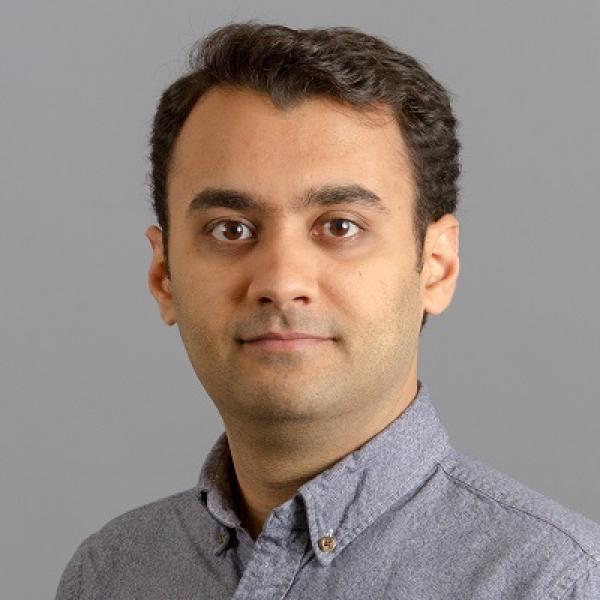 Robin Kothari合作论文数Google Quantum AI1
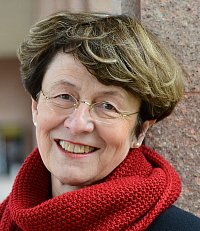 Ingrid Mertig合作论文数Martin-Luther-Universität Halle-Wittenberg1
 Wolfram Hergert合作论文数Martin Luther University Halle-Wittenberg1
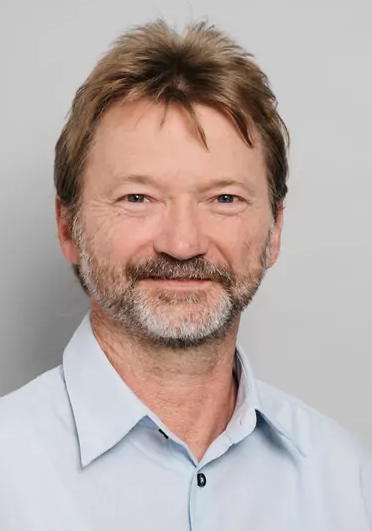 Uwe Hübner合作论文数Competence Center for Micro- and Nanotechnologies, Institute for Physical High Technology1
 Jared H. Cole合作论文数Centre for Quantum Computer Technology;School of Physics;University of Melbourne;School of Physics, University of Melbourne1
 Vittorio Peano合作论文数Institut fur Theoretische1




