A number of large-scale applications require 10 Gbps data transport rates between high-performance computing, storage and file systems, which are connected over wide-area networks. Achieving such capability requires end-to-end optimization of all required hardware and software components including: (i) long haul SONET or 10 GigE connections; (ii) transport protocols such as TCP and UDT, (iii) encryption devices deployed at connection end points, and (iv) host computing, storage and file systems. We present a systematic experimental study of these technologies over 10 Gbps wide-area connections. We first describe a national-scale network testbed with high-performance edge and host systems, which supports dynamic provisioning of 10 Gbps connections of varying lengths. We generate the performance profiles for TCP and UDP with and without encryption devices, and qualitatively describe the effects of latter on transport methods. For file transfers using TCP and UDT, the encryption devices have the equivalent effect of reduced latency and smoother dynamics, respectively, due to on-board buffers. Our experimental results show that these encryption devices lead to higher or smoother file transfer throughputs in spite of the added latency due to packet encryption and decryption.
ADIOS is a state of the art componentization of the IO system that has demonstrated impressive IO performance results on the Cray XT system at ORNL. ADIOS separates the selection and implementation of any particular IO routines from the scientific code offering unprecedented flexibility in the choices for processing and storing data. The API was modelled on F90 IO routines emphasizing simplicity and clarity using external metadata for richness. The metadata is described in a stand-along XML file that is parsed once on code startup and determines what IO routines and parameters are used by the client code for each grouping of data elements generated by the code. By employing this API, a simple change to an entry in the XML file changes the codes to use either synchronous MPI-IO, collective MPI-IO, parallel HDF5, pnetcdf, NULL (no output), or asynchronous transports such as the Rutgers DART implementation and the Georgia Tech DataTap method. Simply by restarting the code, the new IO routines selected in the XML file will be employed. Furthermore, we have been defining additional metadata tags to support in-situ visualization solely through changes in the XML metadata file. The power of this technique is demonstrated on the GTC, GTC_S, XGC1, S3D, Chimera, and Flash codes. We show that when these codes run on a large number of processors, they can sustain high I/O bandwidth when they write out their restart and analysis files.
The steadily increasing power of supercomputing systems is enabling very high resolution simulations of compressible, turbulent flows in the high Reynolds number limit, which is of interest in astrophysics as well as in several other fluid dynamical applications. This paper discusses two such simulations, using grids of up to 8 billion cells. In each type of flow, convergence in a statistical sense is observed as the mesh is refined. The behavior of the convergent sequences indicates how a subgrid-scale model of turbulence could improve the treatment of these flows by high-resolution Euler schemes like PPM. The best resolved case, a simulation of a Richtmyer-Meshkov mixing layer in a shock tube experiment, also points the way toward such a subgrid-scale model. Analysis of the results of that simulation indicates a proportionality relationship between the energy transfer rate from large to small motions and the determinant of the deviatoric symmetric strain as well as the divergence of the velocity for the large-scale field.
The need to simulate fully developed turbulence with wide range of scales led us to use the Piecewise Parabolic Method (PPM) to solve the Euler equations of motions. To obtain data for 3-D homogeneous compressible decaying turbulence numerical simulations were performed on computational meshes of up to 10243 zones. These data were compared with data obtained by solving the Navier–Stokes (NS) equations. Results of studying the kinetic energy, enstrophy, and the energy power spectra with different resolutions are presented for both the PPM and NS data. The results of the comparison show convergence of the PPM and NS solutions to the same limit.
The new generation of powerful DSM and SMP cluster computers enables simulations of fluid dynamics at sufficient resolution to compute the complex nonlinear interactions of small-scale turbulent motions with a large-scale driving flow. With a new programming model of hierarchical shared memory multitasking, it is possible to exploit these new systems without disrupting the flow of small and medium-sized jobs that makes their existence possible.
Close-up underwater photography and image analysis were used to quantify mesh occlusion by biofouling of salmon-cage netting. This technique allows fast, non-destructive sampling of cages in situ for the determination of temporal and spatial changes in fouling. The area of net blockage can be easily determined, allowing rapid evaluation of cleaning or antifouling performance.
Microfouling development on salmon-cage netting in Tasmania, Australia, was studied by scanning electron microscopy (SEM). Temporal changes and distribution of the fouling microorganisms were documented for the horizontal netting bars in winter and spring. Diatoms were dominant on the upper surfaces of the netting bars and protista on the lower surfaces. This distribution is considered to be a consequence of shading of the lower surfaces from light and the abundance of protista is attributed to high nutrient levels associated with the dense fish population. With increasing immersion time, there was a progression in diatom communities from prostrate forms to large erect and stalked forms in winter, and tube-dwelling forms in spring. Both the rates and the depth of fouling varied between seasons. Copper-based and silicone-based antifoulants effectively delayed fouling development. The former also selected for diatom species known to be copper-tolerant. In contrast, the silicone-treated netting was colonised mostly by the same species as the untreated netting.
In previous articles, the nonbroadcast satellite facilities available for use in schools and aerial systems suitable for construction in schools were described. The purpose of this article is to show how the use of the UoSAT project may enable schools to undertake a scientific investigation by outlining a possible area for research.
In a previous article the nonbroadcasting satellites suitable for use by schools and the relevant commercial equipment now available were briefly described. The purpose of this article is to suggest ways in which the performance of a satellite reception system might be improved and the involvement of pupils in satellite projects encouraged.
In a series of talks in 1946, John von Neumann envisioned the use of high-speed computers to generate solutions to nonlinear problems, particularly in fluid dynamics. He pointed out that scientists were conducting expensive and difficult experiments to observe physical behavior even when the underlying principles and governing equations were known. “The purpose of the experiment is not to verify a proposed theory but to replace a computation from an unquestioned theory by direct measurements,” he wrote. “Thus wind tunnels are used at present, at least in large part, as computing devices of the so-called analogy type to integrate the nonlinear partial differential equations of fluid dynamics.”
 Paul Woodward合作论文数Laboratory for Computational Science and Engineering, University of Minnesota, MN, U.S.A.
5
Paul Woodward合作论文数Laboratory for Computational Science and Engineering, University of Minnesota, MN, U.S.A.
5 David H. Porter合作论文数4
 Igor Sytine合作论文数3Karsten Schwan合作论文数2
 Manish Parashar合作论文数Scientific Computing and Imaging Institute, University of Utah;Kahlert School of Computing, University of Utah;Department of Computer Science, Rutgers University2Chen Jin合作论文数2
 Jay Lofstead合作论文数Sandia Natl Labs2Hasan Abbasi合作论文数Georgia Institute of Technology2Karl-Heinz A. Winkler合作论文数2Bruce C. Curtis合作论文数2
 Ciprian Docan合作论文数2Donald E Eliason合作论文数2
 Scott Klasky合作论文数Scientific Computing Group within the National Center for Computational Sciences (NCCS)2Arthur A. Mirin合作论文数2
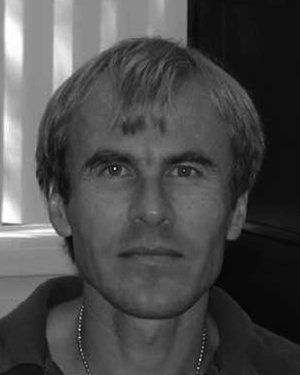 Andris M Dimits合作论文数2R. H. Cohen合作论文数2William P. Dannevik合作论文数2k h a winkler合作论文数1Pr Woodward合作论文数1Susan E. Hicks合作论文数1Joshua K. Lothian合作论文数1S. E. Anderson合作论文数1
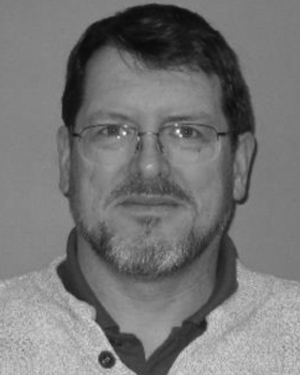 Molly M Wolf合作论文数College of Computing, Georgia Institute of Technology1
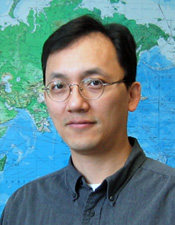 Wei-keng Liao合作论文数Department of Electrical Engineering and Computer Science, McCormick School of Engineering, Northwestern University;Center for Ultra-scale Computing and Information Security, McCormick School of Engineering, Northwestern University1
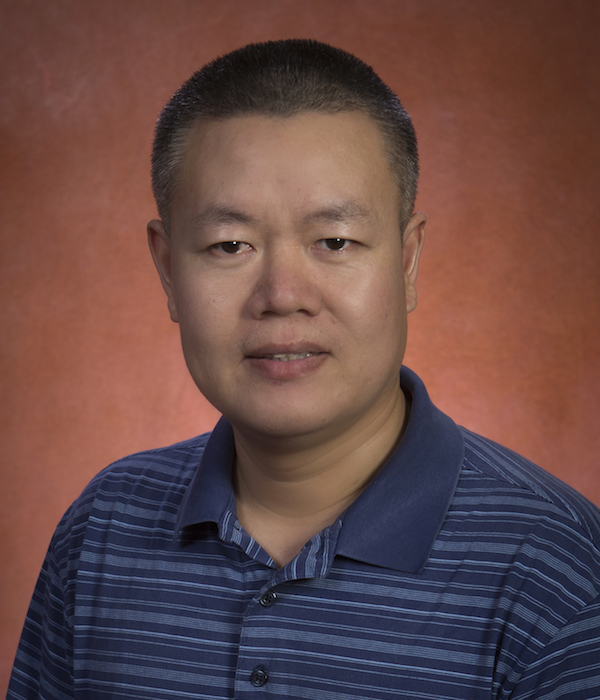 Weikuan Yu合作论文数Department of Computer Science, Florida State University1
 Nageswara S Rao合作论文数Oak Ridge National Laboratory1Dennis Dinge合作论文数1Chris Kemper合作论文数1
 Norman J. Zabusky合作论文数Rutgers University, Piscataway, NJ1
 Ron Oldfield合作论文数Sandia National Laboratories, Albuquerque, NM, USA1Chris Burke合作论文数1Viraj Bhat合作论文数Center for Advanced Information Processing
Rutgers University1James S. Fisher合作论文数1Greg Hinkel合作论文数1Steve Poole合作论文数Northwood University1
Ron Oldfield合作论文数Sandia National Laboratories, Albuquerque, NM, USA1Chris Burke合作论文数1Viraj Bhat合作论文数Center for Advanced Information Processing
Rutgers University1James S. Fisher合作论文数1Greg Hinkel合作论文数1Steve Poole合作论文数Northwood University1




