Background Some emergency department (ED) patients have complex needs requiring hospitalization but lack acute conditions that meet inpatient admission criteria. Although common, these cases have received little national attention. We convened emergency medicine experts to propose definitions, barriers, and calls to action for this population. Methods We conducted a modified Delphi study using iterative online surveys and an inperson meeting. Panelists were recruited from Strengthening Essential EDs (SEED), a consortium of 15 United States (US) academic safety-net hospitals. Panelists were asked to rank agreement with survey items on a 5-point Likert scale, with elimination of items that failed to reach consensus (defined as <3.75) after each round. Between rounds, we integrated all panelist suggestions and distributed anonymous controlled feedback. The inperson discussion used a modified Liberating Structures framework to elicit feedback, which was used to edit items in real time. Results In total, 35 of 67 (52.2%) panelists from 12 of 15 (80%) institutions attended the inperson discussion, and 22 panelists from 13 institutions participated in ≥1 Delphi survey. The panel reached consensus on a single term and definition—recommending “patients with complex dispositions” defined as “a patient who requires hospitalization due to complex disposition planning needs and identified barriers to safe discharge.” The panel also reached consensus on 5 key barriers and 6 calls to action for future work. Conclusions We recommend the term “patients with complex dispositions” to describe patients who require hospitalization due to identified barriers to safe discharge. This term, along with the proposed definition, identified barriers, and calls to action, should be considered and evaluated by a larger and more diverse stakeholder group in the future. We further encourage future work by multidisciplinary teams to evaluate and address this issue in the US health care system.
Safety-net emergency departments (EDs) are a critical component of the US health care system, delivering emergency care for patients in need, including vulnerable populations. EDs provide unscheduled acute care for patients 24 hours a day, 7 days a week, regardless of a person's ability to pay. In addition, EDs have transformed beyond their traditional roles of providing emergency services and being the centers for regionalized trauma, cardiac, and stroke care, to also becoming stewards of public health by leading screening and treatment efforts for nonemergent conditions, such as HIV, hepatitis C, mental health, and opioid use disorder. Many safety-net hospitals and their EDs serve essential roles in urban and rural communities, making the impact of recent closures particularly concerning. In response, we convened clinical, operational, and administrative leaders of key safety-net EDs across the United States in order to develop expert consensus related to critical issues facing safety-net EDs. The goals were to help inform policymakers about current challenges and to offer timely recommendations so that together we can mend the safety net as the country works toward the goal of health equity for all.
This clinical policy from the American College of Emergency Physicians is a revision of the 2010 "Clinical Policy: Critical Issues in the Evaluation and Management of Emergency Department Patients With Suspected Appendicitis." A writing subcommittee conducted a systematic review of the literature to derive evidence-based recommendations to answer the following clinical questions: 1) in ED patients with possible acute appendicitis, can a clinical prediction rule be used to identify patients for whom no advanced imaging is required? 2) in ED patients with suspected acute appendicitis, is the diagnostic accuracy of ultrasound comparable with computed tomography or magnetic resonance imaging for the diagnosis of acute appendicitis? 3) in ED patients who are undergoing computed tomography of the abdomen and pelvis for suspected acute appendicitis, does the addition of contrast improve diagnostic accuracy? Evidence was graded, and recommendations were made based on the strength of the available data.
This Policy Resource and Education Paper (PREP) from the American College of Emergency Physicians (ACEP) discusses the use of high-sensitivity cardiac troponin (hs-cTn) in the emergency department setting. This brief review discusses types of hs-cTn assays as well as the interpretation of hs-cTn in the setting of various clinical factors such as renal dysfunction, sex, and the important distinction between myocardial injury versus myocardial infarction. In addition, the PREP provides one possible example of an algorithm for the use of a hs-cTn assay in patients in whom the treating clinician is concerned about potential acute coronary syndrome.
BACKGROUND:Didactic lectures remain common in medical education. Many faculty physicians do not receive formal training on public presentations or leading instructional sessions. Coaching has emerged in medical education with the potential to positively impact skills. We sought to evaluate a novel, national faculty peer-coaching program created to improve lecture presentation skills and foster career development.METHODS:This was a mixed-methods study of participant and faculty perceptions after completing the Council of Residency Directors in Emergency Medicine Academy Coaching Program. Participants completed an online evaluative survey consisting of multiple choice and Likert-type items. Program coaches participated in semistructured interviews. Descriptive statistics were reported for survey data. Thematic qualitative analysis by two independent reviewers was performed on interview data.RESULTS:During 2012 to 2017, a total of 30 participants and 11 coaches from 37 residency programs across the United States engaged in the program. Twenty-four (80%) participants completed the survey. Eight (73%) coaches participated in semistructured interviews. Data were collected between October and December 2018. The mean ± SD numbers of national presentations participants had given before and after the coaching program were 6.92 ± 7.68 and 16.42 ± 15.43, respectively. Since their coaching, most participants (87.5%) have been invited to give a lecture at another institution. Many participants felt that the program improved their lecture evaluations, public speaking, ability to engage an audience, and professional development. Almost all (92%) would recommend the program to a colleague. The coaches perceived multiple benefits including improved skills, self-reflection, networking, career advancement, and personal fulfillment. Suggestions for improvement included improved administrative processes, more clear expectations, increased marketing, and increased participant and coach engagement.CONCLUSION:Participants and coaches perceived multiple benefits from this novel, national faculty coaching program. With identification of the success, challenges, and suggestions for improvement, others may benefit as they develop coaching programs in medical education.
The outpatient treatment of select emergency department patients with acute pulmonary embolism (PE) or deep vein thrombosis (DVT) has been shown to be safe, cost effective and associated with high patient satisfaction. Despite this, outpatient PE and DVT treatment remains uncommon. To address this, the American College of Emergency Physicians assembled a multidisciplinary team of content experts to provide evidence-based recommendations and practical advice to help clinicians safely treat patients with low-risk PE and DVT without hospitalization. The emergency clinician must stratify the patient's risk of clinical decompensation due to their PE or DVT as well as their risk of bleeding due to anticoagulation. The clinician must also select and start an anticoagulant and ensure that the patient has access to the medication in a timely manner. Reliable follow-up is critical, and the patient must also be educated about signs or symptoms that should prompt a return to the emergency department. To facilitate access to these recommendations, the consensus panel also created 2 web-based "point-of-care tools."
Background Remediation is an important component of residency training that ensures residents are progressing toward competency and unsupervised practice. There is literature describing educators' attitudes about remediation; however, little is known about residents' perspectives regarding peers who are struggling and remediation. Understanding this perspective is critical to supporting struggling residents and developing successful remediation programs. Objective The objective of this study was to describe residents' perspectives on peers who are struggling and remediation processes within graduate medical education programs. Methods In 2015, we conducted focus groups of residents in a multi-institutional exploratory qualitative study designed to investigate resident perspectives on remediation. Focus groups included questions on identification of residents who are struggling, reasons residents face difficulty in training, attitudes toward remediation, and understanding of the remediation process. Using conventional content analysis, we analyzed the focus group data to discover common themes. Results Eight focus groups were performed at 3 geographically distinct institutions. A total of 68 residents participated, representing 12 distinct medical specialties. Four major themes emerged from the participants' discussion: lack of transparency, negative stigma, overwhelming emotions, and a need for change. Conclusions Resident perspectives on remediation are affected by communication, culture, and emotions. The resident participants called for change, seeking greater understanding and transparency about what it means to struggle and the process of remediation. The residents also believed that remediation can be embraced and normalized.
ContextSituativity theory posits that learning and the development of clinical reasoning skills are grounded in context. In case-based teaching, this context comes from recreating the clinical environment, through emulation, as with manikins, or description. In this study, we sought to understand the difference in student clinical reasoning abilities after facilitated patient case scenarios with or without a manikin.MethodsFourth-year medical students in an internship readiness course were randomized into patient case scenarios without manikin (control group) and with manikin (intervention group) for a chest pain session. The control and intervention groups had identical student-led case progression and faculty debriefing objectives. Clinical reasoning skills were assessed after the session using a 64-question script concordance test (SCT). The test was developed and piloted prior to administration. Hospitalist and emergency medicine faculty responses on the test items served as the expert standard for scoring.ResultsNinety-six students were randomized to case-based sessions with (n=48) or without (n=48) manikin. Ninety students completed the SCT (with manikin n=45, without manikin n=45). A statistically significant mean difference on test performance between the two groups was found (t=3.059, df=88, p=.003), with the manikin group achieving higher SCT scores.ConclusionUse of a manikin in simulated patient case discussion significantly improves students' clinical reasoning skills, as measured by SCT. These results suggest that using a manikin to simulate a patient scenario situates learning, thereby enhancing skill development.
Author(s): Jordan, Jaime; Yarris, Lalena; Dorfsman, Michele; Wolf, Stephen; Wagner, Mary Jo
This clinical policy from the American College of Emergency Physicians addresses key issues in opioid management in adult patients presenting to the emergency department. A writing subcommittee conducted a systematic review of the literature to derive evidence-based recommendations to answer the following clinical questions: (1) In adult patients experiencing opioid withdrawal, is emergency department-administered buprenorphine as effective for the management of opioid withdrawal compared with alternative management strategies? (2) In adult patients experiencing an acute painful condition, do the benefits of prescribing a short course of opioids on discharge from the emergency department outweigh the potential harms? (3) In adult patients with an acute exacerbation of noncancer chronic pain, do the benefits of prescribing a short course of opioids on discharge from the emergency department outweigh the potential harms? (4) In adult patients with an acute episode of pain being discharged from the emergency department, do the harms of a short concomitant course of opioids and muscle relaxants/sedative-hypnotics outweigh the benefits? Evidence was graded and recommendations were made based on the strength of the available data.
Conflict is ubiquitous in relationships. It can be productive if managed constructively, resulting in diversity of thought and better solutions. Often, however, it is counterproductive, resulting in stress, frustration, and decreased effectiveness. Assessing one’s conflict tolerance helps to identify one’s conflict management style and minimize and mitigate situations of counterproductive conflict. On a team level conflict can be managed in part by deliberately establishing goals, roles, processes, and a framework for interactions. In the midst of conflict, an approach of pausing, acknowledging, empathizing, redirecting, and delayed readdressing is frequently the best initial response.
INTRODUCTION:The objective of this study was to review and critically appraise the medical education literature pertaining to a flipped-classroom (FC) education model, and to highlight influential papers that inform our current understanding of the role of the FC in medical education.METHODS:A search of the English-language literature querying Education Resources Information Center (ERIC), PsychINFO, PubMed, and Scopus identified 296 papers related to the FC using either quantitative, qualitative, or review methods. Two reviewers independently screened each category of publications using previously established exclusion criteria. Eight reviewers then independently scored the remaining 54 publications using either a qualitative, quantitative, or review-paper scoring system. Each scoring system consisted of nine criteria and used parallel metrics that have been previously used in critical appraisals of education research.RESULTS:A total of 54 papers (33 quantitative, four qualitative, and 17 review) on FC met a priori criteria for inclusion and were critically appraised and reviewed. The top 10 highest scoring articles (five quantitative studies, two qualitative studies, and three review papers) are summarized in this article.CONCLUSION:This installment of the Council of Emergency Medicine Residency Directors (CORD) Academy Critical Appraisal series highlights 10 papers that describe the current state of literature on the flipped classroom, including an analysis of the benefits and drawbacks of an FC approach, practical implications for emergency medicine educators, and next steps for future research.
INTRODUCTION:Didactic lectures remain fundamental in academic medicine; however, many faculty physicians do not receive formal training in instructional delivery. In order to design a program to instill and enhance lecture skills in academic emergency medicine (EM) physicians we must first understand the gap between the current and ideal states.METHODS:In 2012 the Council of Emergency Medicine Residency Directors (CORD) Academy for Scholarship designed a novel coaching program to improve teaching skills and foster career development for medical educators based on literature review and known teaching observation programs. In order to inform the refinement of the program, we performed a needs assessment of participants. Participants' needs and prior teaching experiences were gathered from self-reflection forms completed prior to engaging in the coaching program. Two independent reviewers qualitatively analyzed data using a thematic approach.RESULTS:We analyzed data from 12 self-reflection forms. Thematic saturation was reached after nine forms. Overall inter-rater agreement was 91.5%. We categorized emerging themes into three domains: participant strengths and weaknesses; prior feedback with attempts to improve; and areas of desired mentorship. Several overlapping themes and subthemes emerged including factors pertaining to the lecturer, the audience/learner, and the content/delivery.CONCLUSION:This study identified several areas of need from EM educators regarding lecture skills. These results may inform faculty development efforts in this area. The authors employed a three-phase, novel, national coaching program to meet these needs.
This clinical policy from the American College of Emergency Physicians addresses key issues in the evaluation and management of adult patients presenting to the emergency department with acute headache. A writing subcommittee conducted a systematic review of the literature to derive evidence-based recommendations to answer the following clinical questions: (1) In the adult emergency department patient presenting with acute headache, are there risk-stratification strategies that reliably identify the need for emergent neuroimaging? (2) In the adult emergency department patient treated for acute primary headache, are nonopioids preferred to opioid medications? (3) In the adult emergency department patient presenting with acute headache, does a normal noncontrast head computed tomography scan performed within 6 hours of headache onset preclude the need for further diagnostic workup for subarachnoid hemorrhage? (4) In the adult emergency department patient who is still considered to be at risk for subarachnoid hemorrhage after a negative noncontrast head computed tomography, is computed tomography angiography of the head as effective as lumbar puncture to safely rule out subarachnoid hemorrhage? Evidence was graded and recommendations were made based on the strength of the available data.
Didactic lectures remain a fundamental in academic medicine; however, many faculty physicians do not receive formal training in instructional delivery. Coaching has recently emerged in medical education and preliminary data have suggested that it can improve clinical and teaching skills and positively impact professional development. We sought to create a novel, national peer coaching program to improve lectures skills and foster career development for emergency medicine faculty.
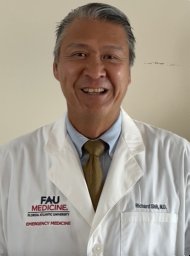 Richard Shih合作论文数Department of Emergency Medicine, Morristown Memorial Hospital9
 Jason Haukoos合作论文数Department of Emergency Medicine, School of Medicine, University of Colorado Anschutz Medical Campus;Department of Epidemiology, Colorado School of Public Health, University of Colorado Anschutz Medical Campus;Denver Health Medical Center;University of Colorado Hospital8
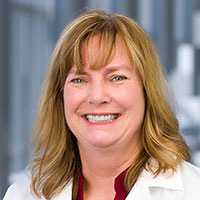 Deborah Diercks合作论文数Department of Emergency Medicine, University of Texas Southwestern Medical Center8
 Silvers Scott M合作论文数7
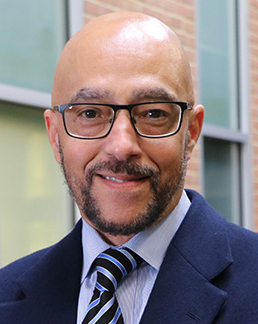 Michael Brown合作论文数Department of Kinesiology, University of Maryland7
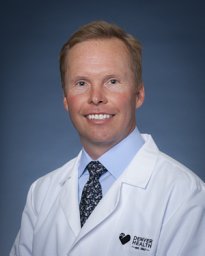 Richard Byyny合作论文数Department of Emergency Medicine, Denver Health Medical Center;University of Colorado School of Medicine;Denver Health Medical Center, University of Colorado School of Medicine6Susan B. Promes合作论文数San Francisco Medical Center (SBP),, University of California6Rhonda R. Whitson合作论文数6
 Steven A Godwin合作论文数6Francis M. Fesmire合作论文数6Andy Jagoda合作论文数6Stephen V. Cantrill合作论文数6
 Molly Thiessen合作论文数Dept Emergency Med, Univ Colorado5
 Stephen P. Wall合作论文数Department of Emergency Medicine, Grossman School of Medicine, New York University5Jordan Jaime合作论文数the David Geffen School of Medicine, Harbor-UCLA Medical Center5Sharon E. Mace合作论文数5
 Edward P Sloan合作论文数Clinical Policies Subcommittee, From the American College of Emergency Physicians5J. Stephen Huff合作论文数5Michele L Dorfsman合作论文数4Devorah J. Nazarian合作论文数4Sara M Krzyzaniak合作论文数4
 Robert L Wears合作论文数Clinical Safety Research Unit, Imperial College London;Department of Emergency Medicine, University of Florida College of Medicine4Yarris Lalena M合作论文数Dept Emergency Med, Oregon Hlth & Sci Univ4Wagner Mary Jo合作论文数Michigan State University4
 Heemun Kwok合作论文数Department of Emergency Medicine, University of Washington4Benjamin W. Hatten合作论文数4Wyatt W. Decker合作论文数4Sigrid Hahn合作论文数4BA Murphy合作论文数3Jonathan H Valente合作论文数3SA Godwin合作论文数3SM Silvers合作论文数3JM Howell合作论文数3EK Kuffner合作论文数3
 Lauren M Westafer合作论文数Med Sch Baystate, Univ Massachusetts3Michael D. Smith合作论文数3Jody A Vogel合作论文数3Lukens T W合作论文数3Gong Jennifer合作论文数3
 Kennon Heard合作论文数University of Colorado, Department of Emergency Medicine and the Colorado Emergency Medicine Research Center3Charles J. Gerardo合作论文数Division of Emergency Medicine, Duke University Medical Center3Wyatt W Decker合作论文数3William C. Dalsey合作论文数3Tai M. Lockspeiser合作论文数Office of Medical Education, University of California School of Medicine3
 Lisa Barker合作论文数Department of Nutrition, Dietetics and Food, Clinical Sciences at Monash Health, Monash University3Gretchen Guiton合作论文数3Jeannette Guerrasio合作论文数3
 Bruce Lo合作论文数3Seth R. Gemme合作论文数2




