We present ZeroBot, a real2sim framework for learning a robot manipulation task from scratch in minutes under challenging conditions: zero human demonstrations, zero policy pre-training, and zero known object models. Given only a single view of an object and a goal pose for that object, ZeroBot uses image-to-3D generative models to obtain a complete object mesh, which is used in simulation for large-scale parallel reinforcement learning. To accelerate training, we introduce an action space which leverages the generated geometry and learned value function to sample states involving robot-object contact. When evaluated on real-world tasks including grasping, pushing, articulated object interaction, and multi-stage manipulation, ZeroBot achieves an 87% success rate with an average training time of 119 seconds. These results show the value of using image-to-3D models in a real2sim framework for rapid, autonomous robot learning.
Connecting the semantic reasoning of vision-language models (VLMs) to the precise geometric demands of robotic manipulation remains a fundamental challenge. Although VLMs can interpret high-level commands, they lack the intrinsic spatial intelligence required for tasks demanding precise object placement, orientation, and physical reasoning. Here, we introduce Retrieval-Augmented Manipulation (RAM), an object-centric framework that endows general-purpose vision foundation models with the spatial reasoning necessary for robust manipulation. RAM bridges the semantic-to-geometric gap by grounding abstract concepts into an explicit, object-centric three-dimensional (3D) representation. This grounded information is then provided as augmented context to the VLM, empowering it to decompose complex instructions into a sequence of spatially precise and physically plausible subgoals. We demonstrate that RAM, in a zero-shot setting on a real-world robot, can execute these subgoals to fulfill complex spatial language instructions, complete spatially aware manipulation under the guidance of a single 2D image, and adaptively replan tasks by reasoning about physical constraints like object size and collisions. Quantitative evaluations on the Common Object in 3D (CO3D) dataset also validated that RAM's core vision module generalizes to previously unseen object categories and is robust to variations in shape and occlusions. By providing a structured bridge between semantic intent and geometric execution, RAM represents a critical step toward developing more physically intelligent and general-purpose robotic systems.
Learning to manipulate cloth is both a paradigmatic problem for robotic research and a problem of immediate relevance to a variety of applications ranging from assistive care to the service industry. The complex physics of the deformable object makes this problem of cloth manipulation nontrivial. In order to create a general manipulation strategy that addresses a variety of shapes, sizes, fold and wrinkle patterns, in addition to the usual problems of appearance variations, it becomes important to carefully consider model structure and their implications for generalisation performance. In this paper, we present an approach to in-air cloth manipulation that uses a variation of a recently proposed reinforcement learning architecture, DreamerV2. Our implementation modifies this architecture to utilise surface normals input, in addition to modiying the replay buffer and data augmentation procedures. Taken together these modifications represent an enhancement to the world model used by the robot, addressing the physical complexity of the object being manipulated by the robot. We present evaluations both in simulation and in a zero-shot deployment of the trained policies in a physical robot setup, performing in-air unfolding of a variety of different cloth types, demonstrating the generalisation benefits of our proposed architecture.
This paper introduces Hierarchical Diffusion Policy (HDP), a hierarchical agent for multi-task robotic manipulation. HDP factorises a manipulation policy into a hierarchical structure: a high-level task-planning agent which predicts a distant next-best end-effector pose (NBP), and a low-level goal-conditioned diffusion policy which generates optimal motion trajectories. The factorised policy representation allows HDP to tackle both long-horizon task planning while generating fine-grained low-level actions. To generate context-aware motion trajectories while satisfying robot kinematics constraints, we present a novel kinematics-aware goal-conditioned control agent, Robot Kinematics Diffuser (RK-Diffuser). Specifically, RK-Diffuser learns to generate both the end-effector pose and joint position trajectories, and distill the accurate but kinematics-unaware end-effector pose diffuser to the kinematics-aware but less accurate joint position diffuser via differentiable kinematics. Empirically, we show that HDP achieves a significantly higher success rate than the state-of-the-art methods in both simulation and real-world.
Using learned reward functions (LRFs) as a means to solve sparse-reward reinforcement learning (RL) tasks has yielded some steady progress in task-complexity through the years. In this work, we question whether today's LRFs are best-suited as a direct replacement for task rewards. Instead, we propose leveraging the capabilities of LRFs as a pretraining signal for RL. Concretely, we propose $\textbf{LA}$nguage Reward $\textbf{M}$odulated $\textbf{P}$retraining (LAMP) which leverages the zero-shot capabilities of Vision-Language Models (VLMs) as a $\textit{pretraining}$ utility for RL as opposed to a downstream task reward. LAMP uses a frozen, pretrained VLM to scalably generate noisy, albeit shaped exploration rewards by computing the contrastive alignment between a highly diverse collection of language instructions and the image observations of an agent in its pretraining environment. LAMP optimizes these rewards in conjunction with standard novelty-seeking exploration rewards with reinforcement learning to acquire a language-conditioned, pretrained policy. Our VLM pretraining approach, which is a departure from previous attempts to use LRFs, can warmstart sample-efficient learning on robot manipulation tasks in RLBench.
We introduce BiGym, a new benchmark and learning environment for mobile bi-manual demo-driven robotic manipulation. BiGym features 40 diverse tasks set in home environments, ranging from simple target reaching to complex kitchen cleaning. To capture the real-world performance accurately, we provide human-collected demonstrations for each task, reflecting the diverse modalities found in real-world robot trajectories. BiGym supports a variety of observations, including proprioceptive data and visual inputs such as RGB, and depth from 3 camera views. To validate the usability of BiGym, we thoroughly benchmark the state-of-the-art imitation learning algorithms and demo-driven reinforcement learning algorithms within the environment and discuss the future opportunities. Project website: https://chernyadev.github.io/bigym/
Object pose estimation plays a crucial role in robotic manipulation, however, its practical applicability still suffers from limited generalizability. This paper addresses the challenge of generalizable object pose estimation, particularly focusing on category-level object pose estimation for unseen object categories. Current methods either require impractical instance-level training or are confined to predefined categories, limiting their applicability. We propose VFM-6D, a novel framework that explores harnessing existing vision and language models, to elaborate object pose estimation into two stages: category-level object viewpoint estimation and object coordinate map estimation. Based on the two-stage framework, we introduce a 2D-to-3D feature lifting module and a shape-matching module, both of which leverage pre-trained vision foundation models to improve object representation and matching accuracy. VFM-6D is trained on cost-effective synthetic data and exhibits superior generalization capabilities. It can be applied to both instance-level unseen object pose estimation and category-level object pose estimation for novel categories. Evaluations on benchmark datasets demonstrate the effectiveness and versatility of VFM-6D in various real-world scenarios.
Joint space and task space control are the two dominant action modes for controlling robot arms within the robot learning literature. Actions in joint space provide precise control over the robot's pose, but tend to suffer from inefficient training; actions in task space boast data-efficient training but sacrifice the ability to perform tasks in confined spaces due to limited control over the full joint configuration. This work analyses the criteria for designing action spaces for robot manipulation and introduces ER ( E nd-effector R edundancy), a novel action space formulation that, by addressing the redundancies present in the manipulator, aims to combine the advantages of both joint and task spaces, offering fine-grained comprehensive control with overactuated robot arms whilst achieving highly efficient robot learning. We present two implementations of ER, ERAngle (ERA) and ERJoint (ERJ), and we show that ERJ in particular demonstrates superior performance across multiple settings, especially when precise control over the robot configuration is required. We validate our results both in simulated and real robotic environments.
Image-generation diffusion models have been fine-tuned to unlock new capabilities such as image-editing and novel view synthesis. Can we similarly unlock image-generation models for visuomotor control? We present GENIMA, a behavior-cloning agent that fine-tunes Stable Diffusion to 'draw joint-actions' as targets on RGB images. These images are fed into a controller that maps the visual targets into a sequence of joint-positions. We study GENIMA on 25 RLBench and 9 real-world manipulation tasks. We find that, by lifting actions into image-space, internet pre-trained diffusion models can generate policies that outperform state-of-the-art visuomotor approaches, especially in robustness to scene perturbations and generalizing to novel objects. Our method is also competitive with 3D agents, despite lacking priors such as depth, keypoints, or motion-planners.
Despite recent advances in improving the sample-efficiency of reinforcement learning (RL) algorithms, designing an RL algorithm that can be practically deployed in real-world environments remains a challenge. In this paper, we present Coarse-to-fine Reinforcement Learning (CRL), a framework that trains RL agents to zoom-into a continuous action space in a coarse-to-fine manner, enabling the use of stable, sample-efficient value-based RL algorithms for fine-grained continuous control tasks. Our key idea is to train agents that output actions by iterating the procedure of (i) discretizing the continuous action space into multiple intervals and (ii) selecting the interval with the highest Q-value to further discretize at the next level. We then introduce a concrete, value-based algorithm within the CRL framework called Coarse-to-fine Q-Network (CQN). Our experiments demonstrate that CQN significantly outperforms RL and behavior cloning baselines on 20 sparsely-rewarded RLBench manipulation tasks with a modest number of environment interactions and expert demonstrations. We also show that CQN robustly learns to solve real-world manipulation tasks within a few minutes of online training.
Joint control and end-effector control are the two most dominant control methods for robot arms within the robot learning literature. Joint control, while precise, often suffers from inefficient training; end-effector control boasts data-efficient training but sacrifices the ability to perform tasks in confined spaces due to limited control over the robot joint configuration. This paper introduces a novel action space formulation: End-Effector-Elbow (E3), which addresses the limitations of existing control paradigms by allowing the control of both the end-effector and elbow of the robot. E3 combines the advantages of both joint and end-effector control, offering fine-grained comprehensive control with overactuated robot arms whilst achieving highly efficient robot learning. E3 systematically outperforms other action spaces, when precise control over the robot configuration is required, both in simulated and real environments. Project website: https://doubleblind-repos.github.io/
In the field of Robot Learning, the complex mapping between high-dimensional observations such as RGB images and low-level robotic actions, two inherently very different spaces, constitutes a complex learning problem, especially with limited amounts of data. In this work, we introduce Render and Diffuse (R D) a method that unifies low-level robot actions and RGB observations within the image space using virtual renders of the 3D model of the robot. Using this joint observation-action representation it computes low-level robot actions using a learnt diffusion process that iteratively updates the virtual renders of the robot. This space unification simplifies the learning problem and introduces inductive biases that are crucial for sample efficiency and spatial generalisation. We thoroughly evaluate several variants of R D in simulation and showcase their applicability on six everyday tasks in the real world. Our results show that R D exhibits strong spatial generalisation capabilities and is more sample efficient than more common image-to-action methods.
Generalising vision-based manipulation policies to novel environments remains a challenging area with limited exploration. Current practices involve collecting data in one location, training imitation learning or reinforcement learning policies with this data, and deploying the policy in the same location. However, this approach lacks scalability as it necessitates data collection in multiple locations for each task. This paper proposes a novel approach where data is collected in a location predominantly featuring green screens. We introduce Green-screen Augmentation (GreenAug), employing a chroma key algorithm to overlay background textures onto a green screen. Through extensive real-world empirical studies with over 850 training demonstrations and 8.2k evaluation episodes, we demonstrate that GreenAug surpasses no augmentation, standard computer vision augmentation, and prior generative augmentation methods in performance. While no algorithmic novelties are claimed, our paper advocates for a fundamental shift in data collection practices. We propose that real-world demonstrations in future research should utilise green screens, followed by the application of GreenAug. We believe GreenAug unlocks policy generalisation to visually distinct novel locations, addressing the current scene generalisation limitations in robot learning.
Understanding the structure of multiple related tasks allows for multi-task learning to improve the generalisation ability of one or all of them. However, it usually requires training each pairwise combination of tasks together in order to capture task relationships, at an extremely high computational cost. In this work, we learn task relationships via an automated weighting framework, named Auto-Lambda. Unlike previous methods where task relationships are assumed to be fixed, Auto-Lambda is a gradient-based meta learning framework which explores continuous, dynamic task relationships via task-specific weightings, and can optimise any choice of combination of tasks through the formulation of a meta-loss; where the validation loss automatically influences task weightings throughout training. We apply the proposed framework to both multi-task and auxiliary learning problems in computer vision and robotics, and show that Auto-Lambda achieves state-of-the-art performance, even when compared to optimisation strategies designed specifically for each problem and data domain. Finally, we observe that Auto-Lambda can discover interesting learning behaviors, leading to new insights in multi-task learning. Code is available at https://github.com/lorenmt/auto-lambda.
Contact is at the core of robotic manipulation. At times, it is desired (e.g. manipulation and grasping), and at times, it is harmful (e.g. when avoiding obstacles). However, traditional path planning algorithms focus solely on collision-free paths, limiting their applicability in contact-rich tasks. To address this limitation, we propose the domain of Language-Conditioned Path Planning, where contact-awareness is incorporated into the path planning problem. As a first step in this domain, we propose Language-Conditioned Collision Functions (LACO) a novel approach that learns a collision function using only a single-view image, language prompt, and robot configuration. LACO predicts collisions between the robot and the environment, enabling flexible, conditional path planning without the need for manual object annotations, point cloud data, or ground-truth object meshes. In both simulation and the real world, we demonstrate that LACO can facilitate complex, nuanced path plans that allow for interaction with objects that are safe to collide, rather than prohibiting any collision.
This paper investigates how to leverage data from multiple cameras to learn representations beneficial for visual control. To this end, we present the Multi-View Masked Autoencoder (MV-MAE), a simple and scalable framework for multi-view representation learning. Our main idea is to mask multiple viewpoints from video frames at random and train a video autoencoder to reconstruct pixels of both masked and unmasked viewpoints. This allows the model to learn representations that capture useful information of the current viewpoint but also the cross-view information from different viewpoints. We evaluate MV-MAE on challenging RLBench visual manipulation tasks by training a reinforcement learning agent on top of frozen representations. Our experiments demonstrate that MV-MAE significantly outperforms other multi-view representation learning approaches. Moreover, we show that the number of cameras can differ between the representation learning phase and the behavior learning phase. By training a single-view control agent on top of multi-view representations from MV-MAE, we achieve 62.3% success rate while the single-view representation learning baseline achieves 42.3%.
This work aims to improve unsupervised audio-visual pre-training. Inspired by the efficacy of data augmentation in visual contrastive learning, we propose a novel speed co-augmentation method that randomly changes the playback speeds of both audio and video data. Despite its simplicity, the speed co-augmentation method possesses two compelling attributes: (1) it increases the diversity of audio-visual pairs and doubles the size of negative pairs, resulting in a significant enhancement in the learned representations, and (2) it changes the strict correlation between audio-visual pairs but introduces a partial relationship between the augmented pairs, which is modeled by our proposed SoftInfoNCE loss to further boost the performance. Experimental results show that the proposed method significantly improves the learned representations when compared to vanilla audio-visual contrastive learning.
We present a speed co-augmentation method for unsupervised audio-visual pre-training. A playback speed is randomly selected and applied to both audio and video data to diversify audio-visual views. By applying this augmentation, we observe an interesting phenomenon that multi-modal co-augmentation leads to data entanglement and even semantic meaning shift (e.g., a sped-up sound from a cat can be mistaken as the sound from a mouse). This differs from the common intuition in single-modality representation learning, where samples are invariant to different augmentations. To combat this, augmented audio-visual views are formulated as a partial relationship via our proposed SoftInfoNCE during unsupervised pre-training. The learned representations are evaluated on three downstream tasks, including action recognition and video retrieval on the UCF101 and HMDB51 datasets, and video-audio retrieval on the Kinetics-Sounds dataset. Extensive experimental results show that we achieve a new state-of-the-art.
Visual robotic manipulation research and applications often use multiple cameras, or views, to better perceive the world. How else can we utilize the richness of multi-view data? In this paper, we investigate how to learn good representations with multi-view data and utilize them for visual robotic manipulation. Specifically, we train a multi-view masked autoencoder which reconstructs pixels of randomly masked viewpoints and then learn a world model operating on the representations from the autoencoder. We demonstrate the effectiveness of our method in a range of scenarios, including multi-view control and single-view control with auxiliary cameras for representation learning. We also show that the multi-view masked autoencoder trained with multiple randomized viewpoints enables training a policy with strong viewpoint randomization and transferring the policy to solve real-robot tasks without camera calibration and an adaptation procedure. Video demonstrations are available at: https://sites.google.com/view/mv-mwm.
Most existing methods for category-level pose estimation rely on object point clouds. However, when considering transparent objects, depth cameras are usually not able to capture meaningful data, resulting in point clouds with severe artifacts. Without a high-quality point cloud, existing methods are not applicable to challenging transparent objects. To tackle this problem, we present StereoPose, a novel stereo image framework for category-level object pose estimation, ideally suited for transparent objects. For a robust estimation from pure stereo images, we develop a pipeline that decouples category-level pose estimation into object size estimation, initial pose estimation, and pose refinement. StereoPose then estimates object pose based on representation in the normalized object coordinate space (NOCS). To address the issue of image content aliasing, we further define a back-view NOCS map for the transparent object. The back-view NOCS aims to reduce the network learning ambiguity caused by content aliasing, and leverage informative cues on the back of the transparent object for more accurate pose estimation. To further improve the performance of the stereo framework, StereoPose is equipped with a parallax attention module for stereo feature fusion and an epipolar loss for improving the stereo-view consistency of network predictions. Extensive experiments on the public TOD dataset demonstrate the superiority of the proposed StereoPose framework for category-level 6D transparent object pose estimation.
 Pieter Abbeel合作论文数Department of Electrical Engineering and Computer Sciences, University of California, Berkeley;Amazon21
 Andrew Davison合作论文数Department of Computing, Faculty of Engineering, Imperial College London15
 Younggyo Seo合作论文数Amazon9
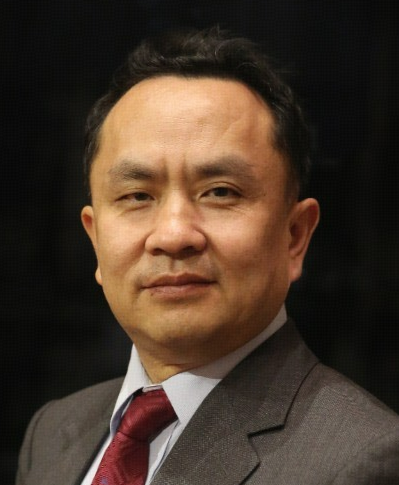 Yun-Hui Liu (劉雲輝)合作论文数Department of Mechanical and Automation Engineering, Faculty of Engineering, The Chinese University of Hong Kong;T Stone Robotics Institute, The Chinese University of Hong Kong;Hong Kong Centre for Logistics Robotics6
 Xiao Ma (马骁)合作论文数Dyson Robot Learning Lab;School of Computing, National University of Singapore5
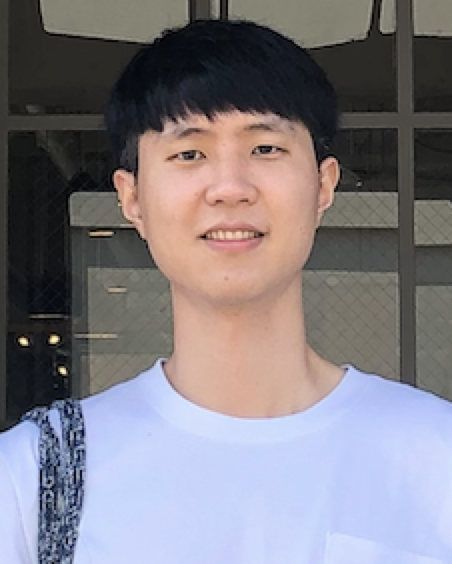 Kimin Lee合作论文数Graduate School of AI, Korea Advanced Institute of Science and Technology5
 Daniel Lenton合作论文数Imperial College London4
 Edward Johns合作论文数Department of Computing, Faculty of Engineering, Imperial College London4
 Kentaro Wada (和田健太郎)合作论文数Imperial College London4
 Qi Dou (窦琪)合作论文数Department of Computer Science and Engineering, The Chinese University of Hong Kong;T Stone Robotics Institute, The Chinese University of Hong Kong4
 Ronald Clark合作论文数Perceptual Intelligence and Extended Reality Lab, Department of Computer Science, University of Oxford4
 Amber Xie合作论文数UC Berkeley, United States3Sumit Patidar合作论文数2
 Pietro Mazzaglia合作论文数Qualcomm2
 Wilson Yan合作论文数Google DeepMind2
 Zhan Tong (童湛)合作论文数KU Leuven2
 Tristan Laidlow合作论文数The Dyson Robotics Lab, Imperial College London2
 Junsu Kim合作论文数Diden Robotics2
 Kai Chen (陳凱)合作论文数Department of Computer Science & Engineering, School of Engineering, The Hong Kong University of Science and Technology2
 Danijar Hafner合作论文数University of Toronto;DeepMind2
 Fangchen Liu合作论文数University of California, Berkeley;AI Algorithm Group, NVIDIA Research2
 Yibing Song (宋奕兵)合作论文数DAMO Academy, Alibaba Group2Zoe Landgraf合作论文数Department of Computing, Imperial College London2
 Jiangliu Wang (王江柳)合作论文数Department of Mechanical and Automation Engineering, Faculty of Engineering, The Chinese University of Hong Kong2
 Jianbo Jiao合作论文数School of Computer Science, University of Birmingham;University of Oxford2
 Michael Bloesch合作论文数DeepMind2
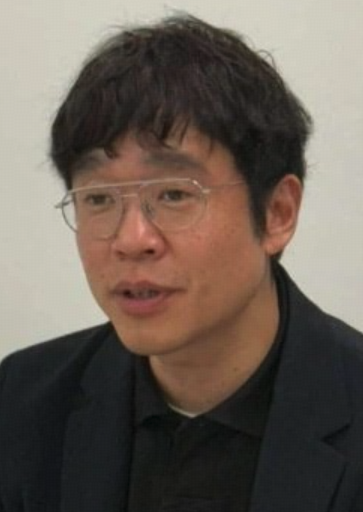 Jinwoo Shin合作论文数School of Electrical Engineering, Korea Advanced Institute of Science and Technology;Kim Jaechul Graduate School of AI, Korea Advanced Institute of Science and Technology2Yiyao Ma合作论文数1
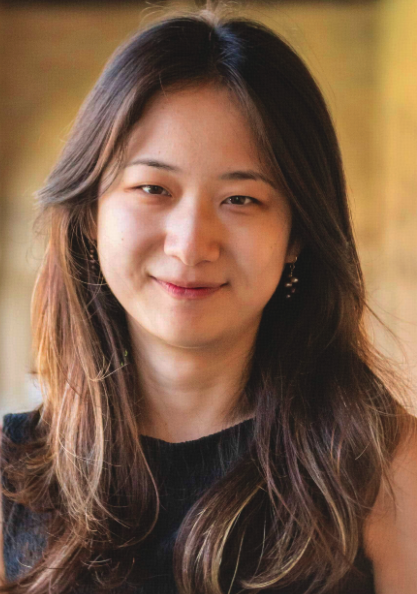 Mandi Zhao合作论文数Stanford University1
 Hao Liu合作论文数Google DeepMind1Iain Haughton合作论文数1Zhongxiang Zhou合作论文数1
 Fabio Pardo合作论文数Google DeepMind1Alexandru-Iosif Toma合作论文数1
 Yunfan Lu合作论文数The Hong Kong University of Science and Technology1
 Ademi Adeniji合作论文数University of California, Berkeley1
 Hussein Ali Jaafar合作论文数Dept Mech & Ind Engn, Ryerson Univ1
 Hao-Ya Hsueh合作论文数Dept. of Mechanical and Industrial Engineering, Ryerson University1
 Fabian Falck合作论文数OxCSML Group, Department of Statistics, University of Oxford;Oriel College1
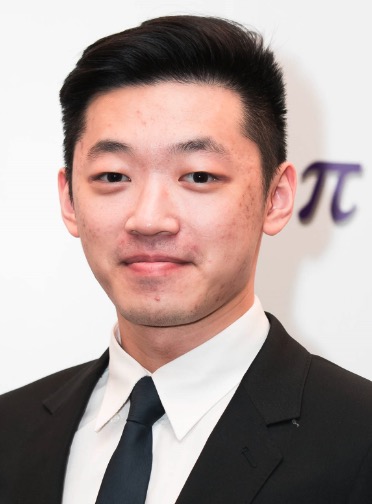 Yat Long (Richie), Lo合作论文数Rooka;Dyson1
 Vitalis Vosylius合作论文数The Robot Learning Lab, Imperial College London1Yichuan Li合作论文数Chinese Univ Hong Kong, Dept Mech & Automat Engn, Hong Kong, Peoples R China1Rui Cao合作论文数Chinese Univ Hong Kong, Dept Comp Sci & Engn, Hong Kong, Peoples R China1
 Sunggoo Jung合作论文数Korea Adv Inst Sci & Technol, Unmanned Syst Res Grp, Daejeon 34141, South Korea1
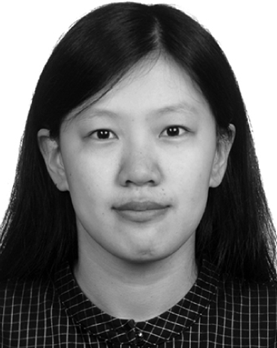 Congying Sui合作论文数Hong Kong Centre for Logistics Robotics1
 John Mccormac合作论文数Department of Computing, Imperial College London1
 Jianshu Zhou合作论文数University of Hong Kong1
 Sajad Saeedi合作论文数Ryerson University1




