On-line detection of anomalies in time series is a key technique used in various event-sensitive scenarios such as robotic system monitoring, smart sensor networks and data center security. However, the increasing diversity of data sources and the variety of demands make this task more challenging than ever. First, the rapid increase in unlabeled data means supervised learning is becoming less suitable in many cases. Second, a large portion of time series data have complex seasonality features. Third, on-line anomaly detection needs to be fast and reliable. In light of this, we have developed a prediction-driven, unsupervised anomaly detection scheme, which adopts a backbone model combining the decomposition and the inference of time series data. Further, we propose a novel metric, Local Trend Inconsistency (LTI), and an efficient detection algorithm that computes LTI in a real-time manner and scores each data point robustly in terms of its probability of being anomalous. We have conducted extensive experimentation to evaluate our algorithm with several datasets from both public repositories and production environments. The experimental results show that our scheme outperforms existing representative anomaly detection algorithms in terms of the commonly used metric, Area Under Curve (AUC), while achieving the desired efficiency.
We present the large-scale, computational fluid dy-namics (CFD) simulation of a full gas-turbine engine compressor, demonstrating capability towards overcoming current limitations for virtual certification of aero-engine design. The simulation is carried out through a performance portable code-base on multi-core/many-core HPC clusters with a CFD-to-CFD coupled execution, combining an industrial CFD solver linked using custom coupler software. The application innovates in its design for performance portability through the OP2 domain specific library for the CFD components, allowing the automatic generation of highly optimized platform-specific parallelizations for both multi-core (CPU) and many-core (GPU) clusters from a single high-level source. The code is used for the simulation of a 4.58B node, full-annulus 10-row production-grade test compressor (DLR's Rig250), using a coupled sliding-plane setup on the ARCHER2 and Cirrus supercomputers at EPCC. The OP2 generated multiple parallelizations, together with optimized coupler configurations on heterogeneous/hybrid settings achieve, for the first time, execution of 1 revolution in less than 6 hours on 512 nodes of ARCHER2 (65k cores), with a parallel scaling efficiency of over 80 % compared to a 107 node run. Results indicate a speed up of the CFD suite by an order of a magnitude (≈30 x) relative to current production capability. Benchmarking and performance modelling project a time-to-solution of less than 5 hours on a cluster of 488xNVIDIA V100 GPUs, about 3x-4 x speedup over CPU clusters. The work demonstrates a step-change towards achieving virtual certification of aircraft engines with the requisite fidelity and tractable time-to-solution that was previously out of reach under production settings.
As the complexity of multi-physics simulations increases, there is a need for efficient flow of information between components. Discrete ‘coupler’ codes can abstract away this process, improving solver interoperability. One such multi-physics problem is modelling the high pressure compressor of turbofan engines, where instances of rotor/stator CFD simulations are coupled. Configuring couplers and allocating resources correctly can be challenging for such problems due to the sliding interfaces between codes. In this research, we present CPX, a mini-coupler designed to model the performance behaviour of a production coupler framework at Rolls-Royce plc., used for coupling rotor/stator simulations. CPX, the first mini-coupler framework of its kind, is combined with a CFD mini-app to predict the run-time and scaling behaviour of large scale coupled CFD simulations. We demonstrate high qualitative and quantitative predictive accuracy with a less than 17 % mean error. A performance model is developed to predict the ‘optimum’ configuration of resources, and is tested to show the high accuracy of these predictions. The model is also used to project the ‘optimum’ configuration for a 6 Billion cell test case, a problem size representative of current leading-edge production workloads, on a 100,000 core cluster and a 400 GPU cluster. Further testing reveals that the ‘optimum’ configuration is unstable if not set up correctly, and therefore a trade-off needs to be made with a marginally less-than-optimal setup to ensure stability. The work illustrates the significant utility of CPX to carry out such rapid design space and run-time setup exploration studies to obtain the best performance from production CFD coupled simulations.
COVID-19 was declared a pandemic by the World Health Organisation (WHO) on March 11th, 2020. With half of the world's countries in lockdown as of April due to this pandemic, monitoring and understanding the spread of the virus and infection rates and how these factors relate to behavioural and societal parameters is crucial for developing control strategies. This paper aims to investigate the effectiveness of masks, social distancing, lockdown and self-isolation for reducing the spread of SARS-CoV-2 infections. Our findings from an agent-based simulation modelling showed that whilst requiring a lockdown is widely believed to be the most efficient method to quickly reduce infection numbers, the practice of social distancing and the usage of surgical masks can potentially be more effective than requiring a lockdown. Our multivariate analysis of simulation results using the Morris Elementary Effects Method suggests that if a sufficient proportion of the population uses surgical masks and follows social distancing regulations, then SARS-CoV-2 infections can be controlled without requiring a lockdown.
Semantic drift is a well-known concept in distributional semantics, which is used to demonstrate gradual, long-term changes in meanings and sentiments of words and is largely detectable by studying the composition of large corpora. In our previous work, which used ontological relationships between words and phrases, we established that certain kinds of semantic micro-changes can be found in social media emerging around natural hazard events, such as floods. Our previous results confirmed that semantic drift in social media can be used to for early detection of floods and to increase the volume of ‘useful’ geo-referenced data for event monitoring. In this work we use deep learning in order to determine whether images associated with ‘semantically drifted’ social media tags reflect changes in crowd navigation strategies during floods. Our results show that alternative tags can be used to differentiate naïve and experienced crowds witnessing flooding of various degrees of severity.
In this paper we present an alternative approach to the representation of simulation particles for unstructured electrostatic and electromagnetic PIC simulations. In our modified PIC algorithm we represent particles as having a smooth shape function limited by some specified finite radius, r0. A unique feature of our approach is the representation of this shape by surrounding simulation particles with a set of virtual particles with delta shape, with fixed offsets and weights derived from Gaussian quadrature rules and the value of r0. As the virtual particles are purely computational, they provide the additional benefit of increasing the arithmetic intensity of traditionally memory bound particle kernels. The modified algorithm is implemented within Sandia National Laboratories' unstructured EMPIRE-PIC code, for electrostatic and electromagnetic simulations, using periodic boundary conditions. We show results for a representative set of benchmark problems, including electron orbit, a transverse electromagnetic wave propagating through a plasma, numerical heating, and a plasma slab expansion. Good error reduction across all of the chosen problems is achieved as the particles are made progressively smoother, with the optimal particle radius appearing to be problem-dependent.
We present StressBench, a network benchmarking framework written for testing MPI operations and file I/O concurrently. It is designed specifically to execute MPI communication and file access patterns that are representative of real-world scientific applications. Existing tools consider either the worst case congestion with small abstract patterns or peak performance with simplistic patterns. StressBench allows for a richer study of congestion by allowing orchestration of network load scenarios that are representative of those typically seen at HPC centres, something that is difficult to achieve with existing tools. We demonstrate the versatility of the framework from micro benchmarks through to finely controlled congested runs across a cluster. Validation of the results using four proxy application communication schemes within StressBench against parent applications shows a maximum difference of 15%. Using the I/O modeling capabilities of StressBench, we are able to quantify the impact of file I/O on application traffic showing how it can be used in procurement and performance studies.
As the computing hardware landscape gets more diverse, and the complexity of hardware grows, the need for a general purpose parallel programming model capable of developing (performance) portable codes have become highly attractive. Intel’s OneAPI suite, which is based on the SYCL standard aims to fill this gap using a modern C++ API. In this paper, we use SYCL to parallelize MG-CFD, an unstructured-mesh computational fluid dynamics (CFD) code, to explore current performance of SYCL. The code is benchmarked on several modern processor systems from Intel (including CPUs and the latest Xe LP GPU), AMD, ARM and Nvidia, making use of a variety of current SYCL compilers, with a particular focus on OneAPI and how it maps to Intel’s CPU and GPU architectures. We compare performance with other parallelizations available in OP2, including SIMD, OpenMP, MPI and CUDA. The results are mixed; the performance of this class of applications, when parallelized with SYCL, highly depends on the target architecture and the compiler, but in many cases comes close to the performance of currently prevalent parallel programming models. However, it still requires different parallelization strategies or code-paths be written for different hardware to obtain the best performance.
In this paper we introduce EMPIRE-PIC, a finite element method particle-in-cell (FEM-PIC) application developed at Sandia National Laboratories. The code has been developed in C++ using the Trilinos library and the Kokkos Performance Portability Framework to enable running on multiple modern compute architectures while only requiring maintenance of a single codebase. EMPIRE-PIC is capable of solv -ing both electrostatic and electromagnetic problems in two-and three-dimensions to second-order accuracy in space and time. In this paper we validate the code against three benchmark problems - a simple electron orbit, an electrostatic Langmuir wave, and a transverse electromagnetic wave propagating through a plasma. We demon-strate the performance of EMPIRE-PIC on four different architectures: Intel Haswell CPUs, Intel's Xeon Phi Knights Landing, ARM Thunder-X2 CPUs, and NVIDIA Tesla V100 GPUs attached to IBM POWER9 processors. This analysis demonstrates scala-bility of the code up to more than two thousand GPUs, and greater than one hundred thousand CPUs.
Trophic coherence, a measure of a graph’s hierarchical organisation, has been shown to be linked to a graph’s structural and dynamical aspects such as cyclicity, stability and normality. Trophic levels of vertices can reveal their functional properties, partition and rank the vertices accordingly. Trophic levels and hence trophic coherence can only be defined on graphs with basal vertices, i.e. vertices with zero in-degree. Consequently, trophic analysis of graphs had been restricted until now. In this paper we introduce a hierarchical framework which can be defined on any simple graph. Within this general framework, we develop several metrics: hierarchical levels, a generalisation of the notion of trophic levels, influence centrality, a measure of a vertex’s ability to influence dynamics, and democracy coefficient, a measure of overall feedback in the system. We discuss how our generalisation relates to previous attempts and what new insights are illuminated on the topological and dynamical aspects of graphs. Finally, we show how the hierarchical structure of a network relates to the incidence rate in a SIS epidemic model and the economic insights we can gain through it.
Federated learning (FL) has attracted increasing attention as a promising approach to driving a vast number of end devices with artificial intelligence. However, it is very challenging to guarantee the efficiency of FL considering the unreliable nature of end devices while the cost of device-server communication cannot be neglected. In this article, we propose SAFA, a semi-asynchronous FL protocol, to address the problems in federated learning such as low round efficiency and poor convergence rate in extreme conditions (e.g., clients dropping offline frequently). We introduce novel designs in the steps of model distribution, client selection and global aggregation to mitigate the impacts of stragglers, crashes and model staleness in order to boost efficiency and improve the quality of the global model. We have conducted extensive experiments with typical machine learning tasks. The results demonstrate that the proposed protocol is effective in terms of shortening federated round duration, reducing local resource wastage, and improving the accuracy of the global model at an acceptable communication cost.
With the increasing complexity of memory architectures and scientific applications, developing data structures that are performant, portable, scalable, and support developer productivity, is a challenging task. In this paper, we present Warwick Data Store (WDS), a lightweight and extensible C++ template library designed to manage these complexities and allow rapid prototyping. WDS is designed to abstract details of the underlying data structures away from the user, thus easing application development and optimisation. We show that using WDS does not significantly impact achieved performance across a variety of different scientific benchmarks and proxy-applications, compilers, and different architectures. The overheads are largely below 30% for smaller problems, with the overhead deceasing to below 10% when using larger problems. This shows that the library does not significantly impact the performance, while providing additional functionality to data structures, and the ability to optimise data structures without changing the application code.
When linking spatio-temporal datasets, the kD-STR algorithm can be used to reduce the datasets and speed up the linking process. However, kD-STR can sacrifice accuracy in the linked dataset whilst retaining unnecessary information. To overcome this, we propose a preprocessing step that removes unnecessary information and an alternative heuristic for kD-STR that prioritises accuracy in the linked output. These are evaluated in a case study linking a road condition dataset with air temperature, rainfall and road traffic data. In this case study, we found the alternative heuristic achieved a 19% improvement in mean error for the linked air temperature features and an 18% reduction in storage used for the rainfall dataset compared to the original kD-STR heuristic. The results in this paper support our hypothesis that, at worse, our alternative heuristic will yield a similar error and storage overhead for linking scenarios as the original kD-STR heuristic. However, in some cases it can give a reduction that is more accurate when linking the datasets whilst using less storage than the original kD-STR algorithm.
Analysing and learning from spatio-temporal datasets is an important process in many domains, including transportation, healthcare and meteorology. In particular, data collected by sensors in the environment allows us to understand and model the processes acting within the environment. Recently, the volume of spatio-temporal data collected has increased significantly, presenting several challenges for data scientists. Methods are therefore needed to reduce the quantity of data that needs to be processed in order to analyse and learn from spatio-temporal datasets. In this paper, we present the k-Dimensional Spatio-Temporal Reduction method (kD-STR) for reducing the quantity of data used to store a dataset whilst enabling multiple types of analysis on the reduced dataset. kD-STR uses hierarchical partitioning to find spatio-temporal regions of similar instances and models the instances within each region to summarise the dataset. We demonstrate the generality of kD-STR with 3 datasets exhibiting different spatio-temporal characteristics and present results for a range of data modelling techniques. Finally, we compare kD-STR with other techniques for reducing the volume of spatio-temporal data. Our results demonstrate that kD-STR is effective in reducing spatio-temporal data and generalises to datasets that exhibit different properties.
In this paper we introduce a novel transformation pass written using LLVM that performs kernel fusion. We demonstrate the correctness and performance of the pass on several example programs inspired by scientific applications of interest. The method achieves up to 4× speedup relative to unfused versions of the programs, and exact performance parity with manually fused versions. In contrast to previous work, it also requires minimal user intervention. Our approach is facilitated by a new loop fusion algorithm capable of interprocedurally fusing both skewed and unskewed loops in different kernels.
The physical and social processes in urban systems are inherently spatial and hence data describing them contain spatial autocorrelation (a proximity-based interdependency on a variable) that need to be accounted for. Standard k-fold cross-validation (KCV) techniques that attempt to measure the generalisation performance of machine learning and statistical algorithms are inappropriate in this setting due to their inherent i.i.d assumption, which is violated by spatial dependency. As such, more appropriate validation methods have been considered, notably blocking and spatial k-fold cross-validation (SKCV). However, the physical barriers and complex network structures which make up a city's landscape mean that these methods are also inappropriate, largely because the travel patterns (and hence Spatial Autocorrelation (SAC)) in most urban spaces are rarely Euclidean in nature. To overcome this problem, we propose a new road distance and travel time k-fold cross-validation method, RT-KCV. We show how this outperforms the prior art in providing better estimates of the true generalisation performance to unseen data.
Purpose There is significant national interest in tackling issues surrounding the needs of vulnerable children and adults. This paper aims to argue that much value can be gained from the application of new data-analytic approaches to assist with the care provided to vulnerable children. This paper highlights the ethical and information governance issues raised in the development of a research project that sought to access and analyse children's social care data. Design/methodology/approach The paper documents the process involved in identifying, accessing and using data held in Birmingham City Council's social care system for collaborative research with a partner organisation. This includes identifying the data, its structure and format; understanding the Data Protection Act 1998 and 2018 (DPA) exemptions that are relevant to ensure that legal obligations are met; data security and access management; the ethical and governance approval process. Findings The findings will include approaches to understanding the data, its structure and accessibility tasks involved in addressing ethical and legal obligations and requirements of the ethical and governance processes. Originality/value The aim of this research is to highlight the potential use of use new data-analytic techniques to examine the flow of children's social care data from referral, through the assessment process, to the resulting service provision. Data held by Birmingham City Council are used throughout, and this paper highlights key ethical and information governance issues which were addressed in preparing and conducting the research. The findings provide insight for other data-led studies of a similar nature.
We present projection sorting, an algorithmic approach to determining pairwise short-range forces between particles in molecular dynamics simulations. We show it can be more effective than the standard approaches when particle density is non-uniform. We implement tuned versions of the algorithm in the context of a biophysical simulation of chromosome condensation, for the modern Intel Broadwell and Knights Landing architectures, across multiple nodes. We demonstrate up to 5× overall speedup and good scaling to large problem sizes and processor counts.
While local-area greenspace is associated with reduced symptoms of mental distress and greater life satisfaction, most previous research has measured the amount of local-area greenspace within administrative boundaries, and found mixed results for associations between greenspace and multidimensional mental wellbeing. The study was designed to examine whether the amount of greenspace within a radius of individuals' homes was associated with mental wellbeing, testing the government guideline that greenspace should be available within 300 m of homes. Individual and Household-level data were drawn from the Annual Population Survey at postcode level (APS, Pooled Dataset 2012-2015), which includes 3 mental wellbeing measures, covering aspects of life satisfaction, sense of worth, and happiness, as well as a range of socio-demographic variables. Greenspace data were obtained Greenspace Information for Greater London Group (GiGL), and was used to calculated the amount of greenspace within a 300 m radius of individuals. Linear regression models revealed positive and statistically significant associations between the amount of greenspace and indicators of life satisfaction and worth. Moran's I, an indicator of spatial autocorrelation, revealed statistically significant clustering of the residuals of these models, so Geographically Weighted Regression (GWR) models were calculated, in order to adjust for underlying spatial processes within the data and investigate the geographic variation in the association between local greenspace and mental wellbeing. The global GWR model revealed that an increase in 1 ha of greenspace within 300 m of residents was associated with a statistically significant 0.803 increase in life satisfaction, 0.740 and 0.521 for worth and happiness, respectively. This therefore provides some support for the inclusion of greenspace within 300 m of homes. Local GWR coefficients revealed slight variation in the strength of these associations across the study space. Therefore, further analyses are required to investigate whether the walking (network distance), absolute size, or type of each greenspace are able to explain this spatial variation.
Advances in processor design have delivered performance improvements for decades. As physical limits are reached, refinements to the same basic technologies are beginning to yield diminishing returns. Unsustainable increases in energy consumption are forcing hardware manufacturers to prioritise energy efficiency in their designs. Research suggests that software modifications may be needed to exploit the resulting improvements in current and future hardware. New tools are required to capitalise on this new class of optimisation. In this article, we present the Power Optimised Software Envelope (POSE) model, which allows developers to assess the potential benefits of power optimisation for their applications. The POSE model is metric agnostic and in this article, we provide derivations using the established Energy-Delay Product metric and the novel Energy-Delay Sum and Energy-Delay Distance metrics that we believe are more appropriate for energy-aware optimisation efforts. We demonstrate POSE on three platforms by studying the optimisation characteristics of applications from the Mantevo benchmark suite. Our results show that the Pathfinder application has very little scope for power optimisation while TeaLeaf has the most, with all other applications in the benchmark suite falling between the two. Finally, we extend our POSE model with a formulation known as System Summary POSE—a meta-heuristic that allows developers to assess the scope a system has for energy-aware software optimisation independent of the code being run.
 Ligang He (何黎刚)合作论文数Department of Computer Science,University of Warwick44
 Daniel P. Spooner合作论文数41Graham R. Nudd合作论文数36
 Steven A. Wright合作论文数Hiram Walker and Sons Limited33
 Simon D. Hammond合作论文数University of Warwick23J. A. Herdman合作论文数21
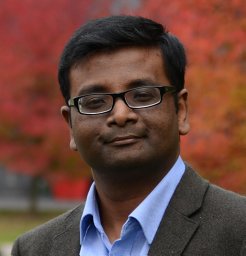 Gihan R. Mudalige合作论文数Oxford eResearch Centre, University of Oxford18
 S. J. Pennycook合作论文数Intel Corporation16David A. Bacigalupo合作论文数15
 James W. J. Xue合作论文数Department of Computer Science;University of Warwick;Department of Computer Science, University of Warwick14
 Adam P. Chester合作论文数Department of Computer Science;University of Warwick;Department of Computer Science, University of Warwick14
 Guang Tan (谭光)合作论文数School of Intelligent Systems Engineering, Sun Yat-Sen University13Junwei Cao (曹军威)合作论文数13
 David Beckingsale合作论文数Department of Computer Science, University of Warwick11Mike Joy合作论文数Computer Science at Warwick University11
 Michael Luck合作论文数University of Sussex10
 Xinuo Chen合作论文数Department of Computer Science;University of Warwick;Department of Computer Science, University of Warwick10
 Azzedine Boukerche合作论文数School of Information Technology and Engineering, University of Ottawa9
 Nigel Thomas合作论文数School of Computing Science, Newcastle University9
 Helen D. Karatza合作论文数Department of Informatics Aristotle University of Thessaloniki9
 Oliver Perks合作论文数9
 Satheesh Maheswaran合作论文数Department of Computing, Imperial College9
 Ahmed Al-Dubai合作论文数IoT and Networked Systems Research Group, School of Computing, Edinburgh Napier University;School of Computing Engineering and the Built Environment, Edinburgh Napier University;Centre for Distributed Computing, Networking and Security, Edinburgh Napier University9James D. Turner合作论文数8
 Henry Crosby合作论文数Warwick Institute for the Science of Cities, University of Warwick, Coventry, UK8Nataliya Tkachenko合作论文数7
 Weisi Guo合作论文数Centre for Autonomous and Cyber-Physical Systems, Cranfield University7
 Hamid Sarbazi-Azad合作论文数High-Performance Computing Architectures and Networks Lab, Department of Computer Engineering, Sharif University of Technology;School of Computer Science, Institute for Research in Fundamental Sciences7Darren J Kerbyson合作论文数Parasol Laboratory;Texas A&M University;Department of Computer Science;Algorithms & Applications Group7Samia Loucif合作论文数I am a lecturer at United Arab Emirates University, Math;Computer Department7A. C. Mallinson合作论文数6W. P. Gaudin合作论文数6Byrd, J.M.R.合作论文数6
 Rob Pooley合作论文数6
 Robert Bird合作论文数6I. Miller合作论文数6Abhir Bhalerao合作论文数Computer Science;University of Warwick6
 Rob Procter合作论文数The Alan Turing Institute;Department of Computer Science, University of Warwick6
 Karim Djemame合作论文数School of Computing, Faculty of Engineering and Physical Sciences, University of Leeds6Timothy R. Law合作论文数5
 Sarunkorn Chotvijit合作论文数Warwick Institute for the Science of Cities, University of Warwick5J. D. Turner合作论文数5J. A. Smith合作论文数5Y. K. Ho合作论文数5Paul Davis合作论文数5Richard Bunt合作论文数5Wilson M. Tan合作论文数Department of Computer Science, University of Warwick5
 Hamid R. Arabnia合作论文数Department of Computer Science, Franklin College of Arts and Sciences, University of Georgia5




