Cannabinoid hemp is a dioecious crop where pistillate plants are selectively grown to maximize cannabinoid yields. Errant pollination can reduce pistillate flower yields, cannabinoid concentrations, and lead to unmarketable flowers due to the presence of undesirable seeds. We compared pollen sensitivity and agronomic performance of diploid (2n = 2x = 20 chromosomes) and triploid (2n = 3x = 30 chromosomes) cannabinoid hemp in open-field conditions. The high-CBD variety Lifter and high-CBG variety White CBG were evaluated in both their diploid and triploid counterparts in fields with and without pollen. Trials were conducted during the 2021 and 2022 field seasons in Kentucky, New York, and North Carolina (n = 6 site years). Triploids produced taller and wider plants than diploids; however, this did not result in yield differences in the pollen-free environment. In the presence of pollen, triploid Lifter and White CBG produced 87% and 77% fewer seeds than their diploid counterparts, respectively. Increased seed production in diploids also resulted in a significant reduction of seed-free biomass and cannabinoid concentrations compared to triploids. In the absence of pollen, we did not find any appreciable differences in seed-free biomass or cannabinoid concentrations between triploids and diploids. Though not completely pollen-insensitive, triploidy is an effective means to reduce seed production and improve yields and quality in cannabinoid hemp in the presence of pollen. Triploid cannabinoid hemp produces significantly less seed than diploids in the presence of pollen. Seed production in the presence of pollen reduced floral biomass and cannabinoid concentrations. Minimal biometric and yield differences were observed between triploid and diploid hemp in the absence of pollen.
In the decades since the first cannabinoids were identified by scientists, research has focused almost exclusively on the function and capacity of cannabinoids as medicines and intoxicants for humans and other vertebrates. Very little is known about the adaptive value of cannabinoid production, though several hypotheses have been proposed including protection from ultraviolet radiation, pathogens, and herbivores. To test the prediction that genotypes with greater concentrations of cannabinoids will have reduced herbivory, a segregating F2 population of Cannabis sativa was leveraged to conduct lab- and field-based bioassays investigating the function of cannabinoids in mediating interactions with chewing herbivores. In the field, foliar cannabinoid concentration was inversely correlated with chewing herbivore damage. On detached leaves, Trichoplusia ni larvae consumed less leaf area and grew less when feeding on leaves with greater concentrations of cannabinoids. Scanning electron and light microscopy were used to characterize variation in glandular trichome morphology. Cannabinoid-free genotypes had trichomes that appeared collapsed. To isolate cannabinoids from confounding factors, artificial insect diet was amended with cannabinoids in a range of physiologically relevant concentrations. Larvae grew less and had lower rates of survival as cannabinoid concentration increased. These results support the hypothesis that cannabinoids function in defense against chewing herbivores.
Water availability influences all aspects of plant growth and development; however, most studies of plant responses to drought have focused on vegetative organs, notably roots and leaves. Far less is known about the molecular bases of drought acclimation responses in fruits, which are complex organs with distinct tissue types. To obtain a more comprehensive picture of the molecular mechanisms governing fruit development under drought, we profiled the transcriptomes of a spectrum of fruit tissues from tomato (Solanum lycopersicum), spanning early growth through ripening and collected from plants grown under varying intensities of water stress. In addition, we compared transcriptional changes in fruit with those in leaves to highlight different and conserved transcriptome signatures in vegetative and reproductive organs. We observed extensive and diverse genetic reprogramming in different fruit tissues and leaves, each associated with a unique response to drought acclimation. These included major transcriptional shifts in the placenta of growing fruit and in the seeds of ripe fruit related to cell growth and epigenetic regulation, respectively. Changes in metabolic and hormonal pathways, such as those related to starch, carotenoids, jasmonic acid, and ethylene metabolism, were associated with distinct fruit tissues and developmental stages. Gene coexpression network analysis provided further insights into the tissue-specific regulation of distinct responses to water stress. Our data highlight the spatiotemporal specificity of drought responses in tomato fruit and indicate known and unrevealed molecular regulatory mechanisms involved in drought acclimation, during both vegetative and reproductive stages of development.
Tomato (Solanum lycopersicum) is an established model for studying fruit biology; however, most studies of tomato fruit growth and ripening are based on homogenized pericarp, and do not consider the internal tissues, or the expression signatures of individual cell and tissue types. We present a spatiotemporally resolved transcriptome analysis of tomato fruit ontogeny, using laser microdissection (LM) or hand dissection coupled with RNA-Seq analysis. Regulatory and structural gene networks, including families of transcription factors and hormone synthesis and signaling pathways, are defined across tissue and developmental spectra. The ripening program is revealed as comprising gradients of gene expression, initiating in internal tissues then radiating outward, and basipetally along a latitudinal axis. We also identify spatial variations in the patterns of epigenetic control superimposed on ripening gradients. Functional studies elucidate previously masked regulatory phenomena and relationships, including those associated with fruit quality traits, such as texture, color, aroma, and metabolite profiles.
With the development of new high-throughput DNA sequencing technologies and decreasing costs, large gene expression datasets are being generated at an accelerating rate, but can be complex to visualize. New, more interactive and intuitive tools are needed to visualize the spatiotemporal context of expression data and help elucidate gene function. Using tomato fruit as a model, we have developed the Tomato Expression Atlas to facilitate effective data analysis, allowing the simultaneous visualization of groups of genes at a cell/tissue level of resolution within an organ, enhancing hypothesis development and testing in addition to candidate gene identification. This atlas can be adapted to different types of expression data from diverse multicellular species.
Cell adhesion in plants is mediated predominantly by pectins, a group of complex cell wall associated polysaccharides. An Arabidopsis mutant, friable1 (frb1), was identified through a screen of T-DNA insertion lines that exhibited defective cell adhesion. Interestingly, the frb1 plants displayed both cell and organ dissociations and also ectopic defects in organ separation. The FRB1 gene encodes a Golgi-localized, plant specific protein with only weak sequence similarities to known proteins (DUF246). Unlike other cell adhesion deficient mutants, frb1 mutants do not have reduced levels of adhesion related cell wall polymers, such as pectins. Instead, FRB1 affects the abundance of galactose- and arabinose-containing oligosaccharides in the Golgi. Furthermore, frb1 mutants displayed alteration in pectin methylesterification, cell wall associated extensins and xyloglucan microstructure. We propose that abnormal FRB1 action has pleiotropic consequences on wall architecture, affecting both the extensin and pectin matrices, with consequent changes to the biomechanical properties of the wall and middle lamella, thereby influencing cell-cell adhesion.
 Jocelyn Rose合作论文数School of Integrative Plant Science, College of Agriculture and Life Sciences, Cornell University7
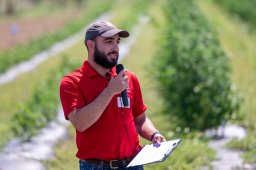 George M. Stack合作论文数Cornell University3
 Carmen Catala合作论文数Plant Biology Section, College of Agriculture and Life Sciences, Cornell University3
 Nicolas Philippe合作论文数3
 Lukas Mueller合作论文数School of Integrative Plant Science Plant Breeding and Genetics Section, Cornell University;Mueller Lab, Boyce Thompson Institute3
 Jim Giovannoni合作论文数Robert W. Holley Center, Agricultural Research Service, United States Department of Agriculture3
 Yoshihito Shinozaki合作论文数United Graduate School of Agricultural Science, Tokyo University of Agriculture and Technology3
 Zhangjun Fei合作论文数Boyce Thompson Institute for Plant Research3
 Shannon Henriquez Inoa合作论文数2Jacob A. Toth合作论文数School of Integrative Plant Science, Cornell AgriTech2Robert Pearce合作论文数2Glenn Philippe合作论文数2Yimin Xu合作论文数Cornell Univ, Boyce Thompson Inst Plant Res, Ithaca, NY 14853 USA2David Suchoff合作论文数Dept Crop & Soil Sci, North Carolina State Univ2
 Fernandez-Pozo Noe合作论文数Boyce Thompson Institute for Plant Research2Michael A. Quade合作论文数1Daniel J. Evanich合作论文数1Lawrence B. Smart合作论文数1Lance Courtney合作论文数1Jamie Crawford合作论文数1Julia Vrebalov合作论文数1Qiyue Ma合作论文数1Yi Zheng (一征)合作论文数1
 Shelley Lumba合作论文数Department of Cell & Systems Biology, Faculty of Arts and Science, University of Toronto1
 Clare Casteel合作论文数Plant Pathology and Plant-Microbe Biology Section, School of Integrative Plant Science, College of Agriculture and Life Sciences, Cornell University1
 Ping Wang合作论文数Department of Entomology Cornell AgriTech, College of Agriculture and Life Sciences, Cornell University1
 Larry Smart合作论文数Horticulture Section, School of Integrative Plant Science, College of Agriculture and Life Sciences, Cornell University1
 Virginia Moore合作论文数Plant Breeding and Genetics Section, College of Agriculture and Life Sciences, Cornell University1Lutz Neumetzler合作论文数1Domozych David S合作论文数1
 Theodore W Thannhauser合作论文数1
 Eliel Ruiz May合作论文数Unidad de Bioquímica y Biología Molecular de Plantas, Centro de Investigación Científica de Yucatán1
 Powell Adrian F合作论文数Cornell University1
 Laetitia Martin合作论文数Department of Plant Biology, Cornell University1Kan Bao合作论文数1Yanna Shi合作论文数1Vasilevski Aleksandar合作论文数1
 Trevor H. Yeats合作论文数Department of Plant Biology, Cornell University;Department of Plant Biology, Cornell University1
 Kunsong Chen (陈昆松)合作论文数College of Agriculture and Biotechnology, Zhejiang University1
 Tania Humphrey合作论文数1
 Bjorn Usadel合作论文数Institut of Biological Data Science, Heinrich Heine University Düsseldorf1Dario Bonetta合作论文数Department of Botany, University of Toronto1




